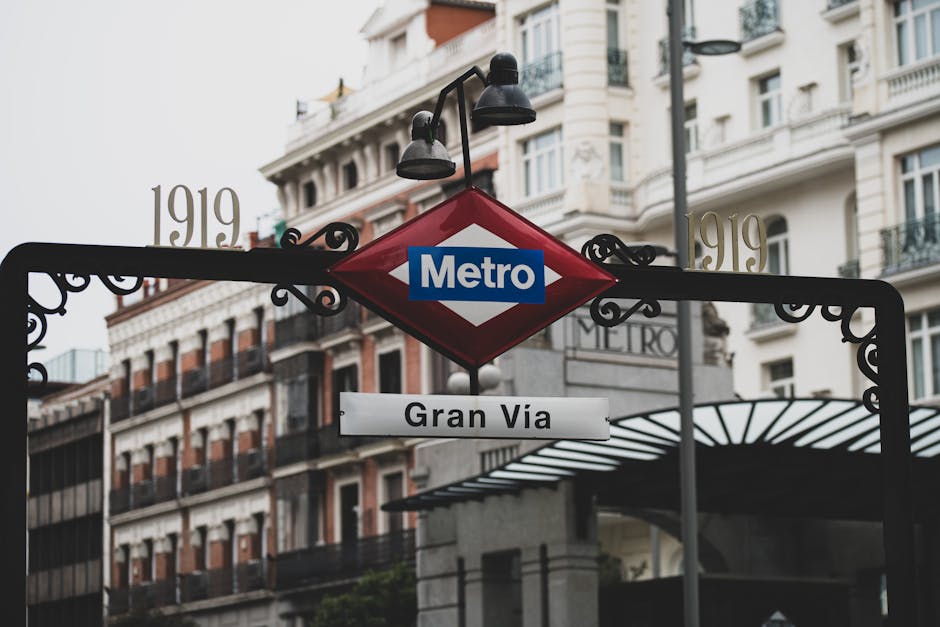
Self-guided audio tour in Madrid
Start Free on iPhone
Start free on iPhone to unlock this self-guided walking tour in Madrid. Hear all the stories that make it amazing, walk at your own pace, and begin whenever you want.
Your Private Tour Guide
Step into the heartbeat of old Madrid with a self-guided walk through La Latina, the city's most evocative medieval neighborhood. This neighborhood stroll captures the essence of Spanish life, where centuries-old architecture meets a legendary culinary scene. As you wander through narrow, winding alleys that follow the footprint of the ancient city walls, you will discover why this district is the undisputed home of the tapas tradition. This walking route is designed to let you explore at your own pace, moving from the bustling energy of historic taverns to the quiet serenity of hidden gardens. Your journey begins on the iconic Calle de la Cava Baja, a street famous for its concentration of traditional eateries, before leading you through vibrant local markets and sun-drenched plazas. You will encounter the spiritual history of the city at the Church of San Andrés and find a peaceful escape in the secret Garden of the Prince of Anglona. The experience concludes with a breathtaking view from the Viaducto de Segovia, offering a panoramic perspective of the Royal Palace and the valley beyond. Whether you are a foodie looking for the perfect bite or a history enthusiast tracing the roots of the Spanish capital, this self-guided adventure provides an authentic look into the local lifestyle. Unlike a traditional walking tour Madrid, this independent route allows you to linger over a glass of vermouth or spend extra time photographing the colorful facades without a fixed schedule. It is the perfect way to experience the soul of the city, combining the flavors of the present with the echoes of the past in one of Europe's most atmospheric quarters. **Note:** This area is known for its ever-changing character. Street art, pop-up venues, and temporary exhibitions may differ from what's described. That's part of the adventure - you might discover something entirely new!
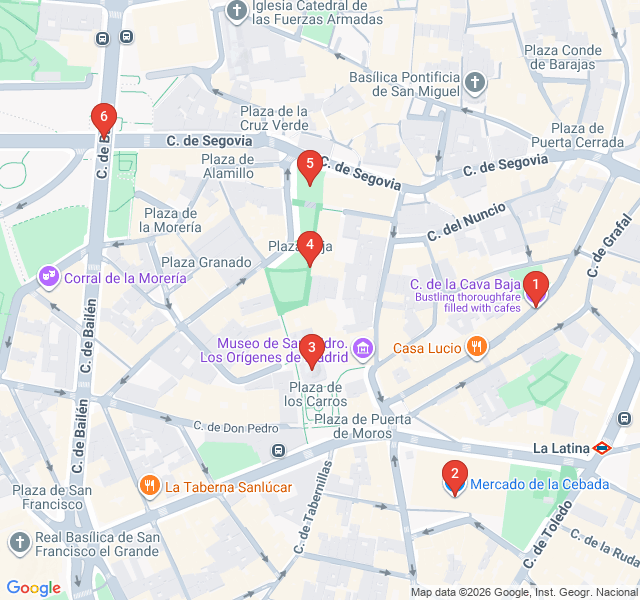
Numbers indicate the order of stops on the tour.
Welcome to one of Madrid's oldest and most famous streets. Calle de la Cava Baja follows the line of the ancient 12th-century city walls. In the Middle Ages, 'cavas' were ditches that allowed people to enter and exit the city secretly. Today, the secret is out: this is the spiritual home of the tapas crawl. The colorful buildings here once served as inns and stables for travelers arriving at the city gates. Look closely at the facades; many taverns still retain their original 19th-century tiled signage. This street is most vibrant in the late evening when locals gather for 'tapear'—moving from bar to bar to sample different specialties. Please note that bar opening times and specific menus vary frequently, so let your nose and the crowds be your guide.
This striking building with its colorful, wave-like roof is the Mercado de la Cebada. While a market has existed on this spot since the 16th century, the current structure is a mid-20th-century design that has become a canvas for local street art. Inside, you will find a bustling world of fresh produce, meats, and cheeses. It is a cornerstone of the neighborhood, where tradition meets modern local life. On weekends, the market often transforms into a social hub where you can enjoy fresh seafood or local wines right at the stalls. Keep in mind that as a working market, stalls typically close during the afternoon siesta hours and on Sundays, though the exterior street art is always visible.
Standing before you is the Church of San Andrés, one of the oldest religious sites in Madrid. This church is deeply connected to the city's history, as it was the original burial place of San Isidro Labrador, the patron saint of Madrid. The building has suffered significantly over the centuries, particularly during the Spanish Civil War, but its Baroque dome remains a landmark of the La Latina skyline. The adjacent chapel, the Capilla de San Isidro, is a masterpiece of Spanish Baroque architecture. As this is a place of active worship, please be respectful of ongoing services. Opening hours for the interior can be unpredictable, but the exterior architecture tells a story of resilience and faith that spans nearly a millennium.
Enter the Plaza de la Paja, or 'Straw Square,' which served as the commercial heart of medieval Madrid. Long before the Plaza Mayor was built, this was the city's primary marketplace. Its name comes from the tax paid in straw to the nearby chapel. Unlike the grand, symmetrical squares elsewhere in the city, this plaza retains an irregular, sloping shape typical of the Middle Ages. It is a perfect spot to observe the contrast between the historic stone walls and the leafy trees. Today, the square is lined with cafes and vegetarian restaurants, making it a popular local hangout. Take a moment to imagine the bustling medieval fairs that once filled this space with merchants, livestock, and travelers from across Castile.
Hidden behind a high brick wall at one corner of Plaza de la Paja lies a secret: the Garden of the Prince of Anglona. This small, walled space is a rare surviving example of an 18th-century aristocratic garden. It was designed in 1761 by Nicolas Chalmandrier and maintains its original Neoclassical layout, featuring low boxwood hedges and a central fountain. It is a peaceful sanctuary that feels worlds away from the city's traffic. Because it is maintained by the city but tucked away, many visitors walk right past its entrance. The garden is open to the public daily, but hours vary by season. It is a wonderful place to sit and reflect on the hidden layers of Madrid's history in near-total silence.
Our walk concludes at the Viaducto de Segovia, an impressive feat of engineering that connects the area of the Royal Palace with the hills of La Latina. The current concrete structure dates to the 1930s, replacing a 19th-century iron predecessor. Standing here, you are treated to one of the most iconic views in Madrid. Looking north, you can see the Almudena Cathedral and the Royal Palace towering over the valley. The viaduct has long been a subject for Spanish artists and filmmakers, appearing in several films by Pedro Almodóvar. As the sun begins to set, the stone of the palace glows gold, providing a perfect finale to your exploration of the city's oldest quarters. From here, you are just a short walk away from the grander boulevards of the city center.
Start Free on iPhone
Explore “The Tapas Trail of La Latina” with your very own Private Tour Guide with Zigway. Start free on iPhone, skip the large group and the fixed routes, and hear the city come alive as you go.
Your Private Tour Guide
Don't miss the good stuff
Explore Freely
 Easy
EasyMadrid, Spain
Explore Madrid's 'Landscape of Light' on this self-guided walk through the world-renowned Golden Triangle of Art, from Cibeles to the Reina Sofía.
 Moderate
Madrid, Spain
Explore Madrid's most diverse neighborhood on this self-guided walk through street art, historic markets, and multicultural squares.
 Easy
EasyMadrid, Spain
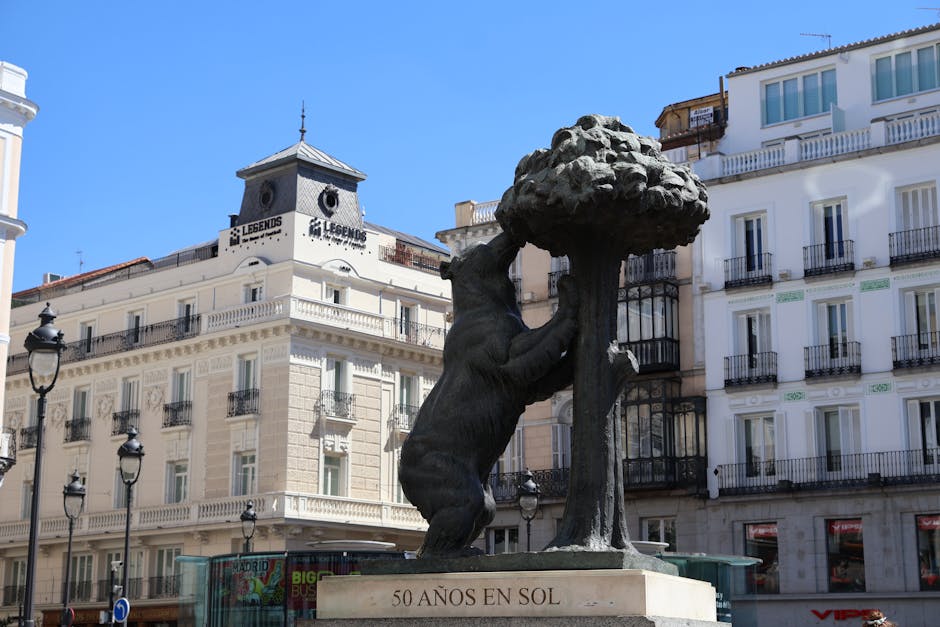
Explore the royal legacy and medieval alleys of Madrid's historic Habsburg district on this immersive self-guided walk through the city's heart.
 Easy
EasyMadrid, Spain
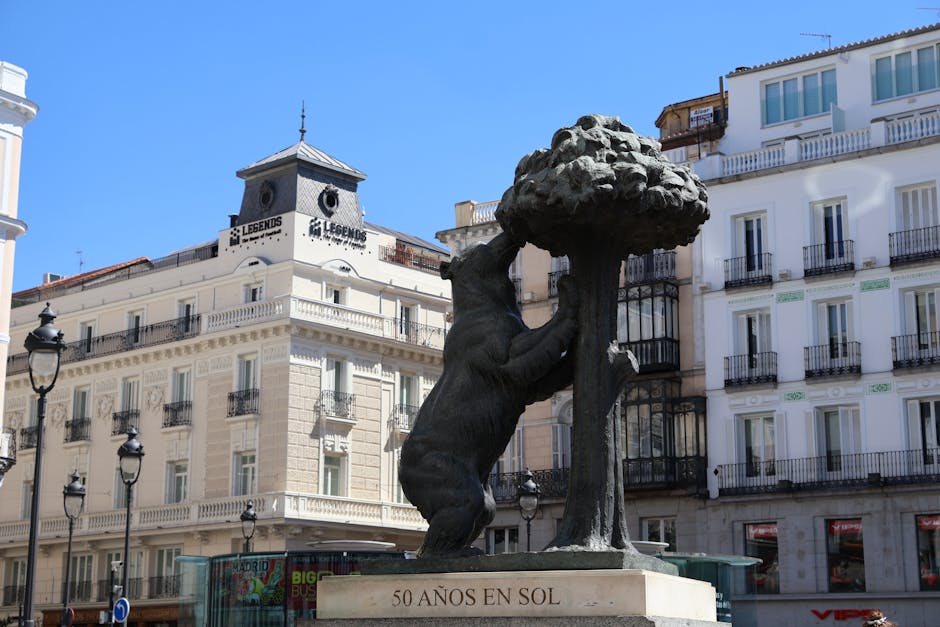
Discover the rebellious spirit of Malasaña on this self-guided walk through Madrid's best street art, historic squares, and counter-culture hubs.
 Moderate
Helsinki, Finland
Explore Helsinki's bohemian heart. Discover historic saunas, granite churches, and the vibrant local life of the Kallio neighborhood at your own pace.
 Moderate
Vienna, Austria
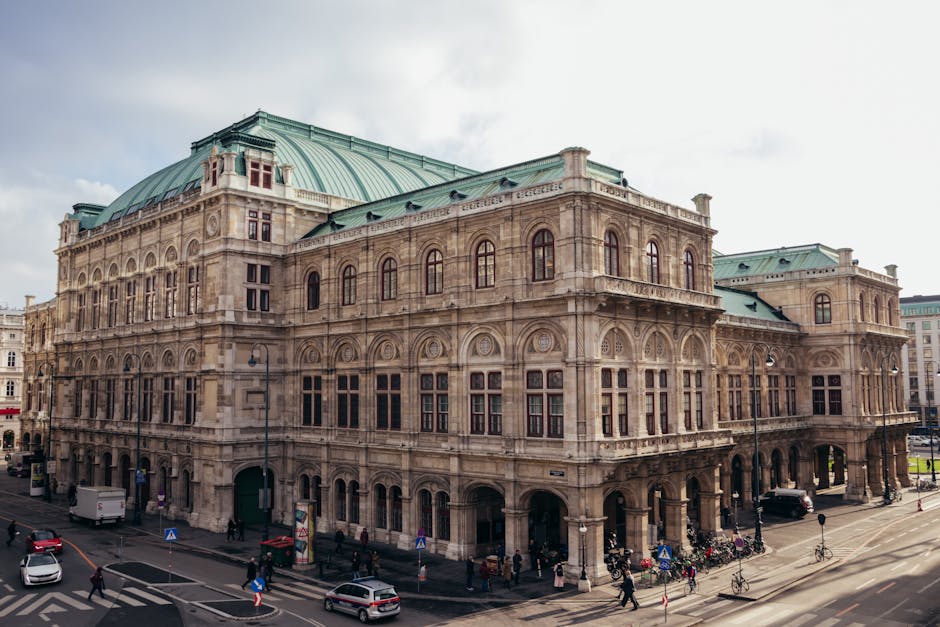
Discover the noir world of The Third Man and Cold War Vienna on this atmospheric self-guided audio walk through the historic Innere Stadt.
 Easy
EasyGothenburg, Sweden
Explore Gothenburg’s historic wooden houses, legendary giant cinnamon buns, and panoramic fortress views on this self-guided neighborhood stroll.
 Moderate
Nairobi, Kenya
Taste your way through Nairobi's Westlands on this self-guided walk featuring street snacks, cultural landmarks, and hidden foodie gems.
 Moderate
Barcelona, Spain
Explore the elegant 'village' of Sarrià, where Gothic monasteries and Gaudí's hidden gems meet charming local markets and narrow streets.
 Moderate
Barcelona, Spain
Discover the revolutionary history and haunting scars of the Spanish Civil War on this self-guided walk through Barcelona's historic streets.
 Easy
EasyBarcelona, Spain
Discover the architectural wonders of Barcelona's Golden Square on this self-guided stroll through Eixample's most luxurious Modernista streets.
 Challenging
Barcelona, Spain
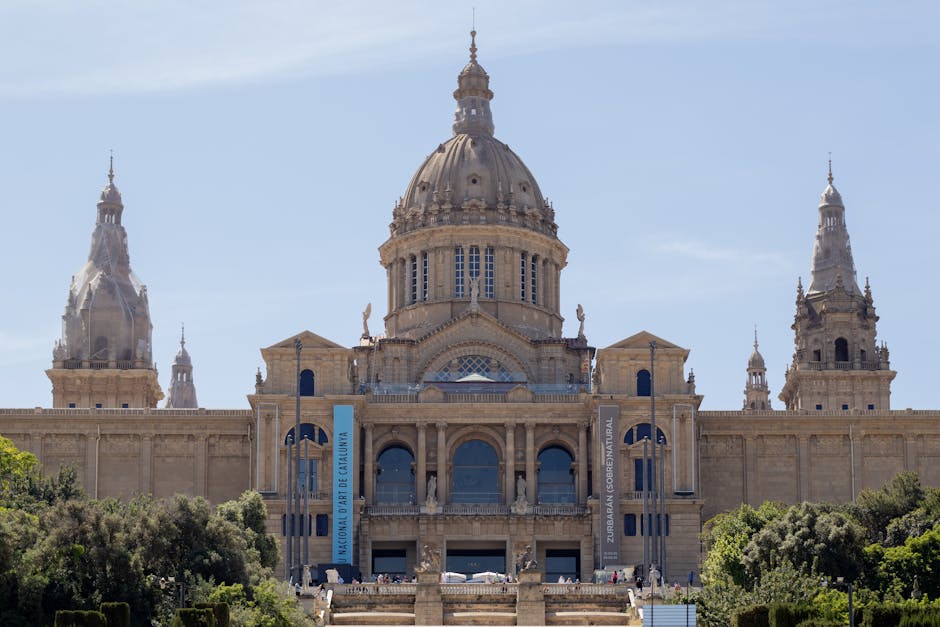
Explore Montjuïc’s lush gardens, historic fortress, and iconic Olympic venues on this scenic self-guided walk with panoramic Mediterranean views.