Self-guided audio tour in Bilbao
Start Free on iPhone
Start free on iPhone to unlock this self-guided walking tour in Bilbao. Hear all the stories that make it amazing, walk at your own pace, and begin whenever you want.
Your Private Tour Guide
Once a gritty industrial landscape of shipyards and ironworks, Bilbao’s Abandoibarra district has undergone one of the most remarkable urban transformations in modern history. This self-guided walk invites you to explore the 'Guggenheim Effect' firsthand, strolling through a neighborhood where world-class architecture and avant-garde art now define the skyline. The route follows the curve of the Nervión River, taking you past shimmering titanium, towering glass, and whimsical sculptures that have become the face of the new Bilbao. As you embark on this neighborhood stroll, you will encounter the works of Pritzker Prize-winning architects like Frank Gehry and César Pelli. The walk is not just about the buildings, however; it is a journey through the city’s identity. You will see how the rusty remnants of the maritime past have been integrated into sleek modern designs, creating a dialogue between the old industrial power and the new cultural prestige. This walking route is perfect for those who want to discover the city at their own pace, offering ample opportunities for photography, riverside relaxation, and architectural study. Highlights include the iconic Guggenheim Museum, the flower-clad Puppy that guards its entrance, and the elegant Zubizuri bridge. Whether you are a fan of contemporary art or simply looking for a scenic way to see the city, this Abandoibarra walk provides a comprehensive look at how Bilbao reinvented itself for the 21st century. It is an easy, flat walk that captures the vibrant energy of the Basque Country’s largest city without the need for a rigid schedule. By choosing this independent audio walk, you gain the freedom to linger by the riverside or spend extra time admiring the intricate details of the titanium scales that make this area famous. This is an essential experience for any first-time visitor looking for a walking tour Bilbao offers through its most famous district.
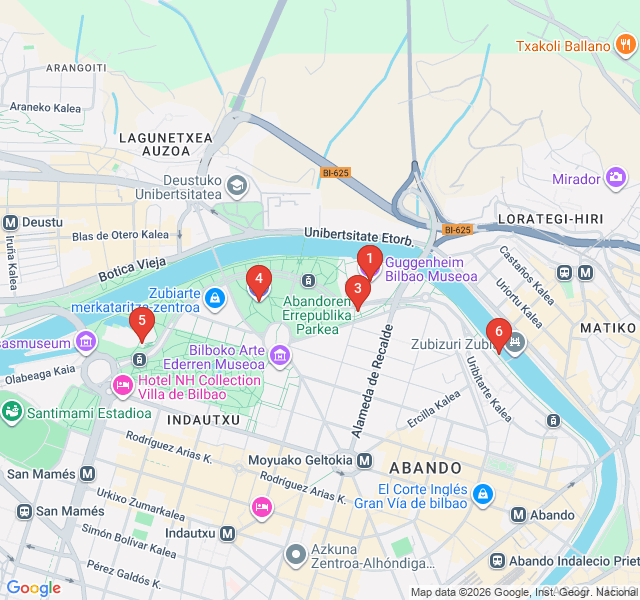
Numbers indicate the order of stops on the tour.
Designed by Frank Gehry and opened in 1997, this museum is the crown jewel of Bilbao's urban renewal. Its structure is a swirling mass of titanium, limestone, and glass, designed to look like a ship, a flower, or a fish, depending on your perspective. The titanium plates were chosen for their ability to reflect the changing light of the Bilbao sky, mimicking the scales of a fish. This building didn't just house art; it saved the city's economy, a phenomenon now known globally as the 'Guggenheim Effect.' Take a moment to walk around the exterior to see how the shapes shift as you move.
Standing nearly 10 meters tall on the riverside promenade, 'Maman' is one of the most recognizable sculptures in the world. Created by Louise Bourgeois, this giant bronze and stainless steel spider is a tribute to the artist's mother, who was a weaver. To Bourgeois, the spider represented protection, intelligence, and the maternal cycle of repair. If you look closely at the underbelly, you can see a sac containing 10 marble eggs. It serves as a stark, spindly contrast to the solid, shimmering walls of the museum behind it, creating one of the city's most photographed vistas.
Guardianship takes a softer form here with Jeff Koons' 'Puppy.' This 12-meter-tall West Highland Terrier is covered in thousands of living flowers, which are changed twice a year to suit the seasons. While it was originally intended as a temporary installation for the museum's opening, the people of Bilbao fell in love with it, and it became a permanent resident. The internal structure contains a complex irrigation system to keep the flowers blooming. It represents a fusion of high art and popular culture, standing as a symbol of optimism and the city's friendly, welcoming spirit.
Rising 165 meters above the Abandoibarra district, the Torre Iberdrola is the tallest building in the Basque Country. Designed by Argentine architect César Pelli, the glass obelisk has a triangular floor plan with curved sides, meant to resemble the prow of a ship heading toward the sea. Its glass facade is highly sustainable, reflecting the sky and the surrounding parkland. The tower serves as the headquarters for the Iberdrola energy company and stands as a symbol of Bilbao’s transition from an industrial manufacturing center to a modern hub of service and green energy.
This building pays direct homage to the site's history as the Euskalduna shipyard. Architects Federico Soriano and Dolores Palacios designed the center to look like a ship under construction, left on the stocks. The exterior is clad in Corten steel, which intentionally rusts over time to evoke the hulls of the massive vessels that once dominated this riverbank. Today, it serves as a world-class opera house and convention center. Its 'rusty' appearance was controversial at first, but it is now celebrated for preserving the memory of the city's maritime and industrial soul.
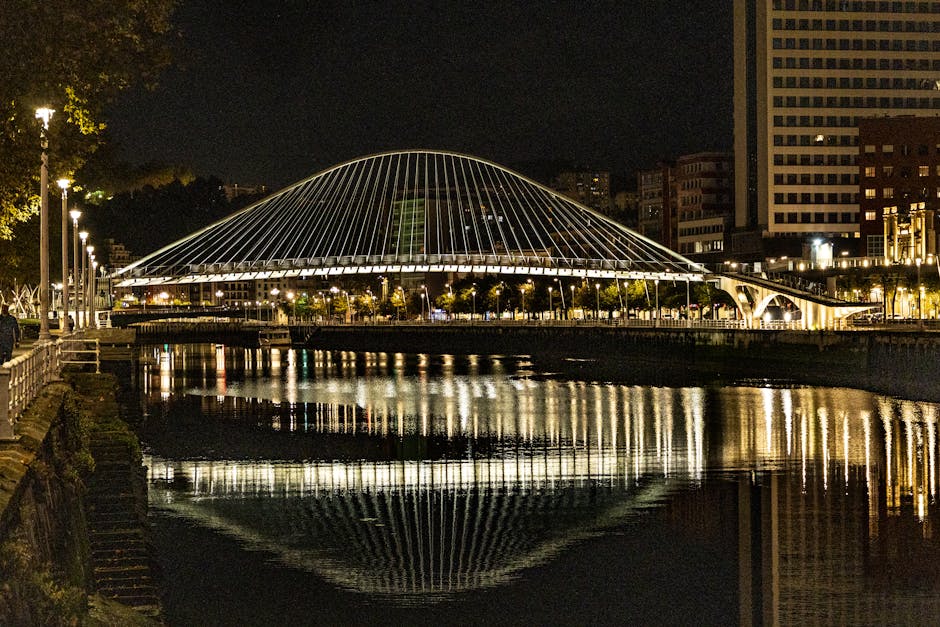
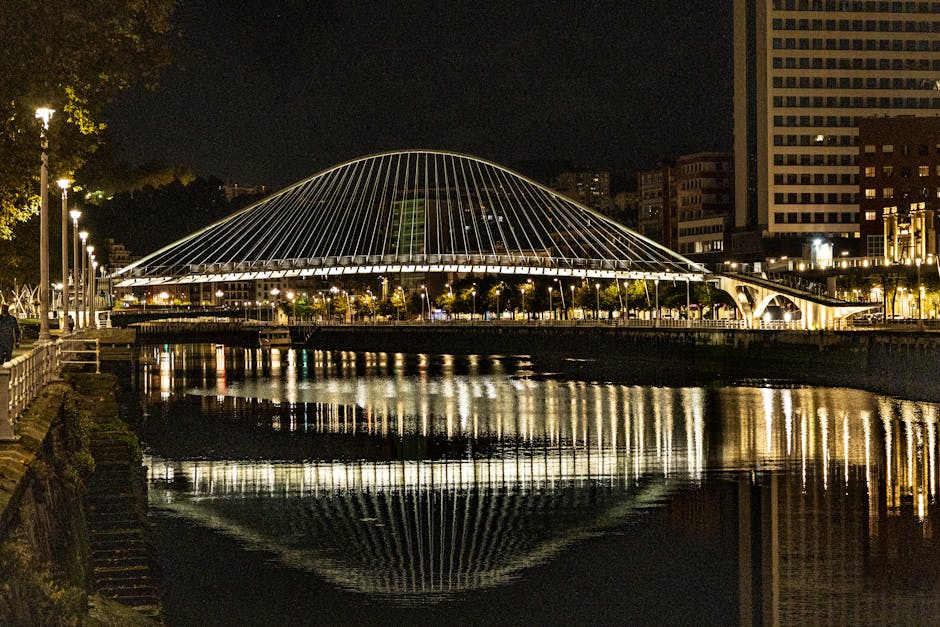
The Zubizuri, which means 'White Bridge' in Basque, was designed by Santiago Calatrava. Its tied-arch design features a curved walkway suspended by steel cables, giving it an elegant, organic feel that resembles a sail. While beautiful, the bridge was famously problematic due to its glass tile floor, which became incredibly slippery in Bilbao’s frequent rain. This led the city to eventually cover the glass with a non-slip mat. Despite the controversy, it remains a vital link between the old city and the new Abandoibarra district, offering some of the best views of the river and the museum.
Start Free on iPhone
Explore “Titanium and Transformation: The Abandoibarra Walk” with your very own Private Tour Guide with Zigway. Start free on iPhone, skip the large group and the fixed routes, and hear the city come alive as you go.
Your Private Tour Guide
Don't miss the good stuff
Explore Freely
 Easy
EasyBilbao, Spain
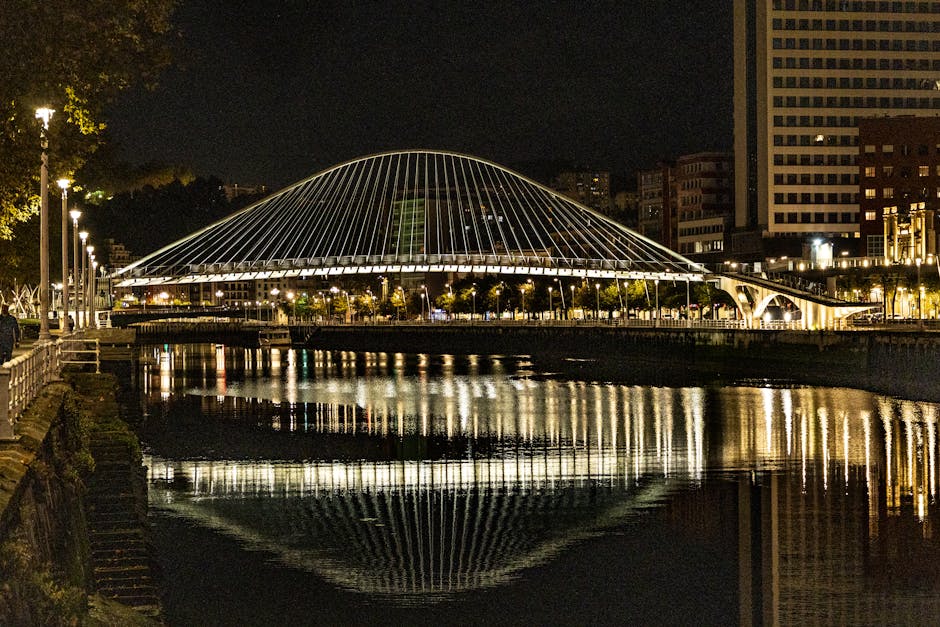
Explore Bilbao’s elegant Museum Mile and its lush 'Green Lung' on this self-guided stroll through art, architecture, and romantic gardens.
 Easy
EasyBilbao, Spain
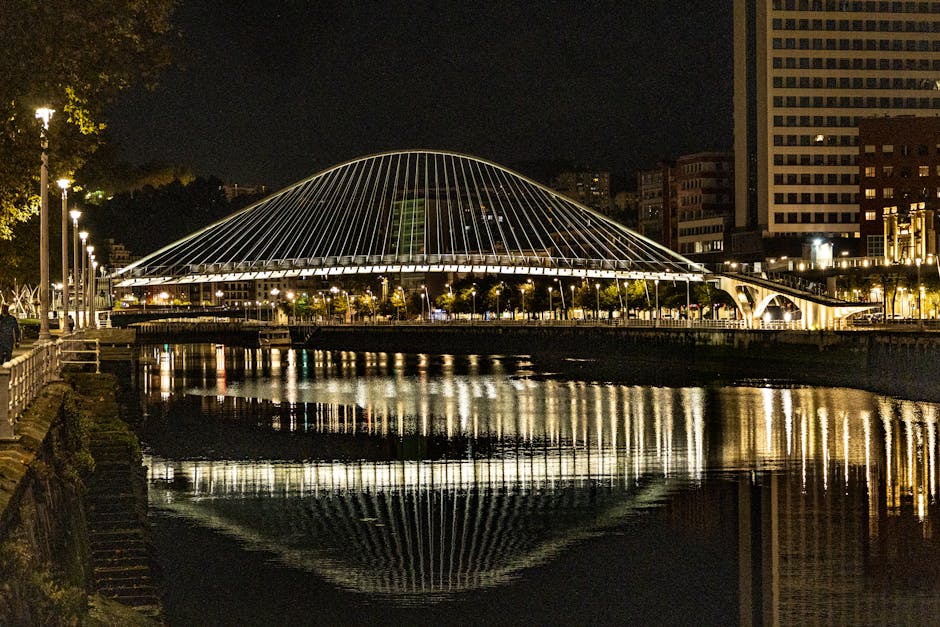
Discover the vibrant murals, industrial history, and bohemian soul of 'Bilbi' on this self-guided neighborhood stroll through Bilbao's coolest district.
 Easy
EasyBilbao, Spain
Follow the life of philosopher Miguel de Unamuno through Bilbao's Casco Viejo on this literary self-guided walk.
 Easy
EasyBilbao, Spain
Trace Bilbao's industrial roots and maritime legacy on this self-guided stroll along the Nervión river, from historic shipyards to local Olabeaga.
 Easy
EasyNairobi, Kenya
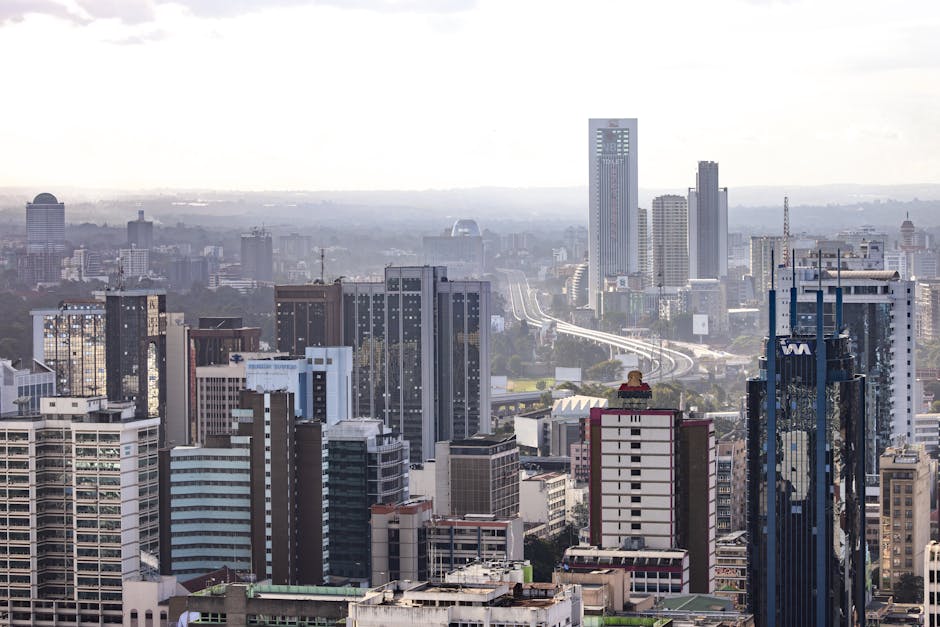
Discover Nairobi's iconic skyline on this self-guided architecture walk through the CBD’s most famous modernist and Brutalist landmarks.
 Easy
EasyGdansk, Poland
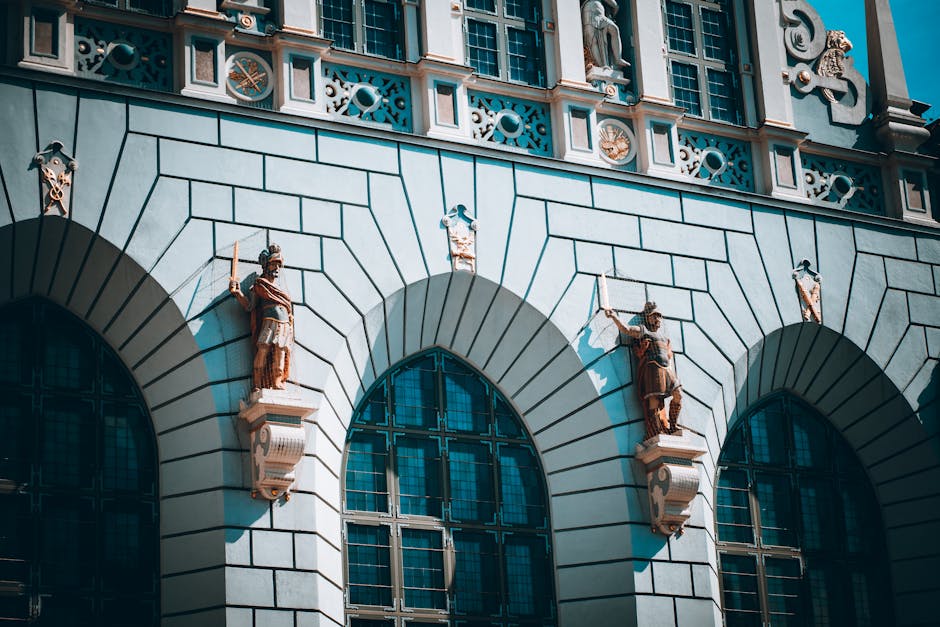
Discover the opulent Royal Way of Gdansk at your own pace. Explore Hanseatic history, gilded architecture, and the iconic Neptune's Fountain.
 Easy
EasyWarsaw, Poland
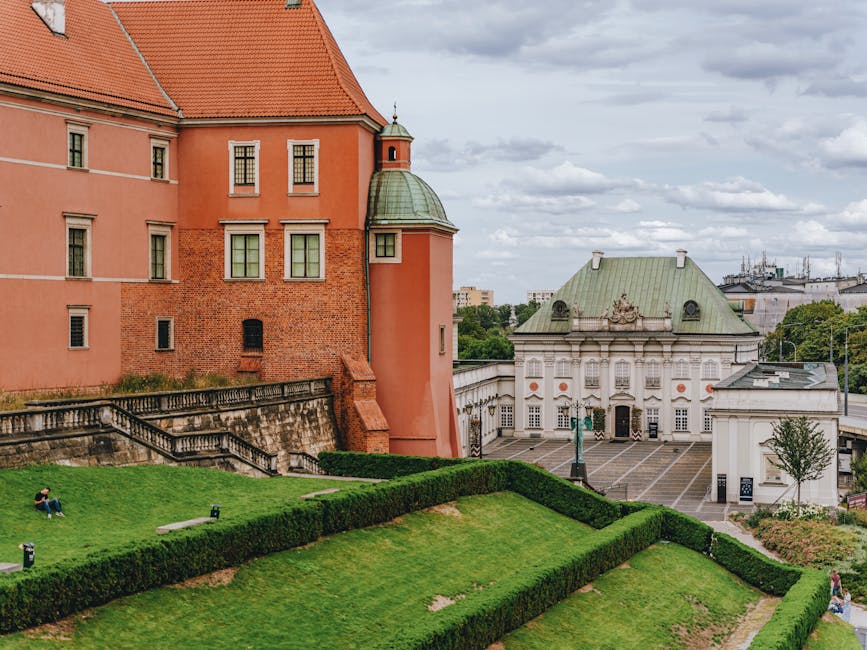
Explore the miracle of Warsaw's reconstructed Old Town on this self-guided walk through royal squares, medieval walls, and heroic monuments.
 Easy
EasyGothenburg, Sweden
Explore Gothenburg's elegant academic district, featuring grand 19th-century stone architecture and the iconic cultural hub of Götaplatsen.
 Moderate
Barcelona, Spain
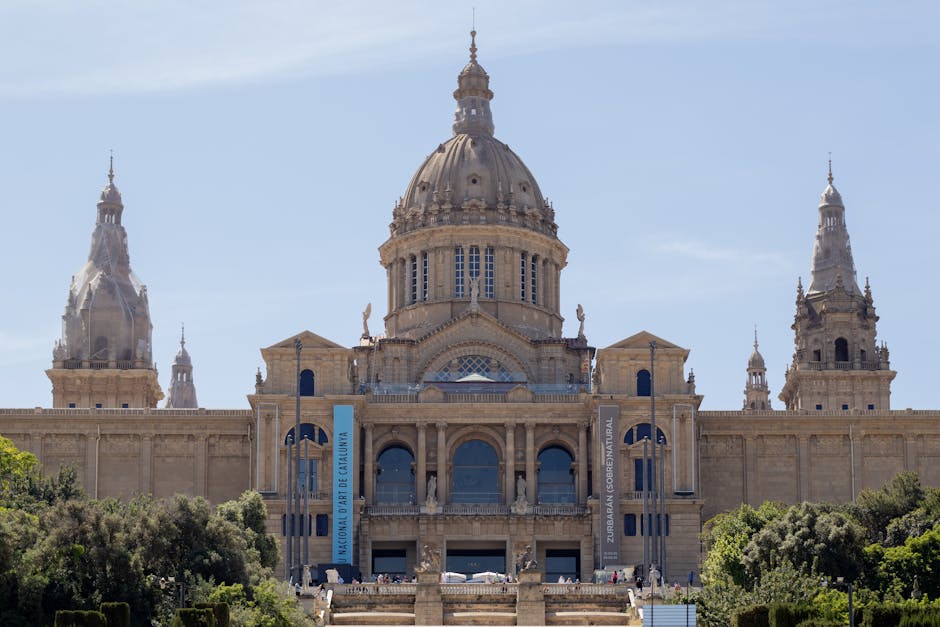
Explore the elegant 'village' of Sarrià, where Gothic monasteries and Gaudí's hidden gems meet charming local markets and narrow streets.
 Moderate
Barcelona, Spain
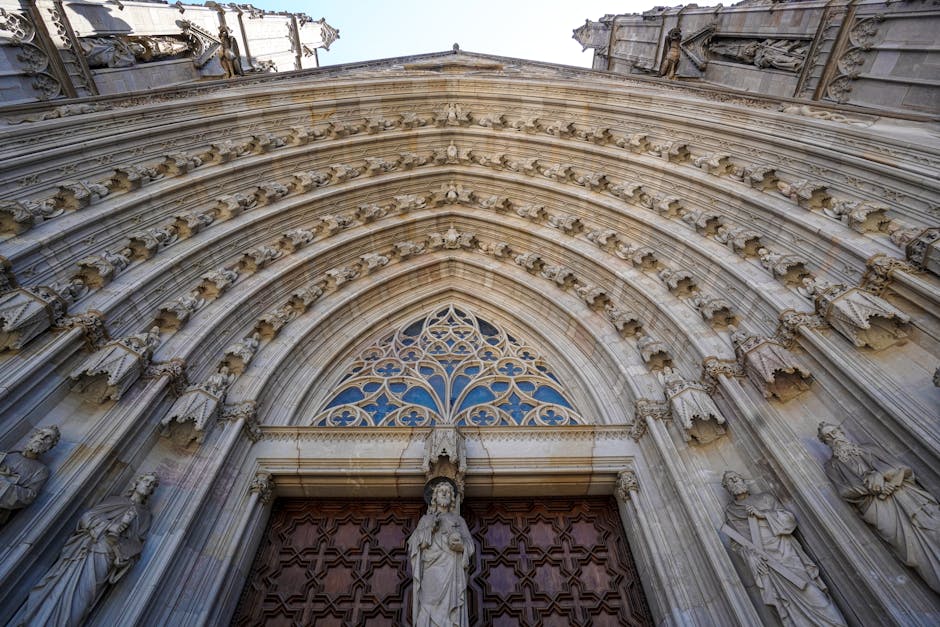
Discover the revolutionary history and haunting scars of the Spanish Civil War on this self-guided walk through Barcelona's historic streets.
 Easy
EasyBarcelona, Spain
Discover the architectural wonders of Barcelona's Golden Square on this self-guided stroll through Eixample's most luxurious Modernista streets.
 Challenging
Barcelona, Spain
Explore Montjuïc’s lush gardens, historic fortress, and iconic Olympic venues on this scenic self-guided walk with panoramic Mediterranean views.