Self-guided audio tour in Austin
Start Free on iPhone
Start free on iPhone to unlock this self-guided walking tour in Austin. Hear all the stories that make it amazing, walk at your own pace, and begin whenever you want.
Your Private Tour Guide
Step into the heart of Texas history with this self-guided walk through Downtown Austin, where the legacies of cattle barons, legendary performers, and political titans collide. This walking route explores the architectural grandeur and the high-stakes stories that shaped the Lone Star State. Your journey begins at the iconic Driskill Hotel, a Romanesque masterpiece built by a wealthy cattleman that remains the gold standard of Texas hospitality. As you stroll along Congress Avenue, you will discover how Austin transformed from a frontier town into a sophisticated seat of power. This architecture-focused route highlights the transition from 19th-century elegance to the monumental scale of modern government. You will pass the Paramount Theatre, a beacon of the city's cultural life for over a century, before approaching the gated grounds of the Texas Governor's Mansion. The centerpiece of this experience is, undoubtedly, the Texas State Capitol. Standing taller than the U.S. Capitol in Washington D.C., this sunset-red granite structure is a testament to Texas-sized ambition. Beyond the legislative chambers, the route delves into the preservation of the state's identity at the Texas State Library and Archives and concludes at the Old Land Office Building, where the state’s vast territory was once managed. Whether you are an architecture enthusiast or a history buff, this exploration provides a deep dive into the symbols of Texas authority. You can explore at your own pace, pausing to admire the intricate carvings of the Capitol dome or the hauntings of historic hotels. This neighborhood stroll offers a comprehensive look at the figures who built Austin, from the visionary architects to the writers and politicians who left an indelible mark on the city. By the end of this walking route, you will understand why Austin's political landscape is as unique and bold as the granite used to build its most famous landmarks.
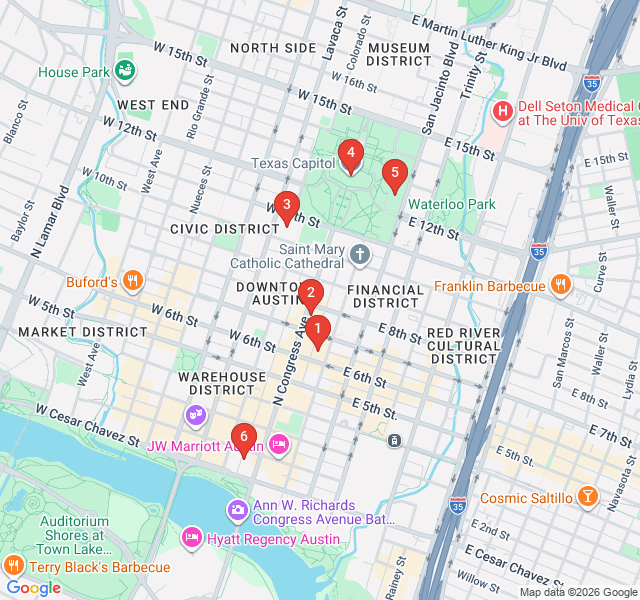
Numbers indicate the order of stops on the tour.
Welcome to the Driskill Hotel, a true Austin legend. Completed in 1886 for cattle baron Jesse Driskill, this Romanesque-style building cost $400,000—a staggering sum at the time. Look up to see the bust of Jesse Driskill himself, flanked by his sons, carved into the stone. The hotel has been a social hub for Texas governors and presidents, most notably Lyndon B. Johnson, who had his first date with Lady Bird here. It is also famously known as one of the most haunted spots in Texas. As you start your self-guided walk, take a moment to admire the ornate lobby and the stained-glass dome, which reflect the immense wealth of the 19th-century cattle industry.
Just a short walk up Congress Avenue brings you to the Paramount Theatre. Opened in 1915 as a vaudeville house called the Majestic, it has hosted everyone from Harry Houdini to Katherine Hepburn. Architect John Eberson designed this space with a focus on luxury and acoustics. In the 1930s, it transitioned into a cinema, and it remains a primary venue for the Austin Film Festival today. If you look closely at the blade sign, you'll see a piece of Austin's neon history. This theater represents the cultural soul of the city, standing as a survivor in a neighborhood that has seen rapid modernization around it.
Before you reach the Capitol, you will see the Texas Governor's Mansion. This Greek Revival structure was completed in 1856 and is the fourth oldest continuously occupied governor's residence in the United States. It was the home of Sam Houston, the legendary leader who served as the first president of the Republic of Texas. The mansion survived a devastating arson attack in 2008 and was meticulously restored to its former glory. Note the six massive columns on the front porch—they represent the 'Six Flags' that have flown over Texas throughout its complex history. This building remains the official residence of the serving governor.
Behold the Texas State Capitol, the literal and figurative peak of Texas politics. Completed in 1888, it was designed by Elijah E. Myers and constructed using 'Sunset Red' granite from nearby Marble Falls. Interestingly, the builders were paid with three million acres of land in the Texas Panhandle. The building stands 302 feet tall, making it slightly higher than the U.S. Capitol in Washington, D.C. At the very top of the dome stands the Goddess of Liberty, holding a lone star. Inside, the rotunda features portraits of every Texas governor and president of the Republic. It is a monument to the state’s fiercely independent identity and its massive scale.
Located just east of the Capitol is the Lorenzo de Zavala State Archives and Library Building. While the exterior, completed in 1961, is more modern than the Capitol, the treasures inside are centuries old. This facility houses the original Texas Declaration of Independence and the Travis Letter from the Alamo. Look at the massive mosaic mural on the facade; it depicts the history of Texas from the era of Spanish explorers to the mid-20th century. This stop highlights the state's commitment to preserving its written history and the legal documents that provide the foundation for Texas law and land ownership.
Our route concludes at the Old Land Office Building, the oldest surviving state government building on the Capitol grounds. Built in 1857 with a German Romanesque 'castle' look, it originally served as the headquarters for managing the state's public lands. A famous former employee here was William Sydney Porter, better known by his pen name O. Henry. He worked as a draftsman here in the late 1880s, and the building even features in some of his short stories. Today, it serves as a visitor center and museum. It is a fitting end to our walk, representing the very land that made the Texas dream possible.
Start Free on iPhone
Explore “Power and Politics: The Texas State Capitol Route” with your very own Private Tour Guide with Zigway. Start free on iPhone, skip the large group and the fixed routes, and hear the city come alive as you go.
Your Private Tour Guide
Don't miss the good stuff
Explore Freely
 Easy
EasyAustin, United States
Step back into Austin's Gilded Age on this self-guided walk featuring Victorian mansions, historic parks, and the iconic Moonlight Towers.
 Moderate
Austin, United States
Discover the vibrant murals, legendary jazz history, and creative soul of East Austin on this flexible self-guided audio walk.
 Moderate
Austin, United States
Uncover the resilient history and cultural legacy of East Austin on this self-guided walk through historic landmarks and sacred sites.
 Moderate
Austin, United States
Explore the soul of Austin on this self-guided walk through Zilker Park’s iconic springs, hidden sculpture gardens, and lush botanical paths.
 Easy
EasyNairobi, Kenya
Explore Nairobi's architectural evolution from colonial-era landmarks to iconic Brutalist skyscrapers on this historic self-guided walking route.
 Easy
EasyNairobi, Kenya
Discover Nairobi's iconic skyline on this self-guided architecture walk through the CBD’s most famous modernist and Brutalist landmarks.
 Easy
EasyGothenburg, Sweden
Discover Gothenburg’s 17th-century Dutch foundations, historic canals, and military fortifications on this self-guided architectural walk.
 Easy
EasyKrakow, Poland
Explore the historic heart of Kazimierz on this self-guided walk through synagogues, ancient cemeteries, and vibrant squares.
 Easy
EasyNashville, United States
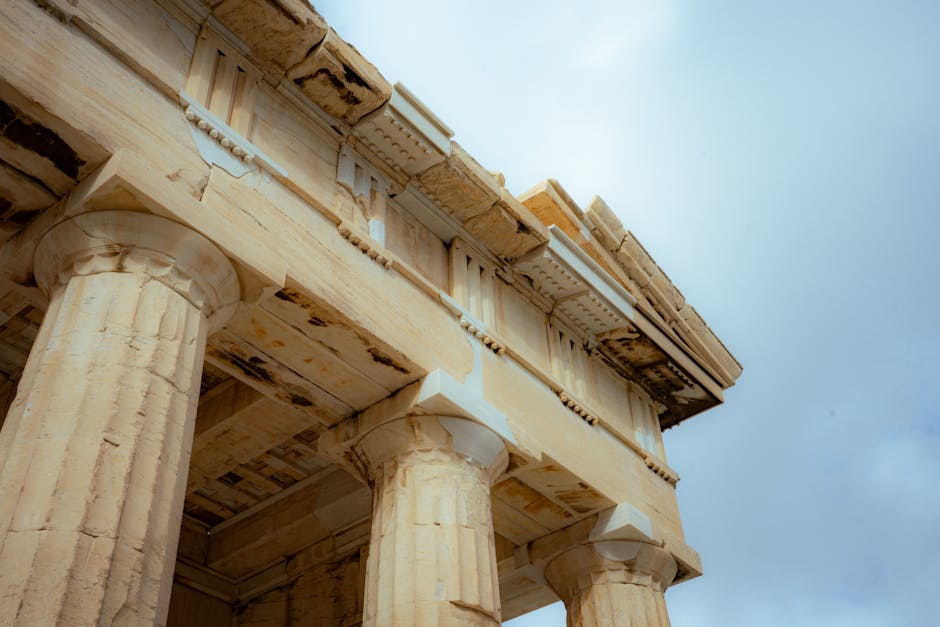
Explore the 'Athens of the South' on this self-guided walk through Centennial Park, featuring the world's only full-scale Parthenon replica.
 Easy
EasyNashville, United States
Explore Nashville's academic heart and Art Deco gems on this self-guided walk through historic Hillsboro Village.
 Easy
EasyNashville, United States
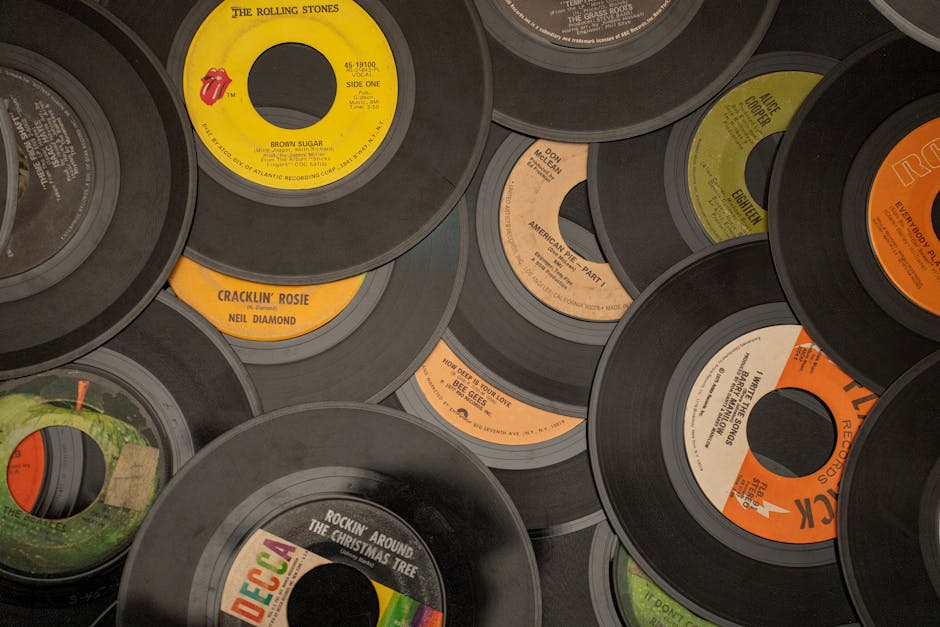
Explore the heart of Nashville's music industry. Discover iconic studios and the history of the legendary Nashville Sound at your own pace.
 Easy
EasyNashville, United States
Explore Nashville's oldest neighborhood! Discover Victorian architecture, Civil War history, and world-class craft beer on this self-guided walk.