Self-guided audio tour in Ljubljana
Start Free on iPhone
Start free on iPhone to unlock this self-guided walking tour in Ljubljana. Hear all the stories that make it amazing, walk at your own pace, and begin whenever you want.
Your Private Tour Guide
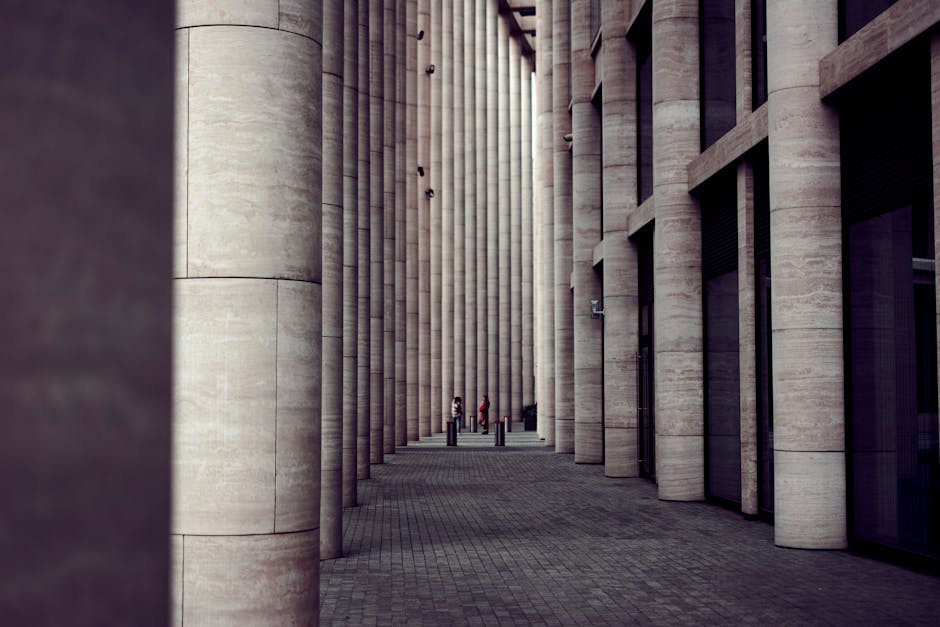
Step away from the pastel-colored Baroque facades of the Old Town and enter a world of raw concrete, geometric precision, and utopian ambition. This self-guided walk invites you to explore the 'Concrete Dreams' of Ljubljana, focusing on the fascinating period of Socialist Modernism that reshaped the city’s skyline following World War II. During the mid-20th century, architects like Edvard Ravnikar—a student of the legendary Le Corbusier—sought to create a new architectural language for a modern, socialist Slovenia within the Yugoslav federation. This walking route takes you through the Government District, where the scale of the buildings reflects the grand aspirations of the era. As you begin your self-guided adventure, you will discover how Ljubljana’s planners used architecture to communicate power, culture, and progress. You will traverse Republic Square, the symbolic heart of Slovenian statehood, and stand between the towering TR3 and Ljubljanska Banka buildings, which serve as a monumental gateway to the city. The route highlights the intricate relationship between traditional Slovenian motifs and the international Brutalist style, particularly visible in the sculptural details of the Parliament Building and the innovative design of the Kozolec residential block. This stroll is more than just an architectural survey; it is a journey through the political and social history of the 20th century. You will see how the Cankar Center was integrated into the urban fabric as a cultural cathedral and how Hotel Lev brought a touch of international modernism to the city's hospitality scene. Exploring independently allows you to notice the small details—the texture of the poured concrete, the rhythm of the ribbon windows, and the symbolic bronze figures that guard the halls of government. Whether you are an architecture enthusiast or a history buff, this neighborhood stroll offers a unique perspective on how Ljubljana transitioned from a provincial town into a modern European capital. This walking tour Ljubljana experience provides a perfect counterpoint to the more traditional tourist paths, revealing the bold, structural beauty that defines the city's recent past.
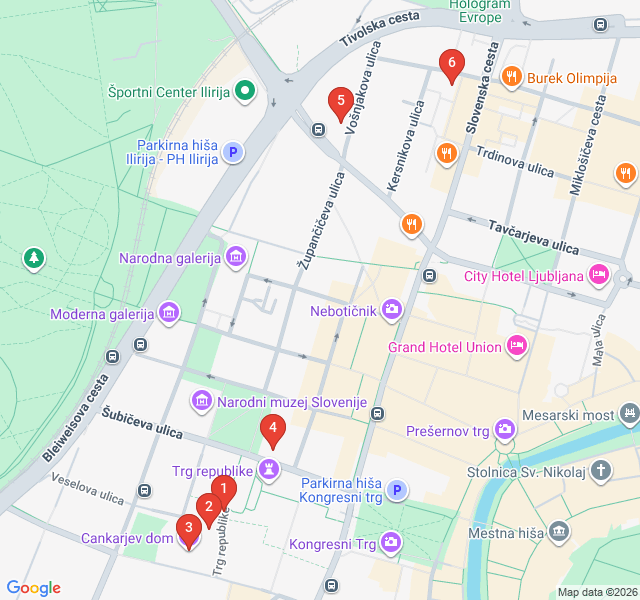
Numbers indicate the order of stops on the tour.
Welcome to Republic Square, the vast ceremonial heart of Ljubljana. Designed primarily by Edvard Ravnikar, this space was intended to be the center of Slovenian political life. Its massive scale is typical of socialist urban planning, designed to host large public gatherings. It was right here in 1991 that Slovenia’s independence from Yugoslavia was officially proclaimed. Notice how the square is paved; the stones were specifically chosen to create a neutral, open canvas for the surrounding monumental buildings. Take a moment to look at the 'Revolution' monument on the edge of the square—a jagged, bronze sculpture that typifies the expressive, abstract art style favored in the Yugoslav era.
Standing before the TR3 Tower, you are looking at one of the most significant examples of Brutalist architecture in the region. Designed by Ravnikar and completed in the 1970s, this tower and its twin, the Ljubljanska Banka, were envisioned as a 'city gate.' The TR3 is famous for its triangular floor plan and its raw concrete exterior, which showcases the 'honesty of materials' central to the modernist movement. Ravnikar was a student of Le Corbusier, and you can see that influence in the way the building sits on 'pilotis' or columns, creating an open, airy feeling at the ground level despite the massive weight of the structure above.
The Cankar Center is Slovenia’s premier cultural and congress hub. It is a masterpiece of 'hidden' architecture, as a large portion of the complex is actually built underground to avoid overwhelming the square above. Ravnikar integrated the building into the existing urban fabric with incredible precision. The exterior is clad in white marble from the Yugoslav island of Brač, providing a bright contrast to the grey concrete of the nearby towers. It was designed to be a 'cathedral of culture,' housing concert halls, theaters, and galleries. The way the building interacts with the square reflects the socialist ideal of bringing high culture to the masses in a central, accessible location.
The Parliament Building, or the People's Assembly, offers a slightly different take on modernism. Designed by Vinko Glanz and completed in 1959, it lacks the raw concrete 'Brutalist' feel of the TR3, opting instead for a more classical, austere facade. However, the true highlight is the main portal. Look closely at the bronze statues surrounding the entrance; they depict the 'working people'—miners, farmers, and builders—representing the socialist ideology of the time. The interior, though rarely open to the public, is a treasure trove of Slovenian materials, featuring local marbles and woods, symbolizing the self-sufficiency and pride of the republic.
Hotel Lev was a symbol of Ljubljana's growing international status in the 1960s. At the time of its construction, it was the most modern hotel in the city, designed to accommodate foreign dignitaries and business travelers. Its clean lines and functionalist design marked a departure from the more decorative pre-war hotels. The name 'Lev' means 'Lion,' and for decades, this was the place to see and be seen in the city. It represents the 'commercial' side of Socialist Modernism—showing that even in a socialist state, there was a desire for international-style luxury and modern amenities.
Our final stop is the Kozolec Building, designed by Edo Mihevc. The name 'Kozolec' refers to the traditional Slovenian hayrack, a wooden structure used for drying grain. Mihevc took this traditional agricultural form and translated it into a modern residential block. Notice the long, horizontal 'ribbon windows' and the open ground floor—clear nods to Le Corbusier’s 'Five Points of Architecture.' This building was a radical departure for Ljubljana's housing, offering bright, modern apartments in the heart of the city. It remains one of the most iconic examples of how Slovenian architects blended local identity with the global language of modernism.
Start Free on iPhone
Explore “Concrete Dreams: Socialist Modernism Walk” with your very own Private Tour Guide with Zigway. Start free on iPhone, skip the large group and the fixed routes, and hear the city come alive as you go.
Your Private Tour Guide
Don't miss the good stuff
Explore Freely
 Easy
EasyLjubljana, Slovenia
Explore the vibrant street art and counter-culture of Metelkova Mesto on this self-guided walk through Ljubljana's alternative art district.
 Moderate
Ljubljana, Slovenia
Discover the mythical heart of Ljubljana on this self-guided walk featuring dragon legends, Baroque fountains, and medieval castle heights.
 Moderate
Ljubljana, Slovenia
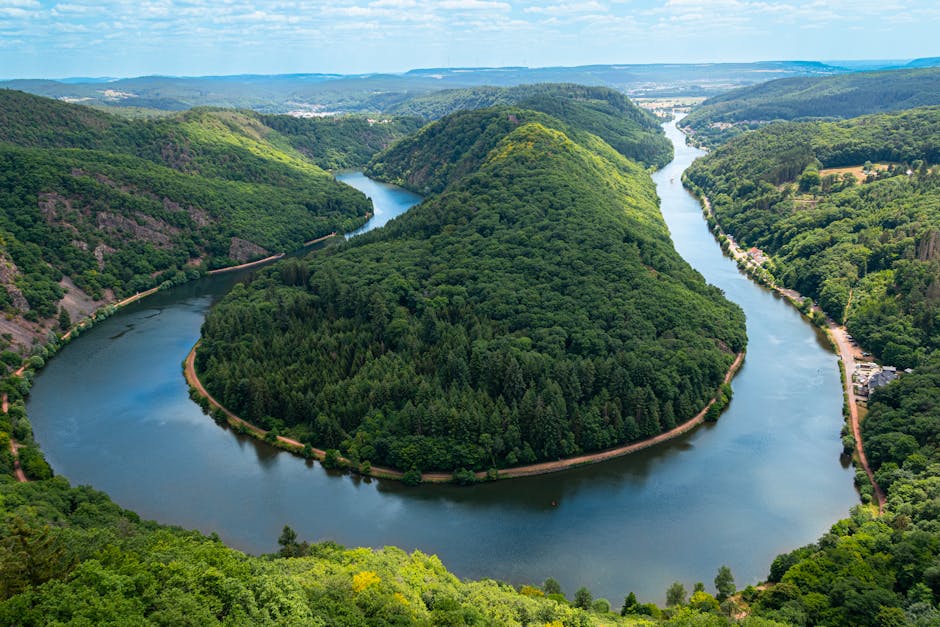
Explore the green heart of Ljubljana on this self-guided walk featuring panoramic views, medieval stairs, and hidden forest paths.
 Easy
EasyLjubljana, Slovenia
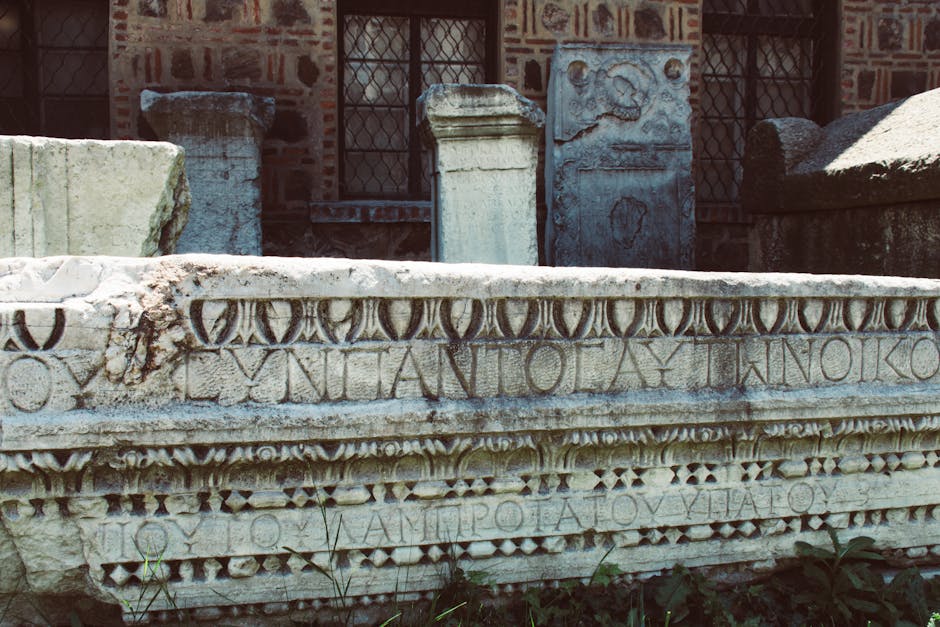
Step back 2,000 years to explore the ruins of Emona, from ancient forums and mosaics to the grand Roman Wall reimagined by Jože Plečnik.
 Easy
EasyWarsaw, Poland
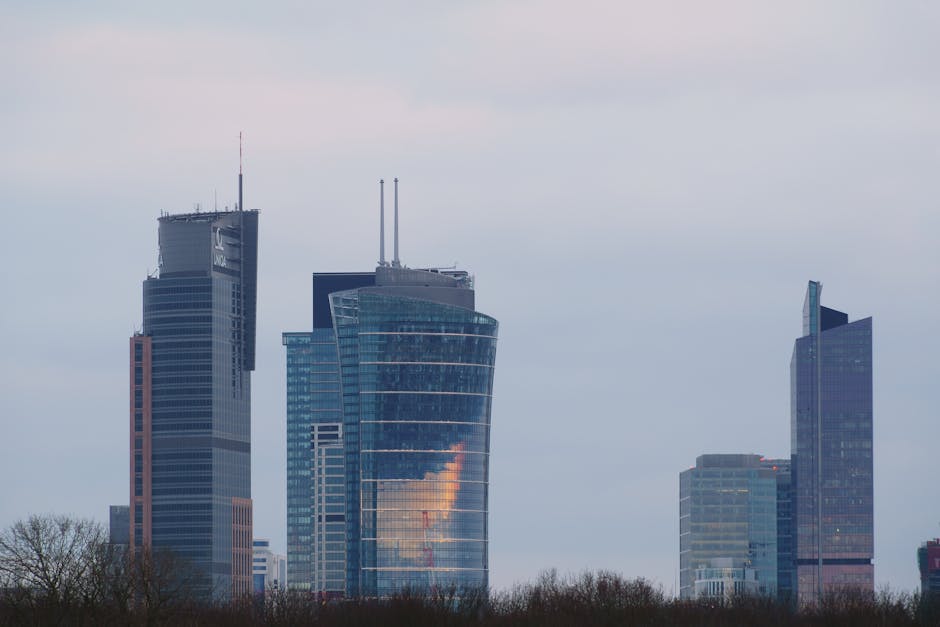
Discover the hidden courtyards and grand pre-war architecture of Warsaw's most atmospheric neighborhood on this self-guided stroll.
 Easy
EasySalzburg, Austria
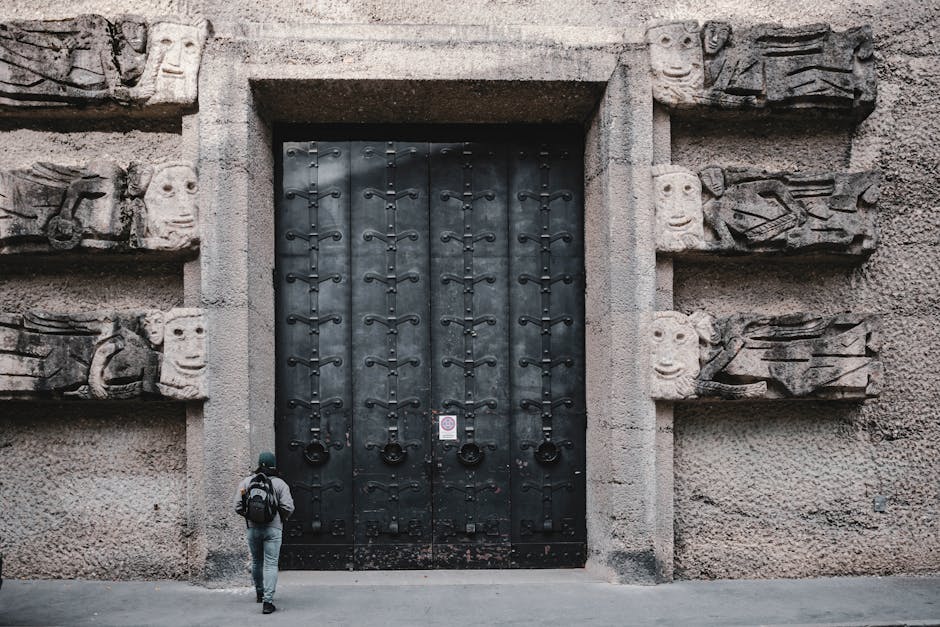
Discover Salzburg's oldest medieval alley, the birthplace of the 'Silent Night' author, and breathtaking views on this quiet self-guided walk.
 Easy
EasyHelsinki, Finland
Discover Helsinki's oldest neighborhood on this self-guided audio walk through Kruununhaka’s historic streets, hidden courtyards, and scenic shores.
 Easy
EasyNairobi, Kenya
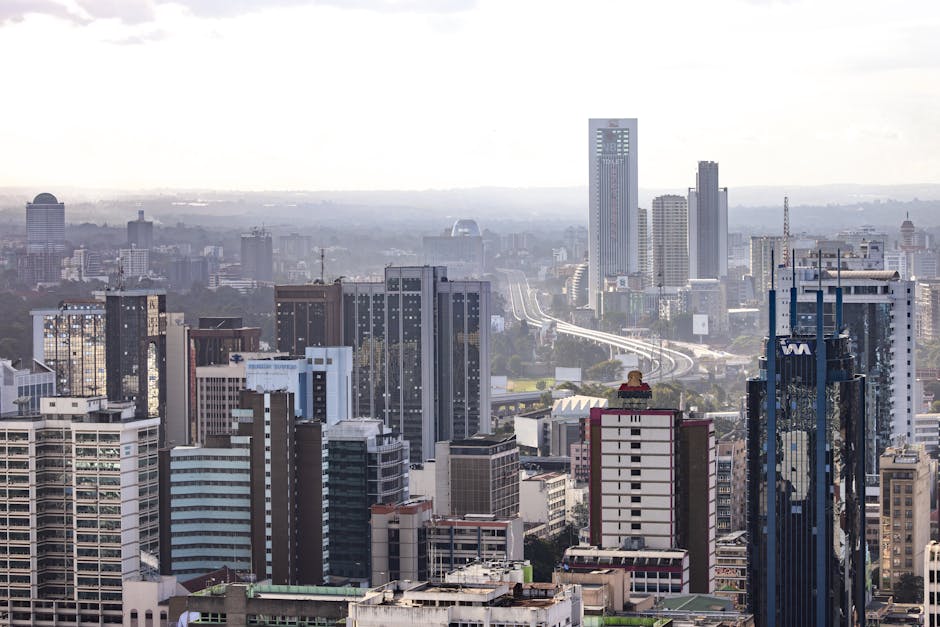
Discover Nairobi's iconic skyline on this self-guided architecture walk through the CBD’s most famous modernist and Brutalist landmarks.