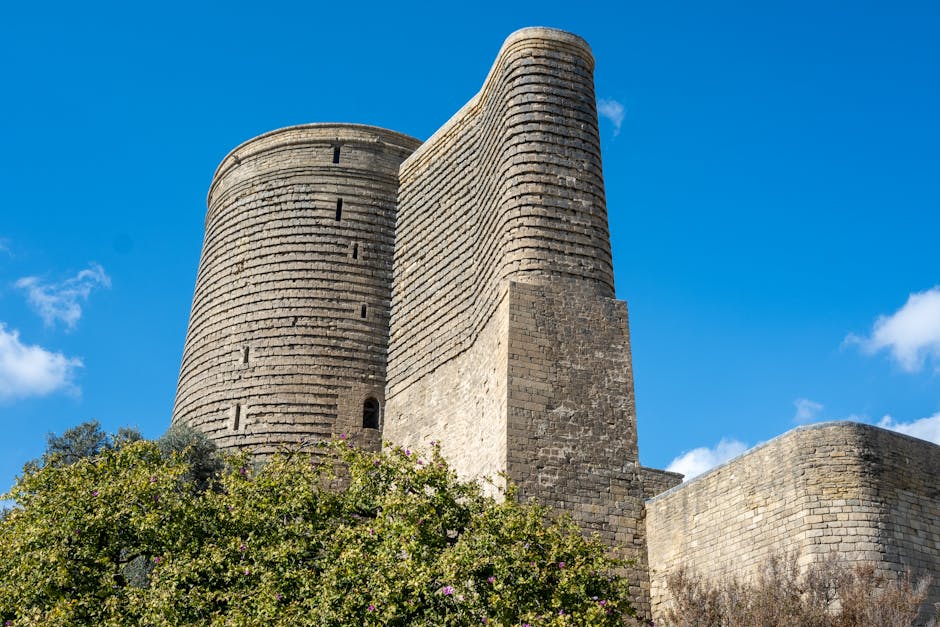
Self-guided audio tour in Tallinn
Start Free on iPhone
Start free on iPhone to unlock this self-guided walking tour in Tallinn. Hear all the stories that make it amazing, walk at your own pace, and begin whenever you want.
Your Private Tour Guide
Step back into the Middle Ages with a self-guided walk along the formidable defensive perimeter of Tallinn’s Old Town, one of the most complete medieval fortification systems in Northern Europe. This walking route invites you to explore the stone sentinels that have protected this Hanseatic gem for over seven centuries. As you traverse the boundary between the lower town and the modern city, you will encounter a landscape defined by limestone walls, conical red-tiled roofs, and heavy wooden gates that once controlled the flow of trade and defense. This exploration focuses on the evolution of military architecture, from the early curtain walls to the massive cannon towers of the late medieval period. Starting at the iconic Viru Gate, the symbolic entrance to the historic center, you will proceed to discover sections of the wall where you can still walk the ramparts and look out over the charming terracotta rooftops. The route highlights the strategic ingenuity of the Teutonic Knights and the wealthy merchant classes who funded these massive works. You will see how the defenses adapted to the invention of gunpowder, culminating in the massive diameter of Fat Margaret, a tower designed to intimidate any fleet approaching from the Baltic Sea. Throughout this self-guided adventure, the history of Tallinn comes alive through the stones themselves. You can set your own pace, stopping to photograph the dramatic silhouettes of the towers against the Estonian sky or venturing inside specific museums housed within the fortifications. Whether you are a fan of medieval history or simply seeking the most photogenic corners of the city, this walking tour Tallinn offers provides a comprehensive look at the structures that earned the city its UNESCO World Heritage status. By the end of this neighborhood stroll, you will have a deep appreciation for the engineering and endurance of Tallinn's defensive legacy.
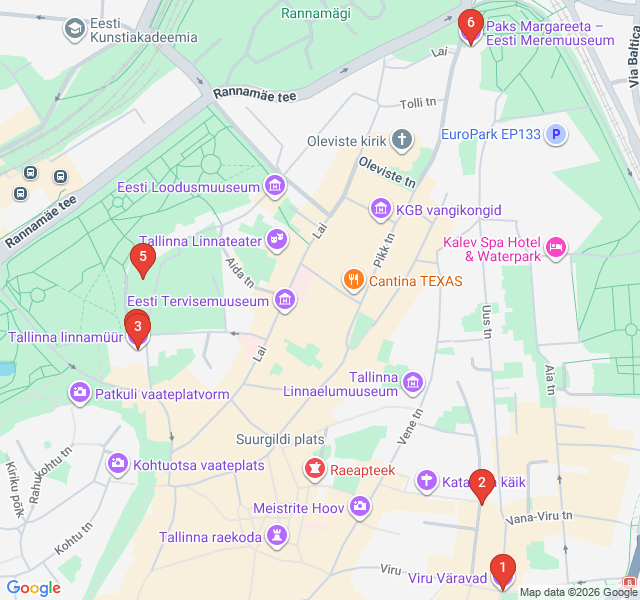
Numbers indicate the order of stops on the tour.
Welcome to the symbolic entrance of Tallinn's Old Town. These twin towers, topped with their distinctive red conical roofs, were once part of a much larger gate system built in the 14th century. Originally, the Viru Gate featured a massive portcullis and a drawbridge over a moat. While most of the complex was demolished in the 1880s to make way for traffic, these two fore-towers were preserved and have since become the most recognizable image of the city. As you stand here, imagine the medieval merchants and peasants who had to pass through rigorous checks to enter the lower town. Today, the gate serves as a threshold between the bustling modern city and the preserved medieval world within.
The Hellemann Tower offers a fascinating glimpse into the life of a medieval sentry. Dating back to the 14th century, this three-story tower has served various roles over the years, including a prison and an ammunition storehouse. What makes this stop unique is the 200-meter stretch of the original town wall that is accessible from here. Walking along the wooden gallery of the ramparts, you can experience the same vantage point that defenders had centuries ago. Notice the thickness of the walls—often reaching up to three meters—designed to withstand both the elements and the impact of early siege engines. The view from the top provides a stunning perspective of the Old Town's dense layout.
As you continue along this section of the fortifications, notice the rhythm of the wall's design. The towers were strategically placed within bowshot of each other, ensuring there were no blind spots for attackers to exploit. This specific walkway highlights the Hanseatic wealth of Tallinn; only a truly prosperous trade hub could afford such extensive and well-maintained defenses. The limestone used for construction was quarried locally, giving the city its characteristic grey hue. Look for the small arrow slits and broader openings for cannons, which show how the wall was continuously upgraded as military technology evolved from crossbows to gunpowder through the 15th and 16th centuries.
The Nunne Tower, or 'Nun's Tower,' gets its name from the nearby Cistercian St. Michael’s Nunnery. This tower is part of a particularly picturesque cluster of three towers: Nunne, Sauna, and Kuldjala. This section of the wall is remarkably well-preserved and showcases the 'Plateau' style of defense. The towers here are horseshoe-shaped, with the flat side facing the city, which allowed defenders to pull up supplies easily while presenting a rounded, deflective surface to enemies outside. During the Middle Ages, the area around this tower was bustling with religious life, contrasting sharply with the martial purpose of the stone structures you are exploring today.
The Kuldjala Tower, which translates to 'Golden Leg,' is one of the most sturdy and impressive structures in this northern section of the wall. Its name's origin is a bit of a mystery—some say it refers to a wealthy protector, while others suggest it relates to the valuable equipment stored within. Spread across five floors, the tower was a key strongpoint in the city's northwestern defense. From the interior side, you can see how the wall integrates with the natural elevation of the land. This tower has survived numerous sieges and fires over the centuries, standing as a testament to the durability of Estonian limestone and medieval engineering techniques.
We conclude our route at the most massive of all Tallinn's towers: Fat Margaret. Built in the early 16th century, this cannon tower was designed not just for defense, but to impress visitors arriving by sea. With walls up to five meters thick and a diameter of 25 meters, it was a formidable obstacle for any invader. It guarded the Great Coastal Gate, the city's main maritime entrance. The tower has served as a gunpowder store, a prison, and now a maritime museum. Its name likely comes from its stout proportions or perhaps a legendary cook who once worked here. From this vantage point, the proximity to the Baltic Sea is clear, explaining why such a massive fortress was necessary to protect Tallinn's lucrative port.
Start Free on iPhone
Explore “Defensive Walls: Towers and Ramparts” with your very own Private Tour Guide with Zigway. Start free on iPhone, skip the large group and the fixed routes, and hear the city come alive as you go.
Your Private Tour Guide
Don't miss the good stuff
Explore Freely
 Easy
EasyTallinn, Estonia
Uncover the myths and merchant history of Tallinn's Lower Town on this immersive self-guided stroll through medieval streets.
 Moderate
Tallinn, Estonia
Explore the raw, creative energy of Tallinn's Kopli peninsula on this self-guided walk through industrial ruins and modern art hubs.
 Moderate
Tallinn, Estonia
Uncover the chilling legends and ghostly tales of medieval Tallinn on this atmospheric self-guided audio walk through the Old Town.
 Easy
EasyTallinn, Estonia
Discover imperial palaces and serene gardens on this self-guided walk through Tallinn’s historic Kadriorg district.
 Easy
EasyNairobi, Kenya
Discover Nairobi's iconic skyline on this self-guided architecture walk through the CBD’s most famous modernist and Brutalist landmarks.
 Easy
EasyNairobi, Kenya
Explore Nairobi's architectural evolution from colonial-era landmarks to iconic Brutalist skyscrapers on this historic self-guided walking route.
 Moderate
Vienna, Austria
Discover the noir world of The Third Man and Cold War Vienna on this atmospheric self-guided audio walk through the historic Innere Stadt.
 Easy
EasyGdansk, Poland
Discover the opulent Royal Way of Gdansk at your own pace. Explore Hanseatic history, gilded architecture, and the iconic Neptune's Fountain.