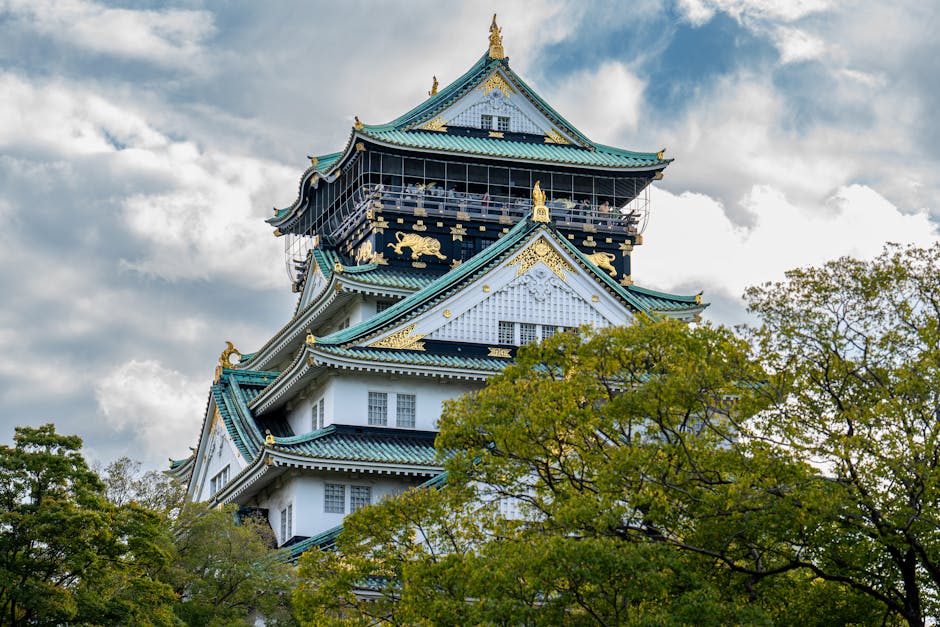
Self-guided audio tour in Osaka
Start Free on iPhone
Start free on iPhone to unlock this self-guided walking tour in Osaka. Hear all the stories that make it amazing, walk at your own pace, and begin whenever you want.
Your Private Tour Guide
Escape the neon-lit frenzy of Dotonbori and step into a landscape of ancient spirituality and towering camphor trees. This self-guided walk through Sumiyoshi invites you to explore one of Japan’s oldest and most unique religious sites. Unlike many shrines influenced by mainland Asian architecture, Sumiyoshi Taisha showcases 'Sumiyoshi-zukuri,' a purely Japanese architectural style that predates the arrival of Buddhism in the 6th century. This neighborhood stroll captures the transition from the modern Nankai railway line into a sanctuary that has protected sailors and travelers for over 1,800 years. As you begin your self-guided adventure, you will encounter the iconic Sorihashi Bridge, a steep, vermilion-colored 'Drum Bridge' that creates a perfect circle when reflected in the water below. Beyond the bridge lies a complex of four main halls, uniquely positioned to face the sea. The route is not just about grand structures; it also reveals intimate local traditions. You can participate in the search for sacred pebbles at Goshogo-zen or wander through the historic Sumiyoshi Park, which was once a pine-covered shoreline where poets gathered to write. This walking route Osaka offers a peaceful alternative to the city's crowded shopping districts, focusing instead on the harmony between nature and Shinto belief. The journey concludes in the surrounding neighborhood, where the pace remains slow and traditional. You will have the chance to visit a local confectionery that has been serving pilgrims for generations, offering a taste of Osaka that feels frozen in time. Whether you are interested in the evolution of Japanese architecture or simply looking for a quiet morning in a sacred grove, this audio walk provides the context and history needed to appreciate one of the nation's most revered cultural treasures.
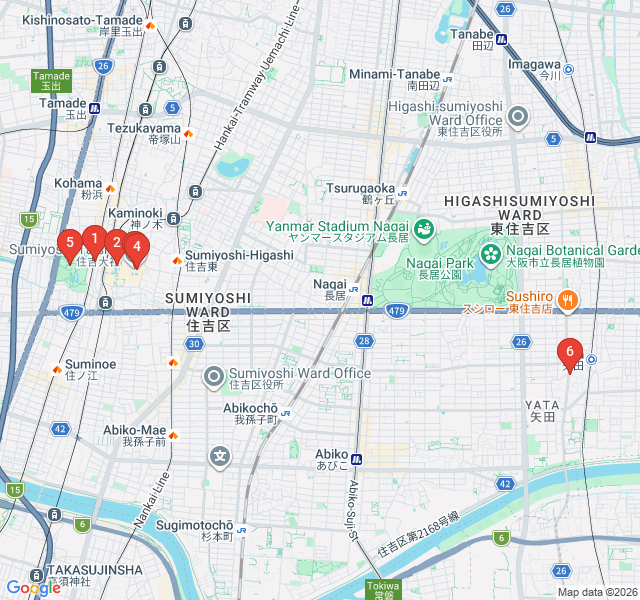
Numbers indicate the order of stops on the tour.
Your self-guided adventure begins at Sumiyoshi Taisha Station on the Nankai Main Line. This station serves as the modern gateway to an ancient world. As you exit, notice how the urban landscape of Osaka immediately begins to soften. This area has been a major pilgrimage destination for centuries. Before the land was reclaimed for the city you see today, the sea reached nearly to the shrine's gates. Travelers would arrive here by boat or via the Kishu Kaido, an important coastal road connecting Osaka to the spiritual centers of the south. Take a moment to orient yourself toward the large stone torii gate in the distance, which marks the entrance to the sacred grounds.
Standing before you is the Sorihashi Bridge, often called the 'Drum Bridge.' Its steep, high arch is one of the most photographed spots in Osaka. Legend says the bridge was originally gifted by Lady Yodo, the wife of Toyotomi Hideyoshi, in the early 17th century. The extreme curvature of the bridge is symbolic; it represents a rainbow connecting the earth to the heavens. Crossing the bridge is considered a ritual of purification, as the high climb and descent are meant to cleanse the soul before entering the inner shrine. Look into the pond below to see the reflection form a perfect circle, and keep an eye out for the many turtles that call these waters home.
You are now entering the heart of the complex. Unlike most Shinto shrines, Sumiyoshi Taisha consists of four main halls. The first three are arranged in a straight line, like a fleet of ships heading out to sea, while the fourth stands to the side. These halls are built in the 'Sumiyoshi-zukuri' style, characterized by straight roofs and crossed finials called 'chigi.' This style is incredibly rare because it predates the curved roofs introduced by Buddhist architecture from China. The deities enshrined here protect seafarers and travelers, which is why you will see many stone lanterns donated by shipping companies and sailors throughout the centuries.
Tucked away behind the main halls is a small stone-fenced area known as Goshogo-zen. This is one of the most popular spiritual spots on the grounds. Look closely at the pebbles inside the enclosure; many have characters written on them in ink. Visitors search through the stones to find three specific pebbles marked with the kanji for 'Go' (Five), 'Sho' (Fortune), and 'Go' (Power). It is said that if you find all three and keep them as a set, your wishes will come true. This tactile tradition connects visitors directly to the sacred earth of the shrine, making it a favorite stop for locals and travelers alike.
Step across the street to Sumiyoshi Park, which opened in 1873 and is recognized as the oldest public park in Osaka. Long before it was a park, this area was famous for its 'Sumiyoshi-no-matsu' or pine groves. In ancient times, the coastline was right here, and the white sands and twisted pines were a favorite subject for classical Japanese poets. Today, the park offers a peaceful buffer between the shrine and the city. As you wander the paths, look for the tall stone lanterns that once functioned as lighthouses for ships entering the harbor. It is a perfect place to reflect on the deep history of the region.
To conclude your neighborhood stroll, visit Satsumaya, a traditional confectionery located just a short walk from the shrine. This shop has a long history of serving 'Shiratama-mochi' and other seasonal Japanese sweets to pilgrims and locals. The refined sweetness of the red bean paste and the chewy texture of the rice cakes provide a perfect end to your journey. Sampling these treats is a way to support the local community that has preserved the traditions of Sumiyoshi for generations. From here, you can easily walk back to the station or continue exploring the quiet residential streets of this historic district.
Start Free on iPhone
Explore “Sacred Groves of Sumiyoshi Taisha” with your very own Private Tour Guide with Zigway. Start free on iPhone, skip the large group and the fixed routes, and hear the city come alive as you go.
Your Private Tour Guide
Don't miss the good stuff
Explore Freely
 Moderate
Osaka, Japan
Discover the soul of Osaka on this self-guided walk through the hidden markets of Tsuruhashi, the neon of Namba, and the scale of Umeda.
 Easy
EasyOsaka, Japan
Explore Osaka's futuristic skyline, from the iconic Umeda Sky Building to hidden shrines, on this self-guided architectural walking route.
 Easy
EasyOsaka, Japan
Explore Osaka's 'American Village' on this self-guided walk through street art, vintage fashion, and the heart of Japanese youth culture.
 Easy
EasyOsaka, Japan
Explore the retro charm and neon-lit alleys of Shinsekai on this self-guided walk through Osaka's most nostalgic district.
 Easy
EasyNairobi, Kenya
Explore Nairobi's architectural evolution from colonial-era landmarks to iconic Brutalist skyscrapers on this historic self-guided walking route.
 Easy
EasyNairobi, Kenya
Discover Nairobi's iconic skyline on this self-guided architecture walk through the CBD’s most famous modernist and Brutalist landmarks.
 Easy
EasyKrakow, Poland
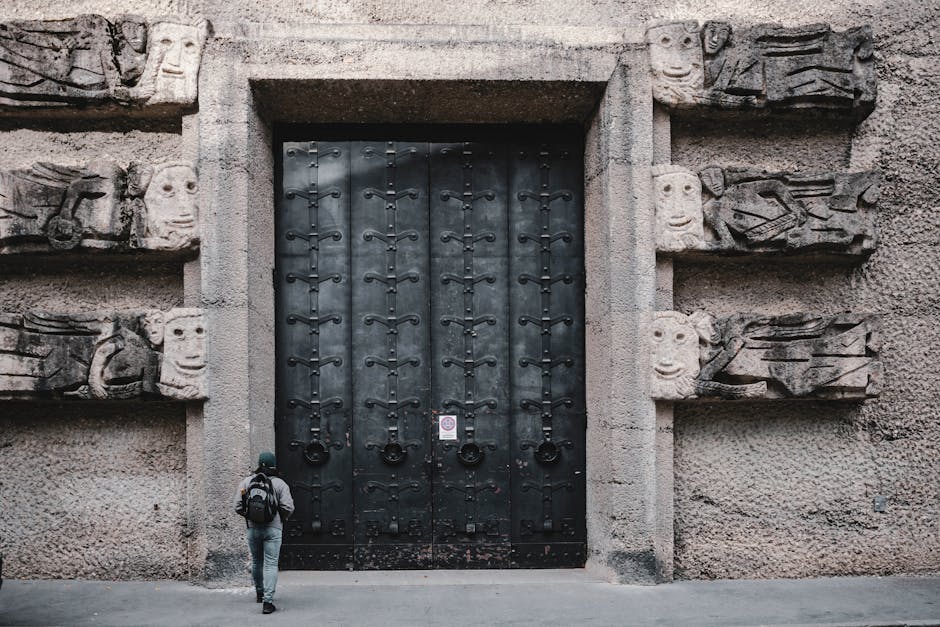
Explore the historic heart of Kazimierz on this self-guided walk through synagogues, ancient cemeteries, and vibrant squares.
 Easy
EasySalzburg, Austria
Discover the 'Rome of the North' on this self-guided walk through the Baroque squares and monumental legacy of Salzburg’s Prince-Archbishops.
 Moderate
Tokyo, Japan
Discover Tokyo's premier creative district on this self-guided walk through Roppongi’s world-class museums and striking modern architecture.
 Easy
EasyTokyo, Japan
Discover the 'Old Tokyo' charm of Yanaka on this self-guided walk through historic temples, artisan alleys, and a stunning torii gate shrine.
 Easy
EasyTokyo, Japan
Experience Shibuya's electric energy on this self-guided walk from the iconic Scramble Crossing to the panoramic views of Shibuya Sky.
 Easy
EasyTokyo, Japan
Explore Tokyo's indie heart. From vintage fashion in Shimokitazawa to world-class art in Shinjuku, discover the city's creative soul independently.