Self-guided audio tour in Lyon
Start Free on iPhone
Start free on iPhone to unlock this self-guided walking tour in Lyon. Hear all the stories that make it amazing, walk at your own pace, and begin whenever you want.
Your Private Tour Guide
Discover the layers of Lyon's past on this expansive self-guided walk that bridges the gap between the bustling historic center and the serene, mystical atmosphere of Île Barbe. This route is designed for those who want to see the 'real' Lyon, moving beyond the standard tourist paths to explore hidden passages, Roman ruins, and lush green escapes. You will begin in the heart of the Renaissance district, navigating the famous 'traboules'—secret corridors used by silk merchants—before climbing the hills for panoramic views that most visitors miss. As you progress, the path transitions from the urban density of the Presqu'île and the slopes of Croix-Rousse to the sprawling beauty of the Parc de la Tête d'Or. The true reward of this walking route lies at its northern tip: the Île Barbe. This island in the middle of the Saône River feels like a step back in time, home to the remnants of a powerful 5th-century abbey and a quiet village atmosphere that contrasts sharply with the city center. Along the way, you will encounter the Amphitheater of the Three Gauls, where history was written in the Roman era, and the creative energy of Les SUBS, a former military site turned cultural hub. This neighborhood stroll offers a perfect blend of architectural grandeur, industrial heritage, and natural beauty. Whether you are interested in the legends of the Druids on the island or the revolutionary history of the silk workers in the city, this audio walk provides the context you need to experience Lyon independently and at your own pace.
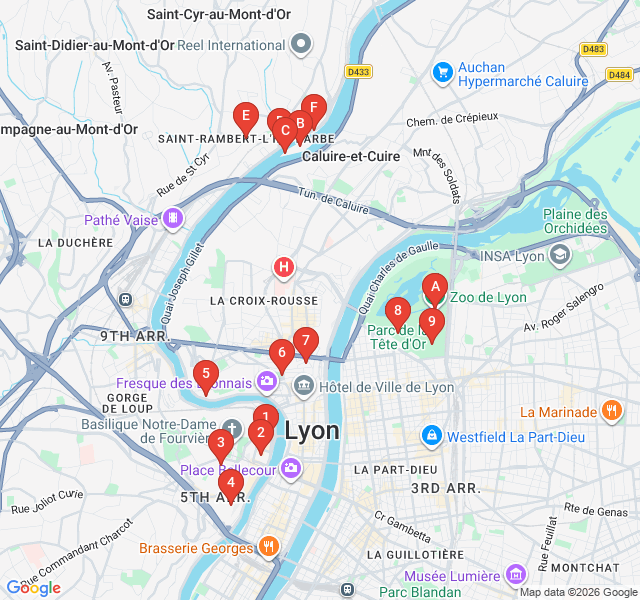
Numbers indicate the order of stops on the tour.
Welcome to the start of your self-guided adventure in Vieux Lyon. You are standing amidst one of the largest Renaissance districts in Europe. The 'traboules' you see here are more than just alleys; they are secret passages that allowed silk workers to transport their precious fabrics protected from the rain. As you explore these corridors, notice the Italian influence in the architecture—a nod to the wealthy Florentine bankers who once called this area home. These hidden paths played a vital role during the French Resistance in WWII, providing cover for those evading capture.
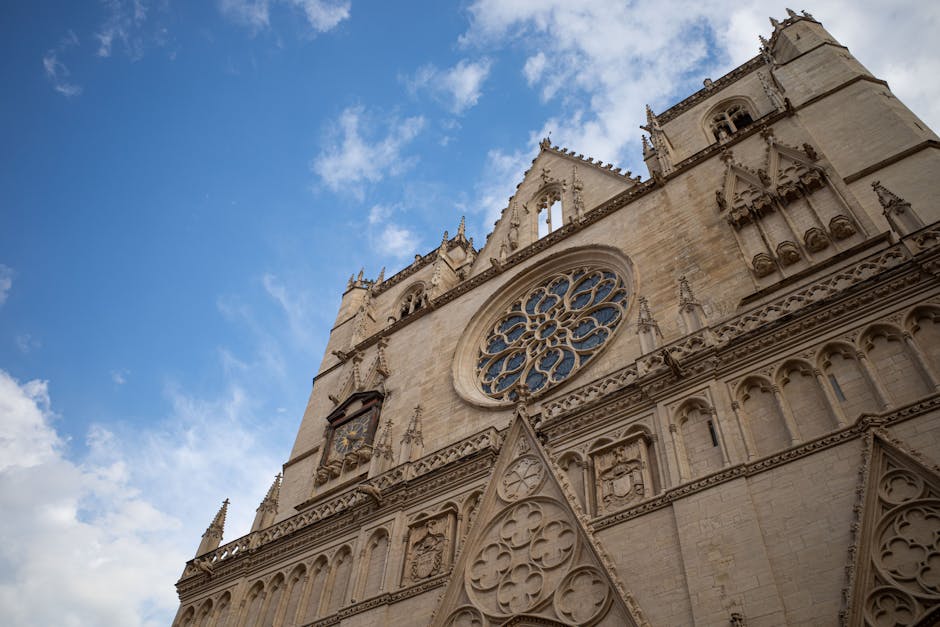
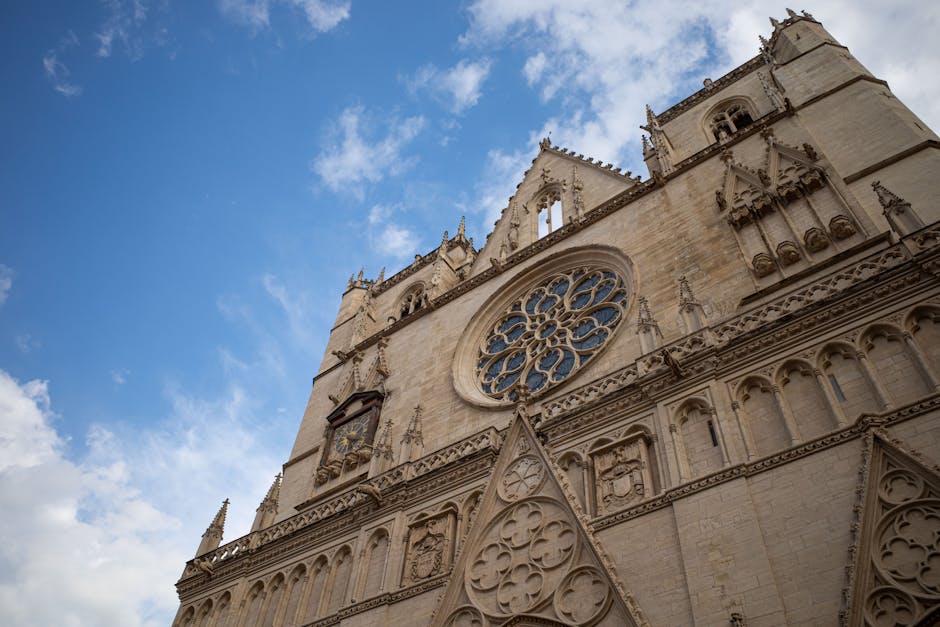
This stunning cathedral is a masterclass in the transition from Romanesque to Gothic architecture. Built between 1180 and 1480, it houses a remarkable 14th-century astronomical clock. If you time your visit right, you might see the clock’s automated figures perform. The cathedral has been the site of major historical events, including the marriage of King Henry IV of France to Marie de' Medici. Take a moment to appreciate the intricate stained glass, some of which dates back to the 12th century, before we begin our ascent toward the Roman ruins.
Perched on the Fourvière hill, these two theaters are among the most significant Roman remains in France. The Great Theater, built around 15 BC, could once hold 10,000 spectators. Imagine the roar of the crowd during ancient performances. Adjacent is the smaller Odeon, used for music and poetry. This site marks the spot where the Roman city of Lugdunum was founded. Even today, the acoustics remain so perfect that the theaters are still used for the 'Nuits de Fourvière' festival every summer. It is a powerful reminder of Lyon's 2,000-year history.
This hidden gem is a local favorite, often missed by those on a standard walking tour of Lyon. Gifted to the city by Montreal to mark the 20th anniversary of their twinning, this small park offers one of the most unique vantage points over the city. Look for the six chairs bolted to the ground, each offering a different 'frame' of the cityscape. It is a peaceful spot to catch your breath and see the sprawl of the city from the Saône to the Alps on a clear day.
As we descend toward the river, we find Les SUBS. This site has lived many lives: first as a 17th-century convent, then as military barracks for the French Army. Today, it has been reclaimed as a vibrant center for contemporary art and circus performance. The massive metal canopy in the courtyard is a modern architectural landmark. It represents Lyon's ability to repurpose its industrial and military heritage into creative spaces for the community. Check the posters near the entrance to see what experimental performances might be happening today.
This site is heavy with history. Built in 19 AD, this amphitheater was the meeting place for delegates from the 60 Gallic tribes. However, it is also known as the site of the first Christian martyrdoms in Gaul in 177 AD. Only a portion of the original structure remains, but standing here, you can feel the weight of the Roman Empire's presence in Lyon. It was once the centerpiece of a massive federal sanctuary dedicated to Rome and Augustus.
Located on the slopes of Croix-Rousse, the Cour des Voraces features one of the most iconic staircases in Lyon. This was a stronghold for the 'Canuts'—the silk weavers. The name 'Voraces' comes from a group of workers who were famous for their republican ideals and their role in the 1848 revolution. The architecture here is functional; the high ceilings were designed to accommodate the massive Jacquard looms. This traboule is a symbol of the city's labor history and its spirit of resistance.
Welcome to the 'Green Lung' of Lyon. This 117-hectare park is one of the largest urban parks in France. Legend says a golden head of Christ is buried somewhere on these grounds, giving the park its name. Designed in the 19th century, it was intended to provide nature for those who didn't have gardens. It’s a perfect place to observe local life, from joggers to families. The lake, the winding paths, and the century-old trees offer a refreshing break from the stone streets of the city center.
Located within the park, this botanical garden is a world-class institution. It manages over 15,000 plant species. The historic greenhouses are architectural beauties in their own right, housing tropical plants, camellias, and carnivorous species. The garden plays a vital role in international conservation, working to protect endangered flora. Whether you are a plant enthusiast or just looking for a quiet stroll, the variety of landscapes—from the Alpine garden to the rose garden—is truly captivating.
Surprisingly, this zoo is free to the public and is part of the city's commitment to education and conservation. The 'African Plain' is a highlight, where giraffes, zebras, and lemurs roam in a shared habitat. The zoo has moved away from old-fashioned cages toward large, naturalistic enclosures. It’s a testament to Lyon's forward-thinking approach to public spaces, ensuring that nature and wildlife are accessible to every citizen, regardless of their budget.
We have reached the mystical Île Barbe. In the 5th century, this was home to one of the most powerful abbeys in the region. Legend says that Charlemagne himself visited and even considered being buried here. The name 'Barbe' comes from 'Insula Barbara'—the Wild Island—suggesting it was a site of Druidic worship before the Christians arrived. Today, only parts of the Romanesque abbey remain, but the aura of ancient mystery is still palpable among the stones and the quiet, narrow streets of the island.
This suspension bridge is the oldest in Lyon still in use, dating back to 1827. Crossing it feels like leaving the modern city behind. As you walk across, look down at the Saône River. The island was once a strategic point for controlling river traffic. The bridge's elegant ironwork and the way it frames the island's greenery make it a favorite spot for photographers. It serves as the gateway between the bustling city and the village-like atmosphere of Saint-Rambert.
This square is the heart of the Saint-Rambert neighborhood. It feels more like a small French village than a district of a major metropolis. Surrounded by golden stone buildings and shaded by plane trees, it is the perfect place to see the slower side of Lyonnais life. Historically, this area was outside the city walls and served as a retreat for the wealthy. Today, it retains that sense of exclusivity and calm, far removed from the traffic of the city center.
This church is a beautiful example of Romanesque architecture, echoing the style of the original abbey on the island. While much of the structure was rebuilt in the 19th century, it stands on very ancient foundations. The interior is simple and contemplative, reflecting the monastic history of the area. It serves as a spiritual anchor for the neighborhood and a reminder of the long-standing religious significance of this bend in the Saône River.
We conclude our self-guided walk along the banks of the Saône. Quai Raoul Carrié offers a peaceful perspective on the island and the river. From here, you can see how the water has shaped the history of Lyon, from a Roman trade hub to a modern city of light. The path along the river is part of a larger network of 'Rives de Saône' trails designed for walking and cycling. It’s a fitting place to reflect on the journey from the dense traboules of Vieux Lyon to this tranquil riverside escape.
Start Free on iPhone
Explore “The Secrets of Île Barbe: A Mystical Island Escape” with your very own Private Tour Guide with Zigway. Start free on iPhone, skip the large group and the fixed routes, and hear the city come alive as you go.
Your Private Tour Guide
Don't miss the good stuff
Explore Freely
 Easy
EasyLyon, France
Discover Lyon's culinary soul on this self-guided walk from historic Presqu'île to the legendary Halles Paul Bocuse food market.
 Easy
EasyLyon, France
Explore Lyon’s futuristic waterfront! A self-guided walk through Confluence’s bold architecture and reclaimed industrial docks.
 Easy
EasyLyon, France
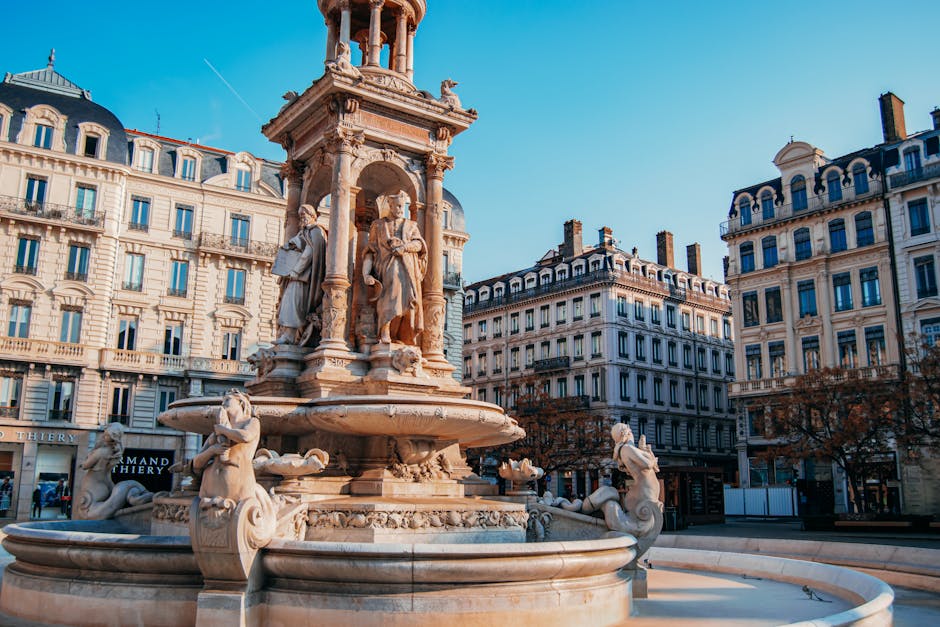
Discover the multicultural soul and industrial heritage of Lyon's 7th arrondissement on this vibrant self-guided walking route.
 Moderate
Lyon, France
Ascend the 'Hill that Prays' to explore Roman ruins, a shimmering basilica, and secret panoramic gardens on this historic self-guided walk in Lyon.
 Easy
EasyGdansk, Poland
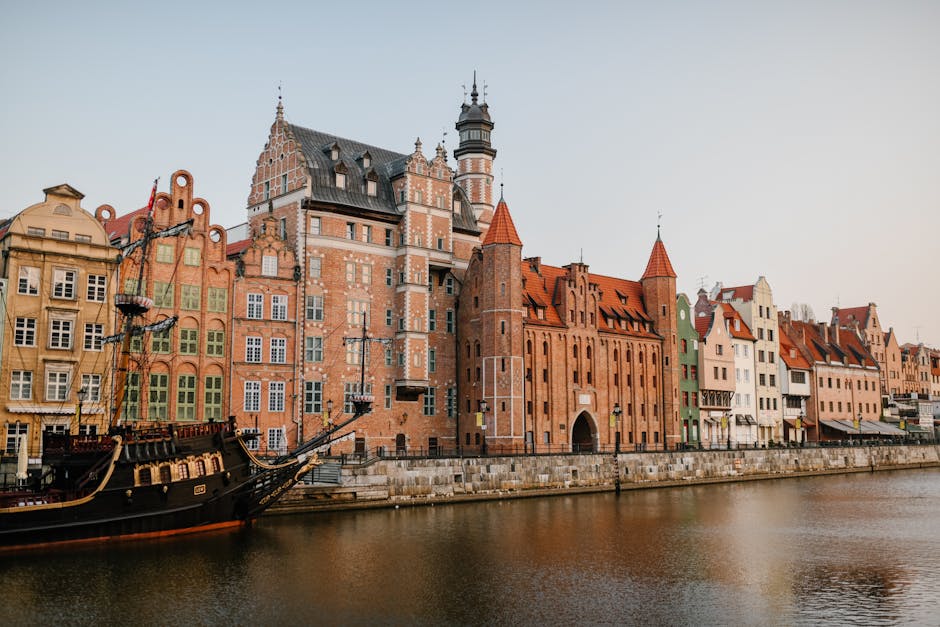
Discover the monastic heritage, world-famous organs, and lush botanical gardens of Oliwa on this peaceful self-guided neighborhood stroll.
 Easy
EasyHelsinki, Finland
Discover Helsinki's oldest neighborhood on this self-guided audio walk through Kruununhaka’s historic streets, hidden courtyards, and scenic shores.
 Easy
EasyWarsaw, Poland
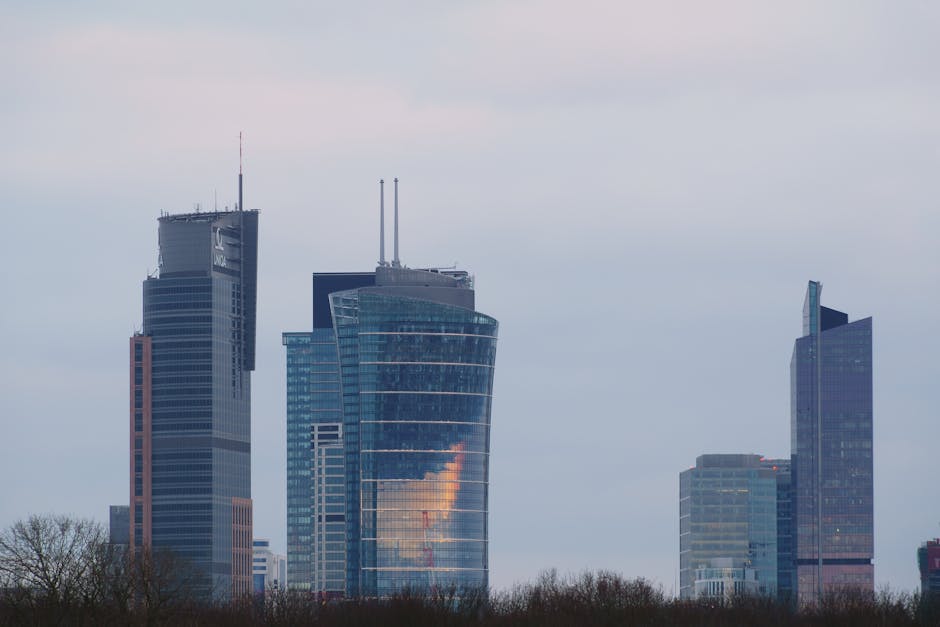
Discover the hidden courtyards and grand pre-war architecture of Warsaw's most atmospheric neighborhood on this self-guided stroll.
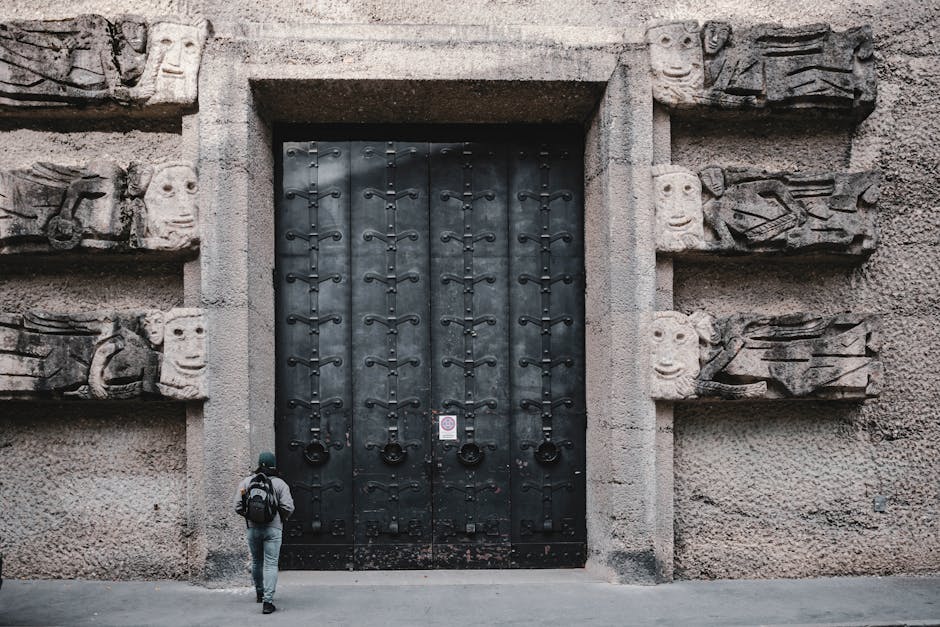 Easy
EasySalzburg, Austria
Discover Salzburg's oldest medieval alley, the birthplace of the 'Silent Night' author, and breathtaking views on this quiet self-guided walk.
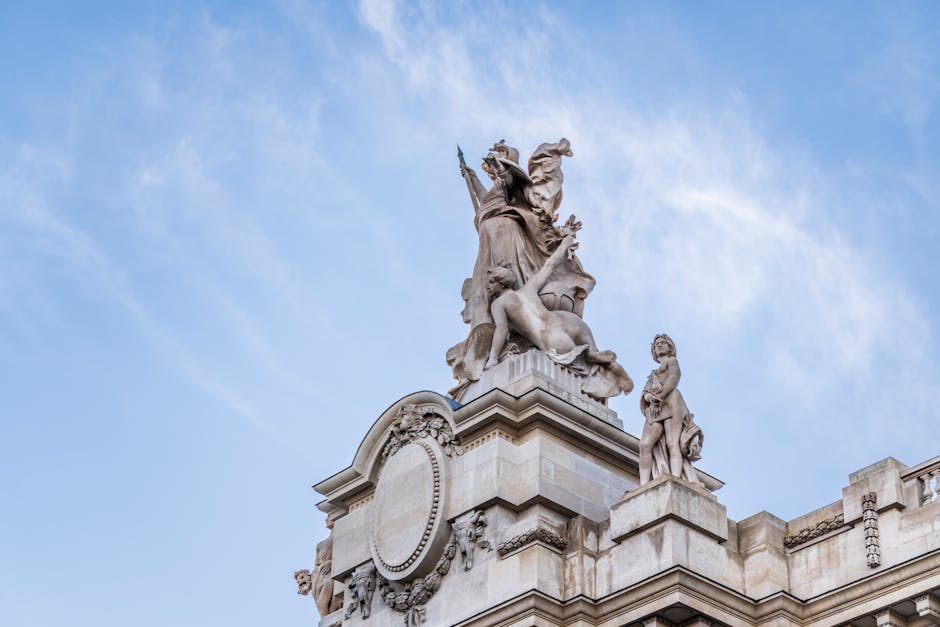 Challenging
Paris, France
Explore the secret vineyards, legendary artist studios, and hidden squares of Paris's iconic hilltop on this self-guided bohemian walking route.
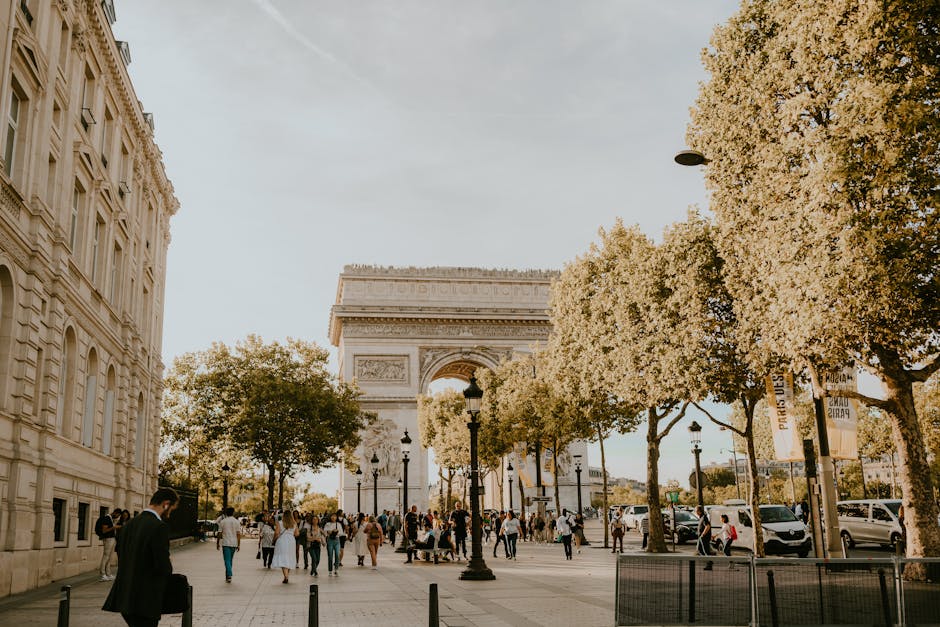 Easy
EasyParis, France
Explore the evolution of Parisian design from Art Nouveau whimsy to Le Corbusier's Modernist masterpieces on this self-guided architectural walk.
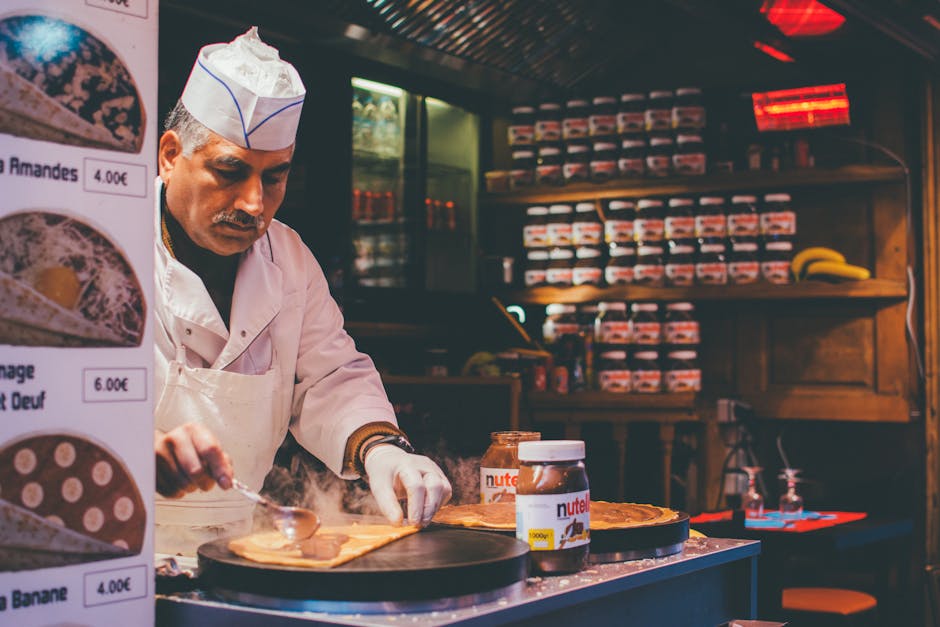 Easy
EasyParis, France
Explore the flavors and history of Bastille on this self-guided walk through the legendary Aligre Market and the scenic Coulée Verte.
 Easy
EasyParis, France
Discover aristocratic mansions, secret medieval courtyards, and royal history on this self-guided walk through the enchanting Marais district.