Self-guided audio tour in Marseille
Start Free on iPhone
Start free on iPhone to unlock this self-guided walking tour in Marseille. Hear all the stories that make it amazing, walk at your own pace, and begin whenever you want.
Your Private Tour Guide
Embark on an evocative journey through the architectural evolution of Marseille, where the rugged charm of the Mediterranean meets the opulent legacy of the 19th century. This self-guided walk invites you to explore the city's transformation from a crowded maritime port to a sophisticated hub of Belle Époque glamour. You will begin in the ancient, winding alleys of Le Panier, Marseille's oldest district, before transitioning into the grand boulevards and monumental landmarks that defined the city's Golden Age. As you move away from the bustling center, the route follows the sweeping curves of the Corniche President John Fitzgerald Kennedy, offering breathtaking sea views and a front-row seat to the magnificent villas that once housed the city’s industrial elite. Along this walking route, you will encounter the Palais Longchamp, a stunning monument to water and engineering, and the historic forts that have guarded the harbor for centuries. The highlight of this neighborhood stroll is the collection of seaside estates, such as Villa Valmer and Château Berger, which showcase the eclectic styles of the late 1800s—ranging from Neo-Renaissance to Orientalist influences. These 'folies' were built by wealthy merchants to display their success, and today they stand as silent witnesses to a period of unprecedented prosperity. This walking tour Marseille experience allows you to discover the contrast between the city's industrial grit and its coastal elegance at your own pace. Whether you are admiring the intricate stonework of the Opéra or gazing out at the silhouette of the Château d'If from the shore, you will gain a deeper understanding of the diverse layers that make up Marseille's unique character. This travel experience is perfect for those who appreciate history, maritime heritage, and the timeless allure of the French Riviera. Discover the hidden stories behind the facades and enjoy the refreshing sea breeze on this comprehensive walking tour Marseille adventure.
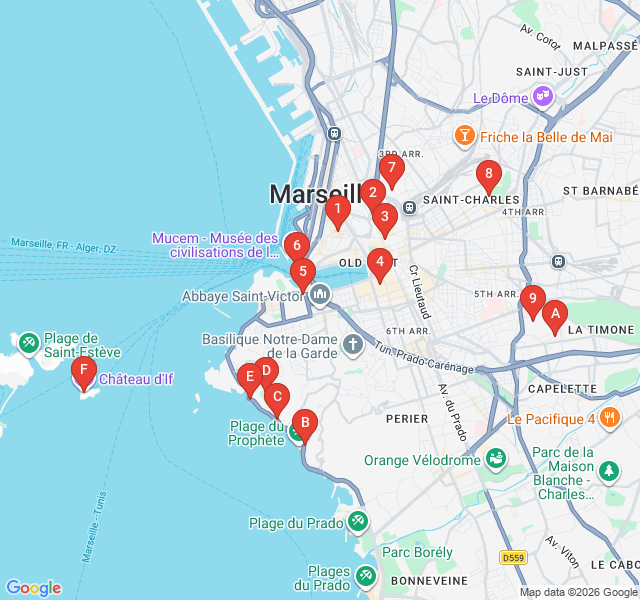
Numbers indicate the order of stops on the tour.
Start exploring with Zigway in the oldest neighborhood of Marseille. Le Panier, or 'The Basket,' is a labyrinth of narrow streets and pastel-colored buildings that sit on the site of the original Greek colony, Massalia, founded around 600 BC. Historically, this was a working-class immigrant district, but today it is a vibrant hub for artists and independent boutiques. As you walk through these ancient alleys, notice the laundry hanging from balconies and the abundance of street art. The area’s resilience is legendary, having survived partial destruction during World War II. It remains the soulful heart of the city, perfectly capturing the gritty yet beautiful spirit of Marseille.
This triumphal arch serves as a grand gateway to the city. Inspired by the arches of ancient Rome, it was originally conceived in 1784 to honor King Louis XVI, though construction wasn't completed until 1839. By then, its dedication had shifted to celebrate the French victories of the Spanish Expedition. The intricate bas-reliefs depict scenes of historic battles and allegorical figures. Standing here, you can feel the transition from the old city to the modern expansions of the 19th century. It marks a point where Marseille began to assert its importance as the 'Gateway to the Orient' during the height of French colonial expansion.
Look at the striking facade of what is now one of Marseille's most important libraries. Before it housed books, the Alcazar was a world-famous music hall that opened in 1857. In its heyday, it hosted legendary performers like Edith Piaf and Yves Montand. The architecture reflects the 'Moorish' style that was incredibly popular during the Belle Époque, reflecting Marseille’s deep connection to North Africa and the Mediterranean. Although a fire destroyed much of the original interior in the 1960s, the modern library preserves the spirit of this cultural landmark, serving as a bridge between the city’s theatrical past and its intellectual present.
The Opéra de Marseille is a fascinating architectural hybrid. The original 18th-century structure was largely destroyed by fire in 1919, leaving only the stone facade and the grand columns you see today. The interior was rebuilt in a stunning Art Deco style, making it one of the few opera houses in the world to feature such a unique blend of Neoclassical and 1920s aesthetics. It has long been the center of high society in Marseille, representing the wealth and cultural aspirations of the city's elite during the Belle Époque. Even today, it remains a prestigious venue for world-class performances, anchored in the bustling heart of the city.
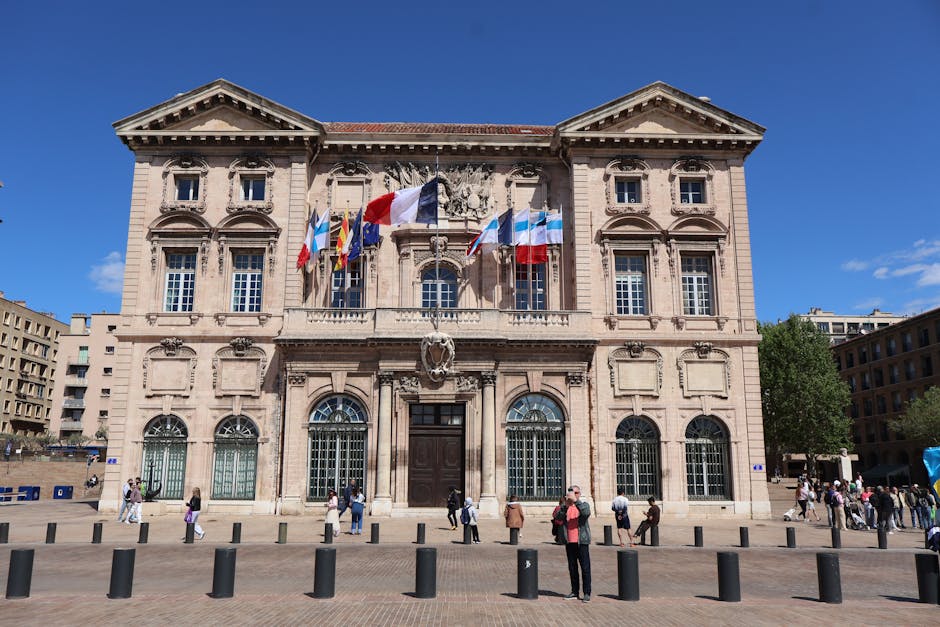
Perched at the entrance of the Vieux Port, Fort Saint-Nicolas was built by order of Louis XIV in the 1660s. Interestingly, the King’s engineers designed the cannons to point both out to sea and inward toward the city. This was a strategic move to keep the notoriously rebellious citizens of Marseille under control. The fortress is made of pinkish limestone from the nearby Couronne quarries, which glows beautifully at sunset. Today, it stands as a symbol of royal authority and military might, offering some of the most commanding views of the harbor and the Mediterranean beyond.
Connected to the modern MuCEM museum by a spectacular footbridge, Fort Saint-Jean is a complex of fortifications dating back to the 12th century. It was originally a commandery for the Knights Hospitaller of Saint John of Jerusalem. Over the centuries, it served as a prison during the French Revolution and a military barracks. The square tower, known as the Tour Carrée, was built in the 15th century to defend the port entrance. Exploring the ramparts provides a sense of the city's maritime layers, where medieval history meets contemporary design. It is a place where the defense of the city once rested, now turned into a space for cultural exchange.
As you move toward the university district, you encounter the Campus Saint-Charles, the historic heart of Aix-Marseille University. Established in the early 20th century, the architecture here reflects the Third Republic’s commitment to education and scientific progress. The grand buildings and lecture halls were designed to project an image of enlightenment and modernity. This area highlights a different side of Marseille’s 19th-century growth—not just a port of trade, but a center of learning. The proximity to the grand Saint-Charles train station made this a vital hub for students and scholars arriving from across France.
The Palais Longchamp is perhaps the most spectacular monument in Marseille. Built to celebrate the arrival of water from the Durance River to the city via the Canal de Marseille in 1869, it is a true 'Château d'Eau' or water castle. The central fountain is a masterpiece of sculpture, featuring a chariot drawn by Camargue bulls. Flanked by the Museum of Fine Arts and the Natural History Museum, the palace’s sweeping colonnades and lush gardens exemplify the Second Empire’s architectural grandeur. It was a vital project for a city that had long suffered from water shortages and cholera outbreaks, turning a public utility into a work of art.
The Timone district is the medical hub of Marseille. This faculty building represents the city's long-standing tradition of medical excellence, which became particularly prominent in the late 19th century as the city expanded. Marseille’s history is inextricably linked to medicine, largely due to its role as a port city that frequently had to manage maritime quarantine and public health. This modern campus continues that legacy, training the next generation of healthcare professionals. While more contemporary in design than the Belle Époque villas, it stands on the grounds of the city’s historical expansion into the eastern districts.
Standing dramatically on the Corniche, this monument honors the soldiers of the 'Army of the East' who fought in distant lands during World War I. Designed by architect Gaston Castel and inaugurated in 1927, the memorial features a massive bronze statue of Victory framed by a grand granite arch. Its position overlooking the sea is symbolic, as many of these soldiers departed from the very harbor below. It is one of the most poignant landmarks in the city, offering a space for reflection while providing an incredible vantage point to look back at the city and out toward the Frioul Islands.
This elegant Neoclassical villa is a prime example of the coastal 'folies' built during the Belle Époque. Originally constructed in 1860 for a wealthy merchant, it later became a thermal spa, capitalizing on the city's growing interest in health and seaside recreation. Its white facade and rhythmic windows reflect the influence of Italianate design, which was highly fashionable among Marseille's upper class. Today, it serves as a high-end spa and wellness center, maintaining its historical association with luxury and the healing power of the Mediterranean coast. It represents the shift of the elite from the city center to the fresh air of the Corniche.
As you stroll further along the Corniche, you will see several private estates that represent the peak of 19th-century coastal living. The Villa de la Résidence is one such property, hidden behind lush gardens and stone walls. These villas were designed to provide privacy while offering maximum views of the sea. Many incorporated 'eclectic' styles, mixing elements of Gothic, Renaissance, and Classical architecture. They were the summer retreats for Marseille’s 'nouveaux riches'—the shipowners and industrial magnates who profited from the city’s booming trade with the French colonies. Each villa was a statement of personal wealth and architectural taste.
Villa Valmer is one of the most iconic residences on the Corniche. Built in 1865 for the manufacturer Charles Gounelle, the name is a contraction of 'Vague à la mer' (wave at the sea). The villa is built in a Neo-Renaissance style, featuring intricate carvings and a dramatic turret. Its public park is a hidden gem, filled with exotic plants and winding paths that lead to spectacular overlooks. During the Belle Époque, these gardens were a status symbol, showcasing rare species brought back by trade ships. The villa’s elevated position makes it appear as if it is floating above the Mediterranean, a true testament to the glamour of the era.
This small, unassuming building houses a vital piece of scientific history. Built in 1884, the Marégraphe was designed to determine the 'zero level' of altitude for all of France. By precisely measuring the Mediterranean tides over several years, scientists established the reference point used for all topographic maps in the country. It is a rare example of a 19th-century scientific instrument still in use today. The location was chosen for its stable rock foundation and the relatively low tidal range of the Mediterranean. It represents the era's obsession with precision, engineering, and the systematic mapping of the natural world.
Looking out across the water from the Corniche, you can see the formidable silhouette of the Château d'If. This 16th-century fortress and former prison gained international fame as the setting for Alexandre Dumas’ adventure novel, 'The Count of Monte Cristo.' While the fictional Edmond Dantès was the most famous prisoner, the island actually held many real-life political and religious detainees over the centuries. Its isolated location and treacherous currents made escape nearly impossible. Today, it is one of Marseille's most iconic landmarks, a symbol of both the city’s defensive history and its enduring place in world literature. This view marks the perfect end to our coastal exploration.
Start Free on iPhone
Explore “Belle Époque Glamour: The Villas of the Corniche” with your very own Private Tour Guide with Zigway. Start free on iPhone, skip the large group and the fixed routes, and hear the city come alive as you go.
Your Private Tour Guide
Don't miss the good stuff
Explore Freely
 Easy
EasyMarseille, France
Explore Marseille's green heart at Parc Borély and discover Le Corbusier's iconic Unité d'Habitation on this self-guided architecture walk.
 Moderate
Marseille, France
Discover Marseille's historic spine from the Old Port to the majestic Palais Longchamp on this self-guided architectural walking route.
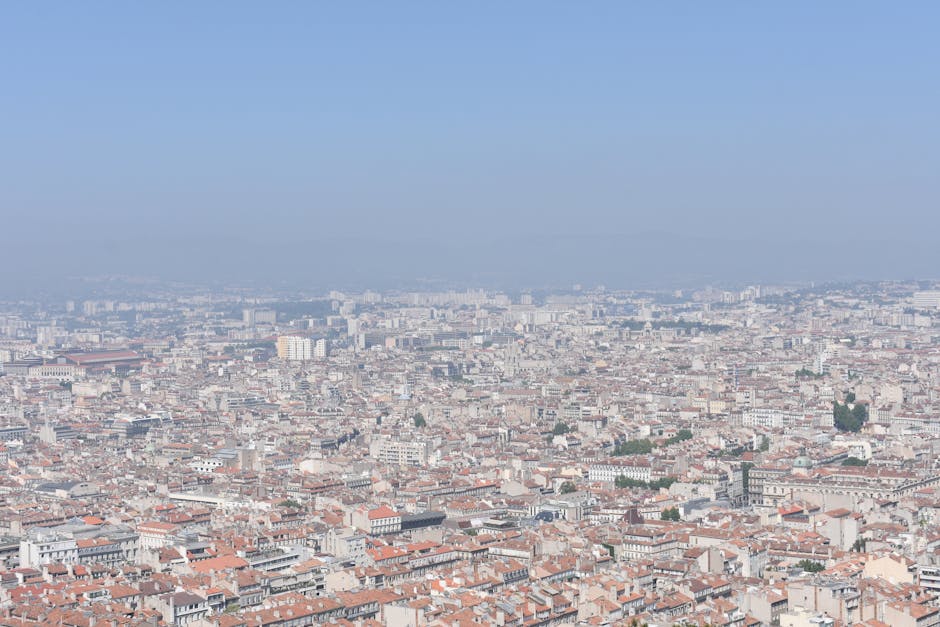 Moderate
Marseille, France
Explore the vertical gardens and hidden villas of Endoume on this self-guided walk through Marseille’s most charming coastal neighborhood.
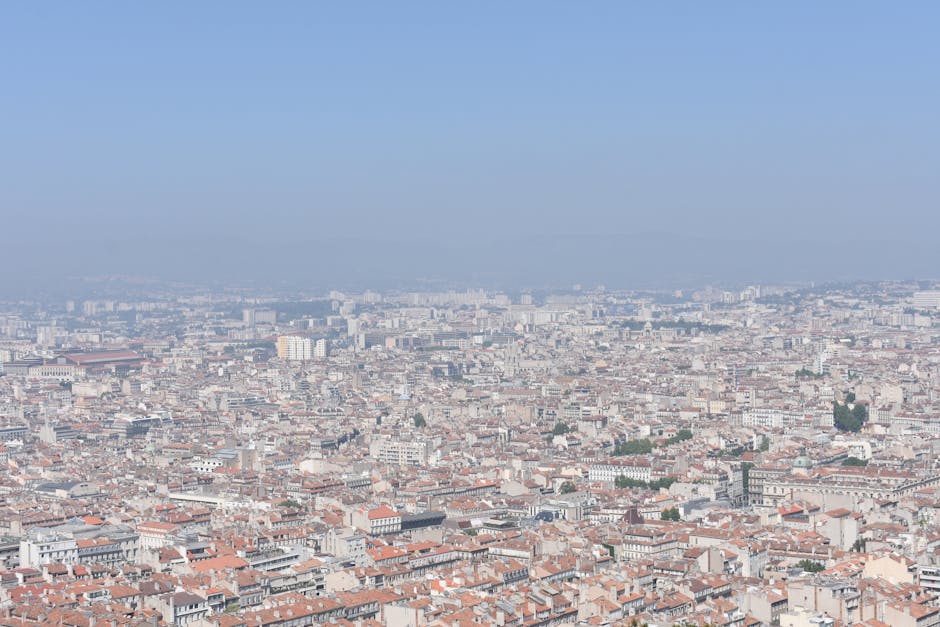 Easy
EasyMarseille, France
Discover the cinematic soul of Marseille on this self-guided walk through the historic Vieux Port, inspired by the works of Marcel Pagnol.
 Easy
EasyGdansk, Poland
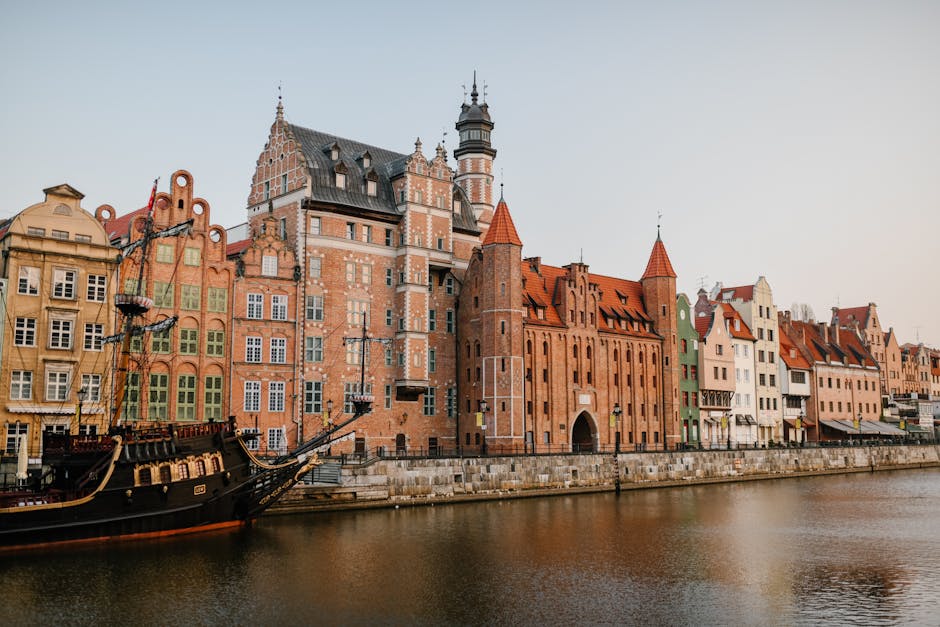
Discover the 'Baltic Gold' on this self-guided walk through Gdansk's historic mills, massive cathedrals, and the magical Mariacka Street.
 Easy
EasyHelsinki, Finland
Discover Helsinki's oldest neighborhood on this self-guided audio walk through Kruununhaka’s historic streets, hidden courtyards, and scenic shores.
 Easy
EasyGothenburg, Sweden
Explore Gothenburg's maritime soul on this self-guided walk from historic shipyards to sleek modern piers and iconic industrial landmarks.
 Easy
EasyGothenburg, Sweden
Discover Gothenburg’s 17th-century Dutch foundations, historic canals, and military fortifications on this self-guided architectural walk.
 Challenging
Paris, France
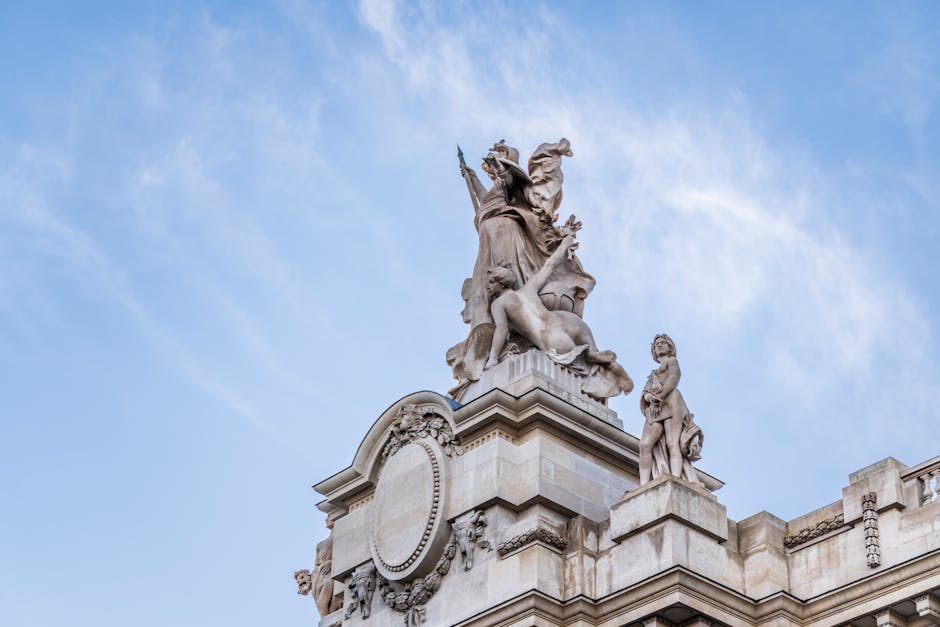
Explore the secret vineyards, legendary artist studios, and hidden squares of Paris's iconic hilltop on this self-guided bohemian walking route.
 Easy
EasyParis, France
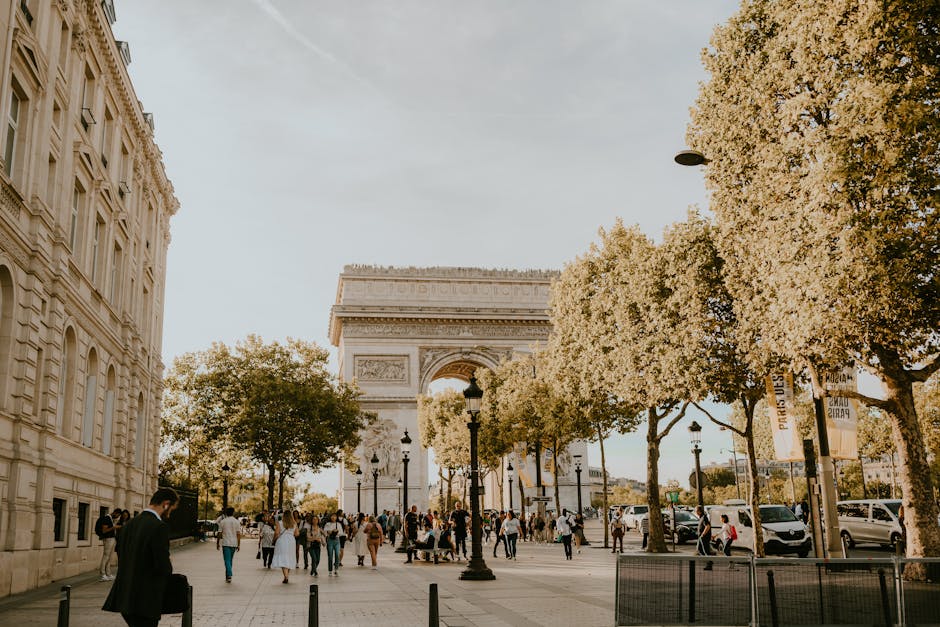
Explore the evolution of Parisian design from Art Nouveau whimsy to Le Corbusier's Modernist masterpieces on this self-guided architectural walk.
 Easy
EasyParis, France
Explore the flavors and history of Bastille on this self-guided walk through the legendary Aligre Market and the scenic Coulée Verte.
 Easy
EasyParis, France
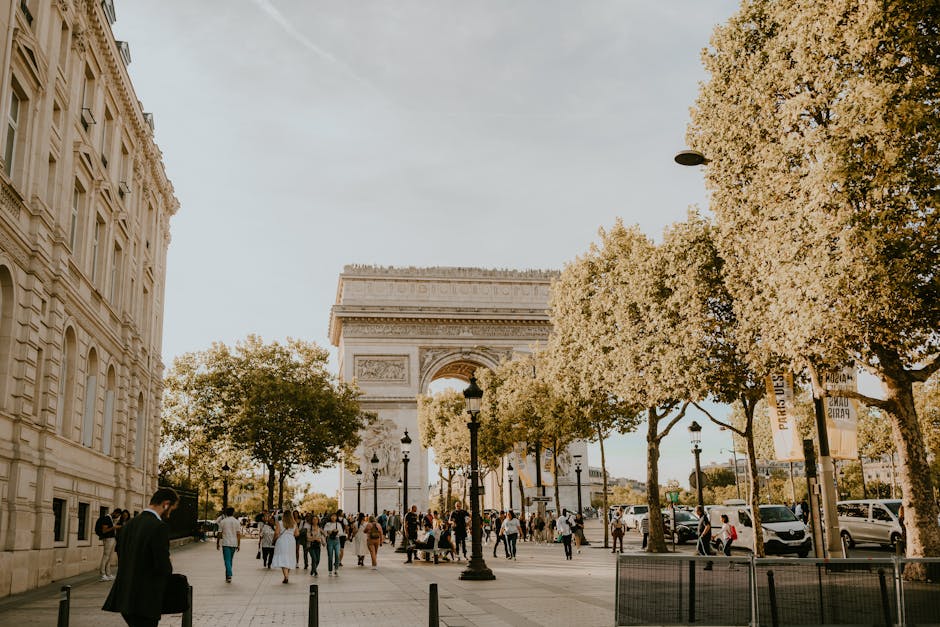
Discover aristocratic mansions, secret medieval courtyards, and royal history on this self-guided walk through the enchanting Marais district.