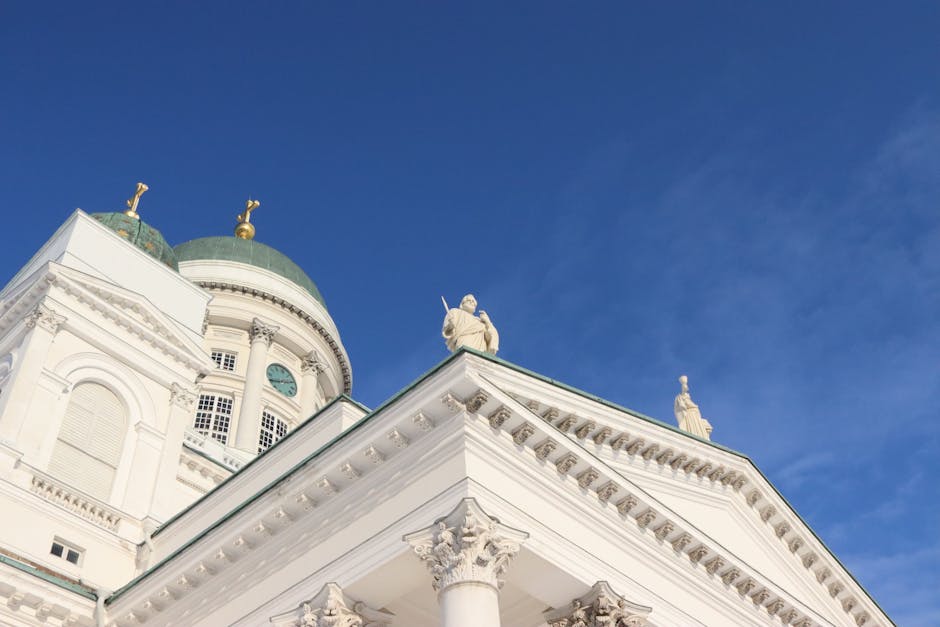
Self-guided audio tour in Helsinki
Start Free on iPhone
Start free on iPhone to unlock this self-guided walking tour in Helsinki. Hear all the stories that make it amazing, walk at your own pace, and begin whenever you want.
Your Private Tour Guide
Discover a side of Helsinki where modern design meets ancient stone in this self-guided walk through the city's most contemplative spaces. Helsinki is a city renowned for its functionalist architecture and seamless integration with nature, and nowhere is this more evident than in its spiritual sanctuaries. This walking route invites you to step away from the bustling commercial centers and into a series of 'Temples of Silence' that define the Finnish capital's unique aesthetic identity. From the minimalist wooden curves of the Kamppi Chapel to the subterranean majesty of the Rock Church, you will experience the evolution of Finnish design over two centuries. As you begin your neighborhood stroll, you will encounter the contrast between 19th-century wooden classicism and the bold experimentation of the 1960s. This isn't just a look at religious history; it is an exploration of how light, materials, and silence are used to create refuge in a modern urban environment. You will wander through the historic 'Plague Park,' marvel at the towering brickwork of Mikael Agricola Church, and conclude your journey at the peaceful seaside Hietaniemi Cemetery, the final resting place of Finland’s national icons. This architecture-focused route is perfect for those who want to explore independently and understand the soul of Helsinki through its quietest corners. Whether you are a fan of Neogothic detail or the raw power of Brutalism, this walking route Helsinki offers a comprehensive look at the city's architectural diversity. By choosing a self-guided walk, you have the freedom to linger in the acoustic perfection of Temppeliaukio or sit for a moment of reflection in Kamppi without the pressure of a group schedule. This journey through the Töölö district and its surroundings reveals why Helsinki is a UNESCO City of Design, showcasing how the city’s inhabitants find harmony between the built environment and the rugged Nordic landscape. Prepare to see Helsinki from the inside out, through the windows and walls of its most iconic structures.
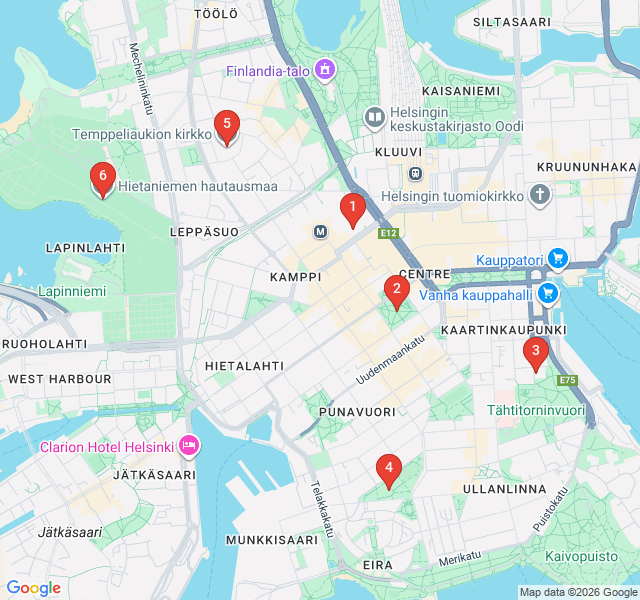
Numbers indicate the order of stops on the tour.
Start your self-guided adventure at the Kamppi Chapel, often called the Chapel of Silence. Completed in 2012, this award-winning structure is a masterpiece of modern Finnish wood architecture. Notice the exterior, made of horizontal strips of spruce curved into a soft, organic shape. It stands in stark contrast to the glass and steel of the surrounding Narinkka Square. Inside, the walls are lined with warm alder, creating a soundproof sanctuary that blocks out the noise of the city. Though it doesn't hold regular services, it serves as a non-denominational space for quiet reflection. The simplicity of the design reflects the Finnish value of 'sisu' and a deep respect for silence in a busy world.
As you walk toward the Old Church Park, you are stepping onto ground with a somber history. Known to locals as 'Plague Park,' this area served as a burial ground during the devastating plague of 1710. The church itself, a beautiful wooden structure designed by Carl Ludvig Engel, was completed in 1826. It is currently the oldest surviving church in central Helsinki. Its bright white exterior and neoclassical lines represent the era when Helsinki was being rebuilt as the capital of the Grand Duchy of Finland. Take a moment to appreciate the surrounding gravestones, which tell the stories of the city's merchant families from centuries past.
Heading toward the waterfront, you’ll find the German Church, or 'Saksalainen kirkko.' Built in 1864 in the Neogothic style, its red-brick facade and sharp spires look like they were plucked straight from a German village. This church represents the long-standing influence of the German community in Finnish trade and culture. Interestingly, the church was heavily damaged by a fire in the late 19th century and later by bombings during World War II, but it has been meticulously restored. Its location on a hill offers a commanding view of the surrounding Kaartinkaupunki neighborhood, and its interior is famous for its intricate woodwork and vibrant stained glass.
This imposing brick giant is named after Mikael Agricola, the father of the Finnish written language. Designed by Lars Sonck and completed in 1935, the church is a prime example of Finnish functionalism with traditional flourishes. Look up at the 97-meter spire; during World War II, this spire was actually retractable. To prevent the church from being used as a landmark for enemy bombers, the top 30 meters could be lowered inside the tower. The interior is equally impressive, featuring a minimalist aesthetic that draws the eye toward the altar. It remains one of the most active churches in Helsinki, hosting a variety of community events and services.
Known globally as the 'Rock Church,' Temppeliaukio is perhaps Helsinki’s most famous architectural feat. Designed by brothers Timo and Tuomo Suomalainen and opened in 1969, the church was excavated directly into a massive block of natural granite. From the street, you only see the copper dome rising above the rock. Step inside to witness the raw rock walls and the 180 vertical glass window panes that connect the dome to the stone, flooding the space with natural light. The acoustics here are world-class, making it a favorite venue for concerts. It is a stunning example of how 20th-century architects sought to harmonize modern construction with the primordial Finnish landscape.
Conclude your walking route at Hietaniemi Cemetery, the 'Pantheon of Finland.' Located right on the shores of the Baltic Sea, this is the final resting place for many of the nation's most famous figures, including the composer Jean Sibelius and several Finnish presidents like Mannerheim and Kekkonen. The cemetery is divided into sections, including a moving military cemetery and a Jewish section. It is not just a place of mourning but a beautiful park where locals come to walk and enjoy the seaside views. The rows of simple, elegant headstones under the canopy of old trees provide a final, peaceful testament to the Finnish spirit of silence and stone.
Start Free on iPhone
Explore “Temples of Silence and Stone” with your very own Private Tour Guide with Zigway. Start free on iPhone, skip the large group and the fixed routes, and hear the city come alive as you go.
Your Private Tour Guide
Don't miss the good stuff
Explore Freely
 Moderate
Helsinki, Finland
Explore Helsinki's bohemian heart. Discover historic saunas, granite churches, and the vibrant local life of the Kallio neighborhood at your own pace.
 Easy
EasyHelsinki, Finland
Discover Helsinki's oldest neighborhood on this self-guided audio walk through Kruununhaka’s historic streets, hidden courtyards, and scenic shores.
 Moderate
Helsinki, Finland
Explore the 'Gibraltar of the North' on this independent walking route through the historic bastions and hidden gardens of Suomenlinna Sea Fortress.
 Easy
EasyHelsinki, Finland
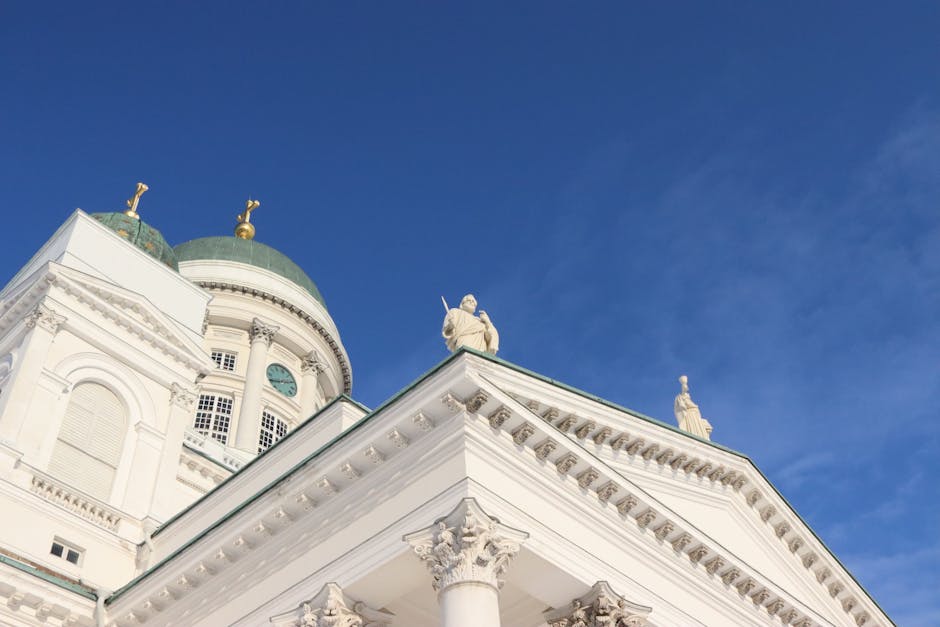
Discover Helsinki's stunning Art Nouveau architecture and maritime history on this self-guided neighborhood stroll through Katajanokka.
 Easy
EasyKrakow, Poland
Explore the prestigious Jagiellonian University district, featuring Neo-Gothic architecture, Baroque churches, and Krakow's hidden scholarly gems.
 Easy
EasyWarsaw, Poland
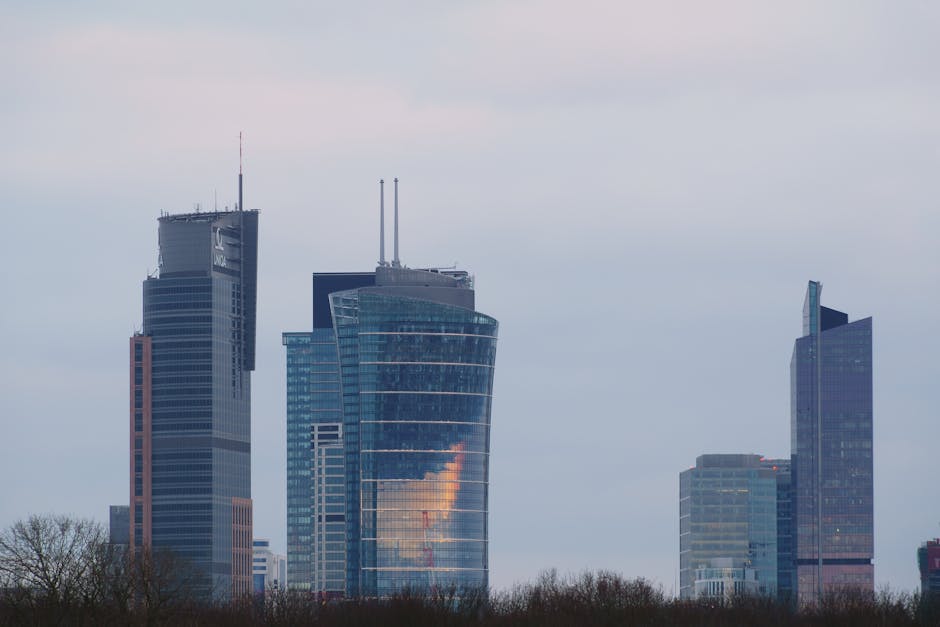
Discover the hidden courtyards and grand pre-war architecture of Warsaw's most atmospheric neighborhood on this self-guided stroll.
 Easy
EasySalzburg, Austria
Discover Salzburg's oldest medieval alley, the birthplace of the 'Silent Night' author, and breathtaking views on this quiet self-guided walk.
 Easy
EasyNairobi, Kenya
Discover Nairobi's iconic skyline on this self-guided architecture walk through the CBD’s most famous modernist and Brutalist landmarks.