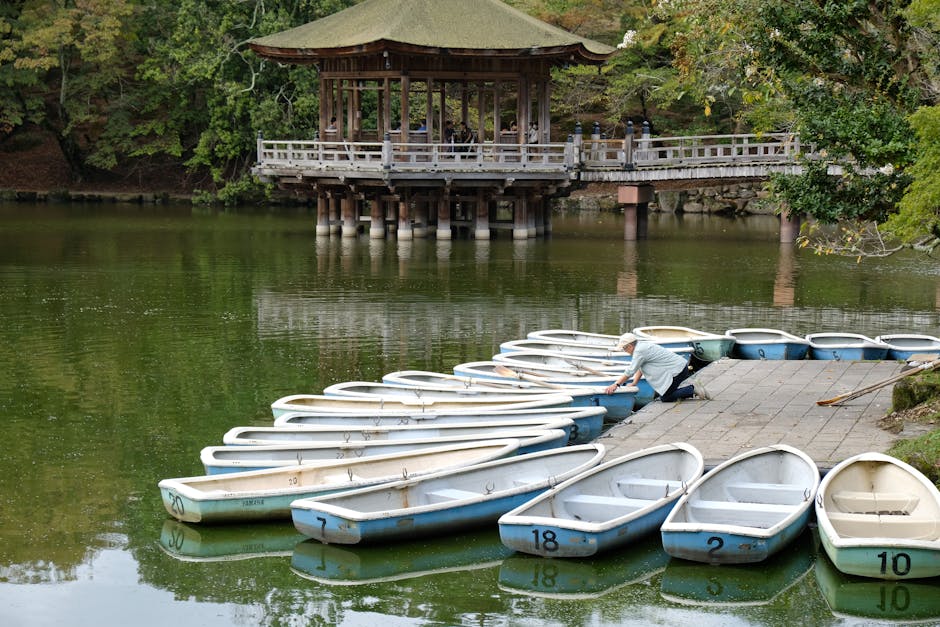
Self-guided audio tour in Nara
Start Free on iPhone
Start free on iPhone to unlock this self-guided walking tour in Nara. Hear all the stories that make it amazing, walk at your own pace, and begin whenever you want.
Your Private Tour Guide
Step away from the bustling deer park and venture into the quiet, spiritual heart of Nara’s ancient history. This self-guided walk, 'Echoes of the Silk Road,' invites you to explore the Nishi-no-kyo district, an area that once served as the western capital when Nara was the seat of the Japanese Empire in the 8th century. By following this neighborhood stroll, you will trace the architectural and religious threads that connected Japan to the distant cultures of China, India, and beyond. This route is perfect for those who want to experience Nara beyond the typical tourist path, focusing instead on the profound legacy of Buddhist art and the grand reconstruction of an imperial era. Your journey begins at the Nara National Museum, where you can admire one of the world’s finest collections of Buddhist sculpture before heading west. As you traverse the expansive Heijō Palace Site, you will stand where emperors once held court, surrounded by reconstructed gates and halls that recreate the majesty of the Tenpyō period. The walk then transitions into the serene Nishi-no-kyo area, home to two of Japan’s most influential UNESCO World Heritage temples: Toshodai-ji and Yakushi-ji. At Toshodai-ji, you will encounter the legacy of the Chinese monk Ganjin, whose perseverance brought orthodox Buddhist teachings to Japan. Finally, at Yakushi-ji, you can marvel at the vibrant 'frozen music' of the East Pagoda and the healing presence of the Medicine Buddha. This walking route Nara offers is more than just a sightseeing trip; it is an independent exploration of the architectural evolution that defined a nation. Whether you are an art historian or a casual traveler seeking a peaceful afternoon, this audio walk provides the context and stories necessary to appreciate Nara’s role as the eastern terminus of the Silk Road. Discover the hidden gems of the western capital at your own pace, away from the crowds, and immerse yourself in the timeless atmosphere of ancient Japan.
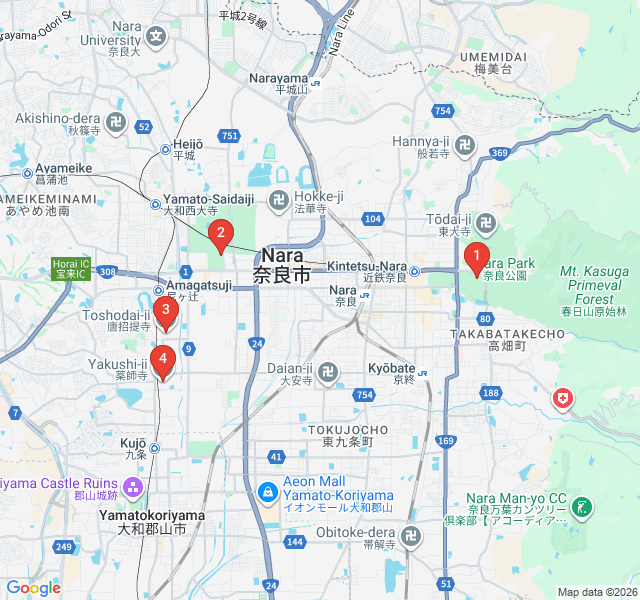
Numbers indicate the order of stops on the tour.
Start your self-guided adventure at the Nara National Museum, a premier institution dedicated to Buddhist art. The museum is housed in two distinct buildings: the original Neo-Baroque Western Wing, completed in 1894, and the modern East Wing. Inside, you will find an unparalleled collection of Buddhist statues, paintings, and ritual objects. Many of these treasures date back to the Nara period (710–794), a time when Japan was rapidly absorbing cultural influences from the Asian mainland. Take a moment to appreciate the intricate craftsmanship of the sculptures, which were intended to radiate peace and enlightenment. This stop sets the stage for your walk by introducing the spiritual and artistic heights reached during Nara's Golden Age.
Next, head west to the Heijō Palace Site, the former heart of the Japanese capital. In the 8th century, this was a sprawling complex of government offices and imperial residences modeled after the Chinese capital of Chang'an. Today, it is a vast open-air historical park. The highlight is the reconstructed Daigokuden, or Great Hall of State, which stands as a testament to the scale of ancient Japanese governance. As you walk across the grounds, imagine the Silk Road traders and foreign envoys who once arrived here to pay respects to the Emperor. The site offers a unique sense of space and history, contrasting the dense modern city with the grandeur of the ancient past.
Continue your walking route to Toshodai-ji, a temple founded in 759 by the Chinese monk Ganjin. Ganjin’s story is one of incredible resilience; he attempted to reach Japan six times, losing his sight in the process, before finally succeeding in his mission to establish an orthodox Buddhist ordination platform. The temple’s Kondo (Golden Hall) is a masterpiece of Tenpyō-era architecture, featuring a classic colonnade that evokes a sense of balance and dignity. Unlike some of the more restored temples, Toshodai-ji retains a weathered, authentic atmosphere. It is a place of quiet contemplation, where the architecture itself serves as a bridge between the cultures of China and Japan.
Your final stop is Yakushi-ji, one of Japan's oldest temples, originally built by Emperor Tenmu to pray for his wife's recovery from illness. The temple is dedicated to Yakushi Nyorai, the Medicine Buddha. The complex is famous for its symmetrical layout and vibrant red and white buildings. Look closely at the East Pagoda; though it appears to have six stories, it actually only has three, with additional decorative roofs known as mokoshi. An American art historian once described this visual rhythm as 'frozen music.' The temple’s bright, meticulously restored halls offer a striking visual contrast to the more somber Toshodai-ji, marking a magnificent end to your exploration of Nishi-no-kyo.
Start Free on iPhone
Explore “Echoes of the Silk Road: The Nishi-no-kyo Route” with your very own Private Tour Guide with Zigway. Start free on iPhone, skip the large group and the fixed routes, and hear the city come alive as you go.
Your Private Tour Guide
Don't miss the good stuff
Explore Freely
 Moderate
Nara, Japan
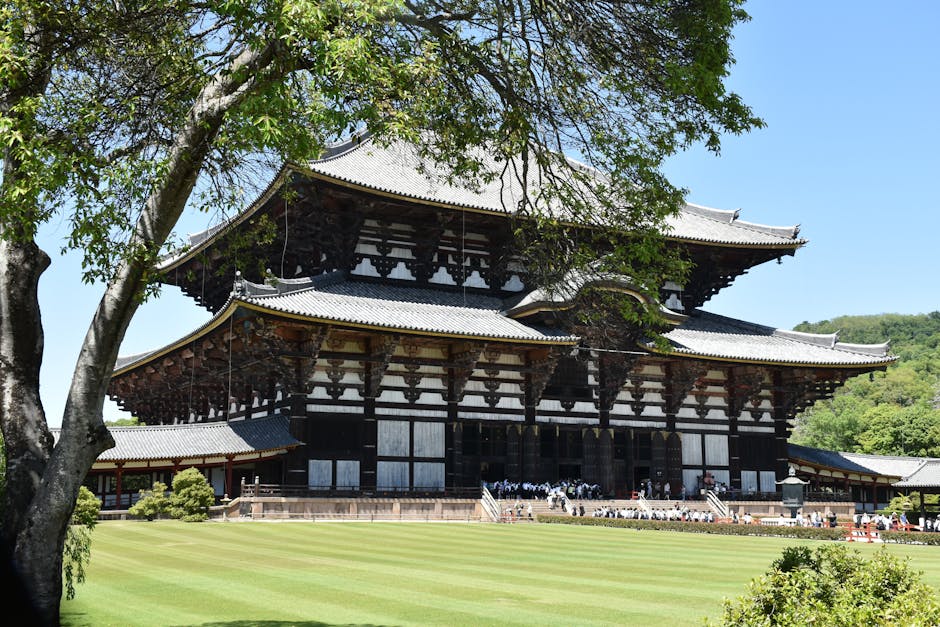
Discover a mystical path through Nara's ancient forest, lined with 3,000 lanterns and sacred deer on this serene self-guided walk.
 Challenging
Nara, Japan
Journey from Nara's imperial ruins and refined gardens into the ancient, sacred silence of the UNESCO-protected Mount Kasuga Primeval Forest.
 Moderate
Nara, Japan
Discover Nara’s literary soul on this self-guided walk through historic Takabatake’s temples, writer residences, and poetic gardens.
 Easy
EasyNara, Japan
Explore Nara's evening charm on this self-guided walk through illuminated pagodas, historic shopping streets, and world-class hidden bars.
 Moderate
Gdansk, Poland
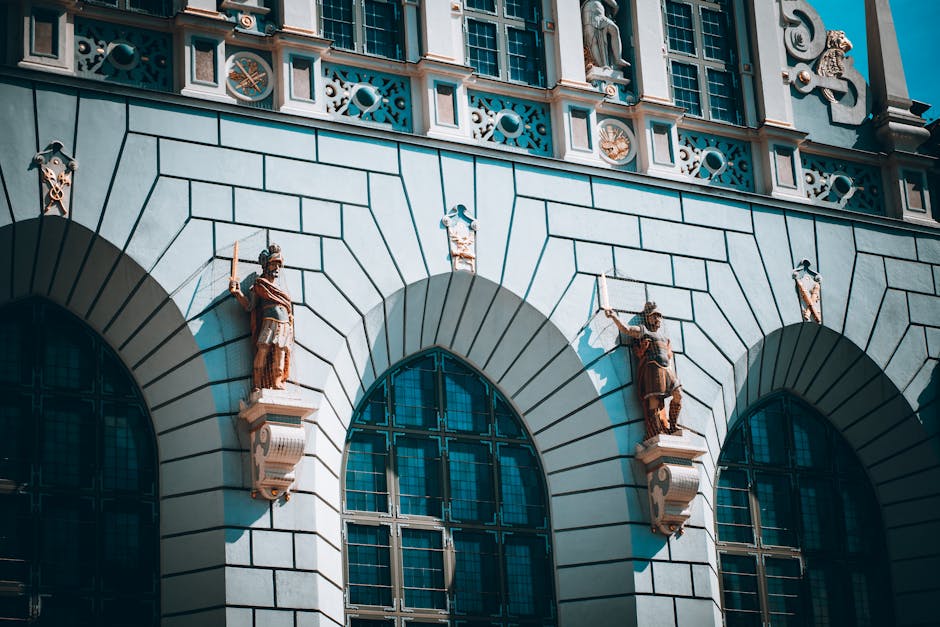
Discover the origins of WWII in Gdansk on this self-guided walk through heroic last stands, massive museums, and strategic hilltop fortifications.
 Easy
EasySalzburg, Austria
Discover Salzburg's oldest medieval alley, the birthplace of the 'Silent Night' author, and breathtaking views on this quiet self-guided walk.
 Easy
EasyNairobi, Kenya
Explore Nairobi's architectural evolution from colonial-era landmarks to iconic Brutalist skyscrapers on this historic self-guided walking route.
 Easy
EasyNairobi, Kenya
Discover Nairobi's iconic skyline on this self-guided architecture walk through the CBD’s most famous modernist and Brutalist landmarks.
 Moderate
Tokyo, Japan
Discover Tokyo's premier creative district on this self-guided walk through Roppongi’s world-class museums and striking modern architecture.
 Easy
EasyTokyo, Japan
Discover the 'Old Tokyo' charm of Yanaka on this self-guided walk through historic temples, artisan alleys, and a stunning torii gate shrine.
 Easy
EasyTokyo, Japan
Experience Shibuya's electric energy on this self-guided walk from the iconic Scramble Crossing to the panoramic views of Shibuya Sky.
 Easy
EasyTokyo, Japan
Explore Tokyo's indie heart. From vintage fashion in Shimokitazawa to world-class art in Shinjuku, discover the city's creative soul independently.