Self-guided audio tour in Dresden
Start Free on iPhone
Start free on iPhone to unlock this self-guided walking tour in Dresden. Hear all the stories that make it amazing, walk at your own pace, and begin whenever you want.
Your Private Tour Guide
Embark on an expansive self-guided walk that bridges the gap between Dresden's avant-garde scientific achievements and its lush Baroque heritage. This route takes you away from the dense crowds of the Altmarkt and into the sprawling 'East End,' where the city’s intellectual and industrial heart beats. You will explore a landscape where transparent glass factories meet 17th-century palaces, and where a former gasometer now houses world-renowned 360-degree art installations. This self-guided walking tour Dresden route is designed for those who want to understand the city beyond the reconstructed facades of the Frauenkirche, diving deep into the themes of human biology, cutting-edge mobility, and the sheer scale of urban history. Your journey begins at the German Hygiene Museum, a landmark of modernism that redefined how we view the human body. From there, you will witness the architectural transparency of the Volkswagen factory, a symbol of high-tech manufacturing integrated into the urban fabric. As you move through the Pirnaische Vorstadt and the Reick district, the architecture shifts from the colorful post-reunification designs of St. Benno Gymnasium to the socialist urban planning surrounding Pirnaischer Platz. The route then leads you through the verdant expanse of the Großer Garten, Dresden's largest park, to find the stunning Palais at its center. This experience serves as a perfect alternative to the standard walking tour Dresden offers, allowing you to linger in the gardens or spend extra time examining the intricate details of the Grand Garden Palace. Finally, the route culminates in the Reick district at the Dresden Panometer. Here, the scale of the city’s past is brought to life within a historic industrial structure. This neighborhood stroll is not just a walk through space, but a walk through the evolution of Dresden's identity—from a center of the European Enlightenment to a hub of modern science and immersive art. Because this route covers significant distance, it offers a refreshing, independent way to see the 'real' Dresden at your own pace.
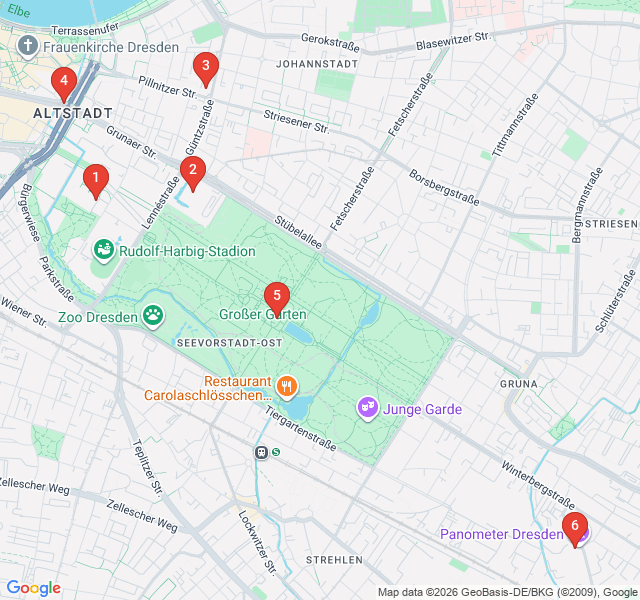
Numbers indicate the order of stops on the tour.
Start your self-guided adventure at the German Hygiene Museum, an institution that is far more than its name suggests. Founded in 1912 by Karl August Lingner—the entrepreneur behind Odol mouthwash—it was envisioned as a 'people's temple for health.' The current building, designed by Wilhelm Kreis in the late 1920s, is a masterpiece of monumental modernism. It survived the 1945 bombings and served as a key educational site during the DDR era. Today, it is famous for its 'Transparent Man' and 'Transparent Woman' exhibits, which revolutionized anatomical education. The museum explores the intersection of science, culture, and society, making it a fitting gateway to Dresden’s intellectual east end. Take a moment to admire the clean lines of the facade before heading toward the greenery of the park nearby.
A short walk from the museum brings you to a marvel of industrial transparency: the Gläserne Manufaktur, or Transparent Factory. Opened in 2002 by Volkswagen, this glass-walled facility was designed by architect Gunter Henn to integrate high-tech manufacturing into the city center without the usual grit of industry. Originally the assembly site for the luxury Phaeton, it later transitioned to electric vehicle production. The building’s design reflects a philosophy of openness, allowing passersby to glimpse the precision of German engineering. Notice how the structure mirrors the surrounding trees of the Großer Garten. It remains one of the most famous examples of modern industrial architecture in Europe, proving that a factory can be as aesthetically pleasing as a gallery.
As you head toward the city center, look for the striking colors and unconventional shapes of the St. Benno Gymnasium. Completed in 1996, this school was designed by the renowned firm Behnisch & Partner, the same architects responsible for the Munich Olympic Stadium. It stands as a vibrant contrast to the historicist architecture found elsewhere in Dresden. The use of bright yellows, blues, and undulating metal surfaces reflects the 'Deconstructivist' style, intended to create an inspiring environment for students. It was the first new Catholic school built in the region after the reunification of Germany. Its presence here marks the architectural transition from the parkland back into the urban residential fabric of the Pirnaische Vorstadt.
Pirnaischer Platz serves as one of Dresden's most significant traffic and historical hubs. Once the site of a city gate on the road to Pirna, it was transformed into a wide, open plaza during the socialist reconstruction of the city in the 1960s and 70s. From here, you can see the stark contrast between the surviving historic structures and the functionalist architecture of the East German era. The massive apartment blocks and the nearby 'Haus der Presse' are hallmarks of this period. While it may seem like a mere transit point, it represents the 'New Dresden' envisioned after the war—a city of wide boulevards and light-filled spaces. It’s a great spot to observe the local rhythm of life before heading back toward the quiet of the gardens.
Enter the Großer Garten, Dresden's 'green lung,' to find the Palais im Großen Garten. Built between 1679 and 1683 under Elector Johann Georg III, this is one of the earliest examples of Baroque architecture in Saxony. Designed by Johann Georg Starcke, the palace was inspired by Italian villas and served as a venue for courtly festivities and royal displays. Though heavily damaged in 1945, its exterior has been meticulously restored. The palace sits at the intersection of the park’s main axes, surrounded by symmetrical flower beds and sculptures. It represents the height of Saxon courtly life and provides a serene, historical counterpoint to the modern factories and museums you visited earlier. The surrounding park is perfect for a leisurely stroll toward the final stop.
The final stop on this walking route is the Dresden Panometer, located in a former telescopic gasometer in the Reick district. This industrial relic, built in 1879, was saved from demolition and repurposed by artist Yadegar Asisi. Inside, you will find a breathtaking 360-degree panorama that stands 27 meters tall. The exhibits rotate, often featuring 'Dresden 1945' or 'Dresden in the Baroque Era,' providing an immersive, bird's-eye view of the city at pivotal moments in history. The scale is immense, utilizing soundscapes and lighting to transport you through time. It is a powerful conclusion to your walk, connecting the physical city you’ve just traversed with the haunting or magnificent versions of its past.
Start Free on iPhone
Explore “From Panometer to Palais: The East-End Walk” with your very own Private Tour Guide with Zigway. Start free on iPhone, skip the large group and the fixed routes, and hear the city come alive as you go.
Your Private Tour Guide
Don't miss the good stuff
Explore Freely
 Easy
EasyDresden, Germany
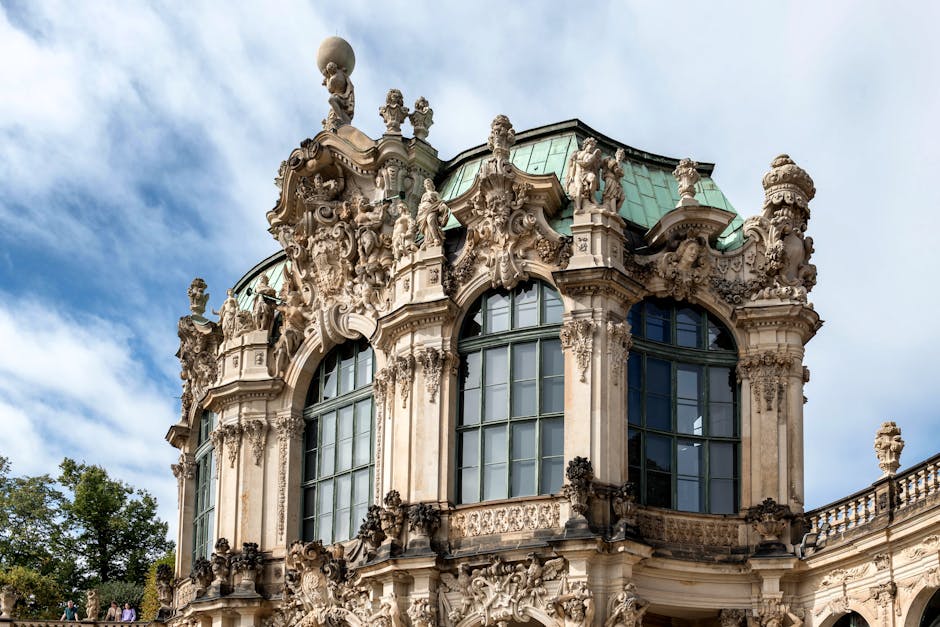
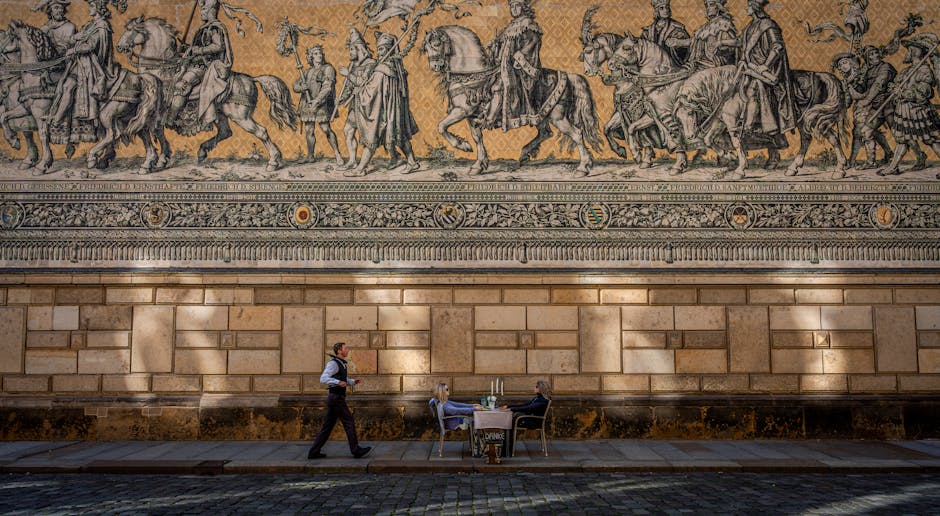
Discover the 'Florence on the Elbe' on this self-guided walk through Dresden’s reconstructed Baroque heart, from royal palaces to iconic domes.
 Moderate
Dresden, Germany
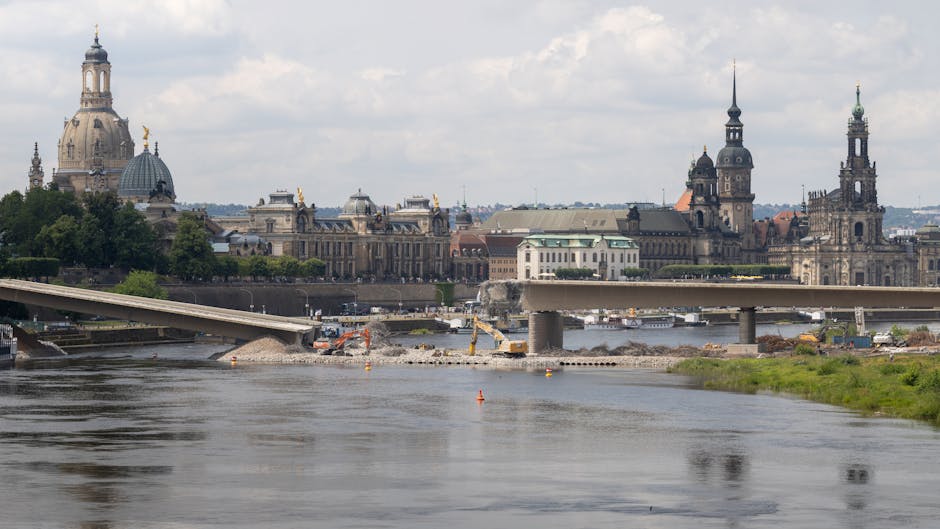
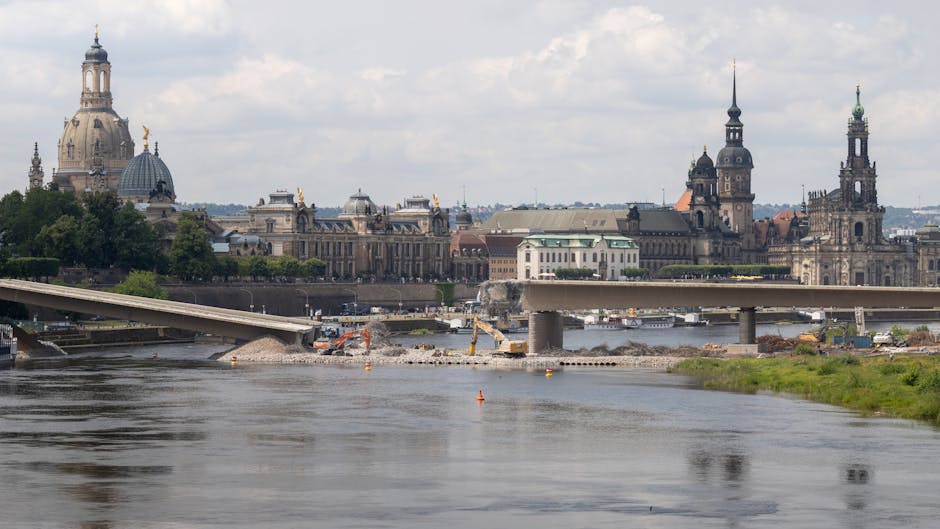
Experience Dresden's most iconic skyline views and Baroque landmarks on this scenic self-guided photography walk along the Elbe River.
 Easy
EasyDresden, Germany
Explore a stunning 19th-century power plant transformed into a vibrant cultural hub of theaters and art in this self-guided walking route.
 Easy
EasyDresden, Germany
Discover Dresden's vibrant soul on this self-guided walk through the street art, quirky courtyards, and bohemian spirit of the Äußere Neustadt.
 Moderate
Nairobi, Kenya
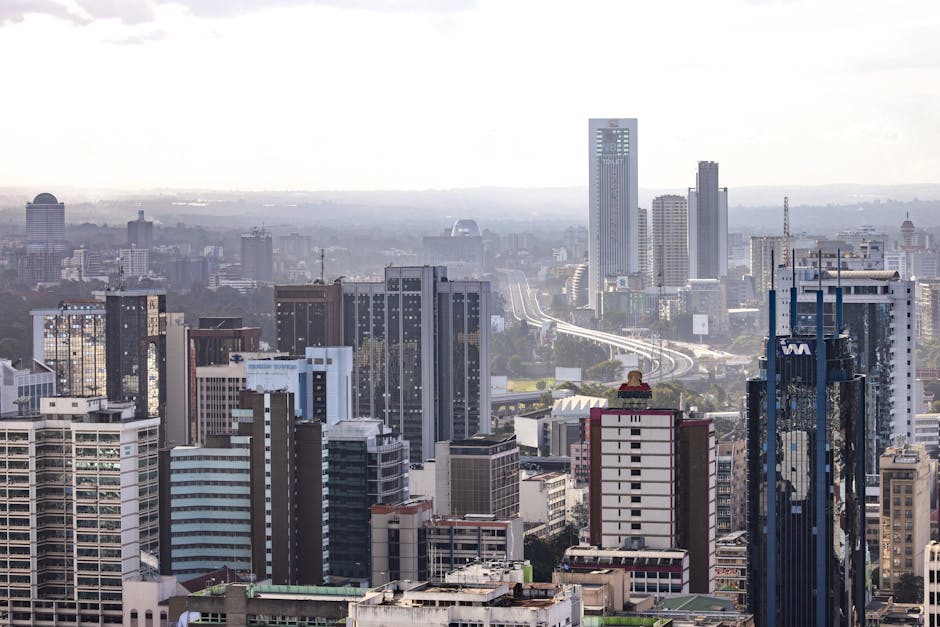
Discover Nairobi's lush side on this self-guided walk through botanical gardens, historic memorials, and vibrant local markets.
 Moderate
Nairobi, Kenya
Discover the pulse of Nairobi's contemporary art scene on this self-guided walk through the galleries and creative spaces of Kilimani.
 Easy
EasySalzburg, Austria
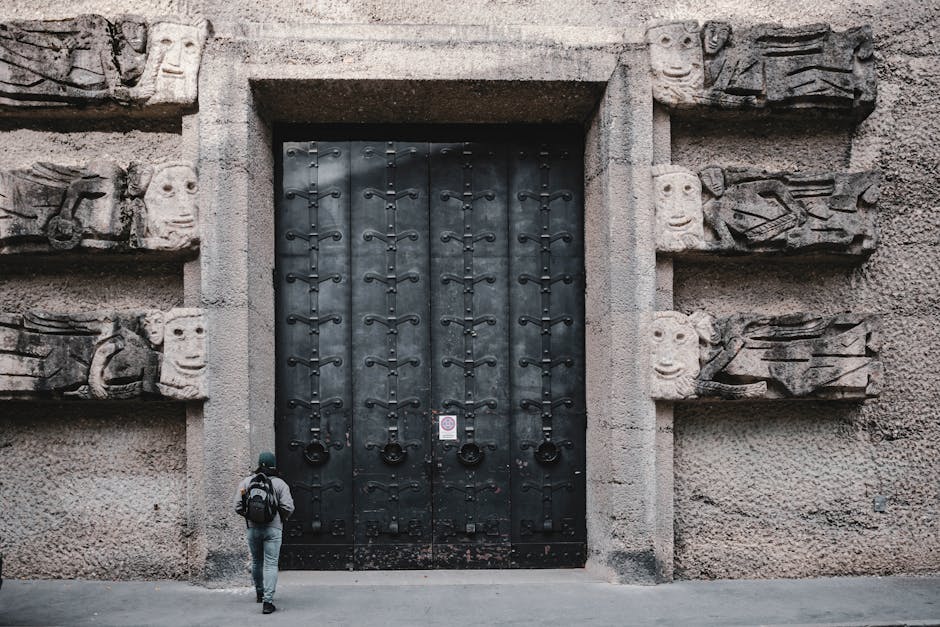
Discover Salzburg's oldest medieval alley, the birthplace of the 'Silent Night' author, and breathtaking views on this quiet self-guided walk.
 Easy
EasyWarsaw, Poland
Explore the 'Polish Versailles' at your own pace. Discover Baroque architecture, royal history, and stunning gardens on this self-guided walk.
 Easy
EasyBerlin, Germany
Explore the sites of Nazi power and the memorials that honor its victims on this self-guided walk through Berlin's historic Wilhelmstraße district.
 Moderate
Berlin, Germany
Explore Berlin’s 'Green Heart' on a self-guided walk through royal history, Cold War memorials, and serene lakeside gardens.
 Moderate
Berlin, Germany
Discover the legacy of the Berlin Wall on this self-guided walk from historic ghost stations to the vibrant street art and cafes of Mauerpark.
 Easy
EasyBerlin, Germany
Discover the soul of 1920s Berlin on a self-guided walk through Charlottenburg’s iconic literary cafes, historic theaters, and artistic landmarks.