Self-guided audio tour in Utrecht
Start Free on iPhone
Start free on iPhone to unlock this self-guided walking tour in Utrecht. Hear all the stories that make it amazing, walk at your own pace, and begin whenever you want.
Your Private Tour Guide
Step into the intellectual heart of the Netherlands with this self-guided walk through Utrecht’s historic University Quarter. For nearly four centuries, the city has been a beacon of learning, science, and philosophy. This neighborhood stroll takes you beyond the shadow of the Dom Tower to discover the hidden courtyards, grand palaces, and scientific bastions that define the university's legacy. You will explore the very spots where the Dutch Republic was born and where Nobel Prize winners once paced the halls. This route is perfect for those who want to experience the city at their own pace, moving from the medieval grandeur of the Academiegebouw to the tranquil greenery of the old botanical gardens. While many visitors search for a traditional guided tour Utrecht offers, this independent walking route allows you to linger where you choose. You will encounter the Drift, a picturesque canal lined with former aristocratic mansions that now serve as academic halls, and visit the city center university library, which was once a royal palace for King Louis Napoleon. The journey also highlights Utrecht’s scientific contributions at the Sonnenborgh Observatory, a 16th-century bastion repurposed for the stars. Whether you are interested in the only Dutch Pope in history or the evolution of botanical science, this walking tour Utrecht provides a comprehensive look at how the university is woven into the city's fabric. Beginning at the Domplein and ending at the serene Oude Hortus, this self-guided adventure showcases a side of Utrecht often missed by the crowds. You will walk through centuries of architectural styles, from Gothic to Neoclassical, all while enjoying the vibrant, youthful energy that the university brings to the city today. It is a journey of discovery for the curious mind, blending the weight of history with the charm of Utrecht’s canal-side life.
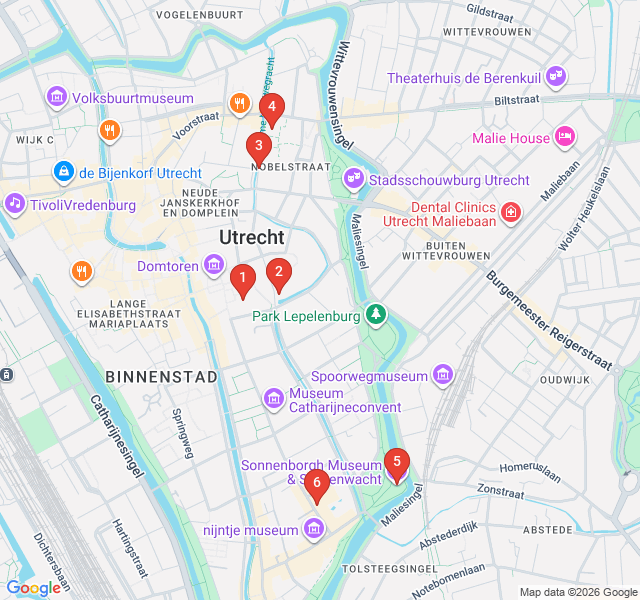
Numbers indicate the order of stops on the tour.
Start exploring at the Academiegebouw, the ceremonial heart of Utrecht University. This Neo-Renaissance building, donated by the city in 1886, sits on a site of immense historical weight. It was here, in the Great Hall, that the Union of Utrecht was signed in 1579, effectively founding the Dutch Republic. The university itself followed in 1636. Look up at the facade to see the statues representing the various faculties. Today, it remains the primary location for PhD defenses and official ceremonies. The statue in front depicts Jan van Nassau, one of the primary architects of the Union. This spot marks the intersection of Dutch national identity and academic excellence.
Just a short stroll from the Domplein stands Paushuize, one of Utrecht’s most striking historic houses. Built in 1517, it was commissioned by Adriaan Floriszoon Boeyens, the only Dutch Pope in history, known as Adrian VI. Ironically, he never lived here; he was in Rome when it was completed and died shortly after. The architecture is a beautiful example of the transition from late Gothic to Renaissance styles. Notice the distinct 'speklagen'—alternating layers of red brick and light stone—which were a sign of great wealth. Today, it serves as a prestigious venue for the King’s Commissioner, maintaining its status as a symbol of power and history in the city.
Walk along the Drift, perhaps the most prestigious canal in the University Quarter. Unlike the busier Oudegracht, the Drift is characterized by its quiet elegance and grand canal-side houses. In the 17th and 18th centuries, these were the homes of Utrecht’s elite. Over time, the university acquired many of these properties, converting them into lecture halls and faculty offices. As you walk, notice how the historic facades hide modern academic life within. The combination of the tranquil water, the arched bridges, and the scholarly atmosphere makes this one of the most photographed spots in the city. It perfectly encapsulates the 'Academic Utrecht' theme where history meets modern education.
This impressive building houses the city center's university library, but its history is far more regal. In the early 19th century, when the Netherlands was under French rule, Napoleon’s brother, Louis Napoleon, was crowned King of Holland. He chose Utrecht as his residence and converted several mansions here into a royal palace. Though his reign was short, the architectural legacy remains. Inside, the library blends contemporary design with the grand proportions of a palace. It holds one of the most significant collections in the country, including the famous Utrecht Psalter. It is a testament to how Utrecht repurposes its monumental heritage for the pursuit of knowledge.
Perched on the edge of the old city walls, Sonnenborgh is a unique hybrid of military defense and scientific exploration. Built in the mid-16th century as a bastion to protect the city, it was later transformed into an astronomical observatory in 1853. It was here that the Royal Netherlands Meteorological Institute (KNMI) was founded. The thick stone walls that once held cannons eventually supported telescopes peering into the heavens. Today, it serves as a museum and public observatory. Standing here, you can see the remains of the city’s fortifications while reflecting on Utrecht’s long-standing commitment to understanding the physical world, from the earth beneath to the stars above.
Your self-guided adventure concludes at the Oude Hortus, the university’s original botanical garden. Established in 1723, this green sanctuary was used by students and professors to study medicinal plants and exotic species brought back by Dutch explorers. The garden features a magnificent Ginkgo biloba tree, believed to be one of the oldest in Europe, planted around 1750. The historic greenhouses, some of the oldest in the country, still house a variety of rare plants. It is a peaceful end to the route, offering a moment of reflection amidst the same flora that academic pioneers studied centuries ago. It remains a living museum of botanical history.
Start Free on iPhone
Explore “Academic Utrecht: From Dom to Drift” with your very own Private Tour Guide with Zigway. Start free on iPhone, skip the large group and the fixed routes, and hear the city come alive as you go.
Your Private Tour Guide
Don't miss the good stuff
Explore Freely
 Easy
EasyUtrecht, Netherlands
Explore Utrecht's 2,000-year history from Roman fortresses to medieval cathedrals on this self-guided audio walk through the city center.
 Easy
EasyUtrecht, Netherlands
Explore Utrecht's industrial evolution on this self-guided walk from the medieval Dom Tower to the creative warehouses and design hubs of Rotsoord.
 Easy
EasyUtrecht, Netherlands
Explore Utrecht’s liquid history on this self-guided walk from historic canal-side cafes to modern craft breweries.
 Easy
EasyUtrecht, Netherlands
Discover the dramatic world of the Utrecht Caravaggisti on this self-guided walk through the historic Museumkwartier and its artistic landmarks.
 Easy
EasyKrakow, Poland
Explore the prestigious Jagiellonian University district, featuring Neo-Gothic architecture, Baroque churches, and Krakow's hidden scholarly gems.
 Easy
EasyWarsaw, Poland
Discover the hidden courtyards and grand pre-war architecture of Warsaw's most atmospheric neighborhood on this self-guided stroll.
 Easy
EasySalzburg, Austria
Discover Salzburg's oldest medieval alley, the birthplace of the 'Silent Night' author, and breathtaking views on this quiet self-guided walk.
 Easy
EasyNairobi, Kenya
Explore Nairobi's architectural evolution from colonial-era landmarks to iconic Brutalist skyscrapers on this historic self-guided walking route.
 Easy
EasyAmsterdam, Netherlands
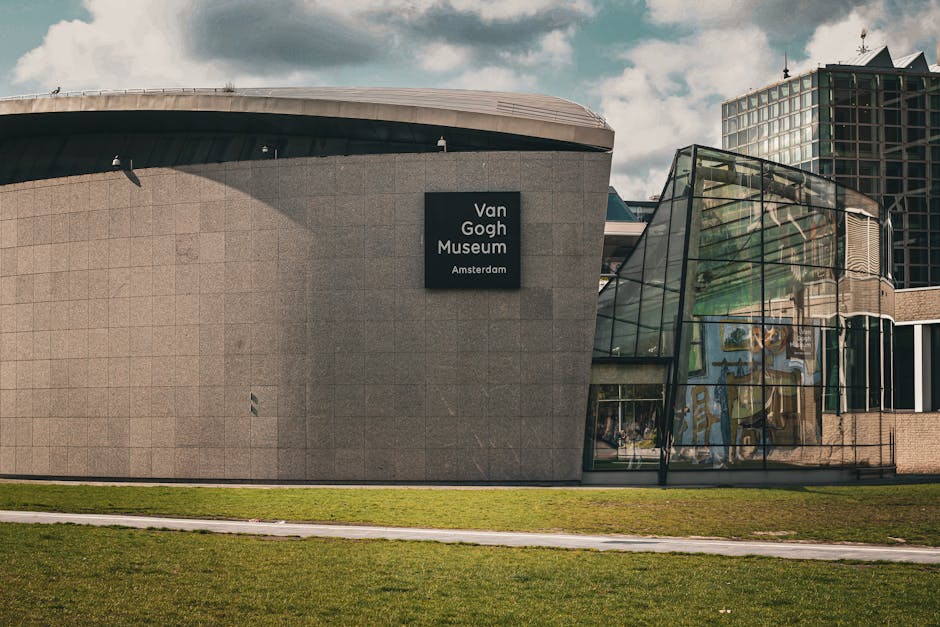
Discover Amsterdam's cultural heart on this self-guided walk from the iconic Museumplein to the serene blooming gardens of Vondelpark.
 Easy
EasyAmsterdam, Netherlands
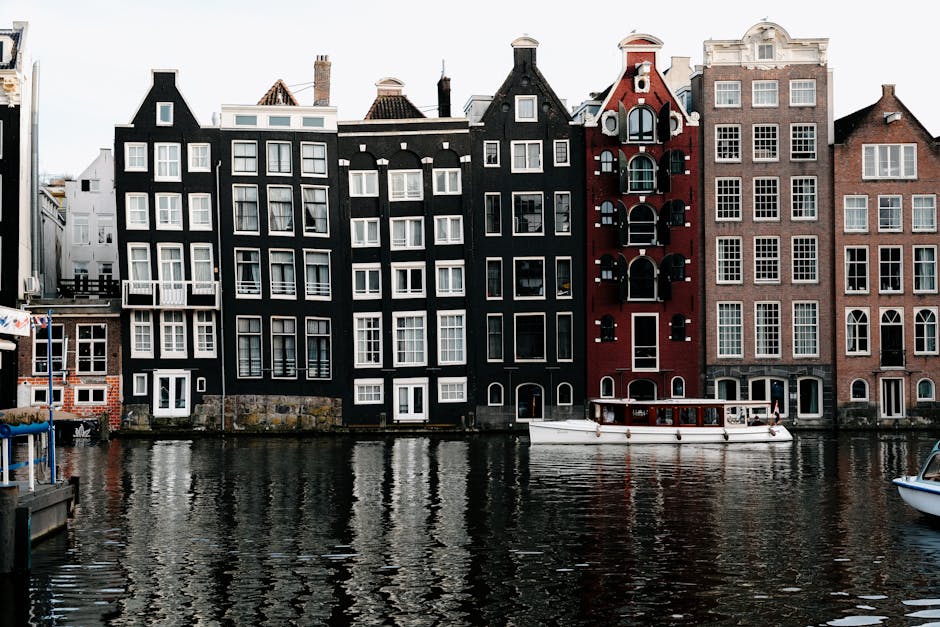
Discover Amsterdam's literary heart on this self-guided walk through historic bookshops, writers' haunts, and the homes of revolutionary thinkers.
 Easy
EasyAmsterdam, Netherlands
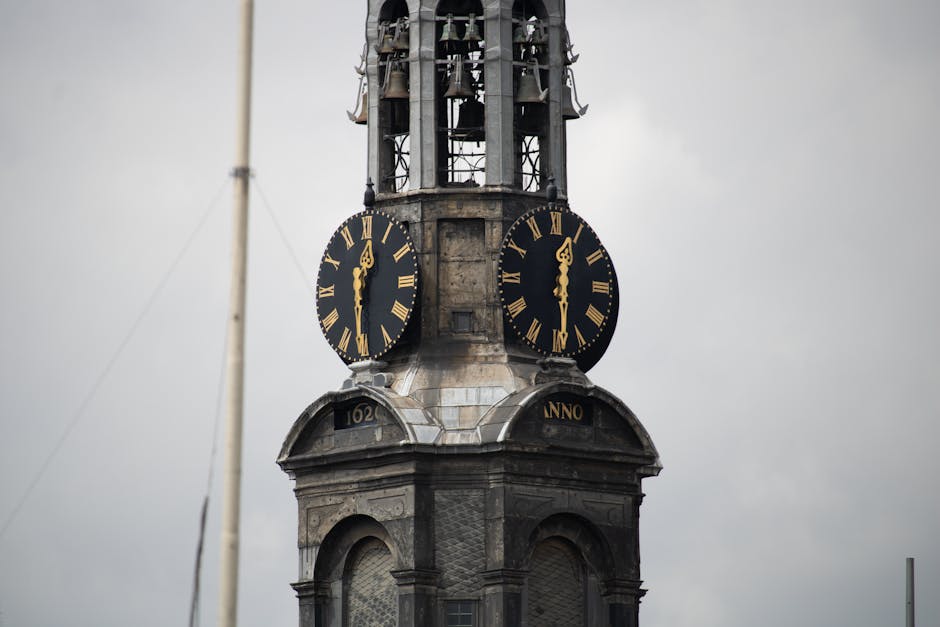
Capture the magic of Amsterdam with this self-guided photography walk across the iconic bridges and scenic banks of the Amstel River.
 Easy
EasyAmsterdam, Netherlands
Discover the opulent 17th-century mansions and rich history of Amsterdam's famous Canal Belt on this self-guided architectural walking route.