Self-guided audio tour in Istanbul
Start Free on iPhone
Start free on iPhone to unlock this self-guided walking tour in Istanbul. Hear all the stories that make it amazing, walk at your own pace, and begin whenever you want.
Your Private Tour Guide
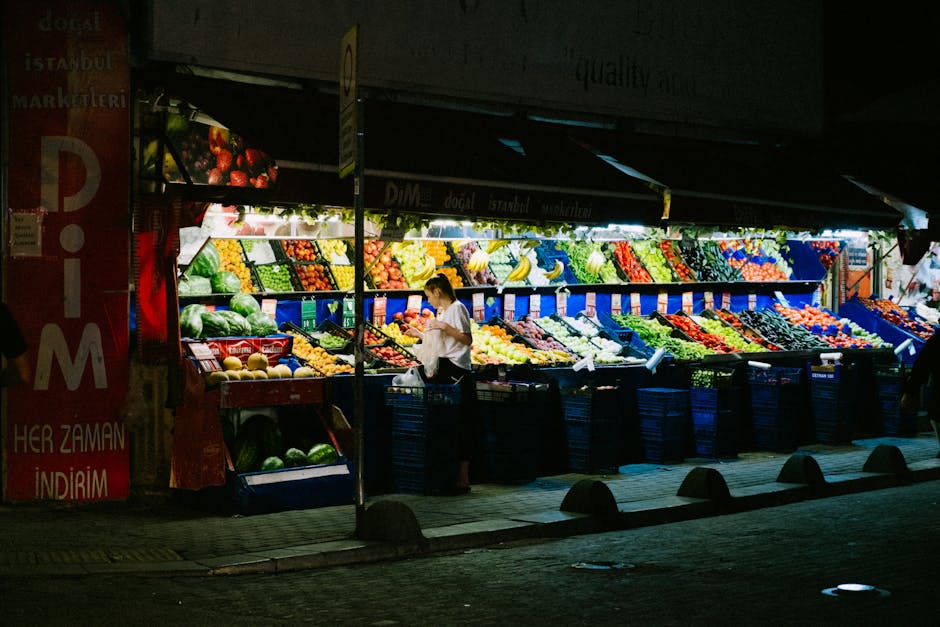
Step into the labyrinthine heart of old Istanbul with this self-guided walk through the historic Fatih district. This route invites you to look beyond the glittering gold of the shop windows and discover the architectural soul of the Ottoman Empire. You will begin at the Nuruosmaniye Mosque, a masterpiece of Ottoman Baroque, before diving into the Grand Bazaar. While most visitors stay on the main thoroughfares, this neighborhood stroll leads you into the 'hans'—historic caravanserais where merchants have traded for over 500 years. These hidden courtyards are the city's secret workshops, where the rhythmic sound of jewelry hammers still echoes off ancient stone walls. This walking tour Istanbul experience is designed for those who want to see the mechanics of history. You will explore the Zincirli Han, famous for its vibrant pink facade and skilled artisans, and the Sandal Bedesteni, which once served as the high-security vault for the city’s most precious silks. As you move toward the Golden Horn, the route takes you through the atmospheric Büyük Valide Han, one of the largest and most storied inns in the city, offering a glimpse into the 17th-century maritime trade. The journey concludes at the Egyptian Bazaar, also known as the Spice Market, where the scent of saffron, sumac, and roasted coffee fills the air. This self-guided adventure allows you to experience the transition from the industrial grit of the workshops to the sensory explosion of the spice stalls at your own pace. Whether you are a photography enthusiast looking for the perfect play of light in a vaulted corridor or a history buff seeking the tracks of the Silk Road, this route provides an authentic look at the commercial legacy of the city. Unlike a standard guided tour Istanbul might offer, this walk encourages you to linger in the quiet corners where modern Istanbul meets its imperial past.
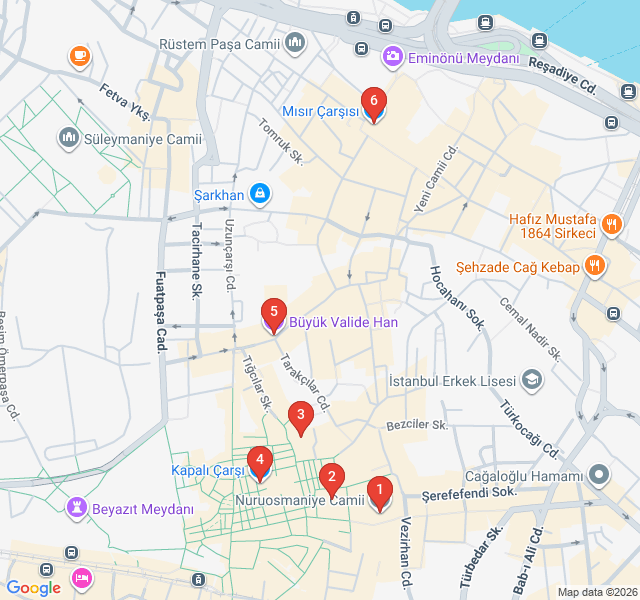
Numbers indicate the order of stops on the tour.
Welcome to the Nuruosmaniye Mosque, a striking example of Ottoman Baroque architecture. Completed in 1755, its name translates to 'The Light of Osman,' and once you step inside, you will see why. The mosque is famous for its massive windows and high dome that flood the interior with natural light. Unlike the traditional square footprints of earlier mosques, this one features a unique horseshoe-shaped courtyard. As you stand here, notice the blend of European decorative influences with classical Ottoman structure. This mosque served as a grand gateway to the bazaar district, signaling to merchants and travelers that they were entering the spiritual and commercial heart of the empire.
You are now entering the Sandal Bedesteni, one of the oldest parts of the Grand Bazaar. A 'bedesten' was a high-security masonry building designed to protect the most valuable goods. This specific hall was named after 'sandal,' a precious type of fabric woven from silk and cotton. Look up at the twenty brick domes that support the roof; this sturdy construction was essential for fireproofing and defense. In the Ottoman era, this was where the elite traded jewelry and luxury textiles. Today, it retains its majestic atmosphere, serving as a reminder of the bazaar's origins as a centralized hub for global trade under Sultan Mehmed the Conqueror.
Tucked away from the main tourist paths is Zincirli Han, often cited as the most beautiful caravanserai within the bazaar complex. Its distinctive pink walls and green-shuttered workshops surround a peaceful courtyard filled with trees. This 'han' has functioned for centuries as a workshop for master jewelers and goldsmiths. If you listen closely, you can often hear the tapping of hammers from the upper floors. Historically, these inns provided lodging for traveling merchants and secure storage for their animals and goods. Today, Zincirli Han is a sanctuary of craftsmanship, offering a glimpse into the traditional apprenticeship system that still thrives in Istanbul.
You are currently standing in one of the largest and oldest covered markets in the world. The Grand Bazaar, or Kapalıçarşı, is a city within a city, featuring over 60 streets and thousands of shops. It began as a small vaulted warehouse in 1455 and expanded over centuries into this massive labyrinth. Each street was traditionally dedicated to a specific craft—leather, gold, carpets, or antiques. While it may seem chaotic, the bazaar follows a logic of trade that has existed for generations. It remains a vital part of Istanbul's economy and a social landmark where bargaining is an art form and tea is the currency of conversation.
Leaving the covered bazaar, you descend toward the sea to find Büyük Valide Han. Built in 1651 by the powerful Kösem Sultan, mother of the Sultan, this was once the largest caravanserai in Istanbul. It was designed to support the maritime trade coming from the nearby Golden Horn. The building is vast and rugged, showing the wear of nearly four centuries. Its upper floors once housed hundreds of rooms for merchants. While famous for its rooftop views, the true magic lies in its weathered stone corridors and the small ateliers where artisans still work with metal and textiles, carrying on a legacy of trade that spans the ages.
The final stop on your route is the Egyptian Bazaar, also known as the Spice Market. Built in 1660, its name 'Mısır Çarşısı' refers to the fact that it was originally funded by taxes from Egypt. This was the terminus of the Silk Road, where spices from the East reached Europe. Today, it remains a sensory feast. You will find mounds of colorful spices, dried fruits, Turkish delight, and medicinal herbs. The L-shaped building is a masterpiece of Ottoman architecture, designed to keep the goods cool. Take a moment to breathe in the mixture of cinnamon, cloves, and freshly ground coffee that has defined this corner of the city for centuries.
Start Free on iPhone
Explore “Grand Bazaar: Hidden Hans and Rooftops” with your very own Private Tour Guide with Zigway. Start free on iPhone, skip the large group and the fixed routes, and hear the city come alive as you go.
Your Private Tour Guide
Don't miss the good stuff
Explore Freely
 Easy
EasyIstanbul, Turkey
Explore the Bosphorus waterfront from Beşiktaş to Ortaköy. Discover imperial palaces, vibrant markets, and iconic mosques at your own pace.
 Moderate
Istanbul, Turkey
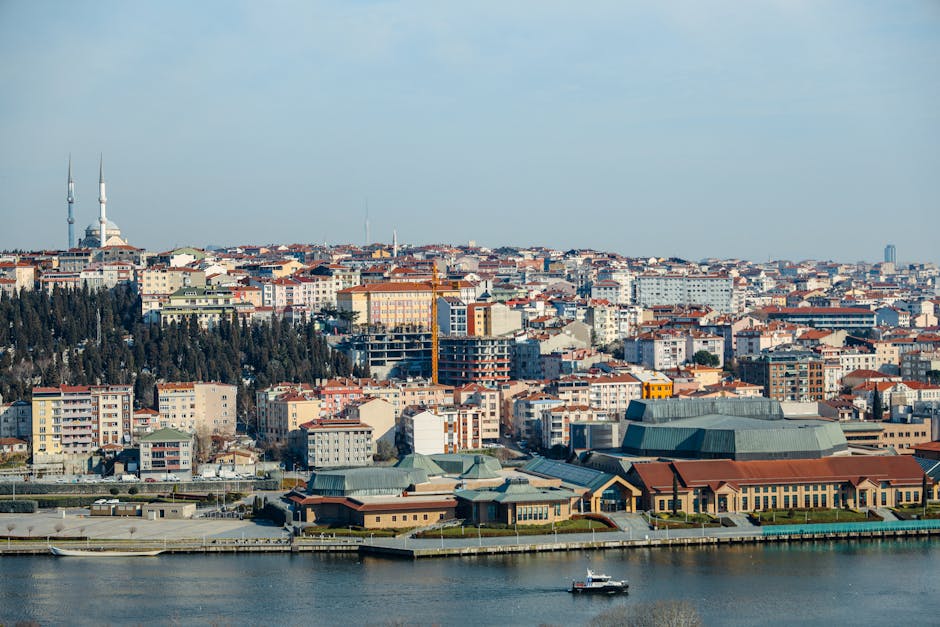
Explore the vibrant colors and deep history of Fener and Balat on this self-guided audio walk through Istanbul's most photogenic neighborhoods.
 Easy
EasyIstanbul, Turkey
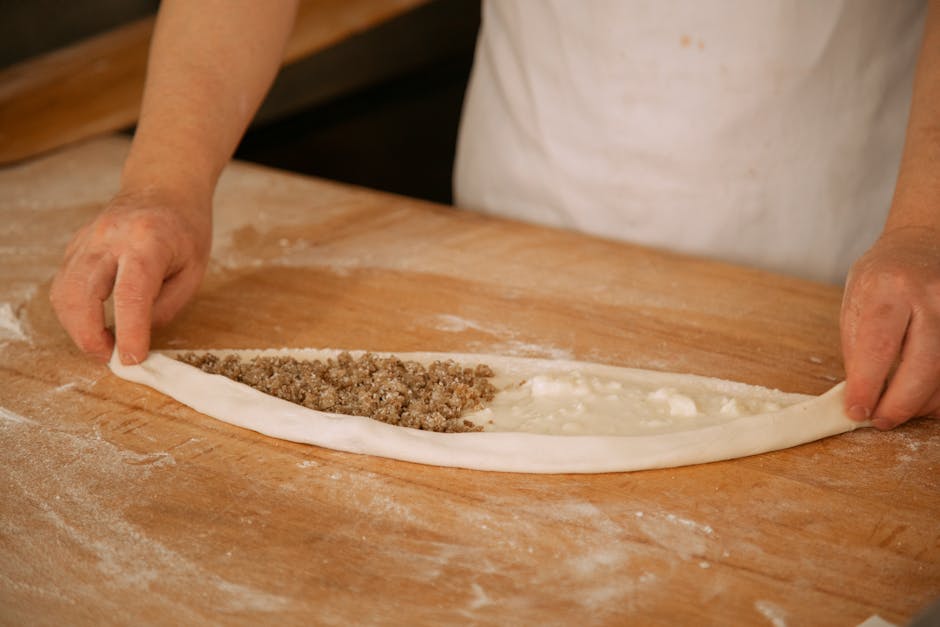
Discover the flavors of Istanbul's Asian side on this self-guided walk through the vibrant markets and historic eateries of Kadıköy.
 Moderate
Istanbul, Turkey
Explore Galata’s artistic soul, from iconic Genoese towers and Art Nouveau stairs to hidden design boutiques on this creative self-guided walk.
 Moderate
Gdansk, Poland
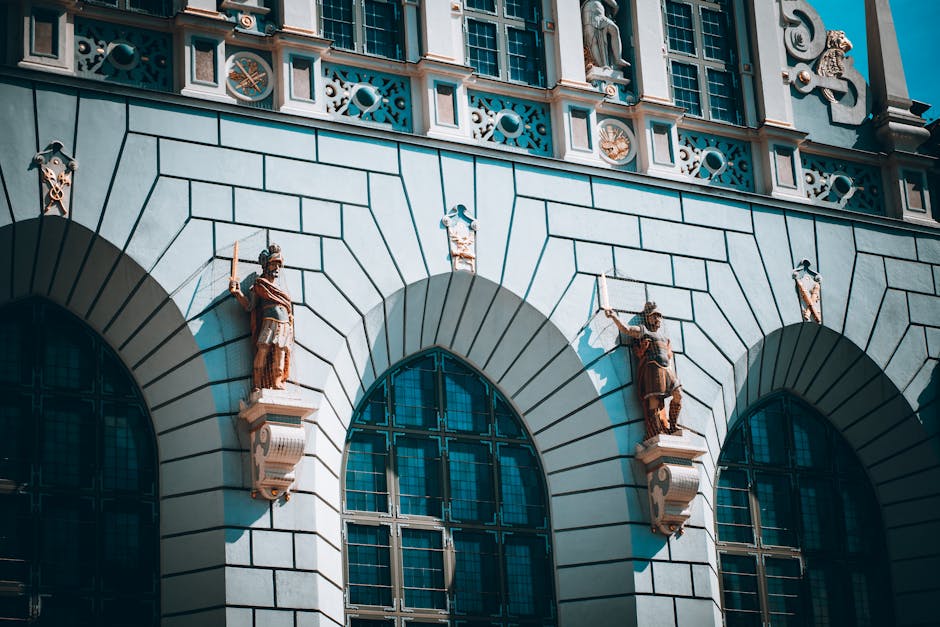
Discover the origins of WWII in Gdansk on this self-guided walk through heroic last stands, massive museums, and strategic hilltop fortifications.
 Easy
EasyWarsaw, Poland
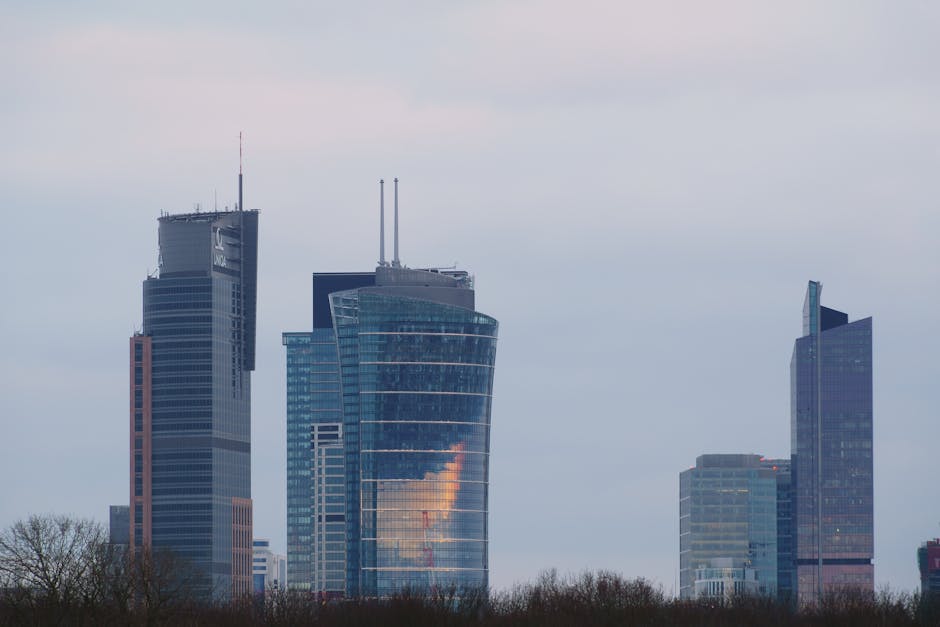
Discover the hidden courtyards and grand pre-war architecture of Warsaw's most atmospheric neighborhood on this self-guided stroll.
 Easy
EasySalzburg, Austria
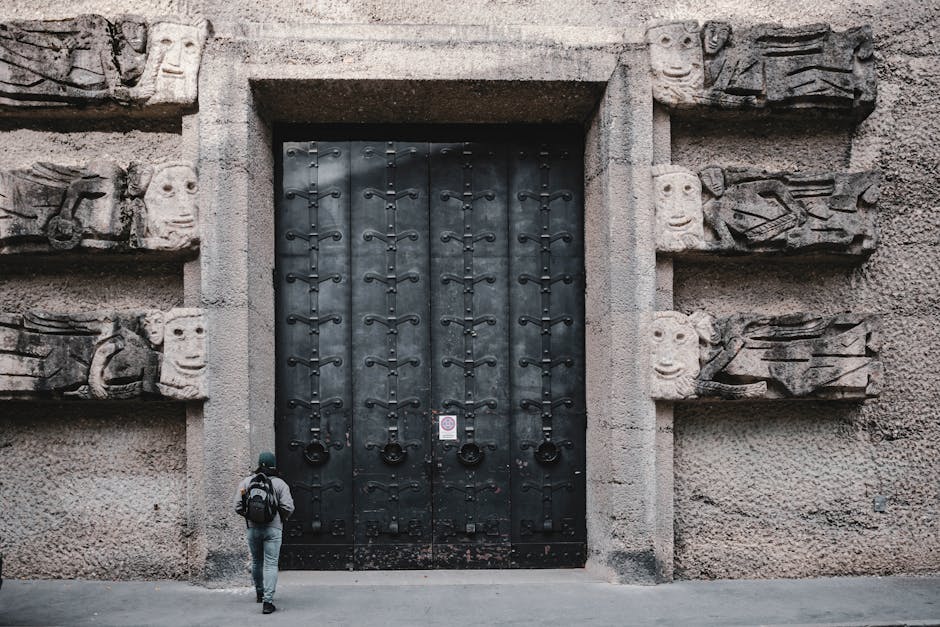
Discover Salzburg's oldest medieval alley, the birthplace of the 'Silent Night' author, and breathtaking views on this quiet self-guided walk.
 Moderate
Gothenburg, Sweden
Discover Gothenburg’s maritime soul on this self-guided walk from the historic Central Station to the scenic riverfront at Stenpiren.
 Moderate
Cappadocia, Turkey
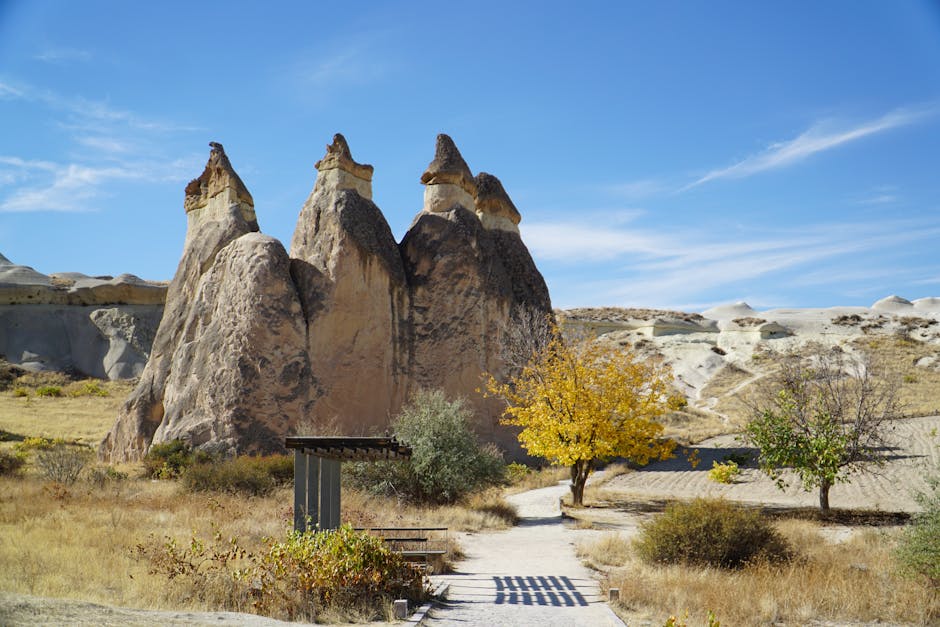
Explore the surreal landscapes and ancient dovecotes of Pigeon Valley on this scenic self-guided walk between Göreme and Uçhisar.
 Moderate
Cappadocia, Turkey
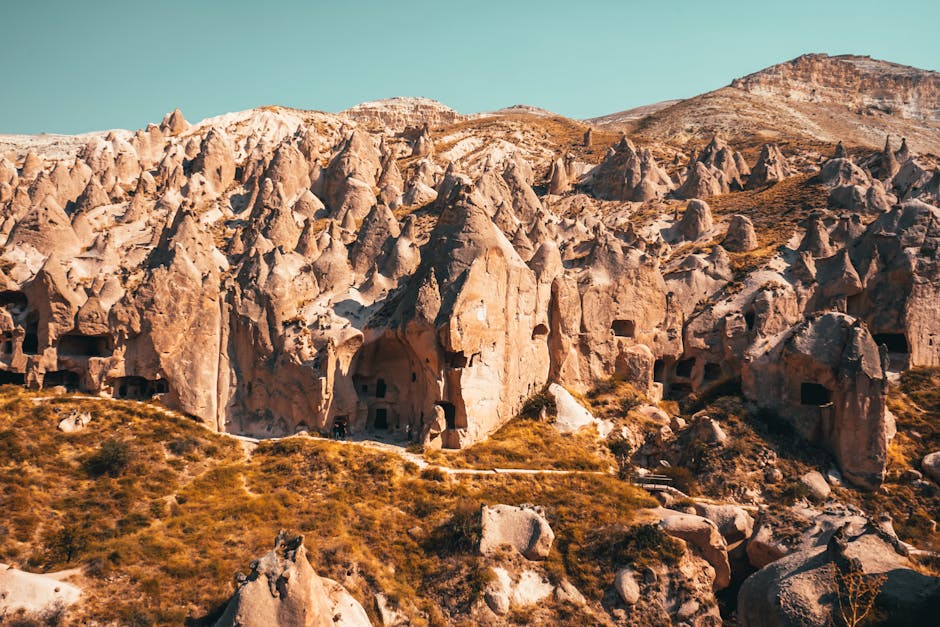
Explore Ortahisar’s towering rock castle, ancient cave monasteries, and authentic village life on this self-guided walk through Cappadocia.
 Easy
EasyCappadocia, Turkey
Explore Ürgüp’s elegant stone mansions, famous fairy chimneys, and rich wine heritage on this self-guided neighborhood stroll through Cappadocia.
 Moderate
Cappadocia, Turkey
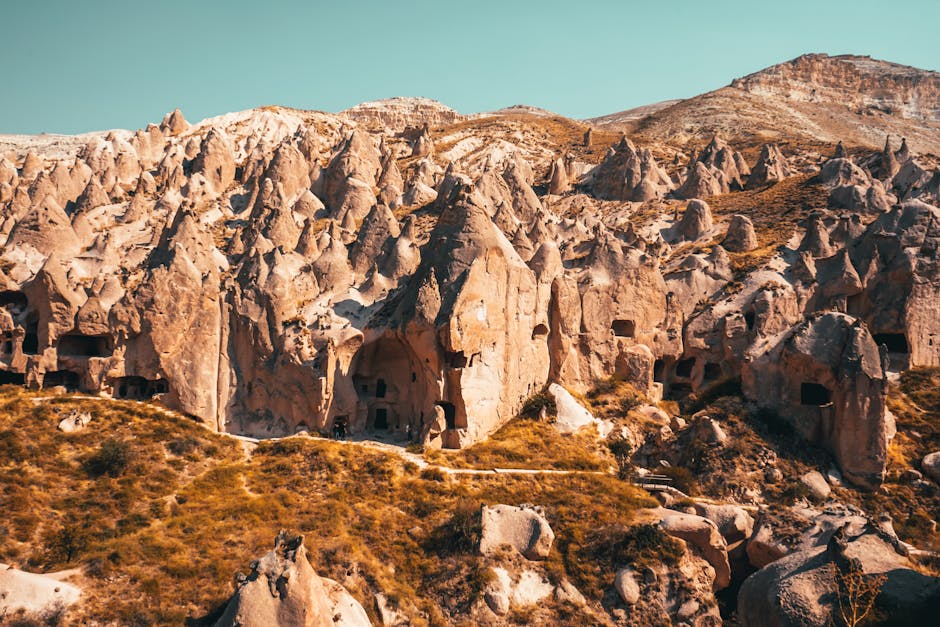
Explore abandoned rock-cut homes and ancient Byzantine churches in Cappadocia’s haunting ghost village on this self-guided audio walk.