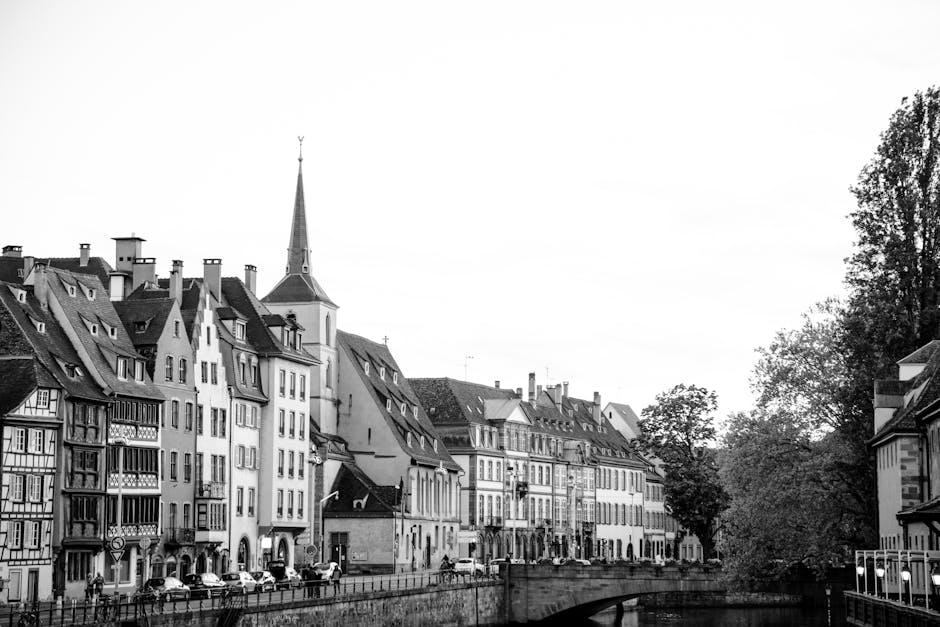
Self-guided audio tour in Strasbourg
Start Free on iPhone
Start free on iPhone to unlock this self-guided walking tour in Strasbourg. Hear all the stories that make it amazing, walk at your own pace, and begin whenever you want.
Your Private Tour Guide
Step into a world where the written word transformed human history. This self-guided walk through Strasbourg’s Grande Île explores the profound intersection of technology and literature. Strasbourg is not just a city of canals and timbered houses; it is the cradle of the printing revolution and a sanctuary for some of Europe’s greatest literary minds. On this walking route, you will uncover the legacy of Johannes Gutenberg, whose invention of movable type in the 15th century forever changed how stories are shared, and follow the footsteps of Johann Wolfgang von Goethe, the titan of German literature who found his poetic voice in these very streets. Beginning near the towering presence of the Cathedral, the route winds through narrow medieval alleys that have remained largely unchanged since the Renaissance. You will explore the square dedicated to Gutenberg, where his statue serves as a reminder of the city's industrial and intellectual heritage. Beyond the history of the press, this neighborhood stroll highlights the romantic era, focusing on the house where a young Goethe resided during his university years. The journey also takes you through the heart of the UNESCO-listed Grande Île, showcasing the architectural evolution from grand religious seminaries to the avant-garde designs of the early 20th century. This walking tour Strasbourg experience is designed for those who appreciate the quiet power of a library and the vibrant history of urban design. Whether you are a bibliophile interested in the origins of the book or a history enthusiast looking to understand Strasbourg’s role as a bridge between French and German cultures, this route offers a deep dive into the city's soul. Enjoy the freedom to pause at a local café or linger in a historic square, discovering at your own pace how a single invention and a few visionary poets helped shape the modern world. Exploring independently allows you to truly soak in the atmosphere of the 'City of Roads' without the rush of a group.
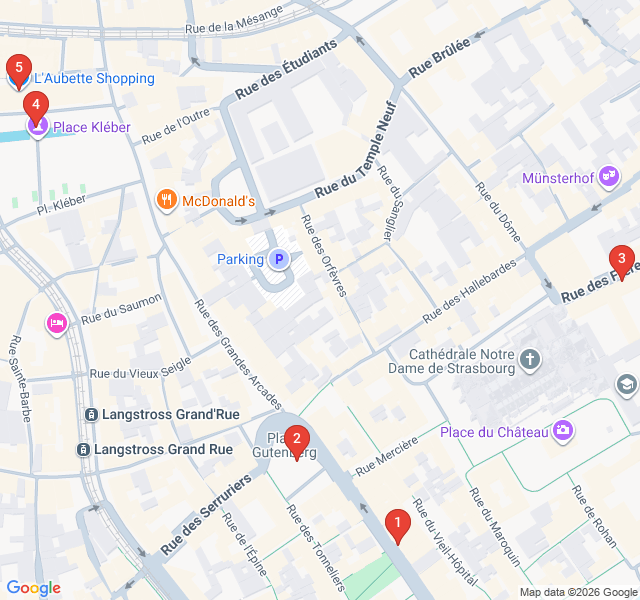
Numbers indicate the order of stops on the tour.
Our journey begins at 16 Rue du Vieux-Marché-aux-Poissons, the former residence of Johann Wolfgang von Goethe. In 1770, a young Goethe arrived in Strasbourg to complete his law studies, but it was the city's culture and its magnificent Cathedral that truly captured his heart. It was here that he transitioned from a student to a leader of the 'Sturm und Drang' literary movement. His time in Strasbourg was marked by his obsession with the Cathedral's Gothic architecture and his tragic romance with Friederike Brion. This house serves as a silent witness to the formative years of a man who would become the most influential figure in German literature. Notice the plaque commemorating his stay, marking the spot where romanticism found its stride in the shadow of the spire.
Walking into Place Gutenberg, you are greeted by the bronze image of the man who revolutionized the world. Johannes Gutenberg lived in Strasbourg for roughly a decade in the mid-1400s, and it was during this time that he experimented with the mechanics of the printing press. The statue, designed by the famous sculptor David d'Angers, depicts Gutenberg holding a page from the Bible with the inscription 'Et la lumière fut' (And there was light). This square was once the political and social hub of the city. As you look at the statue, consider how the ability to mass-produce texts allowed the ideas of the Reformation and the Renaissance to spread like wildfire across Europe, with Strasbourg serving as a primary engine of that change.
A short walk brings us to the Grand Séminaire, a bastion of education and religious history. This site reflects Strasbourg's long-standing tradition of scholarship and the preservation of knowledge. While the current buildings date back centuries, the institution itself represents the transition of Strasbourg from a medieval stronghold to an intellectual center. The seminary has housed vast libraries and served as a training ground for the thinkers who navigated the complex religious landscape of the Alsace region. The architecture here is a blend of sobriety and grandeur, typical of the city's ecclesiastical history, and it provides a quiet contrast to the bustling market streets nearby.
You are now standing in the heart of the Grande-Île, the first city center to be entirely classified as a UNESCO World Heritage site. This island, encircled by the River Ill, is a living museum of medieval and Renaissance urbanism. As you walk, observe the intricate timber-framed houses with their steeply pitched roofs—designed to store goods and dry hides in centuries past. This area was the backdrop for the daily lives of the printers, poets, and merchants we’ve discussed. The harmony of the architecture here reflects the dual French and German influence that defines Strasbourg. It is easy to see why writers like Victor Hugo and Goethe found endless inspiration in these winding, atmospheric lanes.
Our final stop is L'Aubette, located on the northern side of the expansive Place Kléber. Originally built in the 1770s as a military building, its name derives from 'aube' (dawn), referring to the changing of the guard. However, its literary and artistic significance peaked in the 1920s when artists Theo van Doesburg, Sophie Taeuber-Arp, and Jean Arp transformed its interior into a masterpiece of the De Stijl movement, often called the 'Sistine Chapel of Abstract Art.' This evolution from a rigid military structure to a space for avant-garde expression mirrors Strasbourg's own journey through history. It marks the shift from the traditional printed word to the modern visual and abstract languages of the 20th century.
Start Free on iPhone
Explore “The Gutenberg Legacy: Print and Poetry” with your very own Private Tour Guide with Zigway. Start free on iPhone, skip the large group and the fixed routes, and hear the city come alive as you go.
Your Private Tour Guide
Don't miss the good stuff
Explore Freely
 Easy
EasyStrasbourg, France
Discover the vibrant soul of Strasbourg’s student district. Explore historic factories, lively squares, and canal-side hangouts at your own pace.
 Easy
EasyStrasbourg, France
Explore Strasbourg’s Gothic heart and astronomical marvels on this self-guided walk through the historic Grande Île.
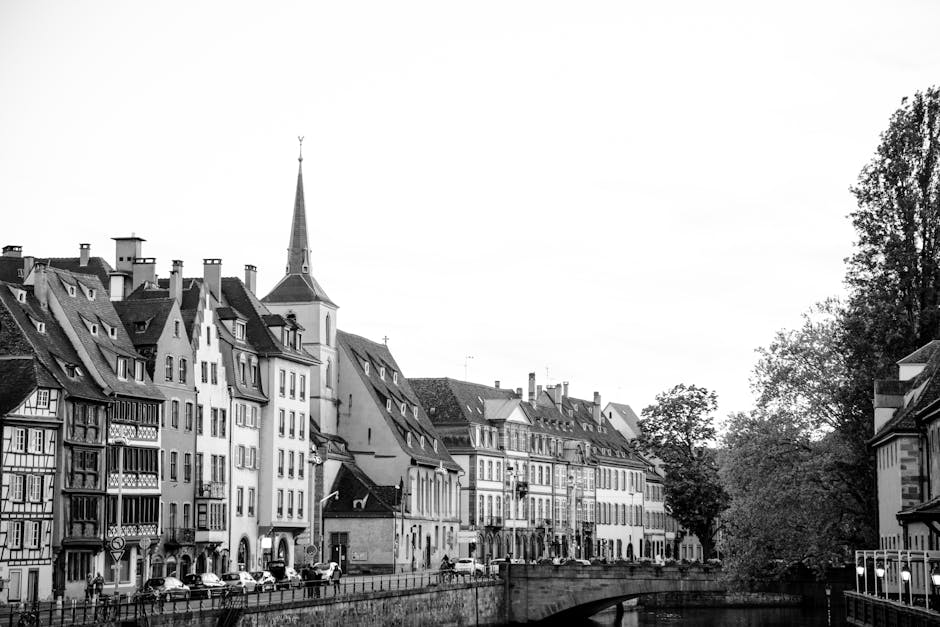 Easy
EasyStrasbourg, France
Discover Strasbourg’s soul on this self-guided stroll along historic quays, scenic bridges, and the fairytale canals of Petite France.
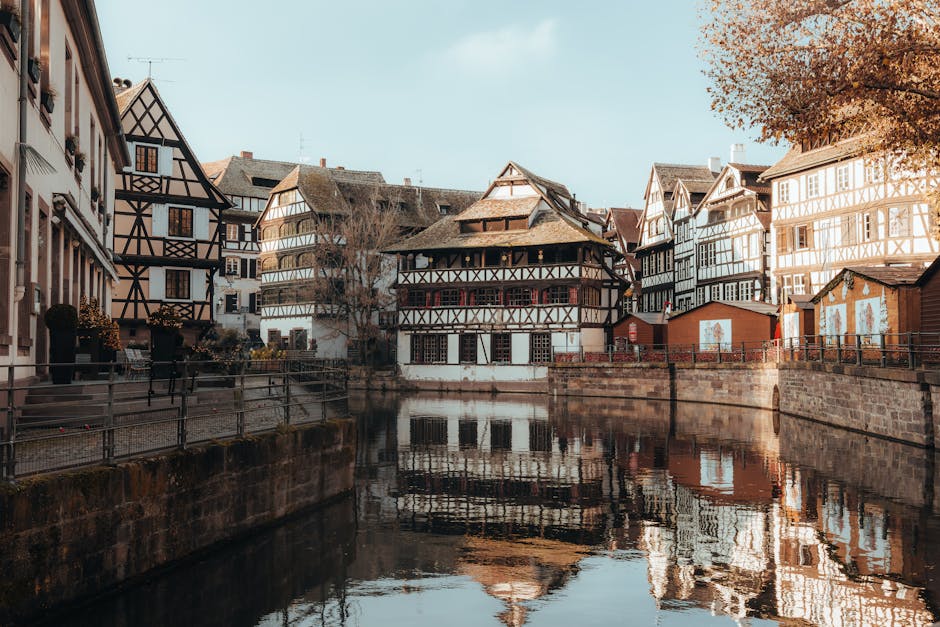 Moderate
Strasbourg, France
Explore the military genius of Vauban on this self-guided walk through Strasbourg’s historic bridges, dams, and riverside defenses.
 Easy
EasyGothenburg, Sweden
Discover Gothenburg’s 17th-century Dutch foundations, historic canals, and military fortifications on this self-guided architectural walk.
 Easy
EasyNairobi, Kenya
Explore Nairobi's architectural evolution from colonial-era landmarks to iconic Brutalist skyscrapers on this historic self-guided walking route.
 Easy
EasyNairobi, Kenya
Discover Nairobi's iconic skyline on this self-guided architecture walk through the CBD’s most famous modernist and Brutalist landmarks.
 Easy
EasyKrakow, Poland
Explore the prestigious Jagiellonian University district, featuring Neo-Gothic architecture, Baroque churches, and Krakow's hidden scholarly gems.
 Challenging
Paris, France
Explore the secret vineyards, legendary artist studios, and hidden squares of Paris's iconic hilltop on this self-guided bohemian walking route.
 Easy
EasyParis, France
Explore the evolution of Parisian design from Art Nouveau whimsy to Le Corbusier's Modernist masterpieces on this self-guided architectural walk.
 Easy
EasyParis, France
Explore the flavors and history of Bastille on this self-guided walk through the legendary Aligre Market and the scenic Coulée Verte.
 Easy
EasyParis, France
Discover aristocratic mansions, secret medieval courtyards, and royal history on this self-guided walk through the enchanting Marais district.