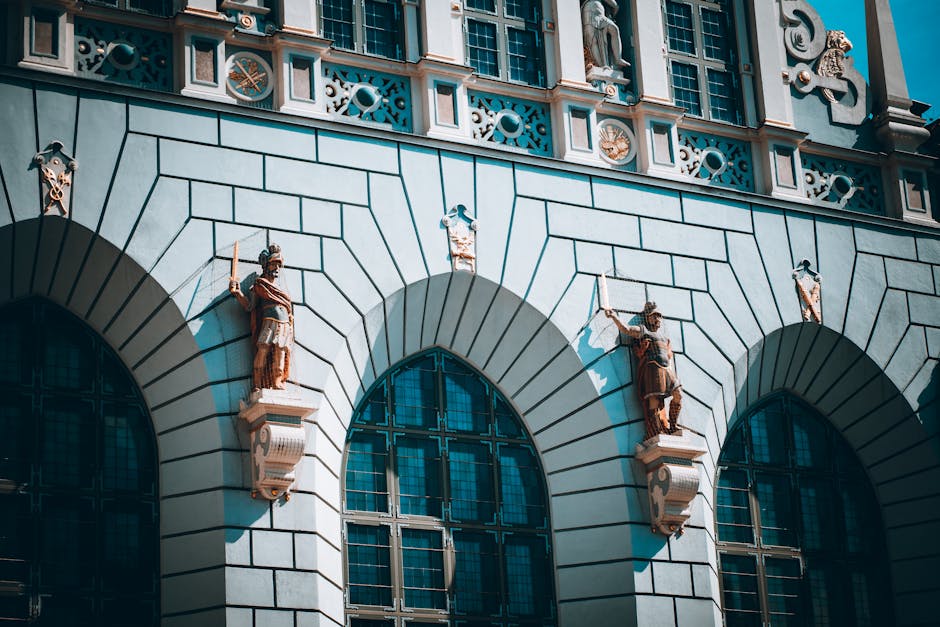
Self-guided audio tour in Gdansk
Start Free on iPhone
Start free on iPhone to unlock this self-guided walking tour in Gdansk. Hear all the stories that make it amazing, walk at your own pace, and begin whenever you want.
Your Private Tour Guide
Gdansk's identity is inextricably linked to the Motlawa River, a waterway that for centuries served as the commercial artery of the Hanseatic League. This self-guided walk invites you to explore the maritime heart of the city, tracing the banks where merchants once traded grain for timber and wine. Starting on the modern Ołowianka footbridge, you will traverse the historic quaysides that tell a story of resilience, industrial prowess, and painstaking post-war reconstruction. The route highlights the dramatic contrast between the city's industrial heritage and its cultural rebirth, moving from a repurposed power station to the deck of the first ship built in post-war Poland. As you follow this walking route, you will encounter the towering silhouette of the Old Port Crane, a masterpiece of medieval engineering and an enduring symbol of Gdansk. The path along the Długie Pobrzeże (Long Quay) offers a sensory experience of the city’s past, with its characteristic water gates and narrow, gabled houses reflected in the river. This neighborhood stroll is more than just a sightseeing exercise; it is an immersion into the 'Golden Age' of Gdansk, where every brick and timber beam has a story to tell about the sailors, merchants, and craftsmen who built this Baltic powerhouse. Whether you are interested in maritime history, adaptive architecture, or simply enjoying a scenic walk by the water, this route provides a comprehensive introduction to the sights and sounds of the Motlawa. Discover the legendary Crane and the bustling quays independently and at your own pace, stopping to admire the view or visit a museum as you see fit. This walking tour Gdansk experience captures the essence of a city that has always looked toward the sea, offering a deep dive into the maritime traditions that continue to define the local culture today.
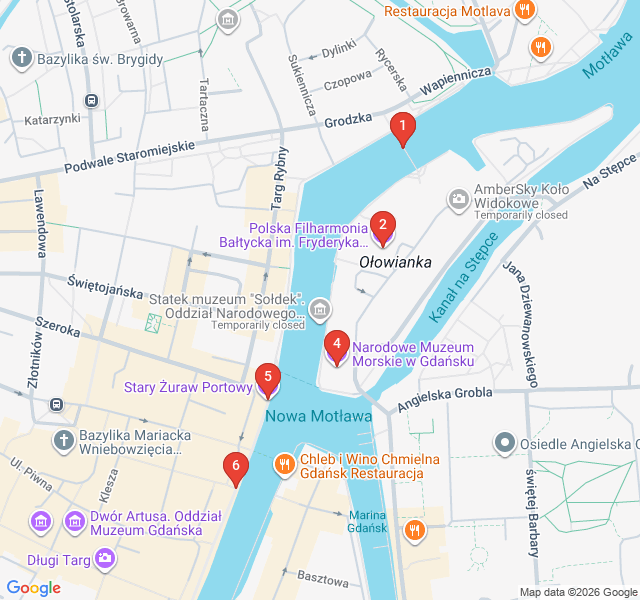
Numbers indicate the order of stops on the tour.
Begin your self-guided adventure at the Ołowianka Footbridge. This modern bascule bridge, completed in 2017, serves as a vital link between the Main City and Ołowianka Island. As you cross, take a moment to look down the Motlawa River; this view perfectly encapsulates the blend of old and new Gdansk. The bridge is designed to lift to allow ships to pass, a process that takes about two minutes. Ołowianka Island itself was historically used for lead storage—hence the name, derived from the Polish word for lead, 'ołów'. This spot offers one of the best vantage points for photographing the historic waterfront and the silhouette of the Crane in the distance.
On your right as you enter Ołowianka Island stands a grand brick building that was once a municipal power station. Built between 1897 and 1898, this neo-Gothic industrial complex survived the destruction of World War II surprisingly well. In the late 1990s, it underwent a massive transformation to become the Polish Baltic Philharmonic. It is a prime example of adaptive reuse, where the industrial 'cathedral' of the 19th century has been preserved to serve modern culture. Look for the decorative brickwork and the tall windows that once lit the turbine halls, now providing a home for world-class musical performances.
Moored alongside the quay is the SS Sołdek, a ship that holds a special place in Polish heart. Launched in 1948, it was the first seagoing ship built in Poland after the devastating losses of the Second World War. Named after Stanisław Sołdek, a 'shock worker' shipbuilder, this coal-and-ore freighter made nearly 1,500 voyages during its 31 years of service. Today, it serves as a museum ship. Even from the quay, you can appreciate its sturdy, functional design, which symbolizes the post-war reconstruction of the Polish maritime industry and the city of Gdansk itself.
The National Maritime Museum is housed in a series of historic granaries, most notably the 'Oliwa', 'Panna', and 'Miedź' granaries. These buildings were the warehouses of the Hanseatic League, where grain from the Polish interior was stored before being shipped across Europe. The museum’s location here is significant; these granaries represent the wealth and commercial power that built Gdansk. Inside, the exhibits cover everything from underwater archaeology to the history of navigation. The architecture here, with its steep roofs and heavy timber frames, is a testament to the city's medieval logistics.
Cross back over the river (via the ferry or bridge) to reach the most famous landmark in Gdansk: the Żuraw, or Old Port Crane. This massive wooden structure, built in its current form in the 1440s, was the largest working crane in medieval Europe. It served a dual purpose as a working port machine and a defensive city gate. Inside, two pairs of massive wooden wheels, once powered by men walking inside them like hamsters, provided the leverage to lift heavy cargo and step masts into ships. It is a marvel of pre-industrial engineering and a survivor of the city’s turbulent history.
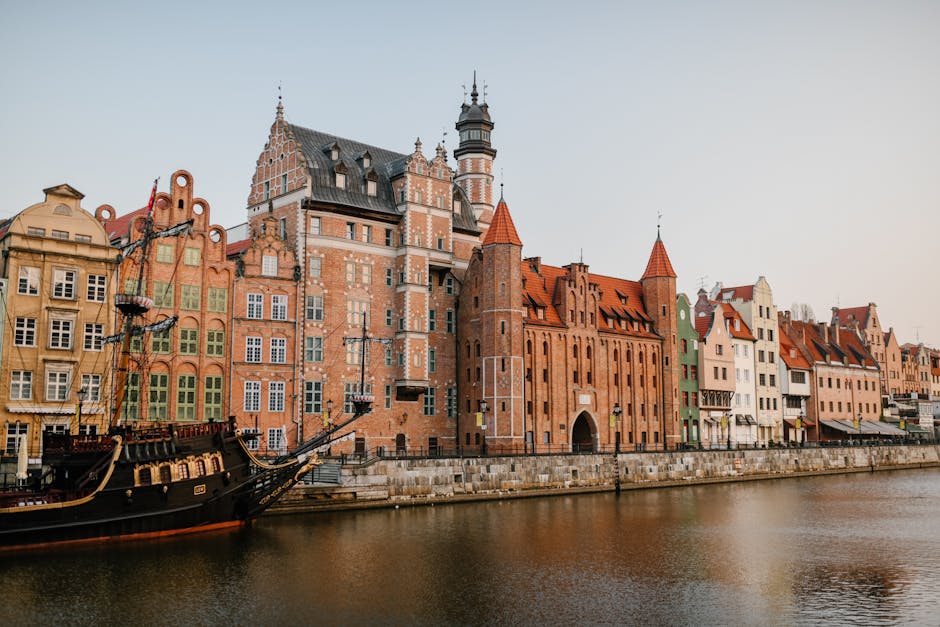
Conclude your walk along Długie Pobrzeże, the Long Quay. This is the historic face of Gdansk, a bustling promenade that has served as the city's main harbor for centuries. As you walk, notice the 'Water Gates'—grand stone portals that lead from the river into the city’s main streets. Each gate, like the St. Mary’s Gate or the Bread Gate, has its own unique architectural style. This quay was once crowded with merchant ships from across the Baltic and North Seas. Today, it is lined with cafes, amber shops, and restaurants, offering a vibrant atmosphere where history and modern leisure meet.
Start Free on iPhone
Explore “Maritime Motlawa: Crane and Quay” with your very own Private Tour Guide with Zigway. Start free on iPhone, skip the large group and the fixed routes, and hear the city come alive as you go.
Your Private Tour Guide
Don't miss the good stuff
Explore Freely
 Moderate
Gdansk, Poland
Discover the bohemian soul of Gdańsk. Explore the literary landmarks of Günter Grass, Prussian villas, and the trendy cafes of historic Wrzeszcz.
 Easy
EasyGdansk, Poland
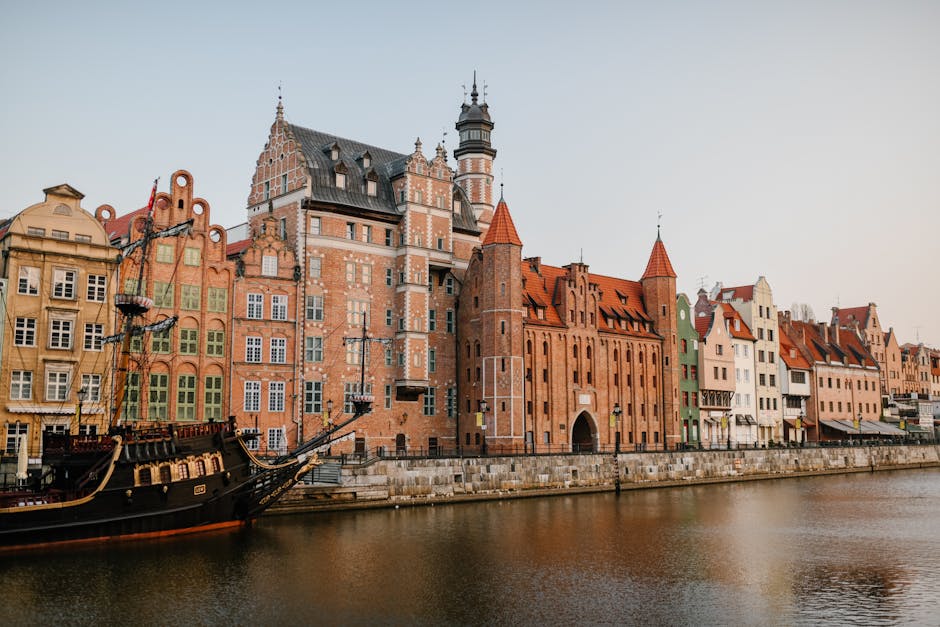
Discover the opulent Royal Way of Gdansk at your own pace. Explore Hanseatic history, gilded architecture, and the iconic Neptune's Fountain.
 Easy
EasyGdansk, Poland
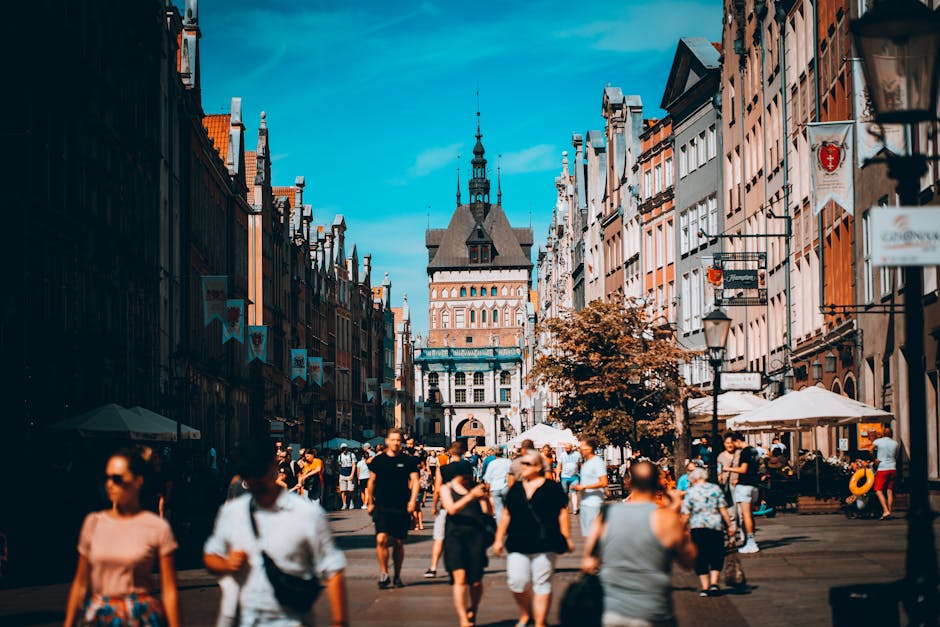
Discover the monastic heritage, world-famous organs, and lush botanical gardens of Oliwa on this peaceful self-guided neighborhood stroll.
 Easy
EasyGdansk, Poland
Taste the history of the Baltic. Explore Gdansk's culinary heritage from medieval markets to gold-flecked liqueurs on this self-guided walk.
 Easy
EasyGothenburg, Sweden
Discover Gothenburg’s 17th-century Dutch foundations, historic canals, and military fortifications on this self-guided architectural walk.
 Easy
EasyGothenburg, Sweden
Explore Gothenburg's elegant academic district, featuring grand 19th-century stone architecture and the iconic cultural hub of Götaplatsen.
 Easy
EasyNairobi, Kenya
Explore Nairobi's architectural evolution from colonial-era landmarks to iconic Brutalist skyscrapers on this historic self-guided walking route.
 Easy
EasyNairobi, Kenya
Discover Nairobi's iconic skyline on this self-guided architecture walk through the CBD’s most famous modernist and Brutalist landmarks.
 Easy
EasyKrakow, Poland
Explore the prestigious Jagiellonian University district, featuring Neo-Gothic architecture, Baroque churches, and Krakow's hidden scholarly gems.
 Easy
EasyKrakow, Poland
Explore Krakow's hidden nightlife with this self-guided walk through medieval cellars, jazz clubs, and bohemian bars in the Old Town and Kazimierz.
 Easy
EasyKrakow, Poland
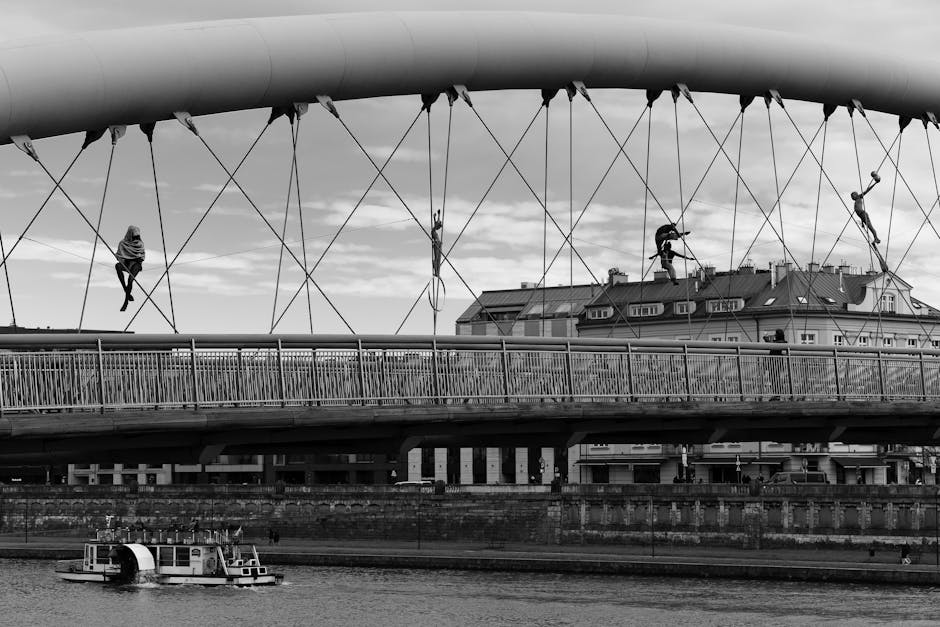
Discover Krakow’s creative soul in Zabłocie, exploring industrial heritage, contemporary art museums, and avant-garde architecture at your own pace.
 Easy
EasyKrakow, Poland
Explore the historic heart of Kazimierz on this self-guided walk through synagogues, ancient cemeteries, and vibrant squares.