Self-guided audio tour in Bucharest
Start Free on iPhone
Start free on iPhone to unlock this self-guided walking tour in Bucharest. Hear all the stories that make it amazing, walk at your own pace, and begin whenever you want.
Your Private Tour Guide
Discover why Bucharest was once celebrated as the "Little Paris of the East" on this self-guided walk through the city's most elegant boulevard, Calea Victoriei. This walking route invites you to step back into the late 19th and early 20th centuries, a golden era when French-inspired architecture, high-society balls, and intellectual discourse defined the Romanian capital. As you explore independently, you will witness the striking contrast between Belle Époque grandeur, Art Deco innovation, and the heavy footprints of the 20th-century political shifts. Your journey begins in the heart of the city's history at Revolution Square, a site that echoes with the voices of 1989. From here, the route showcases the architectural diversity that makes a walking tour Bucharest experience so unique. You will see the former Royal Palace, now the National Museum of Art, which stands as a testament to the Romanian monarchy. Nearby, the Kretzulescu Church offers a glimpse into the traditional Brâncovenesc style, a stark contrast to the modern skyscrapers that began to rise shortly after. As you continue south, the Telephone Palace introduces you to the American-inspired Art Deco movement, representing a time when Bucharest was the most modern city in the Balkans. The climax of the southern leg is the magnificent CEC Palace, with its glass and metal domes that look as though they were plucked straight from a Parisian avenue. Finally, the route loops back to the Romanian Athenaeum, the city's most iconic concert hall and a symbol of national pride. Unlike a typical guided tour Bucharest offers, this audio walk allows you to linger under the frescoes of the Athenaeum or stop for a coffee in a historic passage at your own pace. Whether you are an architecture enthusiast or a history buff, this neighborhood stroll captures the sophisticated spirit of a bygone era that still pulses through the streets of modern Bucharest.
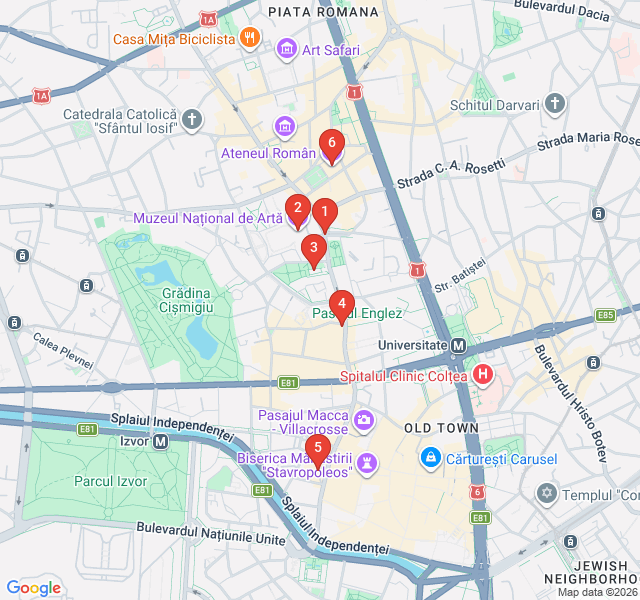
Numbers indicate the order of stops on the tour.
Welcome to Revolution Square, a place where the layers of Bucharest’s history are most visible. This open space has been the stage for the country’s most pivotal moments, most notably the 1989 revolution that ended the communist regime. Look around and you will see the former Central Committee building, from whose balcony Nicolae Ceaușescu gave his final speech. In the center stands the Memorial of Rebirth, a controversial monument commemorating the victims of the revolution. This square isn't just about politics; it’s a crossroads of eras, surrounded by the University Library and the Royal Palace, representing the transition from monarchy to communism and finally to democracy.
Before you stands the former Royal Palace, a building that embodies the elegance of the Romanian monarchy. Completed in its current form in the 1930s, it served as the official residence of King Carol II and later King Michael I. The architecture is strictly neoclassical, designed to reflect the prestige of the young Romanian kingdom. Today, it houses the National Museum of Art, containing vast collections of medieval and modern Romanian works, as well as European masterpieces. During the 1989 revolution, the building was severely damaged by fire and gunfire, but meticulous restoration has returned it to its former glory, serving as a reminder of Bucharest’s royal heritage.
Tucked beside the massive Royal Palace is the Kretzulescu Church, a small but powerful example of the Brâncovenesc style. This architectural style is unique to Romania, blending Byzantine, Ottoman, and late Renaissance elements. Built in the early 18th century by chancellor Iordache Kretzulescu and his wife Safta, the church is famous for its red brick exterior and intricate stone carvings. It is a miracle that it still stands today; during the communist era, there were plans to demolish it to clear the view of the square, but it was saved by the efforts of architects and historians. Step inside to see the original frescoes, which have survived centuries of turmoil.
Rising above Calea Victoriei is the Telephone Palace, Bucharest’s first skyscraper. When it was completed in 1933, it was the tallest building in the city and a symbol of modernity. Designed by American and Romanian architects, its Art Deco style was inspired by the skyscrapers of New York City, particularly the Barclay-Vesey Building. At the time, it was one of the most technologically advanced buildings in Europe, housing the central telephone exchange. Its presence on this historic street marked Bucharest’s ambition to become a global, modern metropolis. Even today, its sleek lines and stepped-back silhouette remain a standout feature of the city’s skyline.
The CEC Palace is arguably the most beautiful building on Calea Victoriei. Built as the headquarters of the National Savings Bank, it was designed by French architect Paul Gottereau in an eclectic style. Its most striking features are the massive glass and metal domes, which allow natural light to flood the grand interior hall. The entrance is framed by a monumental arch supported by Corinthian columns, making it look like a palace of finance. It is one of the few buildings in this area that has never changed its original purpose, continuing to serve as a bank today. It stands as the ultimate symbol of the 'Little Paris' era, reflecting the wealth and French influence of the late 19th century.
We conclude our walk at the Romanian Athenaeum, the spiritual heart of Romanian culture. This circular, domed building is the city’s most prestigious concert hall and home to the George Enescu Philharmonic. It was built in the late 1880s almost entirely through public donations after state funding ran dry—the famous slogan 'Give a penny for the Athenaeum' is still remembered today. Its design is a blend of Neoclassical and French Eclectic styles. Inside, a magnificent fresco circles the auditorium, depicting the most important moments in Romanian history. It remains a temple of art and a testament to the collective will of the Romanian people to create something of lasting beauty.
Start Free on iPhone
Explore “Little Paris: Belle Époque Elegance on Calea Victoriei” with your very own Private Tour Guide with Zigway. Start free on iPhone, skip the large group and the fixed routes, and hear the city come alive as you go.
Your Private Tour Guide
Don't miss the good stuff
Explore Freely
 Moderate
Bucharest, Romania
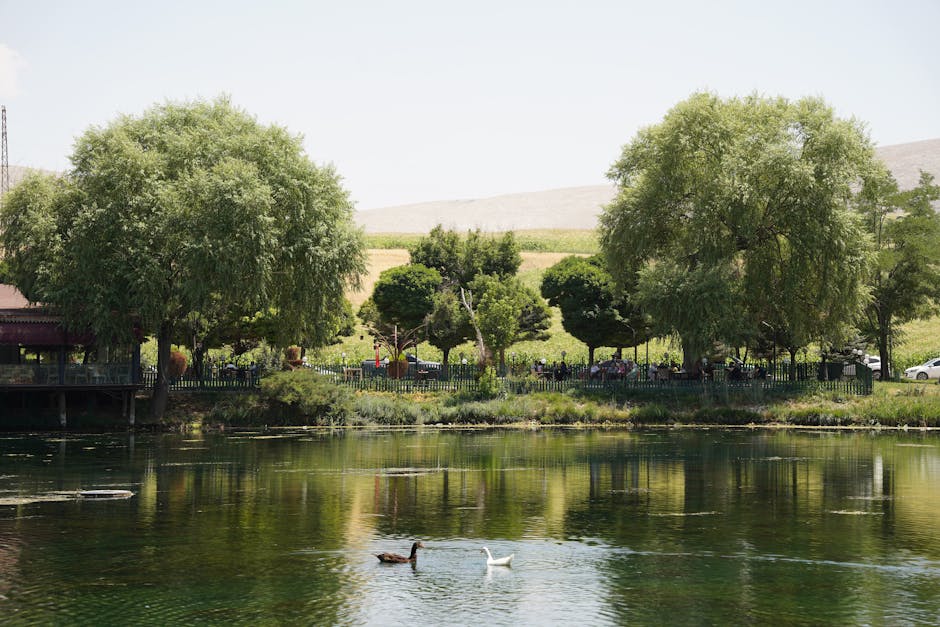
Explore Bucharest’s 'Little Paris' on this self-guided walk through grand parks, royal monuments, and the world-renowned National Village Museum.
 Moderate
Bucharest, Romania
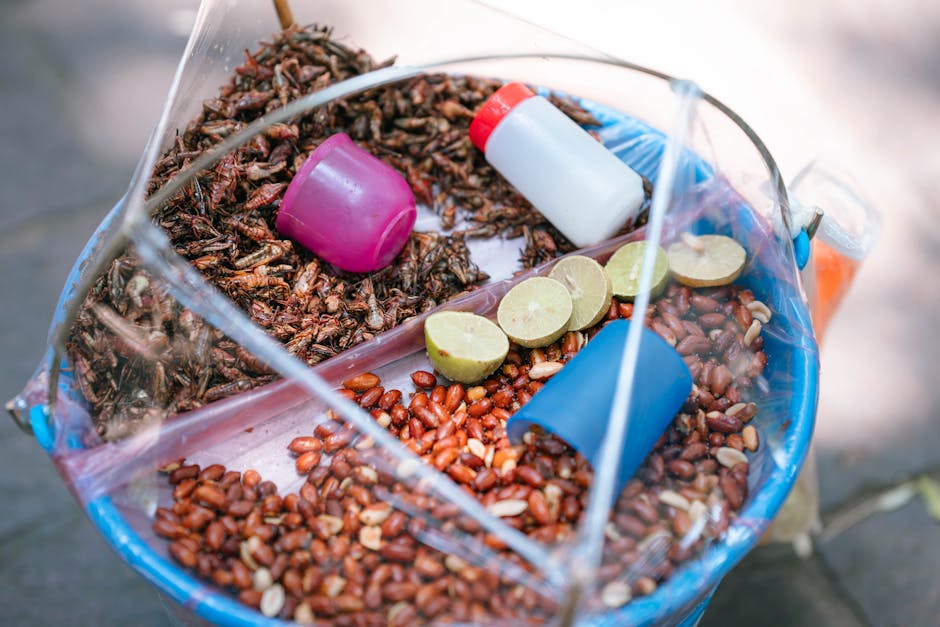
Discover Bucharest’s soul through its flavors, from legendary market 'mici' to historic Old Town gems on this self-guided foodie adventure.
 Easy
EasyBucharest, Romania
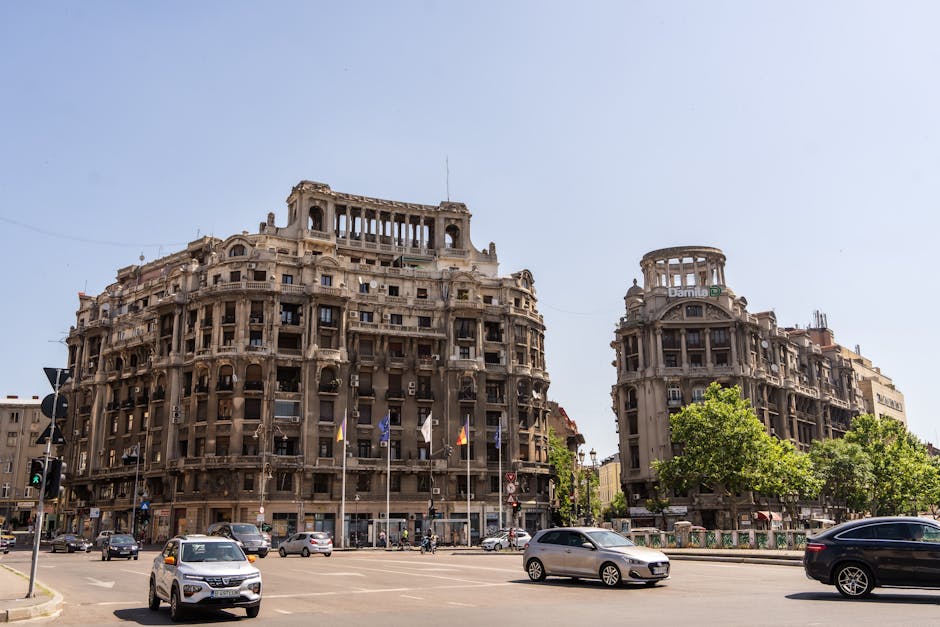
Discover the elegance of Cotroceni, a neighborhood of royal palaces, lush botanical gardens, and stunning interwar villas on this self-guided walk.
 Easy
EasyBucharest, Romania
Discover Bucharest's hidden Armenian Quarter on this self-guided walk through merchant history, elegant villas, and the city's oldest private home.
 Easy
EasyGdansk, Poland
Discover the opulent Royal Way of Gdansk at your own pace. Explore Hanseatic history, gilded architecture, and the iconic Neptune's Fountain.
 Easy
EasyNairobi, Kenya
Discover Nairobi's iconic skyline on this self-guided architecture walk through the CBD’s most famous modernist and Brutalist landmarks.
 Easy
EasyWarsaw, Poland
Explore the miracle of Warsaw's reconstructed Old Town on this self-guided walk through royal squares, medieval walls, and heroic monuments.
 Easy
EasyGothenburg, Sweden
Discover Gothenburg’s 17th-century Dutch foundations, historic canals, and military fortifications on this self-guided architectural walk.
 Moderate
Brasov, Romania
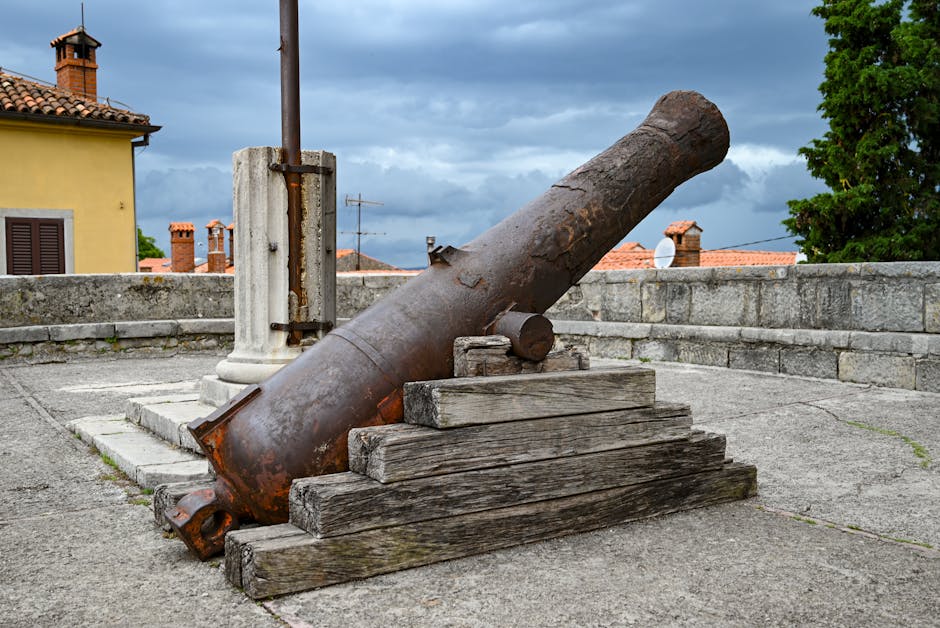
Explore Brasov's medieval fortress walls and guild-defended bastions on this atmospheric self-guided audio walk through the historic Old Town.
 Challenging
Brasov, Romania
Experience Brasov from above. A high-altitude self-guided walk through medieval towers, mountain trails, and the city's most iconic panoramic points.
 Easy
EasyBrasov, Romania
Discover the artistic soul of Brașov on this self-guided walk through historic theaters, art galleries, and legendary concert halls.
 Easy
EasyBrasov, Romania
Explore Brasov’s vibrant craft beer and wine scene on this self-guided stroll through the medieval Old Town and beyond.