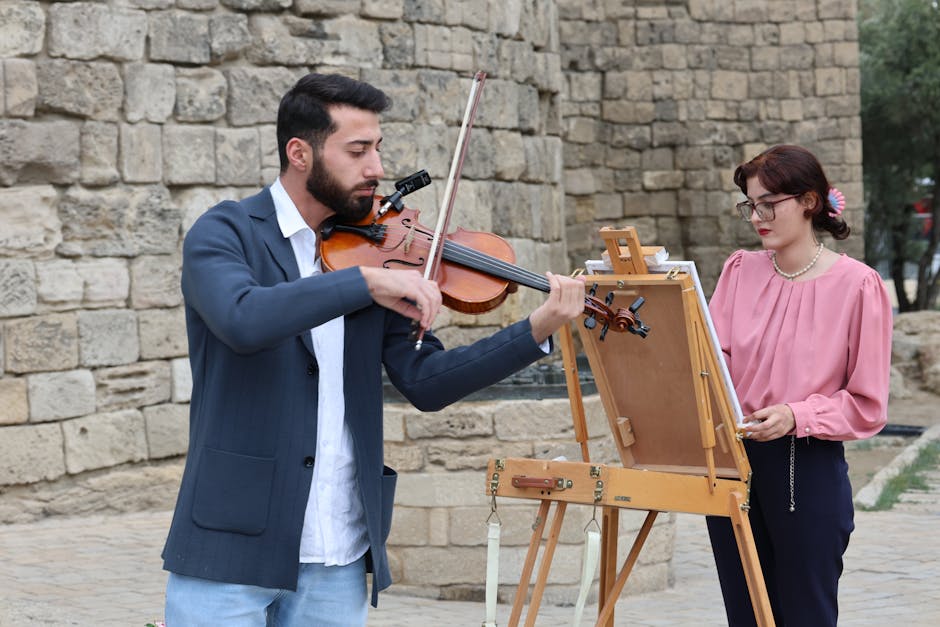
Self-guided audio tour in Brasov
Start Free on iPhone
Start free on iPhone to unlock this self-guided walking tour in Brasov. Hear all the stories that make it amazing, walk at your own pace, and begin whenever you want.
Your Private Tour Guide
Step into the cultural heart of Transylvania with this self-guided walking route through the artistic and musical landmarks of Brașov. While many visitors flock to the city for its medieval fortifications and the iconic Black Church, this neighborhood stroll reveals a more refined side of the city's history. You will explore the evolution of Romanian art, the legacy of world-renowned composers, and the vibrant theatrical life that has flourished here for centuries. Brașov has long been a crossroads of cultures, where Saxon precision met the soulful expression of Romanian folk traditions, creating a unique atmosphere for this walking tour Brasov. The journey begins at the edge of the historic center, where the Ethnographic and Art Museums stand as guardians of the region's creative output. As you move through the route, you will encounter grand venues like the Reduta Cultural Center, which has hosted legends such as Franz Liszt and Johann Strauss. This walking tour Brasov is designed for those who appreciate the finer details of urban life, from the intricate costumes of rural Transylvania to the modern performances at the Sică Alexandrescu Theater. You will discover how the city transformed from a fortified trade hub into a sophisticated center for the arts. Whether you are an art aficionado, a music lover, or a traveler looking to escape the typical tourist crowds, this route offers a peaceful yet intellectually stimulating experience. The walk is mostly flat and covers the transition area between the modern city and the historic citadel, making it an easy addition to any itinerary. By the time you reach the final stop at the Brașov Philharmonic, you will have gained a deep appreciation for the creative spirit that continues to define this Carpathian gem. Explore independently and at your own pace, soaking in the melodies and masterpieces that have shaped Brașov's identity.
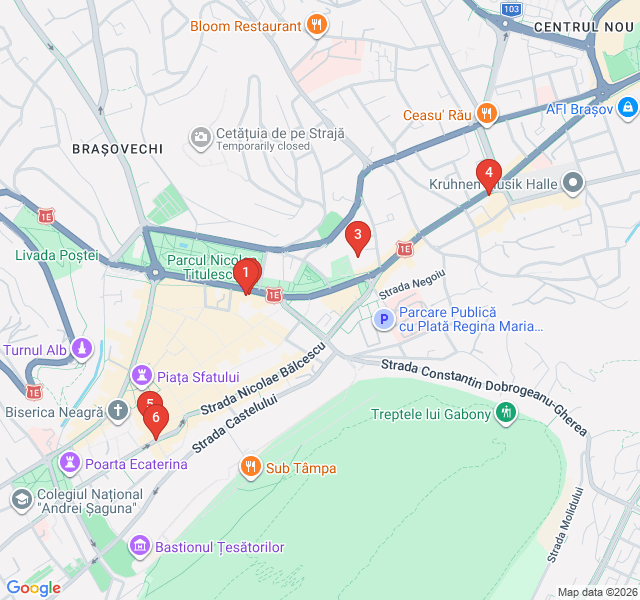
Numbers indicate the order of stops on the tour.
Start exploring with Zigway at the Ethnographic Museum, a treasure trove of Transylvanian heritage. Located in a building that once served as a residence for the local elite, this museum showcases the daily life and creative spirit of the rural communities surrounding Brașov. As you walk through the exhibits, pay attention to the intricate embroidery of the folk costumes and the symbolic wood carvings. These are not merely decorations; they are a visual language that tells stories of status, belief, and regional identity. This stop provides the essential cultural context for understanding how folk art eventually influenced the high art and music you will encounter later on this self-guided walk.
Located right next door to your first stop, the Art Museum of Brașov is housed in a beautiful Neo-Baroque building. This institution holds one of the most significant collections of Romanian art in the country. Within its galleries, you can trace the development of local painting from the 18th century to the modern era. Look for works by masters like Nicolae Grigorescu and Ștefan Luchian, who captured the light and landscapes of Romania with unparalleled skill. The museum also features a collection of European decorative arts, highlighting the city's historical connections to Western artistic centers. It is a quiet sanctuary of color and form that sets a sophisticated tone for the rest of your route.
Continue your walking route toward the Sică Alexandrescu Theater, the primary venue for drama in Brașov. Named after a legendary Romanian director known for his interpretations of Caragiale’s plays, this theater has been the center of the city's literary and performing arts scene since the mid-20th century. The building's modernist facade stands in contrast to the medieval structures nearby, representing the city's post-war cultural expansion. Even if there isn't a performance currently underway, the atmosphere around the theater is often buzzing with local creative energy. It remains a vital hub where classic Romanian literature is brought to life for new generations of theater-goers.
A short stroll brings you to the Patria Cinematheque, a landmark for film enthusiasts. While it now serves as a specialized cinema for art-house and classic films, the building itself has a long history as a cultural gathering place. In Brașov, cinema was more than just entertainment; it was a window to the world during times of cultural isolation. The Patria has maintained its classic charm, resisting the trend of modern multiplexes. It often hosts festivals and cultural events that blend film with music and visual arts, continuing the theme of interdisciplinary creativity that defines this part of the city. Take a moment to admire the mid-century architecture that has witnessed decades of local movie-going history.
As you move deeper into the Old Town, you reach the Reduta Cultural Center, perhaps the most historically significant musical venue in the city. The name 'Reduta' is inspired by similar venues in Vienna, reflecting Brașov's historical ties to the Austro-Hungarian Empire. This hall has seen performances by some of the greatest names in classical music, including Franz Liszt and Johann Strauss. In the 19th century, it was the social heart of the city, hosting grand balls and intellectual debates. Today, it remains a vibrant space for theater, dance, and music, preserving the legacy of the European 'salon culture' that once thrived here. Its elegant facade is a favorite for photography lovers.
The final stop on your self-guided adventure is the Brașov Philharmonic. Founded in the late 19th century, this orchestra is one of the oldest and most respected in Romania. The building, known as the 'Patria Hall' (shared with the cinema space but distinct in its function), is where the city's musical elite gather. The Philharmonic has played a crucial role in promoting both international classical masterpieces and the works of Romanian composers like George Enescu. As you stand before this temple of sound, reflect on how the various art forms you've seen today—from folk weaving to modernist theater—converge in the harmonious legacy of the city's symphonic music. This is the perfect place to conclude your cultural exploration of Brașov.
Start Free on iPhone
Explore “The Classical Music and Art Route” with your very own Private Tour Guide with Zigway. Start free on iPhone, skip the large group and the fixed routes, and hear the city come alive as you go.
Your Private Tour Guide
Don't miss the good stuff
Explore Freely
 Moderate
Brasov, Romania
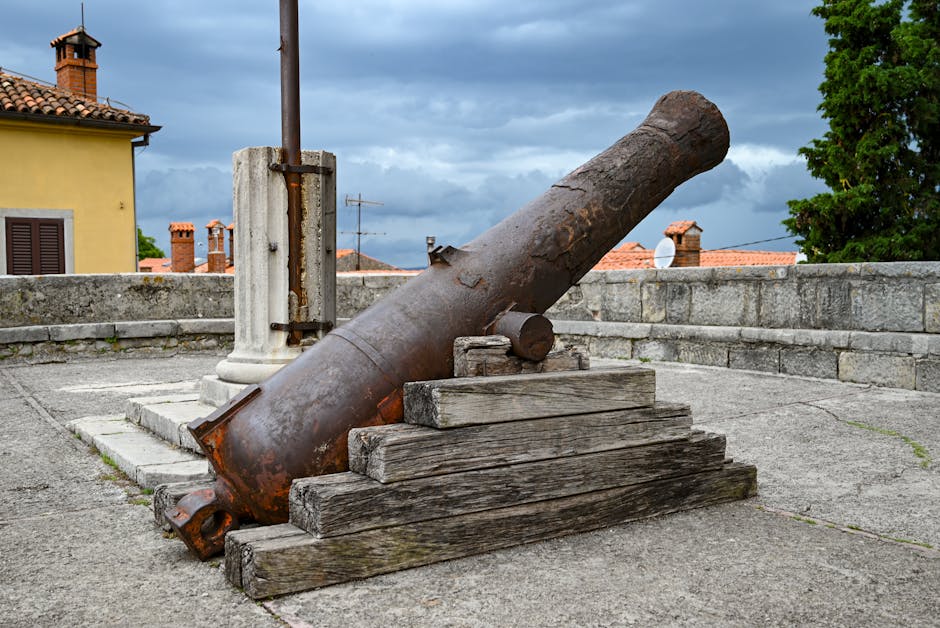
Explore Brasov's medieval fortress walls and guild-defended bastions on this atmospheric self-guided audio walk through the historic Old Town.
 Challenging
Brasov, Romania
Experience Brasov from above. A high-altitude self-guided walk through medieval towers, mountain trails, and the city's most iconic panoramic points.
 Easy
EasyBrasov, Romania
Explore Brasov’s vibrant craft beer and wine scene on this self-guided stroll through the medieval Old Town and beyond.
 Easy
EasyBrasov, Romania
Discover the medieval legacy of Brasov's Saxon merchants on this self-guided walking route through the historic Old Town.
 Easy
EasyWarsaw, Poland
Follow the life of Fryderyk Chopin through Warsaw’s historic center. See where he lived, studied, and where his heart remains today.
 Easy
EasyNairobi, Kenya
Discover Nairobi’s literary soul on this self-guided walk through historic libraries, iconic bookshops, and cultural centers in the heart of the CBD.
 Easy
EasyKrakow, Poland
Explore the prestigious Jagiellonian University district, featuring Neo-Gothic architecture, Baroque churches, and Krakow's hidden scholarly gems.
 Easy
EasyGothenburg, Sweden
Explore Gothenburg's elegant academic district, featuring grand 19th-century stone architecture and the iconic cultural hub of Götaplatsen.
 Moderate
Bucharest, Romania
Explore Bucharest’s 'Little Paris' on this self-guided walk through grand parks, royal monuments, and the world-renowned National Village Museum.
 Moderate
Bucharest, Romania
Discover Bucharest’s soul through its flavors, from legendary market 'mici' to historic Old Town gems on this self-guided foodie adventure.
 Easy
EasyBucharest, Romania
Discover the elegance of Cotroceni, a neighborhood of royal palaces, lush botanical gardens, and stunning interwar villas on this self-guided walk.
 Easy
EasyBucharest, Romania
Discover Bucharest's hidden Armenian Quarter on this self-guided walk through merchant history, elegant villas, and the city's oldest private home.