Self-guided audio tour in Vilnius
Start Free on iPhone
Start free on iPhone to unlock this self-guided walking tour in Vilnius. Hear all the stories that make it amazing, walk at your own pace, and begin whenever you want.
Your Private Tour Guide
Beyond the Baroque facades and cobblestone streets of the UNESCO-listed Old Town lies a secret world often missed by the casual observer. Vilnius is famous for its 'hidden' topography, where narrow passages lead into expansive, peaceful courtyards that served as the private stages for the city’s nobility, clergy, and intellectuals for centuries. This self-guided walk invites you to step through the archways and discover the architectural layers of the city at your own pace. While many visitors stick to the main thoroughfares of Pilies and Didžioji streets, this walking route focuses on the tranquil spaces tucked behind the heavy wooden gates of the historic center. You will explore the Italian Renaissance influence at the Alumnatas, the classicist grandeur of the Presidential Palace, and the quiet spiritual retreats of former Jesuit complexes. This neighborhood stroll is perfect for those who want to escape the crowds and find the 'city within a city' that locals cherish. Along the way, you will see how various architectural styles—from Gothic to Classicism—blend seamlessly in these secluded squares. The experience concludes with a breath of fresh air in the Bernardine Garden and a panoramic vista from the Artillery Bastion, offering a complete perspective of the city's red-tiled roofs. Whether you are a photography enthusiast looking for the perfect frame or a history buff seeking the site where modern Lithuania was born, this audio walk provides the context you need to appreciate the subtle details of the capital. Unlike a standard walking tour Vilnius often presents to large groups, this independent exploration allows you to linger in the quietest corners of the Old Town and truly soak in the atmosphere of one of Europe's largest surviving medieval centers.
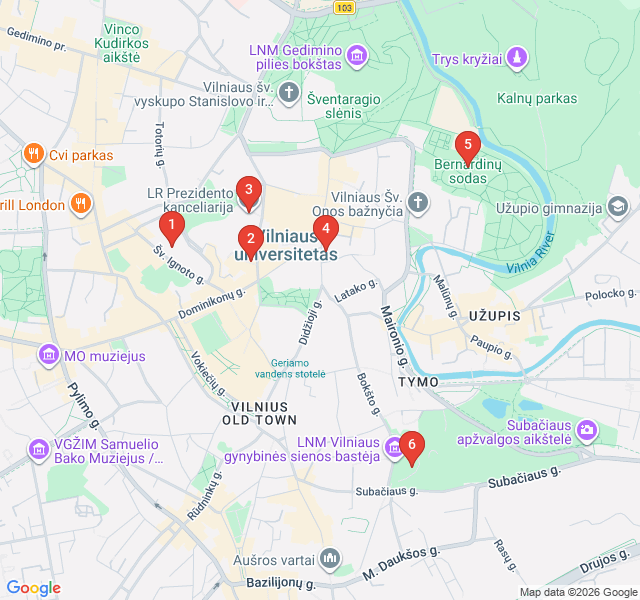
Numbers indicate the order of stops on the tour.
Welcome to the start of your journey into the hidden side of Vilnius. You are standing within the complex of St. Ignatius Church, a site that perfectly illustrates the city's layered history. Originally established by the Jesuits in the early 17th century, this area was once a bustling center of education and spirituality. However, after the Russian Empire took control, the church was converted into a military officers' club and the surrounding buildings into barracks. Look around at the architecture; despite the military interventions of the 19th century, the peaceful Jesuit layout remains. Today, the courtyard serves as a quiet sanctuary for the Lithuanian Military Ordinariate, blending the city's religious heritage with its modern civic life.
Step into what many consider the most beautiful courtyard in Vilnius. The Alumnatas was built in 1582 as a seminary for priests coming from Protestant lands to study under the Jesuits. As you look at the elegant three-story arcades, you might feel as though you have been transported to Italy. This is no accident; the architects were heavily influenced by the Italian Renaissance style, which was brought to Lithuania by the court of Queen Bona Sforza. The loggias and arches were designed to create a sense of harmony and light. Imagine the students of the 16th century walking these corridors, debating theology and philosophy in the heart of Northern Europe.
You are now at the center of Lithuanian political life. The Presidential Palace, or 'Prezidentūra', is a masterpiece of late Classicism. While the facade facing the square is impressive, the inner courtyard reveals the true scale of this former Bishop’s Palace. Over the centuries, this building has hosted some of history's most famous figures, including Tsar Alexander I and Napoleon Bonaparte during his 1812 campaign. The courtyard is a space of strict symmetry and grand proportions, reflecting the Enlightenment ideals of the era. If you are here on a weekend, you might even see the flag-hoisting ceremony, but even on a quiet day, the architecture speaks of the city's enduring power and resilience.
This stop takes you to the heart of Lithuanian identity. On February 16, 1918, twenty brave men signed the Act of Independence of Lithuania in this very building. The courtyard behind the house is a classic example of Old Town urban planning, where residential and commercial spaces merged. Notice the balconies and the way the buildings lean toward each other, creating an intimate, protected environment. This space has seen the transition of Vilnius from a provincial imperial city to the capital of a sovereign nation. It remains a symbol of the intellectual spirit of the city, often hosting art installations or small, quiet cafes that keep the historic atmosphere alive.
It is time to leave the stone courtyards for a moment and enjoy the 'green lung' of the Old Town. The Bernardine Garden, situated right at the foot of the Vilnia River, was established by the monks of the nearby Bernardine Monastery in the 15th century. They used this land for orchards, herb gardens, and fish ponds. Today, the park has been restored to its 19th-century botanical garden glory. As you walk past the fountains and the old oaks, you can see the Gediminas Castle Tower rising on the hill above. It is a favorite spot for locals to escape the urban pace, offering a perfect transition from the dense architecture of the Old Town to the natural beauty of the river valley.
Your walk concludes at one of the most dramatic spots in the city. The Artillery Bastion, or 'Barbakanas', is a 17th-century defensive structure built to protect Vilnius from eastern invaders. While the tunnels underground hold legends of a mythical Basilisk, the real treasure today is the view from the top. From this vantage point, you can look out over the bohemian district of Užupis, the numerous church spires that define the skyline, and the red-tiled roofs of the courtyards you just explored. It is the perfect place to reflect on the hidden layers of Vilnius, where every gate and every hill tells a story of survival, faith, and artistic beauty.
Start Free on iPhone
Explore “Secret Courtyards of the Old Town” with your very own Private Tour Guide with Zigway. Start free on iPhone, skip the large group and the fixed routes, and hear the city come alive as you go.
Your Private Tour Guide
Don't miss the good stuff
Explore Freely
 Easy
EasyVilnius, Lithuania
Discover the 'Rome of the North' on this self-guided walk through the Baroque churches and historic courtyards of Vilnius Old Town.
 Easy
EasyVilnius, Lithuania
Explore fairy-tale wooden villas, a rare Karaite Kenesa, and peaceful river paths on this self-guided audio walk through Vilnius’ greenest district.
 Easy
EasyVilnius, Lithuania
Explore the quirky, artistic, and self-proclaimed Independent Republic of Užupis on this creative self-guided walk through Vilnius' bohemian heart.
 Challenging
Vilnius, Lithuania
Scale the historic hills of Vilnius on this self-guided walk for breathtaking panoramas and photography of the Old Town.
 Easy
EasyWarsaw, Poland
Discover the hidden courtyards and grand pre-war architecture of Warsaw's most atmospheric neighborhood on this self-guided stroll.
 Easy
EasyKrakow, Poland
Explore the prestigious Jagiellonian University district, featuring Neo-Gothic architecture, Baroque churches, and Krakow's hidden scholarly gems.
 Easy
EasyGdansk, Poland
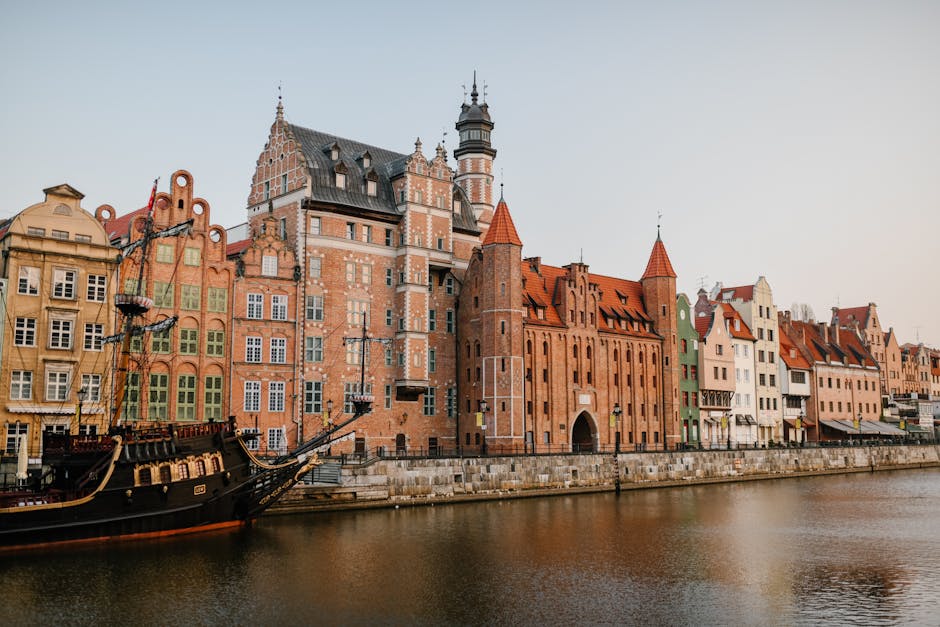
Discover the 'Baltic Gold' on this self-guided walk through Gdansk's historic mills, massive cathedrals, and the magical Mariacka Street.
 Easy
EasySalzburg, Austria
Discover Salzburg's oldest medieval alley, the birthplace of the 'Silent Night' author, and breathtaking views on this quiet self-guided walk.