Self-guided audio tour in Bratislava
Start Free on iPhone
Start free on iPhone to unlock this self-guided walking tour in Bratislava. Hear all the stories that make it amazing, walk at your own pace, and begin whenever you want.
Your Private Tour Guide
Step back into an era when Bratislava, then known as Pressburg, served as the capital of the Hungarian Kingdom. For nearly three centuries, this city on the Danube was the stage for the lavish coronation ceremonies of kings and queens. This self-guided walk invites you to follow the exact path taken by the newly crowned monarchs through the winding cobblestone alleys of the Old Town. By following the small bronze crown markers embedded in the pavement, you will trace a route of regal power and architectural splendor. Your journey begins at Michael's Gate, the only surviving entrance of the city's medieval fortification system. As you pass through the gateway, you are literally entering the historic core where the coronation procession once transitioned from the outskirts to the inner city. From here, the route leads you into the heart of the Main Square, where the Old Town Hall stands as a witness to centuries of civic and royal history. You'll explore the significance of the Maximilian Fountain, commissioned by a king to provide water and celebrate his reign, before moving toward the elegant Primatial Palace, a masterpiece of Neoclassical architecture. One of the most atmospheric segments of this walking route is Kapitulská Street. Unlike the bustling commercial streets nearby, this silent lane has preserved its medieval character, offering a glimpse into the ecclesiastical life that supported the monarchy. The experience culminates at St. Martin’s Cathedral, the gothic sanctuary where 11 kings and 8 royal consorts were officially crowned. The massive golden replica of the Hungarian Crown sitting atop the cathedral spire serves as a permanent reminder of the city's prestigious past. This audio walk is designed for those who want to discover Bratislava's royal identity at their own pace, blending grand historical narratives with the quiet charm of the city’s best-preserved corners.
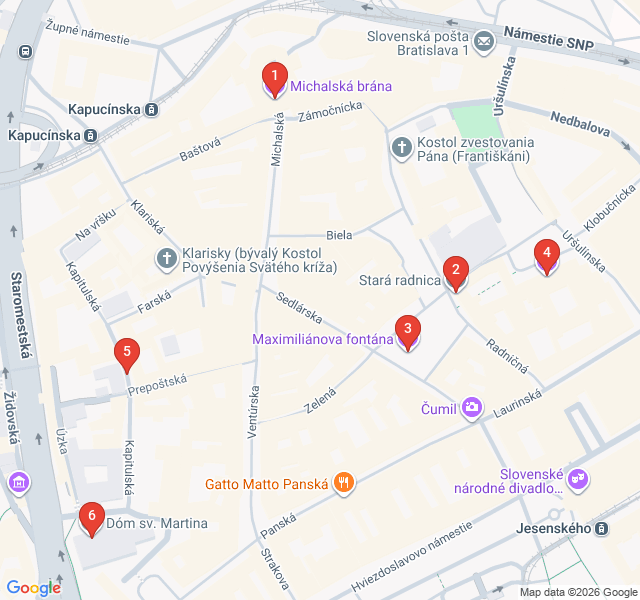
Numbers indicate the order of stops on the tour.
Standing before Michael's Gate, you are looking at the only surviving gate of Bratislava's medieval fortifications. Built in the 14th century, its current Baroque appearance dates back to 1758. For the Hungarian kings, this was a symbolic threshold. During coronation festivities, the monarch would pass through this gate to enter the city. Look down at the ground beneath the tower to find the 'zero kilometer' plate, which lists the distances from Bratislava to 29 world capitals. The gate is topped by a statue of the Archangel Michael slaying a dragon. Today, it serves as a gateway between the modern city and the historic pedestrian zone, housing a museum of weapons inside its tower.
The Old Town Hall is not just one building, but a complex of structures from different eras, with the oldest parts dating back to the 13th century. It is the oldest city hall in Slovakia. As you stand in the courtyard, look for the stone cannonball embedded in the wall to the left of the gothic window; it was fired by Napoleon’s troops in 1809. This building was the center of city life, serving as a mint, an armory, and even a prison. For the coronation path, it represented the city's loyalty to the crown. The tower offers a panoramic view, but even from the ground, the colorful tiled roof is a standout feature of the city's skyline.
In the center of the Main Square stands the Maximilian Fountain, often called Roland’s Fountain. It was commissioned by King Maximilian II in 1572 after a fire broke out during his coronation festivities. He wanted to ensure the city had a constant water supply, but also to leave a monument to his reign. The statue atop the fountain depicts a knight in armor—traditionally thought to be Roland, the legendary protector of city rights, though it bears the features of King Maximilian himself. Local legend says that the knight comes to life and bows toward the Old Town Hall at the stroke of midnight on New Year's Eve, but only to those with a pure heart.
This elegant pink palace is widely considered one of the most beautiful Neoclassical buildings in Slovakia. Completed in 1781 for Archbishop József Batthyány, it later became the site of a major turning point in European history. Inside the Hall of Mirrors, the Peace of Pressburg was signed in 1805 between Napoleonic France and the Austrian Empire after the Battle of Austerlitz. While the palace was not a coronation site itself, it hosted royal guests and remains a symbol of the city's high-society past. Don't miss the rare 17th-century English tapestries found hidden in the walls during a 1903 renovation, which are now on display inside.
Step away from the souvenir shops and cafes into Kapitulská Street. This is the oldest street in Bratislava, and it feels as though time has stopped here. Historically, this was the 'Church Street,' inhabited by clergy and scholars. Because the buildings here were owned by the church rather than private developers, the street has avoided modern commercialization. As you walk the uneven cobblestones, notice the weathered stone walls and the heavy wooden doors. This quiet lane was part of the coronation route, providing a somber, reflective path for the royal procession as it moved toward the cathedral. It offers the most authentic medieval atmosphere in the city.
You have reached the destination of the coronation procession: St. Martin's Cathedral. This massive Gothic structure, built atop an 11th-century Romanesque church, served as the coronation church of the Kingdom of Hungary between 1563 and 1830. A total of 11 kings and 8 queens were crowned here, including the famous Empress Maria Theresa. If you look at the top of the 85-meter tower, you won't see a cross; instead, there is a gold-plated cushion topped with a 300-kilogram replica of the Hungarian Royal Crown. This signifies the cathedral's status as a royal coronation site. Inside, the sheer verticality of the Gothic arches and the lead statue of St. Martin reflect the grandeur of the Habsburg era.
Start Free on iPhone
Explore “The Coronation Path of Kings” with your very own Private Tour Guide with Zigway. Start free on iPhone, skip the large group and the fixed routes, and hear the city come alive as you go.
Your Private Tour Guide
Don't miss the good stuff
Explore Freely
 Easy
EasyBratislava, Slovakia
Discover Bratislava’s soul through its historic pubs and traditional flavors on this self-guided walk through the atmospheric Old Town.
 Moderate
Bratislava, Slovakia
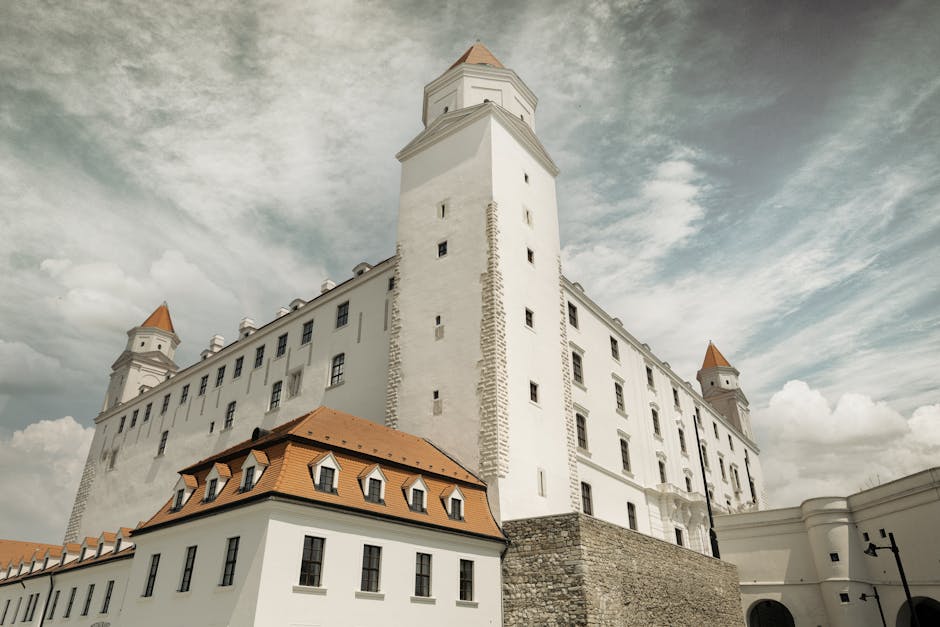
Explore the resilient history of Pressburg's Jewish community on this poignant self-guided walk through Bratislava's Old Town and Castle Hill.
 Moderate
Bratislava, Slovakia
Discover Bratislava’s transformation from industrial heartland to a hub of street art and futuristic Zaha Hadid architecture on this self-guided walk.
 Easy
EasyBratislava, Slovakia
Discover grand Rococo palaces and secret courtyard gardens on this elegant self-guided walk through Bratislava’s aristocratic history.
 Easy
EasyNairobi, Kenya
Explore Nairobi's architectural evolution from colonial-era landmarks to iconic Brutalist skyscrapers on this historic self-guided walking route.
 Easy
EasyNairobi, Kenya
Discover Nairobi's iconic skyline on this self-guided architecture walk through the CBD’s most famous modernist and Brutalist landmarks.
 Easy
EasySalzburg, Austria
Discover the 'Rome of the North' on this self-guided walk through the Baroque squares and monumental legacy of Salzburg’s Prince-Archbishops.
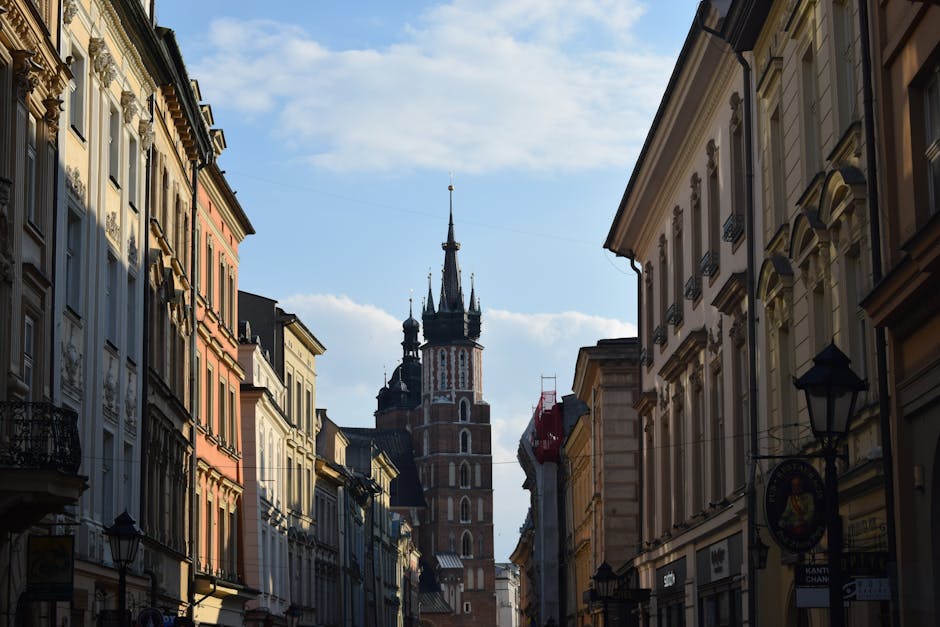 Easy
EasyKrakow, Poland
Uncover Krakow's legendary past on this self-guided walk from literary monuments to the fire-breathing Wawel Dragon.