Self-guided audio tour in Berat
Start Free on iPhone
Start free on iPhone to unlock this self-guided walking tour in Berat. Hear all the stories that make it amazing, walk at your own pace, and begin whenever you want.
Your Private Tour Guide
Berat, famously known as the 'City of a Thousand Windows,' is a living museum of Ottoman architecture and religious coexistence. This self-guided walk explores the city's two most iconic historic neighborhoods: Mangalem and Gorica. Separated by the Osum River but linked by centuries of shared history, these districts offer a fascinating contrast in atmosphere and perspective. As you follow this walking route, you will see how the city was designed to maximize light and space on the steep hillsides, creating the unique 'stacked' window effect that has earned Berat UNESCO World Heritage status. Your journey begins at the elegant Gorica Bridge, a symbol of the city's endurance. From here, you will venture into the quieter Gorica district, traditionally the Christian quarter. This neighborhood stroll leads you through narrow, winding alleys and up to viewpoints that offer the most breathtaking panoramas of the Mangalem district across the water. You will encounter hidden Orthodox gems like the Church of St. Spiridon and the Church of St. Thomas, which stand as testaments to the deep-rooted faith of the local community. These sites are often less crowded than those on the opposite bank, offering a peaceful atmosphere for reflection. Crossing back to the northern bank, the adventure shifts to the vibrant Mangalem district. This area was historically the Muslim quarter and remains the heart of the lower city. You will explore the architectural marvels of the Bachelors' Mosque and the Halveti Tekke, where intricate carvings and painted ceilings reveal the artistic heights of the Ottoman era. This walking tour Berat provides is not just about buildings; it is about the layers of history that have shaped Albania's cultural identity. By choosing a self-guided experience, you can linger at the viewpoints or stop for a coffee in a traditional courtyard whenever the mood strikes. Whether you are interested in the technical mastery of 18th-century stonemasons or simply want to capture the perfect photo of the sun hitting the white-washed facades, this walking route ensures you see the best of both worlds. This is widely considered the most comprehensive way to experience a walking tour Berat has to offer for those who prefer independence.
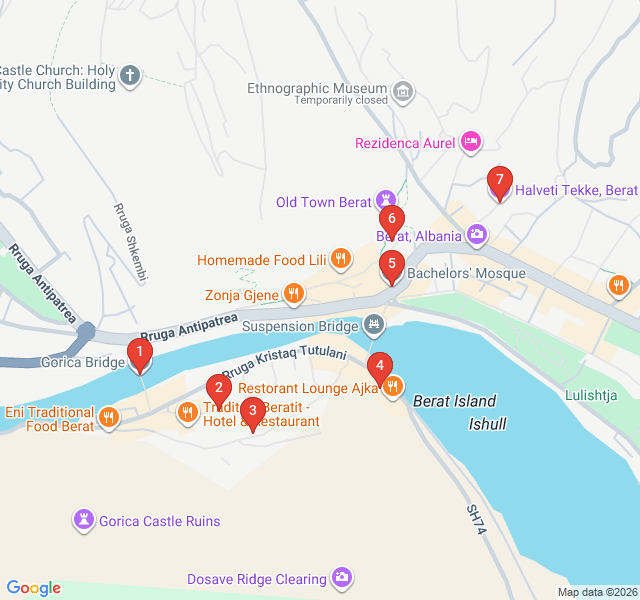
Numbers indicate the order of stops on the tour.
Begin your self-guided adventure at one of Albania's most beautiful Ottoman structures. Originally built of wood in 1780 and later rebuilt in stone during the 1920s, the Gorica Bridge spans the Osum River with seven graceful arches. Local legends whisper of a young woman sacrificed within its foundations to ensure the bridge's stability—a common trope in Balkan folklore. As you stand here, look toward the Mangalem side; this is your first great view of the 'stacked windows' that look like eyes watching over the river. The bridge serves as the physical and symbolic link between the Christian and Muslim quarters of the city.
Follow the path upward into the Gorica neighborhood to reach this vantage point. While Mangalem is more famous, Gorica offers the superior perspective for photographers. From this height, you can see why Berat is called the 'City of a Thousand Windows.' The houses across the river in Mangalem are built so closely together that their windows seem to climb on top of one another. Notice how the white-washed walls and red-tiled roofs create a rhythmic pattern against the grey stone of the Citadel above. This is the perfect spot to appreciate the urban planning of the Ottoman period, designed to ensure every house had access to natural light.
Nestled in the heart of Gorica, this 19th-century basilica is a significant center for the city's Orthodox community. The church is dedicated to Saint Spiridon, the protector of potters and craftsmen. Its architecture is a classic example of the post-Byzantine style prevalent in the region. If you are lucky enough to find the doors open, the interior features a beautifully carved iconostasis and remnants of traditional religious art. The quiet courtyard outside provides a stark contrast to the busier streets across the river, highlighting the more residential and contemplative nature of the Gorica district.
Continuing through the narrow stone paths, you reach the Church of St. Thomas. This small but significant site was largely destroyed during the atheism campaign of the communist era but has since been lovingly restored. Its location on the slopes of Gorica Hill offers a different angle of the city and the river valley. The restoration of this church is a symbol of the religious revival in Albania following 1990. Take a moment to observe the stonework; the techniques used here have been passed down through generations of Berat’s master builders, who were famous throughout the Ottoman Empire.
After crossing back over the river, you arrive at the Bachelors' Mosque, located at the foot of the Mangalem hill. Built in the early 19th century, it was specifically intended for the unmarried shop assistants and craftsmen of the city’s bazaar. What makes this mosque truly unique are the external paintings. Look closely at the upper walls under the eaves to see floral motifs and depictions of cities—an unusual feature for Islamic architecture in this region. This mosque marks the entrance to the historic Mangalem quarter and served as a social hub for the young men who guarded the local markets.
You are now standing in the heart of Mangalem. While you saw these windows from across the river, walking among them is a different experience. The narrow alleys are paved with smooth 'kalldërim' (cobblestones) and the houses seem to lean over the streets. These buildings date primarily from the 18th and 19th centuries. The large, symmetrical windows were a sign of wealth and status, but they also served the practical purpose of cooling the homes during hot Albanian summers. Notice the heavy wooden doors and the stone arches—this is the quintessential Berat aesthetic that earned it a place on the UNESCO list.
The final stop on this neighborhood stroll is the Halveti Tekke, a place of worship for the Halveti Sufi order. Built in 1782 by Ahmet Kurt Pasha, it is part of a larger religious complex that includes the King Mosque. The highlight here is the stunning interior ceiling, which features intricate wood carvings and gold-leaf painting. The Tekke was a center for Islamic mysticism, and the architecture reflects a desire for inner peace and spiritual focus. The small square outside, known as the Center of the Medieval City, is the perfect place to conclude your walk and reflect on the diverse architectural and religious history of Berat.
Start Free on iPhone
Explore “The Two Faces of Berat: Mangalem vs Gorica” with your very own Private Tour Guide with Zigway. Start free on iPhone, skip the large group and the fixed routes, and hear the city come alive as you go.
Your Private Tour Guide
Don't miss the good stuff
Explore Freely
 Easy
EasyBerat, Albania
Explore Berat’s stunning riverside, historic bridges, and iconic 'thousand windows' views on this peaceful self-guided nature and photography walk.
 Moderate
Berat, Albania
Explore Berat’s unique religious harmony on this self-guided walk through ancient mosques, Sufi shrines, and Byzantine churches.
 Moderate
Berat, Albania
Discover the legends and landmarks of Berat on this self-guided walk through Ottoman neighborhoods and the ancient living citadel.
 Easy
EasyBerat, Albania
Discover the secret of 'Onufri Red' and explore the ancient Byzantine churches and Ottoman streets of Berat on this artistic self-guided walk.
 Easy
EasyGdansk, Poland
Discover the 'Baltic Gold' on this self-guided walk through Gdansk's historic mills, massive cathedrals, and the magical Mariacka Street.
 Easy
EasyGothenburg, Sweden
Explore Gothenburg's elegant academic district, featuring grand 19th-century stone architecture and the iconic cultural hub of Götaplatsen.
 Moderate
Vienna, Austria
Discover the noir world of The Third Man and Cold War Vienna on this atmospheric self-guided audio walk through the historic Innere Stadt.
 Easy
EasyGdansk, Poland
Discover the opulent Royal Way of Gdansk at your own pace. Explore Hanseatic history, gilded architecture, and the iconic Neptune's Fountain.
 Easy
EasyTirana, Albania
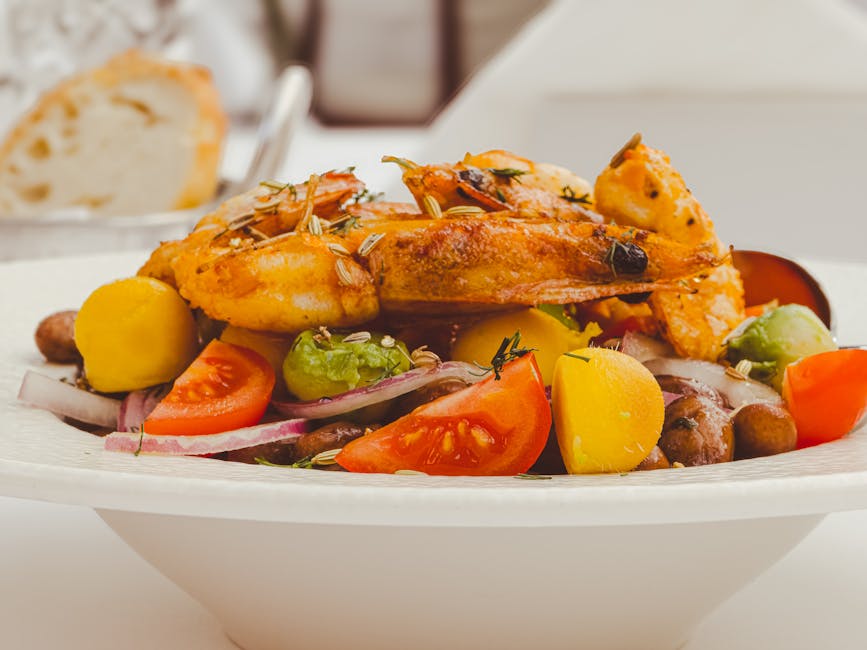
Explore the vibrant stalls of Pazari i Ri and the trendy eateries of Blloku on this flavor-focused self-guided walk through Tirana.
 Moderate
Tirana, Albania
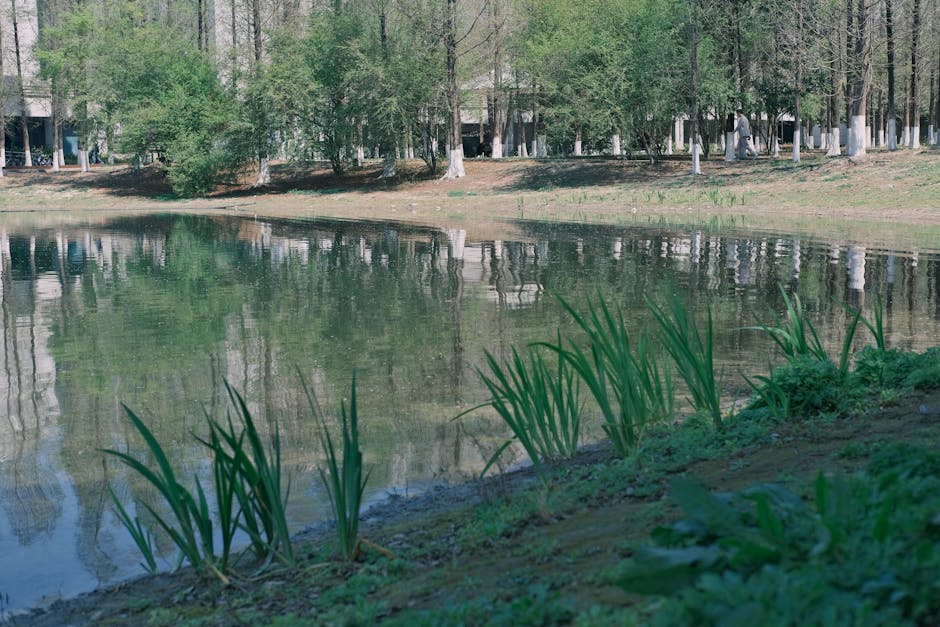
Explore Tirana's green side on this self-guided walk from Skanderbeg Square to the serene Grand Park and hidden lakeside memorials.
 Easy
EasyTirana, Albania
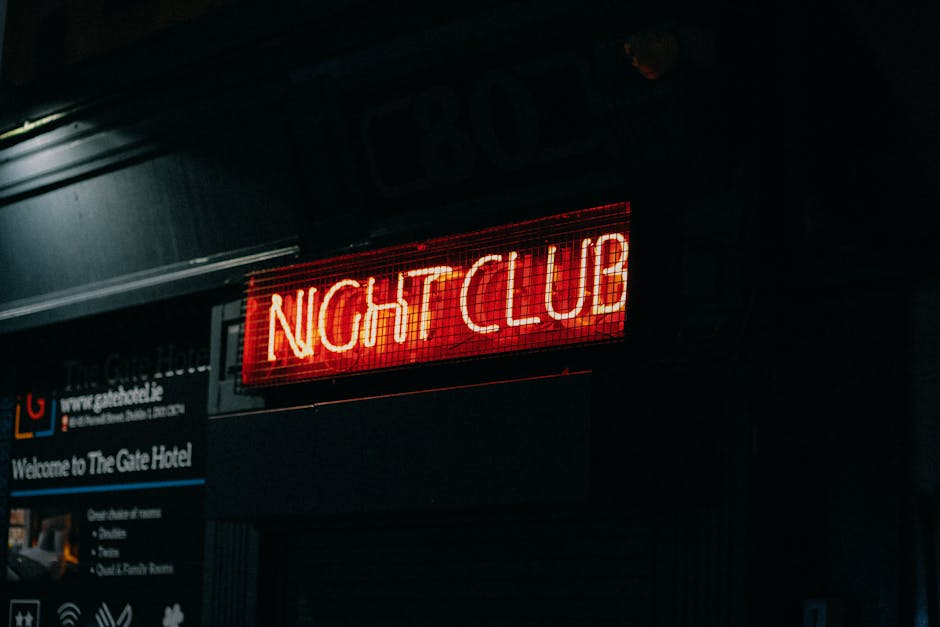
Explore Tirana’s neon-lit landmarks and vibrant nightlife districts on this self-guided evening photography walk.
 Easy
EasyTirana, Albania
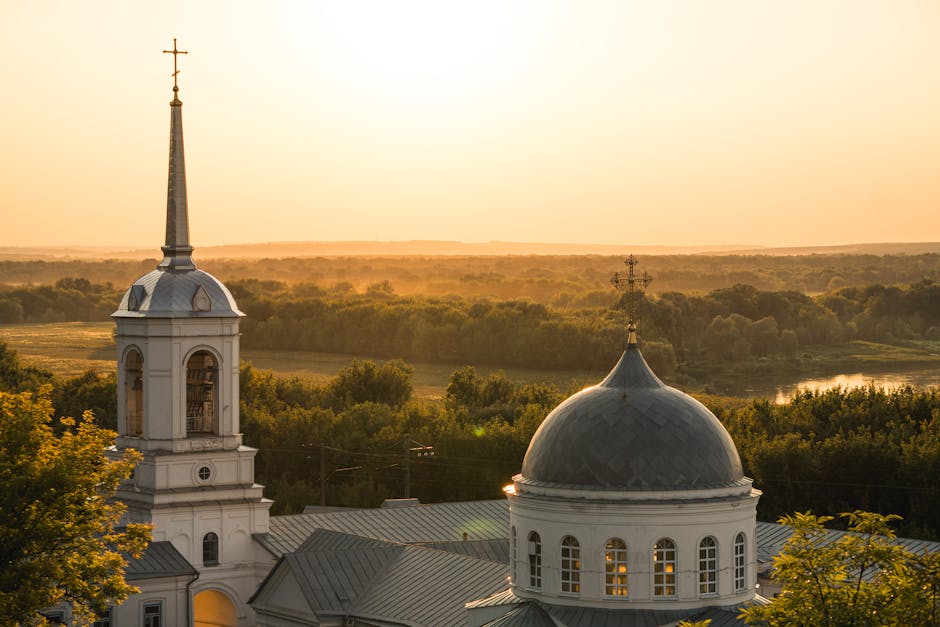
Explore Tirana’s unique religious harmony on this self-guided walk through historic mosques, grand cathedrals, and Ottoman landmarks.