Self-guided audio tour in Berat
Start Free on iPhone
Start free on iPhone to unlock this self-guided walking tour in Berat. Hear all the stories that make it amazing, walk at your own pace, and begin whenever you want.
Your Private Tour Guide
Welcome to Berat, the 'City of a Thousand Windows,' where history is etched into every stone and mountain ridge. This self-guided walk invites you to explore the dramatic landscape through the lens of a local legend: the battle between the giants Shpirag and Tomorr. As you navigate the winding cobblestone paths of the Mangalem and Gorica neighborhoods, you will see the physical scars of this mythic duel on the slopes surrounding the city. This walking route is more than just a history lesson; it is an immersion into the soul of Albania, where ancient Illyrian foundations support Byzantine churches and Ottoman mansions. You will begin in the heart of the lower town, discovering the often-overlooked Jewish history of Berat at the Solomoni Museum before ascending toward the fortress that has guarded this valley for millennia. The journey takes you across the Osum River to the tranquil Gorica quarter, offering a different perspective of the iconic tiered houses. From there, the path climbs steeply to the Kalaja, or the Castle of Berat, a rare living citadel where residents still inhabit centuries-old stone homes. Along the way, you will encounter the vibrant colors of Onufri’s 16th-century icons, the remnants of Cold War paranoia in the form of concrete bunkers, and the breathtaking panoramas of Mount Tomorr, the holy peak of the Bektashi faith. Whether you are a photography enthusiast looking for the perfect sunset shot or a history buff eager to peel back the layers of the Balkans, this neighborhood stroll offers a comprehensive look at why Berat is a UNESCO World Heritage site. Explore at your own pace, stopping to sip Turkish coffee or photograph the intricate woodwork of the Ethnographic Museum, as you uncover the legends of the holy mountain.
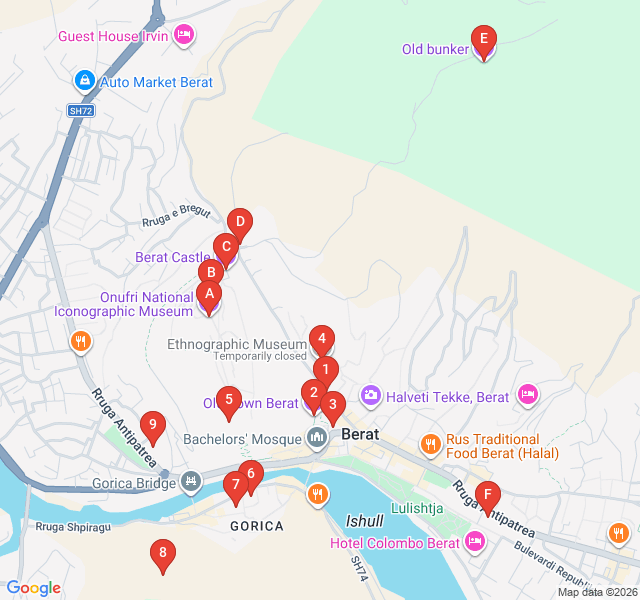
Numbers indicate the order of stops on the tour.
Begin your self-guided adventure at this small but significant museum. Albania holds a unique place in history as the only European country that had more Jews after World War II than before it. This is largely due to 'Besa,' a local code of honor and protection. The Solomoni Museum tells the story of the Jewish community in Berat, which dates back centuries. You will find records of families who found refuge here and the cultural integration that occurred within these stone walls. It is a poignant starting point that highlights the city's long-standing tradition of religious tolerance and hospitality.
Step into the Mangalem quarter, the most iconic image of Berat. The 'Thousand Windows' aren't just an architectural quirk; they were designed to maximize natural light in the narrow, steep streets. As you walk, notice how the houses seem to climb on top of one another. This area was historically the Muslim quarter, characterized by its Ottoman-style buildings with white walls and dark wooden frames. The craftsmanship here has survived earthquakes and wars, maintaining a silhouette that has remained largely unchanged for over two hundred years. Take a moment to appreciate the verticality of the neighborhood before we move toward the feudal history of the city.
This site was once the residence of the powerful Vrioni family, one of Albania's most influential land-owning dynasties during the Ottoman era. While much of the original grandeur has faded, the 'Sarajet' (palatial houses) represent the feudal structure that governed Berat for centuries. The Vrionis were patrons of the arts and politics, and their influence shaped the city's development. Look for the remnants of the grand entrance and imagine the bustling courtyard filled with servants, merchants, and diplomats who once sought the favor of the Bey. It serves as a reminder of the social hierarchy that existed alongside the city's architectural beauty.
Housed in a 18th-century Ottoman building, this museum offers a window into the daily life of Berat’s elite. The structure itself is a masterpiece, featuring an 'uha' (open porch) that provides a view of the city. Inside, the rooms are organized by function: the guest room with its intricate wood-carved ceiling, the kitchen with traditional copper utensils, and the loom room where local textiles were woven. The museum showcases the 'city' style of living, which was highly sophisticated, blending Balkan traditions with Ottoman luxury. It is an essential stop to understand the domestic heritage of the people who built these famous windows.
As you begin your ascent toward the citadel, you will encounter the lower sections of the old castle walls. These fortifications have layers of history: the bottom stones are often massive Illyrian blocks from the 4th century BC, while the upper layers show Byzantine and Ottoman repairs. These walls have withstood numerous sieges, from the Romans to the Crusaders. The strategic position above the Osum River made Berat nearly impregnable. Feel the texture of the ancient stone and notice the strategic holes for archers and later, musketeers, who guarded the entrance to the 'White City.'
This stop highlights the preservation of local traditions within a family home. The Qako house is a prime example of the 'Kulla' style adapted for urban living. Many of these homes in the Kalaja and Mangalem neighborhoods are still owned by the same families for generations. They represent the continuity of life in Berat. Observe the stone masonry and the small, high windows on the ground floor, which were designed for defense, while the upper floors open up with larger windows for air and light. This domestic architecture is what earned Berat its UNESCO status.
Cross the bridge to reach Gorica, the traditionally Christian quarter. For centuries, this neighborhood sat across the river from Mangalem, creating a beautiful symmetry. Gorica is often quieter and more shaded, offering a labyrinth of narrow alleys that feel even older than the rest of the town. Walking here gives you the best view of the Mangalem houses across the water. The neighborhood is home to several small, hidden churches that survived the atheist campaign of the communist era. It is the perfect place to experience the slower, more residential side of Berat life.
Few visitors make the trek up to the ruins of the Gorica Castle, but the effort is rewarded with a unique perspective. This fortification was smaller than the main citadel but served as a vital watchtower. From here, you can see the main Castle of Berat in its entirety, sitting like a crown on the opposite hill. The ruins are overgrown and atmospheric, offering a sense of discovery away from the main tourist paths. It is here that you can truly appreciate the geographical bottleneck that made Berat such a valuable military prize for any empire passing through the Balkans.
This area is dedicated to the 'Martyrs of the Nation,' commemorating those who fell during World War II. Albania had a vigorous partisan resistance movement, and Berat was a center of political activity during the struggle against Italian and German occupation. The socialist-realist influence is visible in the monuments here, reflecting the period when Albania was under a strict communist regime. It marks a shift in the city’s timeline, moving from the Ottoman centuries into the tumultuous 20th century. The square often serves as a gathering point for locals, bridging the gap between historical Berat and the modern city center.
Located inside the Cathedral of the Dormition of St. Mary within the castle walls, this museum is a treasure trove of religious art. It is named after Onufri, the 16th-century master painter who revolutionized icon painting with his realism and the use of a mysterious, vibrant red pigment known as 'Onufri Red,' the secret of which died with him. The gilded iconostasis is one of the most beautiful in the Balkans. As you explore, look for the subtle ways Onufri and his son, Nikolla, blended Byzantine tradition with early Renaissance influences, creating a style that is uniquely Albanian.
The Kalaja is unique because it is still inhabited. These upper walls offer a 360-degree view of the surrounding valleys. Unlike many European castles that are now empty museums, here you will see laundry hanging from ancient windows and children playing in the shadows of Byzantine churches. The walls contain the ruins of over 20 churches and two mosques, symbolizing the city's complex religious identity. Walking along the perimeter, you can see the strategic layout that allowed the residents to hold out against invaders for months at a time.
This is the heart of the legend. Look across the valley to the massive, flat-topped Mount Tomorr. According to local myth, Tomorr was a giant who fought his brother, Shpirag, over the love of a local girl. Tomorr fought with a sword, leaving the deep vertical gashes you see on Shpirag’s slopes, while Shpirag fought with a mace, creating the holes and craters on Tomorr. The girl wept so much that her tears formed the Osum River. Today, Tomorr is considered a holy mountain, especially by the Bektashi Sufis, who perform a pilgrimage to its summit every August. The view from here is arguably the most spiritual and scenic in all of Albania.
This monument tells a fascinating story of international solidarity. The Antonio Gramsci Battalion was composed of Italian soldiers who, after the Italian armistice in 1943, chose to join the Albanian partisans and fight against the Nazis rather than surrender. It is named after the famous Italian Marxist philosopher. This site honors their sacrifice and highlights a complex chapter of WWII history where former enemies became brothers-in-arms. It’s a quiet spot for reflection on the castle grounds, overlooking the modern city spreading out below.
Scattered throughout the landscape near the castle are concrete mushrooms—the famous Albanian bunkers. Built during Enver Hoxha’s regime in the 1970s and 80s, over 170,000 of these were constructed across the country due to a paranoid fear of invasion. This specific bunker near the citadel was part of the defense network for the city. While they were never used for their intended purpose, they remain as stark reminders of the Cold War era. Today, many have been repurposed as cafes, storage sheds, or even art galleries, representing Albania’s ability to move past its isolated history.
Your self-guided walk concludes at the Municipality building in the modern center. This area serves as the transition between the historic 'museum city' and the contemporary life of Berat’s residents. From here, you are steps away from the Bulevardi Republika, a pedestrian street where the 'xhiro'—the traditional evening stroll—takes place. As the sun sets, locals of all ages walk up and down the boulevard, socializing and enjoying the cooler air. It is the perfect place to find a seat, order a glass of Raki or a mountain tea, and reflect on the thousands of years of history you have just traversed.
Start Free on iPhone
Explore “Legends of the Holy Mountain: Shpirag vs Tomorr” with your very own Private Tour Guide with Zigway. Start free on iPhone, skip the large group and the fixed routes, and hear the city come alive as you go.
Your Private Tour Guide
Don't miss the good stuff
Explore Freely
 Easy
EasyBerat, Albania
Explore Berat’s stunning riverside, historic bridges, and iconic 'thousand windows' views on this peaceful self-guided nature and photography walk.
 Moderate
Berat, Albania
Explore Berat’s unique religious harmony on this self-guided walk through ancient mosques, Sufi shrines, and Byzantine churches.
 Moderate
Berat, Albania
Explore the 'City of a Thousand Windows' on this self-guided walk through the historic Ottoman districts of Mangalem and Gorica in Berat.
 Easy
EasyBerat, Albania
Discover the secret of 'Onufri Red' and explore the ancient Byzantine churches and Ottoman streets of Berat on this artistic self-guided walk.
 Moderate
Vienna, Austria
Discover the noir world of The Third Man and Cold War Vienna on this atmospheric self-guided audio walk through the historic Innere Stadt.
 Easy
EasyGothenburg, Sweden
Explore Gothenburg’s historic wooden houses, legendary giant cinnamon buns, and panoramic fortress views on this self-guided neighborhood stroll.
 Easy
EasyGdansk, Poland
Discover the 'Baltic Gold' on this self-guided walk through Gdansk's historic mills, massive cathedrals, and the magical Mariacka Street.
 Easy
EasyGothenburg, Sweden
Explore Gothenburg's elegant academic district, featuring grand 19th-century stone architecture and the iconic cultural hub of Götaplatsen.
 Easy
EasyTirana, Albania
Explore the vibrant stalls of Pazari i Ri and the trendy eateries of Blloku on this flavor-focused self-guided walk through Tirana.
 Moderate
Tirana, Albania
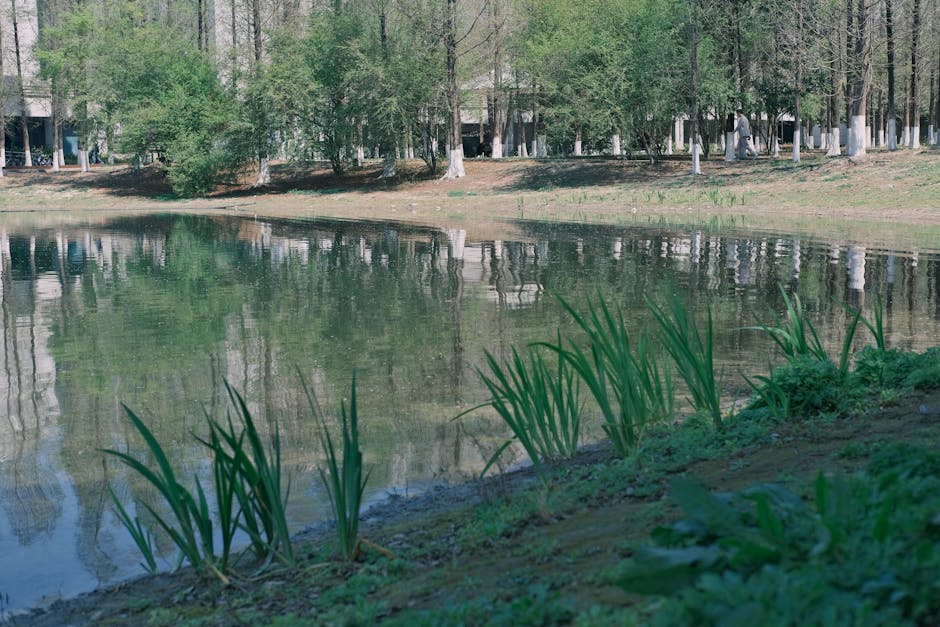
Explore Tirana's green side on this self-guided walk from Skanderbeg Square to the serene Grand Park and hidden lakeside memorials.
 Easy
EasyTirana, Albania
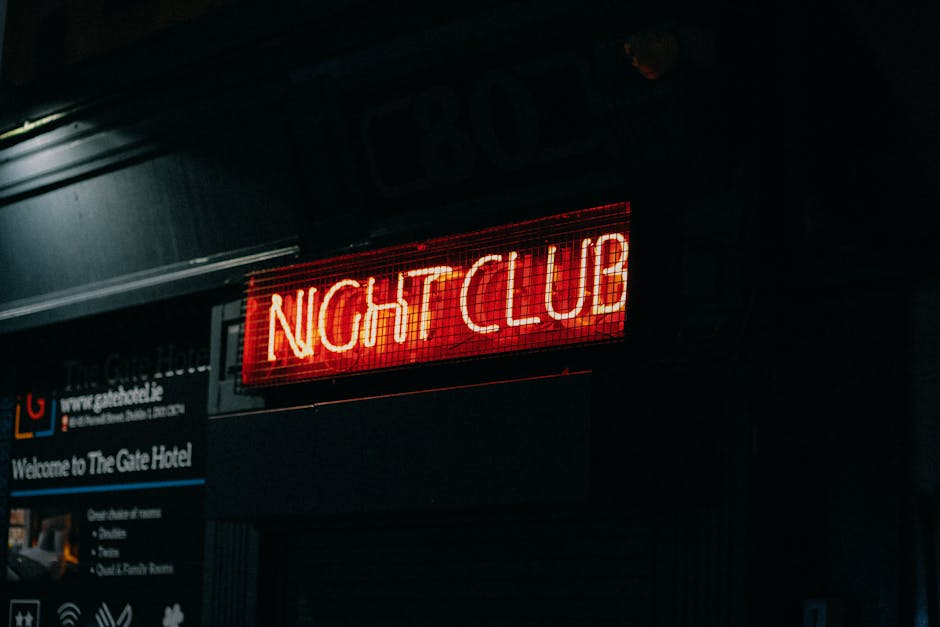
Explore Tirana’s neon-lit landmarks and vibrant nightlife districts on this self-guided evening photography walk.
 Easy
EasyTirana, Albania
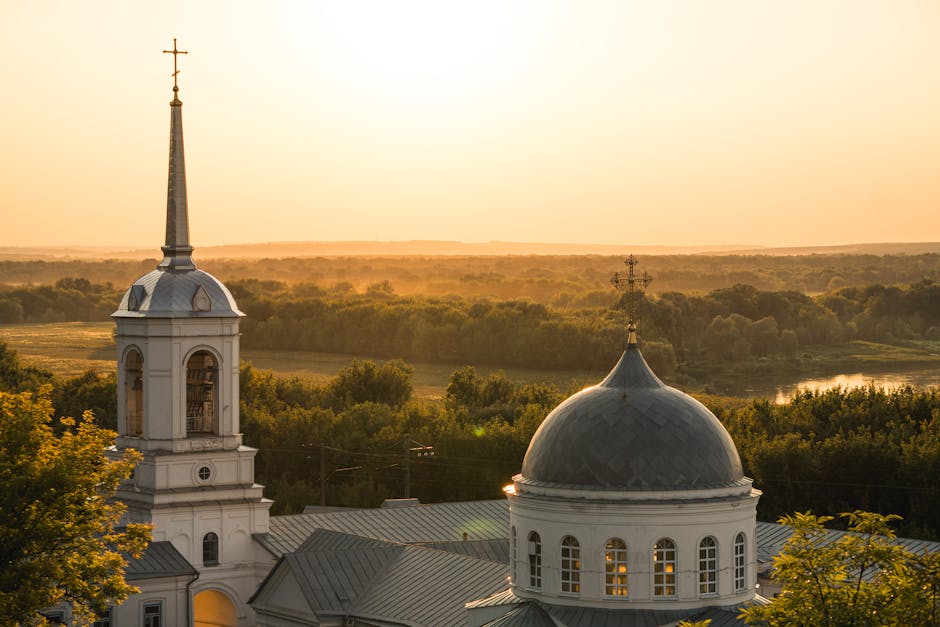
Explore Tirana’s unique religious harmony on this self-guided walk through historic mosques, grand cathedrals, and Ottoman landmarks.