Self-guided audio tour in George Town
Start Free on iPhone
Start free on iPhone to unlock this self-guided walking tour in George Town. Hear all the stories that make it amazing, walk at your own pace, and begin whenever you want.
Your Private Tour Guide
Step into a world where the sea breeze of the Melaka Straits meets the echoes of the British Empire. This self-guided walk through George Town’s Padang Kota Lama and beyond offers a deep dive into the layers of history that shaped Penang into a UNESCO World Heritage site. You will begin in the heart of the old city at the Sun Yat Sen Museum, where revolutionary ideas once brewed in hidden courtyards, before moving toward the iconic Clan Jetties—a testament to the resilience of Chinese immigrant communities living over the water. As you transition toward the Esplanade, the architecture shifts from narrow shophouses to the grand, imposing facades of the colonial era. Exploring independently allows you to linger under the shade of ancient trees at the Logan Memorial or stand in the shadow of Fort Cornwallis, imagining the first arrival of Captain Francis Light in 1786. This walking route doesn't just stick to the 19th century; it tracks the evolution of the city into a modern educational and digital hub. From the Victorian elegance of the Town Hall to the cutting-edge spaces of the Penang Digital Library, this journey illustrates how George Town has successfully married its colonial past with a forward-thinking future. Whether you are captivated by the intricate details of the Queen Victoria Memorial Clock Tower or the somber history of the Cenotaph, this neighborhood stroll provides a comprehensive look at the cultural collisions that define Penang. This walking tour George Town experience is designed for those who want to understand the 'why' behind the architecture, offering a narrative that spans from revolutionary politics to maritime trade and modern innovation.
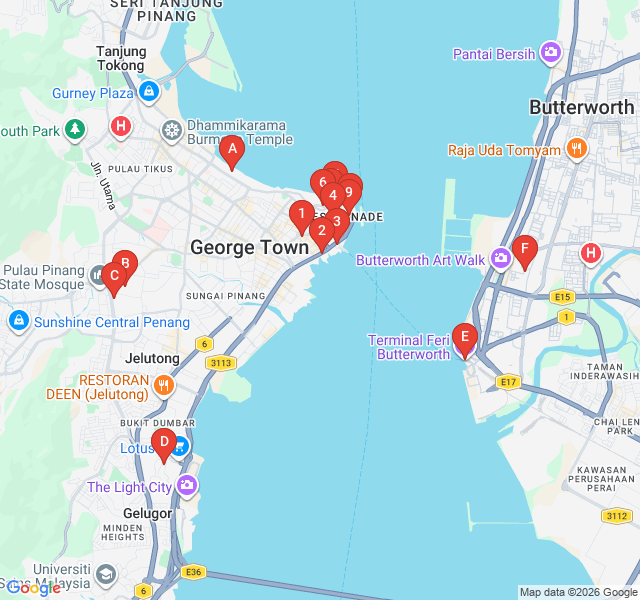
Numbers indicate the order of stops on the tour.
Start exploring with Zigway at 120 Armenian Street. This unassuming shophouse was once the base for Dr. Sun Yat Sen’s Southeast Asian operations. In 1910, the historic 'Penang Conference' was held within these walls, a pivotal moment that helped launch the Xinhai Revolution in China. Notice the long, narrow layout of the building—a classic example of a Straits Settlements shophouse—featuring beautiful timber carvings and a tranquil inner courtyard that provided light and ventilation for the revolutionaries plotting history here.
Walk toward the waterfront to discover the Clan Jetties. These wooden piers, established in the late 19th century, are home to various Chinese clans who sought work at the busy port. Each jetty is named after a clan—Chew Jetty is the most famous. The houses are built on stilts over the water, a tradition that allowed the residents to live near the docks without paying land tax. As you walk the planks, observe the small shrines and the bustling domestic life that continues today, largely unchanged for generations.
This terminal has been the gateway between Penang Island and the mainland for decades. Historically, the ferry service was the lifeblood of the city's economy. While modern bridges now connect the island, the ferry remains an iconic experience. The terminal reflects the mid-20th-century functionalist style, standing as a reminder of the era when George Town was a burgeoning free port. It’s a perfect spot to observe the shipping lanes that first attracted the British to these shores.
Located in a beautifully restored colonial-era building, SENTRAL College represents the repurposing of historic heritage for modern education. This site was once part of the vibrant commercial district supporting the nearby port. The architecture features high ceilings and arched windows designed to capture the sea breeze, a necessity in the days before air conditioning. It stands as a bridge between the mercantile history of Weld Quay and the intellectual future of the city.
The Penang Town Hall is a magnificent example of Victorian architecture, completed in the 1880s. It served as the social heart for the British elite and the administrative center for the municipal commission. With its stark white facade and classical columns, it was designed to project imperial power and stability. Adjacent to the Padang, or city green, it hosted grand balls and public meetings. Today, it remains one of the most photographed buildings in George Town, standing as a pristine relic of the colonial administration.
Look for the white marble monument dedicated to James Richardson Logan. An advocate for the local people and a champion of legal justice, Logan was a lawyer and editor who fought for the rights of non-Europeans in the 19th century. The memorial is adorned with four figures representing Justice, Temperance, Fortitude, and Prudence. It is a rare colonial monument that honors someone for their service to the local community rather than military conquest, reflecting the complex social fabric of early Penang.
This somber monument on the Esplanade commemorates the soldiers who lost their lives in World War I. Interestingly, the original Cenotaph was destroyed during World War II during an Allied bombing raid and was later painstakingly reconstructed. It stands as a place of reflection, overlooking the North Channel. The design is a smaller-scale replica of the Cenotaph in London, signifying Penang's deep historical ties to the British Commonwealth and the shared sacrifices made during global conflicts.
Named after Charles Cornwallis, this star-shaped fort was built on the site where Captain Francis Light first landed in 1786. Although it was never involved in major combat, it served as a vital administrative and military base. Inside, you can see the bronze Seri Rambai cannon, which has its own local legends regarding fertility. The fort's walls offer a clear view of the surrounding Esplanade, illustrating how the British positioned their defenses to protect the lucrative spice trade from rival European powers and local threats.
Commissioned by local millionaire Cheah Chen Eok to commemorate Queen Victoria’s Diamond Jubilee in 1897, this tower stands 60 feet tall—one foot for every year of her reign. Notice that the tower has a slight lean, a result of the bombing of the nearby government buildings during World War II. It is a stunning blend of Moorish and Victorian styles, symbolizing the wealth and loyalty of the local merchant class during the height of the British Empire's influence in the region.
Moving further afield, we find Wawasan Open University, housed in the 'Homestead.' This palatial mansion was once the home of the prominent Lim Mah Chye family and later Yeap Chor Ee. It represents the pinnacle of private wealth in colonial Penang. Today, the transition from a tycoon's residence to a center for distance learning reflects Penang's shift toward becoming a regional hub for education and knowledge, preserving the grand 'Straits Eclectic' architecture while serving a modern purpose.
Han Chiang is a cornerstone of Chinese-language education in Malaysia. Founded by the Teochew community, this institution highlights the importance of cultural preservation through education. The campus has evolved from a primary school to a university college, playing a vital role in the intellectual life of the Chinese diaspora. It serves as a reminder that while the British built the administrative city, the immigrant communities built the social and educational infrastructure that sustains the culture to this day.
Housed in a restored colonial bungalow next to the Governor’s residence, the Penang Digital Library represents the city's future. It was the first of its kind in Malaysia—a library with no physical books, only digital resources. This 'Library in the Park' concept allows the historic architecture to breathe while providing high-tech spaces for the community. It’s a perfect example of how George Town integrates heritage preservation with the 'Smart City' initiatives of the 21st century.
The Institute of Teacher Education (IPGM) is located in a lush, green campus that has long been dedicated to training the educators of the nation. The site reflects the post-war expansion of Penang’s suburban areas and the investment in human capital. The architecture here is more functional, representing the transition from the ornate colonial era to the practical needs of a newly independent Malaysia focused on nation-building through education.
Crossing over to the mainland side, the Butterworth Ferry Terminal (Pangkalan Sultan Abdul Halim) serves as the primary link for rail and bus passengers coming from Kuala Lumpur or Thailand. This area has undergone massive redevelopment with the 'Penang Sentral' project, turning an old industrial transit point into a modern, integrated transport hub. It offers the best panoramic view of the George Town skyline, allowing you to see the dense cluster of heritage buildings you just explored from a distance.
Our final stop is the Butterworth Digital Library, a stunning piece of modern architecture that revitalizes an old community building. Much like its counterpart on the island, this library focuses on digital literacy and community engagement. Its sleek, glass-heavy design provides a sharp contrast to the historic shophouses of George Town, signaling the expansion of Penang's 'Silicon Island' reputation across the water to the mainland of Seberang Perai.
Start Free on iPhone
Explore “Colonial Footprints of the Esplanade” with your very own Private Tour Guide with Zigway. Start free on iPhone, skip the large group and the fixed routes, and hear the city come alive as you go.
Your Private Tour Guide
Don't miss the good stuff
Explore Freely
 Easy
EasyGeorge Town, Malaysia
Explore the vibrant colors, sacred temples, and aromatic spice stalls of George Town’s historic Little India district on this sensory audio walk.
 Moderate
George Town, Malaysia
Explore George Town's creative pulse on this self-guided walk through vibrant art depots, heritage streets, and urban archaeological parks.
 Easy
EasyGeorge Town, Malaysia
Discover the vibrant nightlife of George Town, from legendary hawker stalls to hidden cocktail bars and historic lanes.
 Easy
EasyGeorge Town, Malaysia
Explore George Town's historic floating villages on this self-guided stroll through 19th-century clan jetties and stilt-house communities.
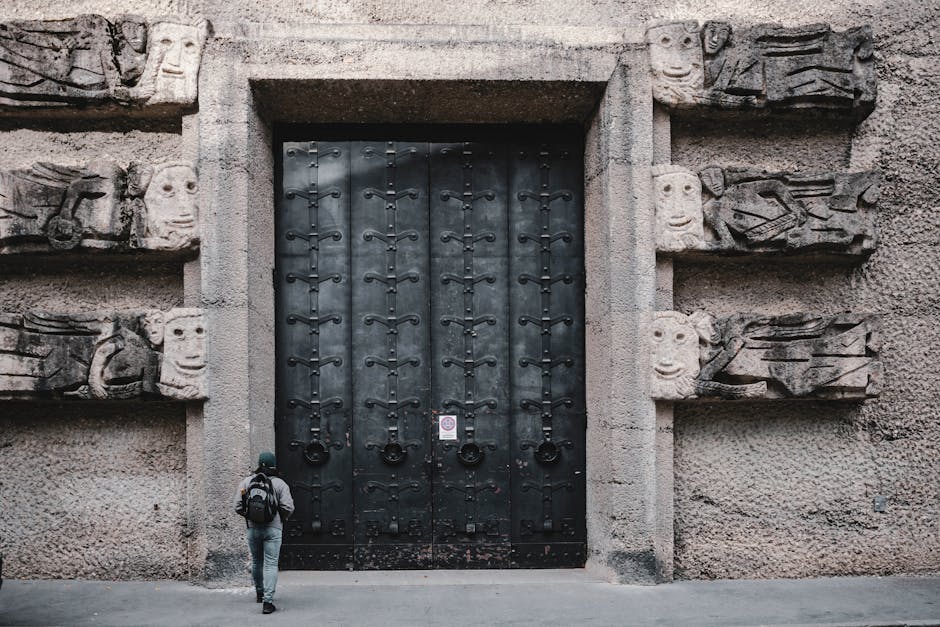 Easy
EasySalzburg, Austria
Discover the 'Rome of the North' on this self-guided walk through the Baroque squares and monumental legacy of Salzburg’s Prince-Archbishops.
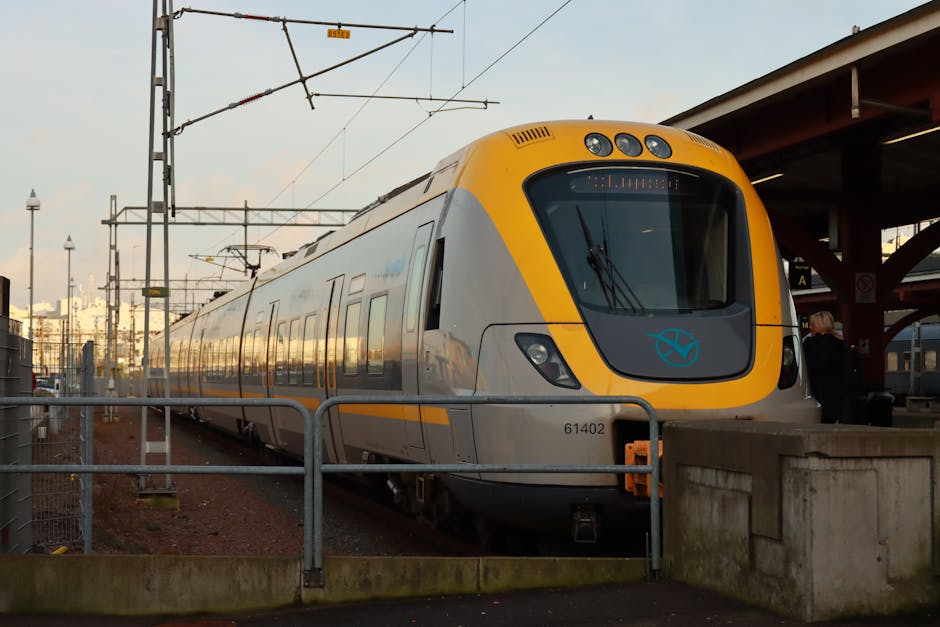 Easy
EasyGothenburg, Sweden
Discover Gothenburg’s 17th-century Dutch foundations, historic canals, and military fortifications on this self-guided architectural walk.
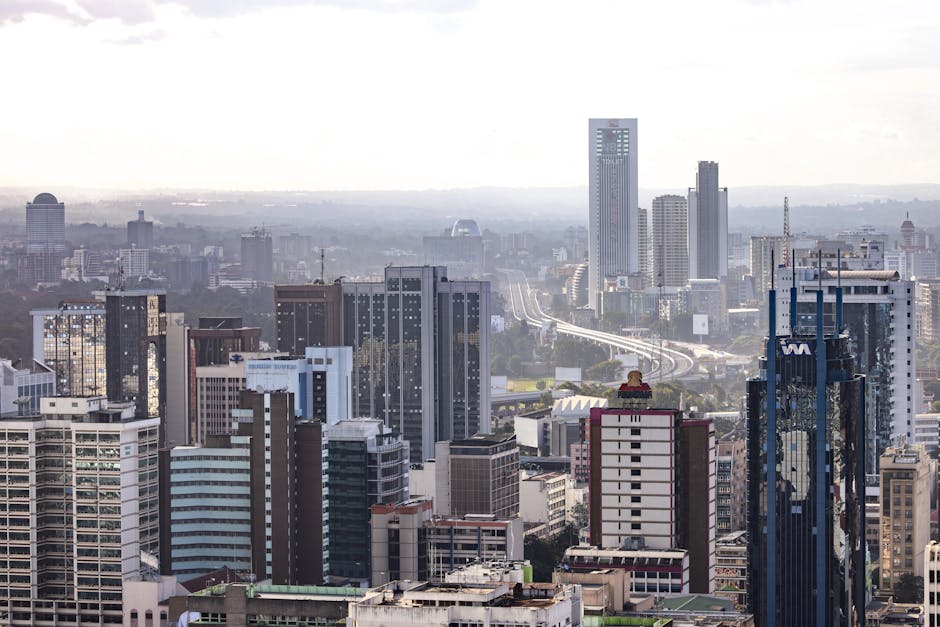 Easy
EasyNairobi, Kenya
Explore Nairobi's architectural evolution from colonial-era landmarks to iconic Brutalist skyscrapers on this historic self-guided walking route.
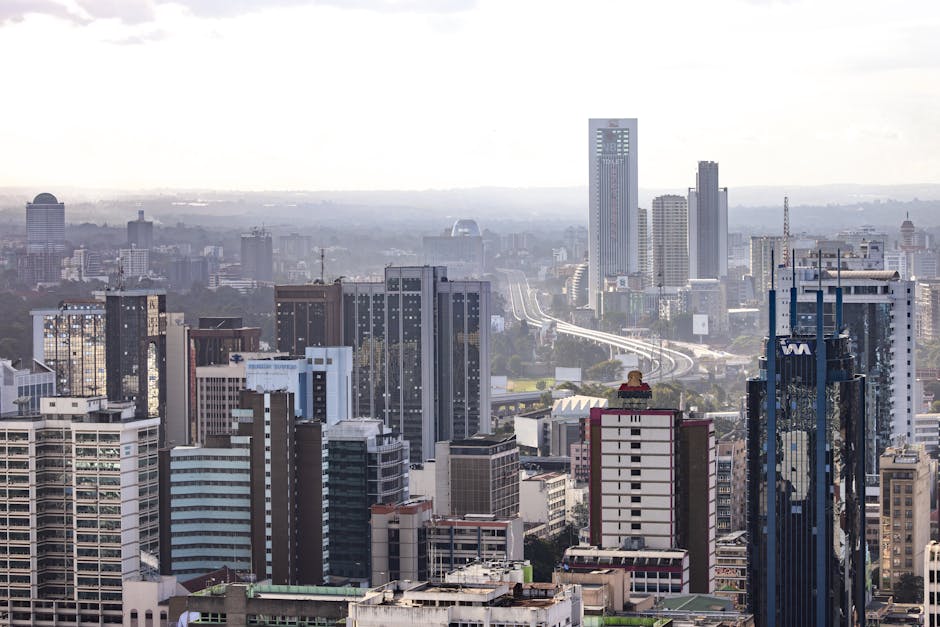 Easy
EasyNairobi, Kenya
Discover Nairobi's iconic skyline on this self-guided architecture walk through the CBD’s most famous modernist and Brutalist landmarks.
 Easy
EasyKuala Lumpur, Malaysia
Discover the futuristic architecture and lush parklands of KLCC on this photography-focused self-guided walk through Kuala Lumpur's iconic center.
 Moderate
Kuala Lumpur, Malaysia
Discover Kuala Lumpur's rainforest heart on this self-guided walk through the Bukit Nanas canopy, historic markets, and iconic green spaces.
 Easy
EasyKuala Lumpur, Malaysia
Explore the vibrant colors, scents, and diverse spiritual landmarks of Kuala Lumpur's Little India on this sensory self-guided audio walk.
 Moderate
Kuala Lumpur, Malaysia
Explore Kuala Lumpur’s most iconic bookstores and creative hubs on this half-day self-guided literary adventure.