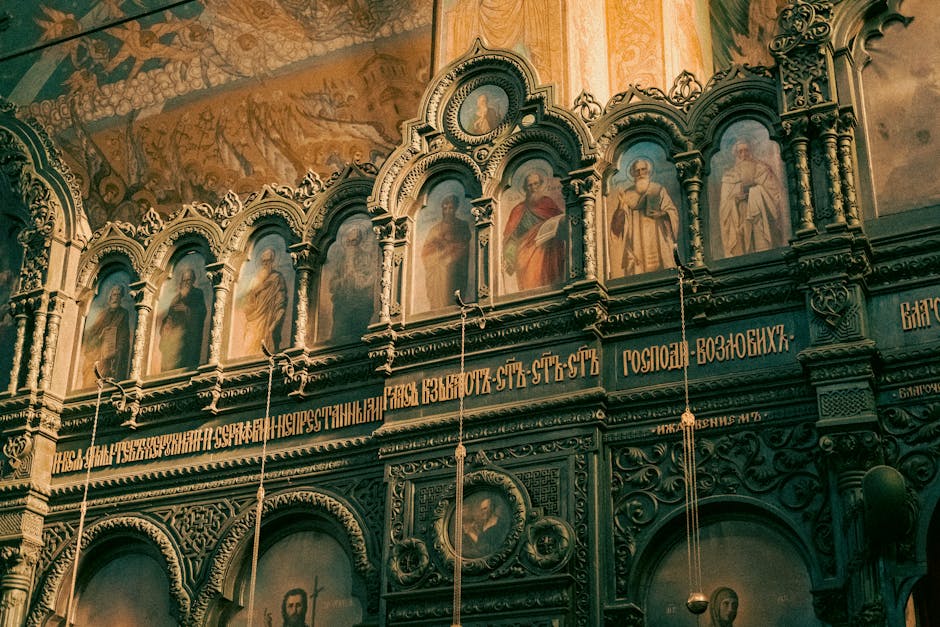
Self-guided audio tour in Nicosia
Start Free on iPhone
Start free on iPhone to unlock this self-guided walking tour in Nicosia. Hear all the stories that make it amazing, walk at your own pace, and begin whenever you want.
Your Private Tour Guide
Nicosia is a city where history is etched into every stone, and nowhere is this more evident than within its iconic Venetian walls. This self-guided walk invites you to explore the complex spiritual tapestry of the world’s last divided capital. As you navigate the winding alleys of the Old City, you will encounter a landscape where church spires and minarets share the skyline, telling a story of centuries of coexistence, conquest, and faith. This walking route is designed for those who want to peel back the layers of Nicosia’s history at their own pace, moving from the oldest Byzantine foundations to the grand architectural statements of the Ottoman and modern eras. Your journey begins in the Chrysaliniotissa neighborhood, one of the most traditional corners of the city, before leading you toward the religious heart of the Greek Orthodox community. You will discover St. John’s Cathedral, an unassuming building from the outside that hides a breathtaking interior of 18th-century frescoes. Nearby, the Archbishop’s Palace stands as a symbol of the enduring influence of the Church in Cypriot life. The path then shifts toward the Omeriye Mosque, a site that beautifully encapsulates the island’s transitions, having served as both an Augustinian monastery and a focal point for Islamic worship after the Ottoman conquest. Each stop on this neighborhood stroll offers a window into a different era, from the medieval period to the present day. While wandering through these historic quarters, you will experience the unique atmosphere of a city that bridges East and West. This walking tour Nicosia provides is more than just a sightseeing exercise; it is an immersion into the cultural crossroads of the Mediterranean. You will finish your walk at the lively Faneromeni Church, a central gathering point where the city’s spiritual past meets its vibrant modern culture. Whether you are a history enthusiast or a curious traveler, this self-guided adventure offers the flexibility to linger at ancient icons or enjoy a coffee in a hidden courtyard. Experience the layers of Nicosia independently and discover why this walking tour Nicosia offers is the best way to understand the soul of the city.
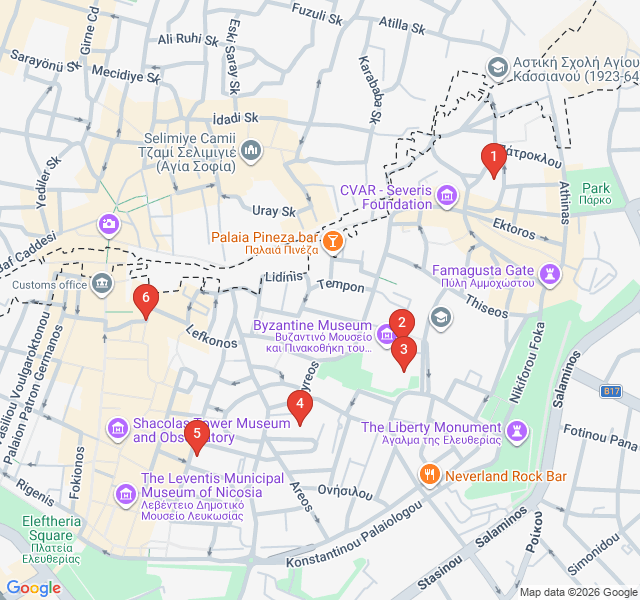
Numbers indicate the order of stops on the tour.
Welcome to the oldest Byzantine church in Nicosia. Built around 1450 by Queen Helena Palaeologina, Panagia Chrysaliniotissa is dedicated to 'Our Lady of the Golden Flax.' This church is a masterpiece of architectural evolution, featuring a mix of Byzantine domes and Gothic influences that reflect Cyprus's position at the crossroads of empires. Inside, the church houses a rare collection of ancient icons, some dating back centuries. The surrounding neighborhood is one of the most authentic in the Old City, with low-slung houses and quiet courtyards that have remained largely unchanged for decades. Take a moment to appreciate the tranquility here, which offers a stark contrast to the busier commercial streets nearby.
Though it appears modest from the street, St. John's Cathedral is the most important religious site for the Greek Orthodox community within the walls. Built in 1662 on the site of a 14th-century Benedictine abbey, it became the cathedral of Nicosia in the 18th century. The interior is a sensory marvel, covered entirely in vibrant frescoes depicting biblical scenes and the discovery of the tomb of Saint Barnabas, the patron saint of the Cypriot Church. Look up to see the intricate wood-carved iconostasis covered in gold leaf. Because the cathedral was built during the Ottoman period when no Christian building could be taller than a mosque, its exterior remains humble, hiding its true splendor within.
Standing before you is the Archbishop’s Palace, the official residence and office of the Archbishop of Cyprus. Although it looks ancient, this Neo-Byzantine palace was actually completed in 1961. It serves as a powerful symbol of the 'Ethnarchy'—the historical role of the Church as the political leader of the Greek Cypriot people during centuries of foreign rule. In the courtyard, you might notice the statue of Archbishop Makarios III, the first president of independent Cyprus. The palace grounds also house the Byzantine Museum and the Library of the Archbishopric, making this complex the intellectual and spiritual hub of the city’s Orthodox heritage.
The Omeriye Mosque is a fascinating example of Nicosia’s layered history. Originally built in the 14th century as the Augustinian Church of Saint Mary, it was converted into a mosque by Lala Mustafa Pasha after the Ottoman conquest in 1571. Legend says the site is associated with the 7th-century Prophet Omar, who supposedly rested here. Architecturally, the building retains its soaring Gothic windows and heavy buttresses, now complemented by a tall minaret. It remains an active place of worship today. The transition from a Catholic monastery to an Islamic mosque reflects the wider story of Cyprus—a place where different faiths have inhabited the same sacred spaces over the millennia.
Agios Savvas is a quintessential neighborhood church that serves as a landmark in the southern part of the Old City. Rebuilt in the mid-19th century on the foundations of an older church, it features a distinctive bell tower and a traditional three-aisled basilica design. This stop highlights the local, communal side of faith in Nicosia. Unlike the grand cathedral, Agios Savvas was where the local merchants and residents of the surrounding quarters gathered for daily life and celebrations. The area around the church is filled with small workshops and traditional storefronts, offering a glimpse into the everyday life of the Old City residents before the advent of modern shopping malls.
Our final stop is Faneromeni Church, the largest church within the Venetian walls. Built in 1872 on the site of an ancient nunnery, its name means 'The Revealed One,' referring to an icon of the Virgin Mary found in the ruins. The church is a mixture of Neoclassical and Byzantine styles and stands at the heart of a lively square that has historically been a center for political activism and social gathering. Adjacent to the church is a marble mausoleum containing the remains of bishops and priests executed by the Ottomans in 1821. Today, the square is a popular meeting spot for students and locals, marking the perfect transition from the sacred silence of the shrines to the bustling energy of modern Nicosia.
Start Free on iPhone
Explore “Sacred Spires and Minarets: A Multi-Faith Journey” with your very own Private Tour Guide with Zigway. Start free on iPhone, skip the large group and the fixed routes, and hear the city come alive as you go.
Your Private Tour Guide
Don't miss the good stuff
Explore Freely
 Easy
EasyNicosia, Cyprus
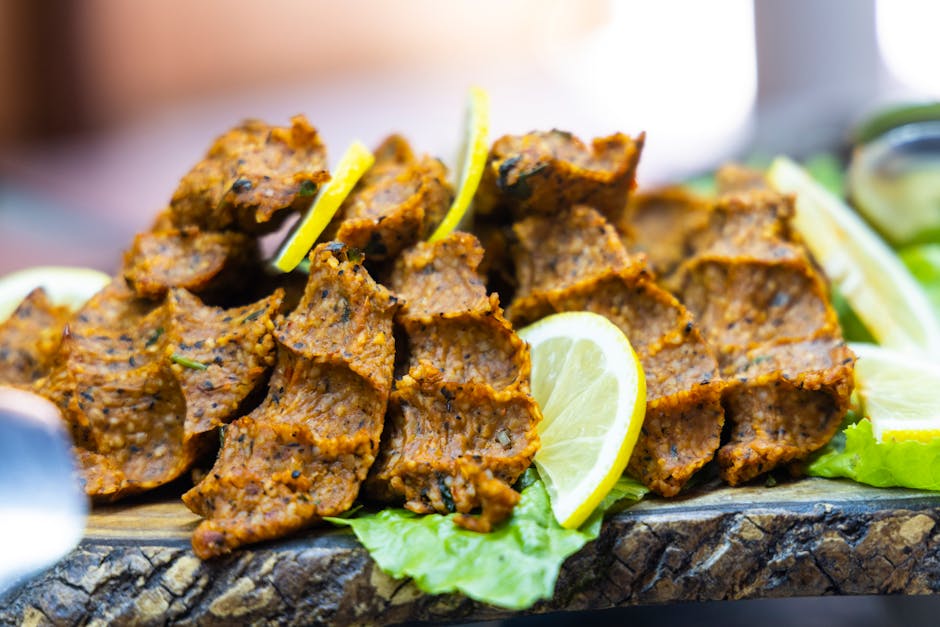
Explore Nicosia's culinary heart! A self-guided stroll from historic coffee roasters to modern meze spots across the city's unique divided center.
 Easy
EasyNicosia, Cyprus
Capture the soul of the world's last divided capital on this self-guided walk through Nicosia's historic streets, street art, and panoramic views.
 Easy
EasyNicosia, Cyprus
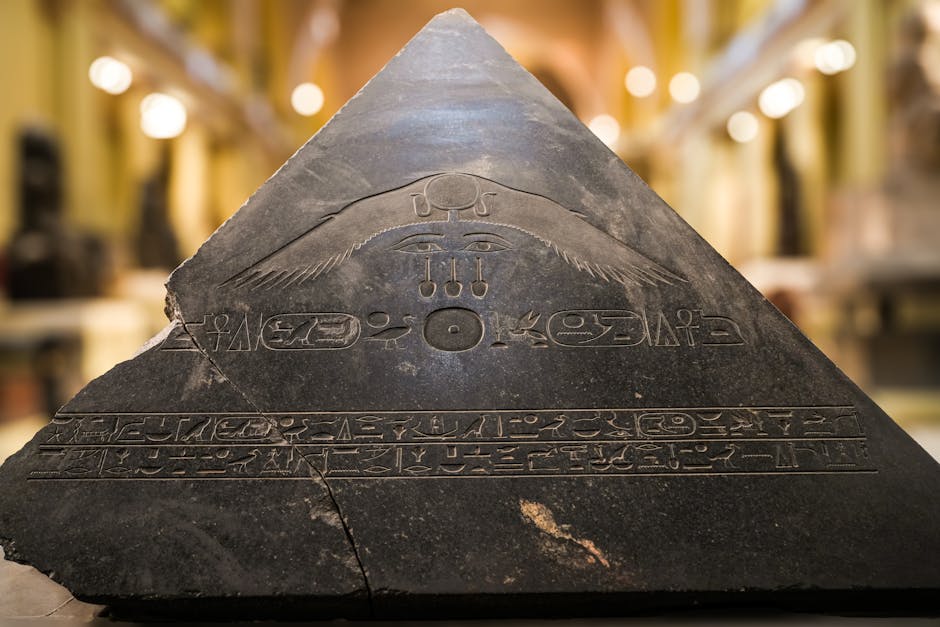
Explore Nicosia's rich heritage on this self-guided walk through premier museums, Ottoman mansions, and world-class archaeological collections.
 Easy
EasyNicosia, Cyprus
Explore Nicosia’s modern side, from Zaha Hadid’s fluid architecture to vibrant street art and Jean Nouvel's iconic bioclimatic 'White Walls.'
 Moderate
Gdansk, Poland
Discover the origins of WWII in Gdansk on this self-guided walk through heroic last stands, massive museums, and strategic hilltop fortifications.
 Easy
EasyKrakow, Poland
Explore the historic heart of Kazimierz on this self-guided walk through synagogues, ancient cemeteries, and vibrant squares.
 Easy
EasySalzburg, Austria
Discover the 'Rome of the North' on this self-guided walk through the Baroque squares and monumental legacy of Salzburg’s Prince-Archbishops.
 Moderate
Warsaw, Poland
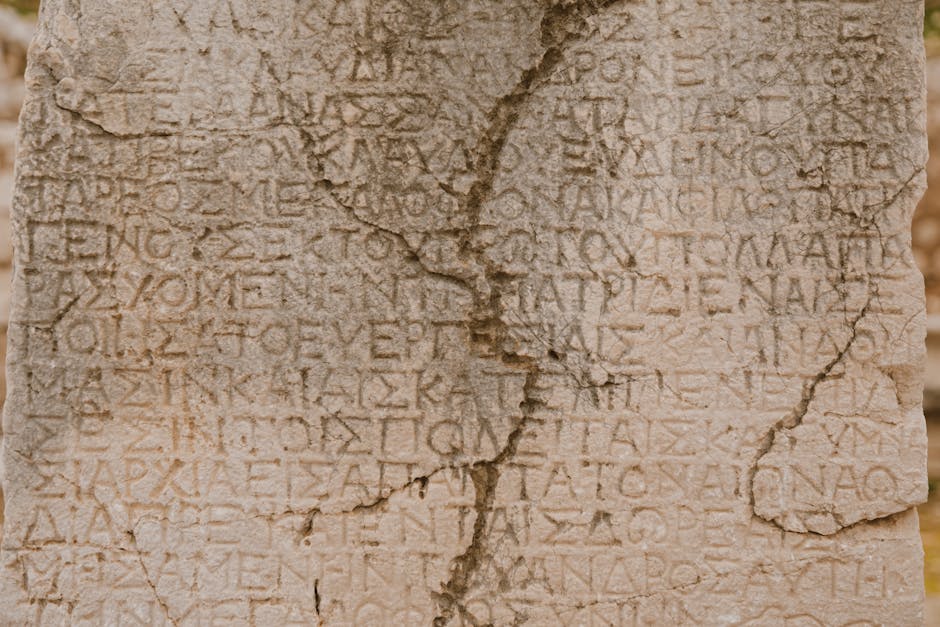
Explore the resilient spirit of Warsaw's Muranów district on this self-guided walk through the history and landmarks of the former Jewish Ghetto.
 Easy
EasyPaphos, Cyprus
Explore Paphos' maritime history on this self-guided walk from ancient tombs and Roman mosaics to the iconic harbor fort and a coastal shipwreck.
 Easy
EasyPaphos, Cyprus
Experience the vibrant pulse of Paphos after dark, from the neon lights of Bar Street to sophisticated harbor-side cocktails on this self-guided walk.
 Easy
EasyPaphos, Cyprus
Experience the stunning Mediterranean coastline, historic lighthouse, and medieval castle on this scenic self-guided audio walk in Kato Paphos.
 Easy
EasyPaphos, Cyprus
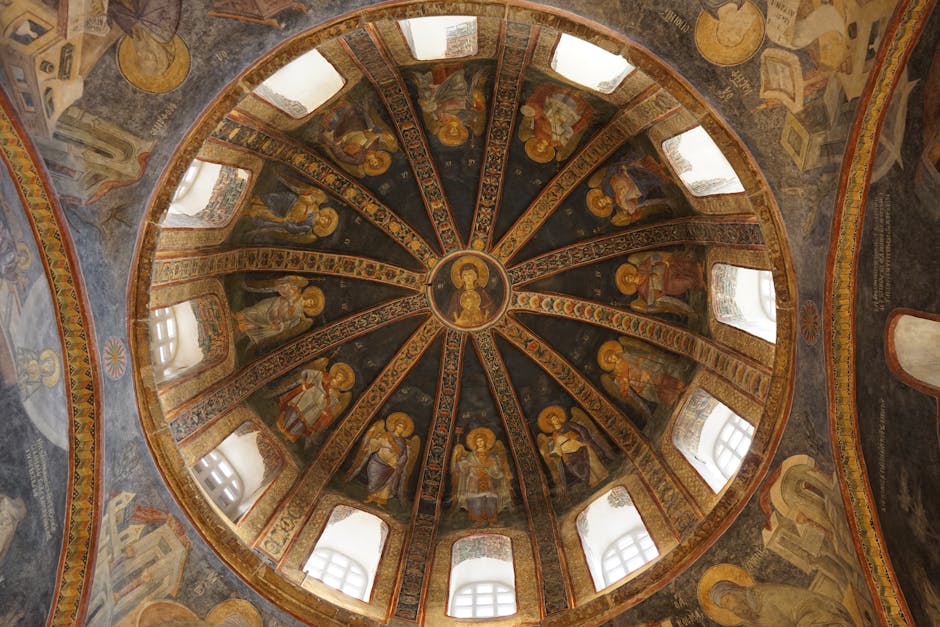
Discover UNESCO-listed ruins, Byzantine churches, and Roman mosaics on this self-guided audio walk through the historic heart of Paphos.