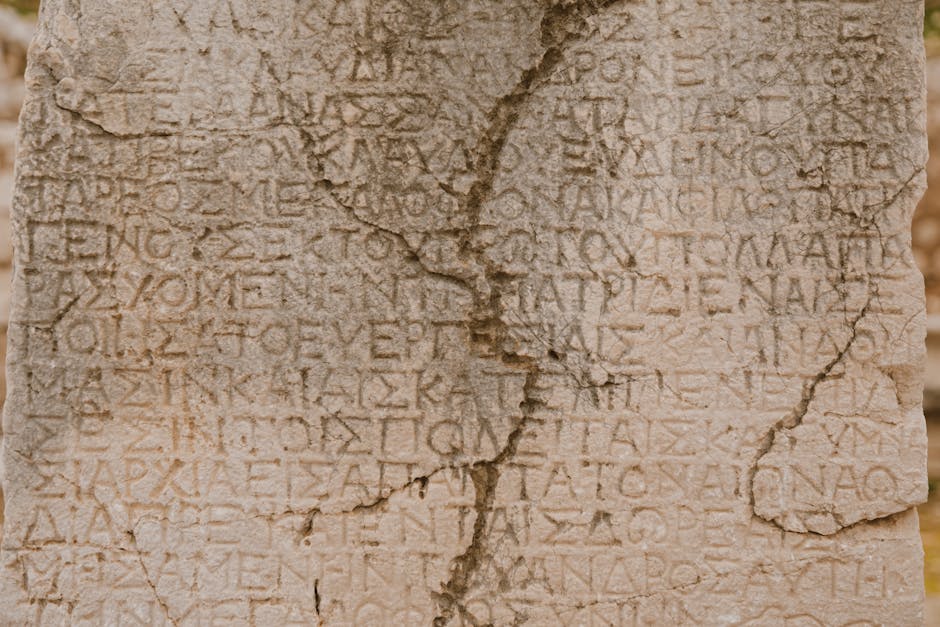
Self-guided audio tour in Paphos
Start Free on iPhone
Start free on iPhone to unlock this self-guided walking tour in Paphos. Hear all the stories that make it amazing, walk at your own pace, and begin whenever you want.
Your Private Tour Guide
Step into a world where ancient legends meet the turquoise horizon on this self-guided walk through Kato Paphos. This maritime-themed route invites you to explore the layered heritage of a city that has served as a strategic Mediterranean gateway for millennia. From the silent, sun-drenched chambers of the Tombs of the Kings to the sturdy walls of the Medieval Castle, you will discover how the sea has shaped the identity, wealth, and architecture of this UNESCO World Heritage site. This neighborhood stroll captures the essence of Paphos, blending the grandeur of Roman mosaics with the utilitarian beauty of British-era lighthouses and the haunting silhouette of a modern shipwreck. As you navigate the walking route, you will encounter the Agia Solomoni Catacomb, where history and local folklore intertwine around a sacred tree, and stand where Saint Paul supposedly faced the Roman authorities. The journey leads you through the Archaeological Park, home to some of the finest Roman mosaics in the world at the House of Dionysus, before concluding at the bustling harbor. Whether you are a history enthusiast or a casual traveler, this self-guided adventure offers the flexibility to linger over ancient ruins or enjoy the sea breeze at your own pace. Discover the stories of the fleet that once anchored here and the fort that stood guard over the island's most precious harbor, all while enjoying the vibrant atmosphere of modern Cyprus. This walking tour Paphos experience is designed to showcase the maritime soul of the city, ensuring you don't miss the hidden details that make this coast so legendary.
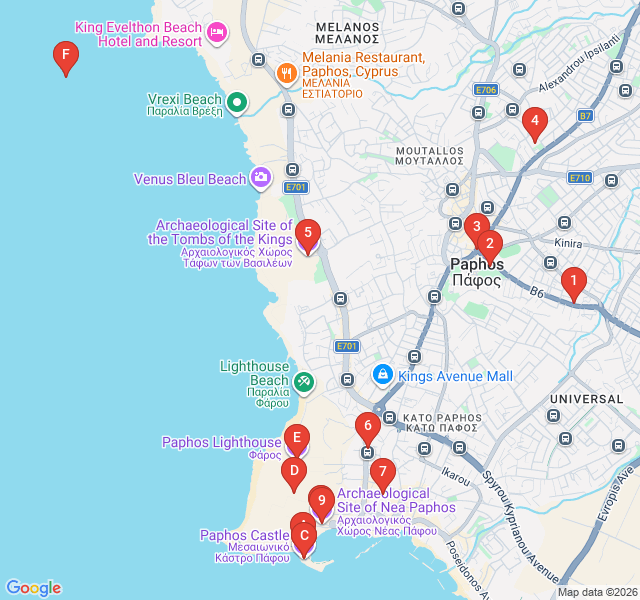
Numbers indicate the order of stops on the tour.
Begin your self-guided adventure at the Archaeological Museum of the Paphos District. This museum serves as the perfect introduction to the region's long history, housing artifacts that date from the Neolithic Age to the 18th century. As you explore the galleries, look for the exquisite collection of pottery, Roman glass, and marble statues found across the Paphos district. The exhibits highlight the city's evolution from a local settlement to a major administrative center of the Mediterranean. It sets the stage for the maritime and ancient sites you will encounter later on your walk, providing context for the ruins and relics scattered throughout Kato Paphos.
A short walk brings you to the Paphos Town Hall, a building that reflects the neoclassical architectural style popular in the early 20th century. Located near the municipal gardens, this area marks the transition between the upper town and the coastal district. The Town Hall's grand columns and symmetrical design are a nod to the classical Greek influence that remains a point of pride for the island. Take a moment to appreciate the peaceful surroundings and the elegant architecture before heading down toward the harbor, where the city’s ancient and modern maritime lives truly converge.
As you descend toward the coast, stop at this viewpoint to get your first expansive look at the Paphos Harbor. From here, you can see the Mediterranean stretching toward the horizon and the Medieval Castle standing guard at the end of the mole. For centuries, this harbor was a vital link for trade and naval power in the Eastern Mediterranean. Today, it is a vibrant hub of activity, where traditional fishing boats sit alongside modern yachts. Observe the layout of the old city and the archaeological park, which occupies the headland just to the west of the modern marina.
This main thoroughfare, Apostolos Pavlos Avenue, is the historic artery connecting the upper town of Ktima with the lower harbor area of Kato Paphos. Named after Saint Paul, who visited the city in 45 AD, the road is lined with shops, cafes, and significant historic markers. Walking this route allows you to feel the pulse of the city. As you head toward the sea, you are literally walking over layers of history; beneath these modern pavements lie the remains of the ancient city walls and the Roman roads that once carried merchants and pilgrims from the harbor to the heart of the city.
Despite the name, no kings were actually buried here; instead, this impressive necropolis was the final resting place for high-ranking officials and aristocrats during the Hellenistic and Roman periods. The tombs are carved directly into the solid rock, featuring Doric columns and peristyle courtyards that mimic the houses of the living. This 'city of the dead' reflects the wealth and architectural sophistication of ancient Paphos. As you explore the underground chambers, notice the intricate details of the masonry and the way the tombs were designed to accommodate multiple generations of the city's elite, overlooking the sea they once traded upon.
This site is a fascinating blend of religious tradition and ancient history. The Agia Solomoni Catacomb was originally a Hellenistic tomb complex that was later used as a Christian chapel. Outside, you will notice a large terebinth tree covered in tied pieces of cloth—votive offerings from locals and visitors seeking healing. Descending into the cool, damp catacombs, you can see remnants of 12th-century frescoes and a sacred spring. It is a quiet, evocative place that demonstrates how ancient structures in Paphos have been repurposed and revered throughout different eras of faith and culture.
Located within the grounds of the Panagia Chrysopolitissa church, this marble pillar is steeped in tradition. It is said to be the site where the Apostle Paul was tied and whipped 39 times by the Romans before he successfully converted the Roman proconsul, Sergius Paulus, to Christianity. Whether the legend is literal or symbolic, the site marks Paphos as one of the first places in the world to be governed by a Christian leader. The surrounding area is a landscape of fallen marble columns and intricate floor mosaics from a massive 4th-century Byzantine basilica that once stood here.
Enter the heart of the UNESCO World Heritage site. The Kato Pafos Archaeological Park contains the remains of the ancient city of Nea Paphos, founded in the 4th century BC. This sprawling site is an open-air museum of Mediterranean history. As you walk through the park, you are treading on the administrative center of Roman Cyprus. The park is famous for its incredible preservation, offering a glimpse into the domestic and public lives of the ancients. It is a place where the maritime wealth of the city was transformed into enduring monuments of stone and art.
Within the larger park, the Nea Paphos site specifically refers to the planned city that became the island's capital. Its strategic location near the harbor allowed it to flourish as a center for trade and military operations. You can see the remains of the Agora, the central marketplace, and the Odeon, a small theater used for musical performances and city meetings. The layout of the ruins shows the typical Greco-Roman grid system. Imagine the bustling crowds of sailors, merchants, and politicians who once filled these spaces when Paphos was the most important city on the island.
Exit the archaeological sites and step into the modern Paphos Harbor Marina. This area is the soul of Kato Paphos today. The maritime legacy continues here, though the cargo has changed from copper and timber to tourism and leisure. The promenade is perfect for a slow walk, lined with seafood tavernas and cafes where you can smell the salt air. Watch the local fishermen mending their nets, a scene that has likely changed very little over the centuries. The marina provides a vivid contrast between the ancient ruins you've just seen and the living, breathing maritime culture of Cyprus.
Standing at the edge of the harbor is the Paphos Medieval Castle. Originally a Byzantine fort built to protect the harbor, it was destroyed by an earthquake in 1222, rebuilt by the Lusignans, dismantled by the Venetians, and finally restored by the Ottomans in the 16th century. Its thick, sturdy walls have served as a fortress, a prison, and even a salt warehouse under British rule. You can walk across the small stone bridge to enter the fort. Its history of destruction and reconstruction is a perfect metaphor for the turbulent and resilient history of the island itself.
While the exterior of the castle is impressive, the view from its upper ramparts is even better. From the top, you have a commanding view of the harbor entrance and the archaeological park. In the past, soldiers would have scanned the horizon for pirate sails or enemy fleets. Today, the square in front of the castle serves as a cultural venue, most notably for the annual Paphos Aphrodite Festival. The small windows and dark chambers inside the castle offer a stark look at its time as a prison, contrasting with the bright Mediterranean sun reflecting off the water outside.
Re-entering the archaeological area briefly or viewing from the paths, the House of Dionysus contains some of the most spectacular mosaics in the world. Dating from the 2nd century AD, these floor mosaics decorated the villa of a wealthy Roman citizen. They depict scenes from Greek mythology, particularly those involving Dionysus, the god of wine. The level of detail, the variety of colors, and the storytelling captured in these tiny stone tiles are breathtaking. They were preserved for centuries under layers of soil after an earthquake, only to be rediscovered in 1962 by a farmer plowing his field.
A short walk toward the western edge of the archaeological park brings you to the Paphos Lighthouse. Built in 1888 during the British administration, it remains an active navigational aid for ships approaching the Cyprus coast. Its presence is a reminder of the continued importance of maritime safety in these waters. The lighthouse stands on a small hill, offering one of the best vantage points for photos of the ancient theater and the sea. It represents the modern era of the harbor's history, bridging the gap between ancient navigation and the shipping lanes of the 19th and 20th centuries.
To conclude your maritime journey, look out toward the sea to spot the MV Dimitrios II. This cargo ship ran aground in 1998 during a heavy storm while carrying a cargo of timber from Greece to Syria. The crew was rescued, but the ship remained, becoming a permanent and haunting fixture of the Paphos coastline. Resting on a rocky reef about 500 meters from the shore, the rusting hull is a favorite subject for photographers, especially at sunset. It serves as a modern reminder of the power of the Mediterranean and the dangers that sailors have faced along these shores since antiquity.
Start Free on iPhone
Explore “The Fort and the Fleet: Paphos Harbor Heritage” with your very own Private Tour Guide with Zigway. Start free on iPhone, skip the large group and the fixed routes, and hear the city come alive as you go.
Your Private Tour Guide
Don't miss the good stuff
Explore Freely
 Easy
EasyPaphos, Cyprus
Experience the vibrant pulse of Paphos after dark, from the neon lights of Bar Street to sophisticated harbor-side cocktails on this self-guided walk.
 Easy
EasyPaphos, Cyprus
Experience the stunning Mediterranean coastline, historic lighthouse, and medieval castle on this scenic self-guided audio walk in Kato Paphos.
 Easy
EasyPaphos, Cyprus
Discover UNESCO-listed ruins, Byzantine churches, and Roman mosaics on this self-guided audio walk through the historic heart of Paphos.
 Moderate
Paphos, Cyprus
Discover the neoclassical beauty of Ktima and the ancient ruins of Kato Paphos on this comprehensive self-guided walking route through history.
 Easy
EasyNairobi, Kenya
Discover Nairobi's iconic skyline on this self-guided architecture walk through the CBD’s most famous modernist and Brutalist landmarks.
 Easy
EasyNairobi, Kenya
Explore Nairobi's architectural evolution from colonial-era landmarks to iconic Brutalist skyscrapers on this historic self-guided walking route.
 Easy
EasyNairobi, Kenya
Explore the history of Kenya’s independence through the statues, monuments, and parks that define Nairobi’s political heart on this self-guided walk.
 Easy
EasyKrakow, Poland
Uncover Krakow's legendary past on this self-guided walk from literary monuments to the fire-breathing Wawel Dragon.
 Easy
EasyNicosia, Cyprus
Explore Nicosia's culinary heart! A self-guided stroll from historic coffee roasters to modern meze spots across the city's unique divided center.
 Easy
EasyNicosia, Cyprus
Capture the soul of the world's last divided capital on this self-guided walk through Nicosia's historic streets, street art, and panoramic views.
 Easy
EasyNicosia, Cyprus
Explore Nicosia's rich heritage on this self-guided walk through premier museums, Ottoman mansions, and world-class archaeological collections.
 Easy
EasyNicosia, Cyprus
Explore Nicosia’s modern side, from Zaha Hadid’s fluid architecture to vibrant street art and Jean Nouvel's iconic bioclimatic 'White Walls.'