Self-guided audio tour in Nicosia
Start Free on iPhone
Start free on iPhone to unlock this self-guided walking tour in Nicosia. Hear all the stories that make it amazing, walk at your own pace, and begin whenever you want.
Your Private Tour Guide
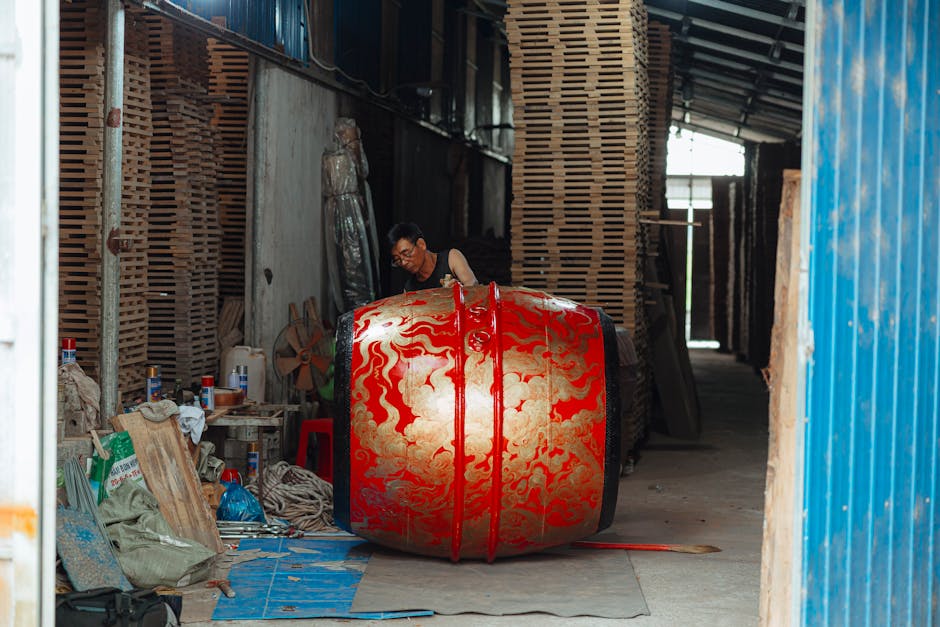
Step into a world where time slows down and the rhythmic sounds of hammers, looms, and saws echo through narrow alleyways. This self-guided walk through Nicosia offers a deep dive into the soul of the last divided capital, focusing on the incredible resilience of its traditional artisans. This neighborhood stroll begins in the quiet, historic suburb of Kaimakli, where the ghosts of the old Cyprus Government Railway still linger. From there, the walking route leads you through the formidable Venetian walls at Famagusta Gate and into the heart of the Old City. You will discover the Ermou Street workshops, where master craftsmen still practice trades that have remained unchanged for centuries, from chair-making to copper-smithing. As you explore independently, the trail weaves through both the southern and northern sectors of the city, highlighting the shared heritage of Ottoman caravanserais like the Büyük Han and the grand neoclassical architecture of the Cyprus Museum. This is more than a walking tour Nicosia; it is an invitation to witness the living history of Cyprus through its people and their crafts. Along the way, you will encounter iconic landmarks like the Shacolas Tower and the Liberty Monument, providing context to the island's complex modern history. Whether you are admiring the intricate lace at the Handicraft Centre or the archaeological treasures of the Cyprus Museum, this journey celebrates the enduring spirit of Nicosia. By following this route, you can experience the city's unique atmosphere at your own pace, moving between ancient gates and contemporary galleries. This walking tour Nicosia is perfect for those who want to see beyond the tourist facade and connect with the authentic artisan culture that defines this Mediterranean crossroads. **Note:** This area is known for its ever-changing character. Street art, pop-up venues, and temporary exhibitions may differ from what's described. That's part of the adventure - you might discover something entirely new!
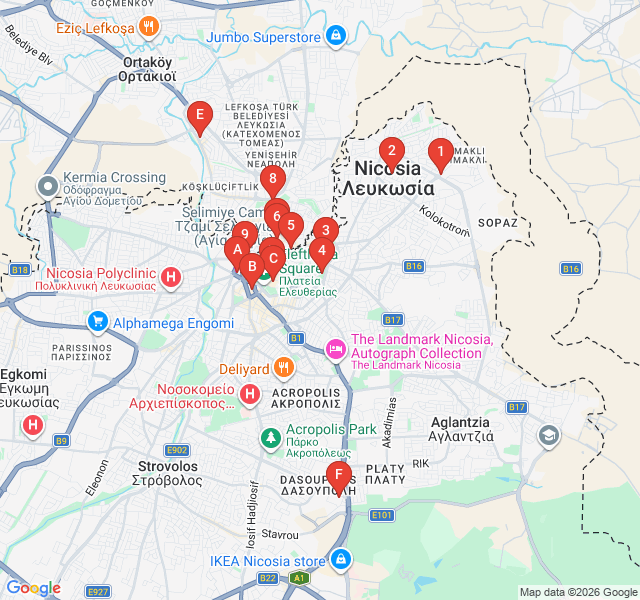
Numbers indicate the order of stops on the tour.
Begin your self-guided adventure at the restored Kaimakli Train Station. While Cyprus no longer has a functioning railway, this building is a rare reminder of the Cyprus Government Railway that operated from 1905 to 1951. The station served as a vital link for transporting goods and people between Famagusta and Nicosia. Today, the linear park following the old tracks provides a peaceful green space. Notice the architectural style of the building, which reflects the British colonial era. It stands as a gateway to the Kaimakli neighborhood, known for its traditional houses and long history of craftsmanship, setting the stage for your journey into Nicosia's artisanal past.
In the winding streets of Kaimakli, you may find the distinctive scent of fresh wood. This area is home to some of the last traditional chair makers in Nicosia. These artisans specialize in the 'tonia' style—Cypriot chairs made from local wood with hand-woven rush seats. Observe the precision required to shape the wood without modern machinery. This craft has been passed down through generations, though it faces challenges from mass-produced furniture. These workshops are often small, family-run spaces where the artisan’s life and work are inextricably linked. It is a rare opportunity to see a functional piece of Cypriot heritage being created before your eyes.
As you reach the edge of the Old City, you are confronted by the massive Famagusta Gate. Built by the Venetians in 1567, this was originally known as the Porta Giuliana. It is the most beautiful and best-preserved of the three gates that once led into the walled city. The gate features a large vaulted passage and a impressive facade. Historically, it served as the main entrance for travelers arriving from the east. Today, the internal chambers are often used for cultural exhibitions and performances. Standing here, you can feel the transition from the suburban sprawl to the concentrated history of the fortified center.
Just a short walk from the gate stands the Liberty Monument, a powerful bronze and stone sculpture. Erected in 1973, it commemorates the release of EOKA fighters from prison in 1959. The monument depicts two heroic figures pulling chains to open a prison gate, while various figures representing different sectors of Cypriot society emerge into freedom. It is a significant site for understanding the modern political identity of the Republic of Cyprus. The monument’s location on the Podocattaro Bastion offers a clear view of how the city walls were used for defense throughout history, from the Venetians to the modern military presence.
Ermou Street was once the primary commercial artery of Nicosia, where merchants and craftsmen from all communities gathered. After years of neglect due to its proximity to the Buffer Zone, the street has seen a cultural revival. Today, you can explore independently and find a mix of old-school artisans—like coppersmiths and tailors—alongside contemporary art studios. The architecture here is a blend of traditional stone and early 20th-century storefronts. Look for the small signage of the 'Last Artisans' project which highlights these masters. The street serves as a bridge between the past and the present, showcasing how traditional skills are being adapted for a new generation.
Enter the northern part of the city to find the Büyük Han, or 'Great Inn.' Built by the Ottomans in 1572, shortly after they took the city from the Venetians, this is considered one of the finest buildings on the island. It served as a caravanserai—a roadside inn where travelers and merchants could rest. The central courtyard features a small mosque, or 'mescit,' raised on marble columns. Today, the former sleeping quarters house various artisan shops selling traditional lace, pottery, and silk. It is the perfect place to pause and appreciate the intricate stone carvings and the peaceful atmosphere of this historic trading post.
A few steps away is the Kumarcılar Han, known as the 'Gamblers' Inn.' While smaller than the Büyük Han, this 17th-century structure offers a more intimate look at Ottoman commercial architecture. It follows the classic plan of a two-story building surrounding an open courtyard. Legend has it the name comes from the travelers who would pass the time playing games here. After extensive restoration, the Han now hosts small cafes and craft shops. Notice the Gothic details in the arches, a sign of how Ottoman builders often repurposed materials and styles from the earlier Lusignan period of Cyprus history.
Kyrenia Gate marks the northern entrance to the walled city. Unlike the Famagusta Gate, this entrance was significantly modified by the British in 1931, who cut through the walls on either side to allow for modern vehicle traffic. The gate itself was built by the Venetians and later repaired by the Ottomans, who added the square room on top with its distinctive dome. Look for the inscriptions on the gate facade, which include the monogram of the Sultan and the date of repairs. Today, the gate stands as an island in the middle of a busy square, serving as a symbolic link to the northern coast of the island.
Moving to the western edge of the walls, you find Paphos Gate. This area is particularly poignant because it is one of the few places where the Buffer Zone is extremely narrow, with Greek Cypriot and Turkish Cypriot guard posts visible just meters apart. The gate itself was largely obscured by British roadworks, but the surrounding bastion remains impressive. Nearby, the Holy Cross Catholic Church sits literally on the line, its back door opening into no-man's-land. This stop highlights the physical reality of the city's division and the strategic importance of the walls even in the 20th century.
Leaving the walled city, you arrive at the Cyprus Museum, the oldest and largest archaeological museum in the country. Founded in 1888, the current building dates to 1908 and is a beautiful example of neoclassical architecture. Inside, the collection tells the story of Cyprus from the Neolithic Age to the early Byzantine period. Key highlights include the stunning terracotta figurines from Agia Irini and the world-famous cross-shaped Chalcolithic idols. The museum provides the essential historical context for the crafts you have seen on the trail, proving that the island's artistic traditions stretch back over 9,000 years.
For a change of pace, visit the A. G. Leventis Gallery. This modern facility houses an incredible private collection of European art, including works by Canaletto, Renoir, and Monet. However, the highlight for this trail is the Cyprus Collection, which features works by the first generation of modern Cypriot artists. These paintings often depict the very artisans and rural scenes you are exploring today, capturing a way of life that was already beginning to vanish in the mid-20th century. The gallery itself is a masterpiece of contemporary design, offering a sharp contrast to the ancient stone of the Old City.
Located in a beautifully restored mansion, this museum is dedicated exclusively to the history of Nicosia. It is the best place to understand how the city evolved from a small settlement to a medieval powerhouse and eventually a divided modern capital. The exhibits are arranged chronologically, with a fantastic section on the traditional trades of the city. You can see tools, costumes, and photographs of the guilds that once dominated Nicosia's economy. It provides a human scale to the grand history of the walls and gates you have visited, focusing on the daily lives of the 'Nicosians' through the ages.
To truly grasp the layout of Nicosia, head to the 11th floor of the Shacolas Tower. This observatory offers a 360-degree view of the entire city, spanning both sides of the Green Line. Using interactive screens, you can identify the landmarks you have visited, such as the Büyük Han and the Venetian walls. Seeing the city from above is the only way to appreciate the star-shape of the fortifications and the proximity of the two sides. It is a moment for reflection on the city's past beauty and its current complex reality, all while looking out toward the Kyrenia Mountains in the distance.
Located in the Kumsal neighborhood, this museum is housed in the former residence of Dr. Nihat Ilhan. It serves as a somber memorial to the intercommunal violence of 1963. The house has been preserved as it was during the events, offering a stark and tragic look at the human cost of the Cyprus conflict. While difficult to visit, it is a significant site for understanding the narrative of the Turkish Cypriot community. Please note that exhibit content can be graphic; it is an essential stop for those wishing to understand the full, complex history of Nicosia's division beyond the artisan workshops.
Conclude your self-guided walk at the Cyprus Handicraft Centre. This government-run facility is dedicated to the preservation and promotion of traditional Cypriot crafts. Here, you can see live demonstrations of Lefkara lace-making, pottery, weaving, and woodcarving. Unlike a typical shop, the focus here is on maintaining the highest standards of traditional techniques. It is the culmination of the trail, where the 'last artisans' are supported by modern efforts to ensure their skills are passed on to future generations. You can even find authentic, certified handmade items to take home as a lasting memory of Nicosia's enduring heritage.
Start Free on iPhone
Explore “The Last Artisans: Traditional Workshop Trail” with your very own Private Tour Guide with Zigway. Start free on iPhone, skip the large group and the fixed routes, and hear the city come alive as you go.
Your Private Tour Guide
Don't miss the good stuff
Explore Freely
 Easy
EasyNicosia, Cyprus
Explore Nicosia's culinary heart! A self-guided stroll from historic coffee roasters to modern meze spots across the city's unique divided center.
 Easy
EasyNicosia, Cyprus
Capture the soul of the world's last divided capital on this self-guided walk through Nicosia's historic streets, street art, and panoramic views.
 Easy
EasyNicosia, Cyprus
Explore Nicosia's rich heritage on this self-guided walk through premier museums, Ottoman mansions, and world-class archaeological collections.
 Easy
EasyNicosia, Cyprus
Explore Nicosia’s modern side, from Zaha Hadid’s fluid architecture to vibrant street art and Jean Nouvel's iconic bioclimatic 'White Walls.'
 Moderate
Gdansk, Poland
Discover the origins of WWII in Gdansk on this self-guided walk through heroic last stands, massive museums, and strategic hilltop fortifications.
 Moderate
Warsaw, Poland
Explore the resilient spirit of Warsaw's Muranów district on this self-guided walk through the history and landmarks of the former Jewish Ghetto.
 Moderate
Warsaw, Poland
A powerful self-guided walk through Warsaw's WWII history, tracking the 1944 Uprising from ruined skyscrapers to solemn memorials.
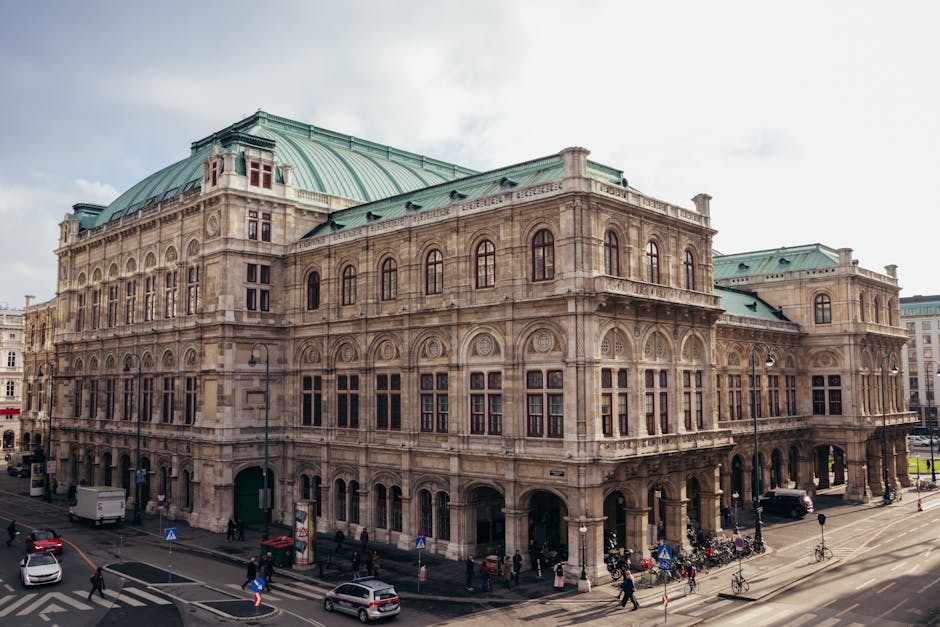 Moderate
Vienna, Austria
Follow the footsteps of Mozart and Strauss through Vienna’s historic center on this self-guided walk through the city's rich musical history.
 Easy
EasyPaphos, Cyprus
Explore Paphos' maritime history on this self-guided walk from ancient tombs and Roman mosaics to the iconic harbor fort and a coastal shipwreck.
 Easy
EasyPaphos, Cyprus
Experience the vibrant pulse of Paphos after dark, from the neon lights of Bar Street to sophisticated harbor-side cocktails on this self-guided walk.
 Easy
EasyPaphos, Cyprus
Experience the stunning Mediterranean coastline, historic lighthouse, and medieval castle on this scenic self-guided audio walk in Kato Paphos.
 Easy
EasyPaphos, Cyprus
Discover UNESCO-listed ruins, Byzantine churches, and Roman mosaics on this self-guided audio walk through the historic heart of Paphos.