Self-guided audio tour in Nicosia
Start Free on iPhone
Start free on iPhone to unlock this self-guided walking tour in Nicosia. Hear all the stories that make it amazing, walk at your own pace, and begin whenever you want.
Your Private Tour Guide
Nicosia holds a unique and poignant title: it is the world’s last divided capital. This self-guided walk invites you to explore the complex layers of the 'Green Line,' the United Nations-monitored buffer zone that has separated the northern and southern parts of the city for decades. Rather than a simple boundary, the Green Line is a living museum of mid-century architecture, forgotten storefronts, and the resilient spirit of a city that continues to thrive despite its division. This walking route Nicosia offers is a deep dive into the historical events of 1963 and 1974, providing context to the barbed wire and sandbags that define the Old City's landscape. Your journey begins with a panoramic view from the Shacolas Tower, where the Ledra Museum Observatory allows you to grasp the city's geography from above. From this height, the contrast between the two sides and the presence of the UN buffer zone becomes immediately clear. As you descend to street level and walk through the historic center, you will encounter Ermou Street, once the bustling commercial heart of Nicosia, now a quiet witness to the city's division. The route takes you through the Ledra Street Checkpoint, a symbolic crossing point that reopened in 2008, and past the Holy Cross Catholic Church, where the boundary literally brushes against the sanctuary walls. History buffs and photography enthusiasts will find endless inspiration in the juxtaposition of Venetian walls and modern checkpoints. You will see the Paphos Gate UN Post, where the 'Green Line' actually got its name from a green pencil mark on a map, and conclude at the Home for Cooperation. This final stop is a beacon of hope, located within the buffer zone itself, serving as a space for bicommunal dialogue. This self-guided audio walk is designed for those who wish to understand Nicosia beyond the surface level, exploring the echoes of the past while observing the vibrant, modern life that flows through these historic streets today.
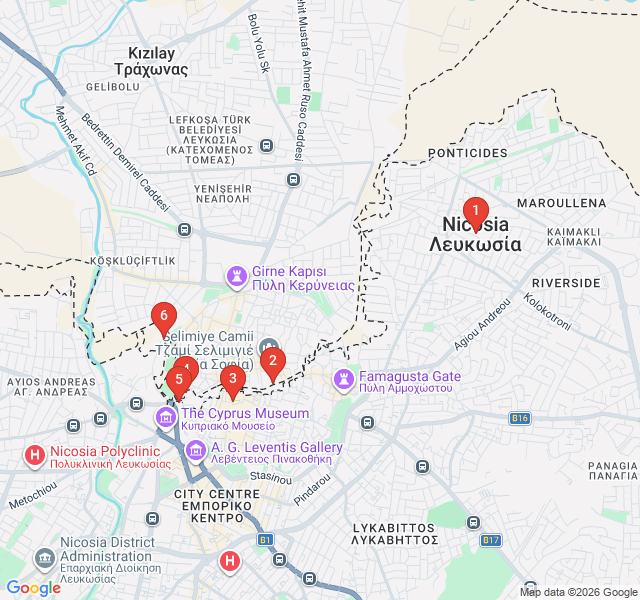
Numbers indicate the order of stops on the tour.
Welcome to the start of your self-guided walk. You are standing on the 11th floor of the Shacolas Tower. This is the best place to begin because it provides a bird’s-eye view of Nicosia’s unique geography. Look out toward the north, and you will see the large flags painted onto the Kyrenia Mountains. Below you, the 'Green Line' snakes through the city, marked by abandoned buildings and corrugated iron. The museum here offers photographs and videos showing Nicosia before and after the division. It is a sobering reminder that while the city looks unified from this height, the reality on the ground is much more complex. Take a moment to orient yourself with the Venetian walls that encircle the old city before we head down to street level.
As you walk along Ermou Street, try to imagine it as it was before 1963: the primary commercial artery of Nicosia. It was lined with ironmongers, textile shops, and bustling cafes where Greek and Turkish Cypriots traded side-by-side. Today, much of the street sits directly against the buffer zone. You will notice many of the buildings here have been restored, but look closely at the side streets—many are blocked by oil drums and barbed wire. This area is a prime example of urban renewal meeting historical trauma. The silence here is a stark contrast to the noise of the modern shopping districts just a few blocks away, making it a powerful spot for photography.
This is perhaps the most famous spot in Nicosia. For 34 years, this street was completely blocked by a wall. In 2008, the barriers were dismantled, and this pedestrian crossing was opened, allowing people to walk between the Republic of Cyprus and the northern part of the city for the first time in decades. It remains a symbol of the city's hope for reunification. Even if you don't plan to cross today, stand for a moment and watch the flow of people. It is a reminder that despite political divisions, the daily life of a city finds a way to continue. The architecture here shifts from the southern side's familiar European brands to the more traditional bazaar-style shops just a few meters away in the north.
This church occupies one of the most unusual locations in the city. Built in 1900, the Holy Cross Catholic Church sits directly on the Green Line. In fact, the church's back wall and its garden are technically inside the UN-controlled buffer zone. Because of this, the church's rear entrance was sealed for many years. It serves a diverse international community and stands as a spiritual bridge in a divided land. The architecture is a simple, elegant Latin style that contrasts with the surrounding fortifications. It is a peaceful enclave where the sounds of the city seem to fade, replaced by the heavy history of the stones beneath your feet.
Paphos Gate was one of the three original entrances through the Venetian walls of Nicosia. Today, it is most notable for the United Nations post that sits atop it. This is where the 'Green Line' truly began; in 1963, British Major General Peter Young used a green chinagraph pencil to draw a cease-fire line on a map of the city. That line eventually became the high-security buffer zone you see today. Look for the blue berets of the UN peacekeepers who still monitor this sector. The gate itself is partially buried due to the raising of the road levels over the centuries, but it remains a critical junction where the old fortifications meet the modern division.
Our final stop is the Home for Cooperation, located in the heart of the UN Buffer Zone, opposite the historic Ledra Palace Hotel. This building was once a derelict structure in 'no-man's-land,' but it was transformed into a community center where people from all sides of the divide can meet, drink coffee, and work together. It represents the 'Echoes of a Divided City' transitioning into a dialogue for the future. The area around here is filled with history—the Ledra Palace was once the most luxurious hotel in the Middle East before becoming a UN headquarters. This is a perfect place to end your walk, perhaps with a coffee in the cafe, reflecting on the resilience of the people of Nicosia.
Start Free on iPhone
Explore “Echoes of a Divided City: Along the Green Line” with your very own Private Tour Guide with Zigway. Start free on iPhone, skip the large group and the fixed routes, and hear the city come alive as you go.
Your Private Tour Guide
Don't miss the good stuff
Explore Freely
 Easy
EasyNicosia, Cyprus
Explore Nicosia's culinary heart! A self-guided stroll from historic coffee roasters to modern meze spots across the city's unique divided center.
 Easy
EasyNicosia, Cyprus
Capture the soul of the world's last divided capital on this self-guided walk through Nicosia's historic streets, street art, and panoramic views.
 Easy
EasyNicosia, Cyprus
Explore Nicosia's rich heritage on this self-guided walk through premier museums, Ottoman mansions, and world-class archaeological collections.
 Easy
EasyNicosia, Cyprus
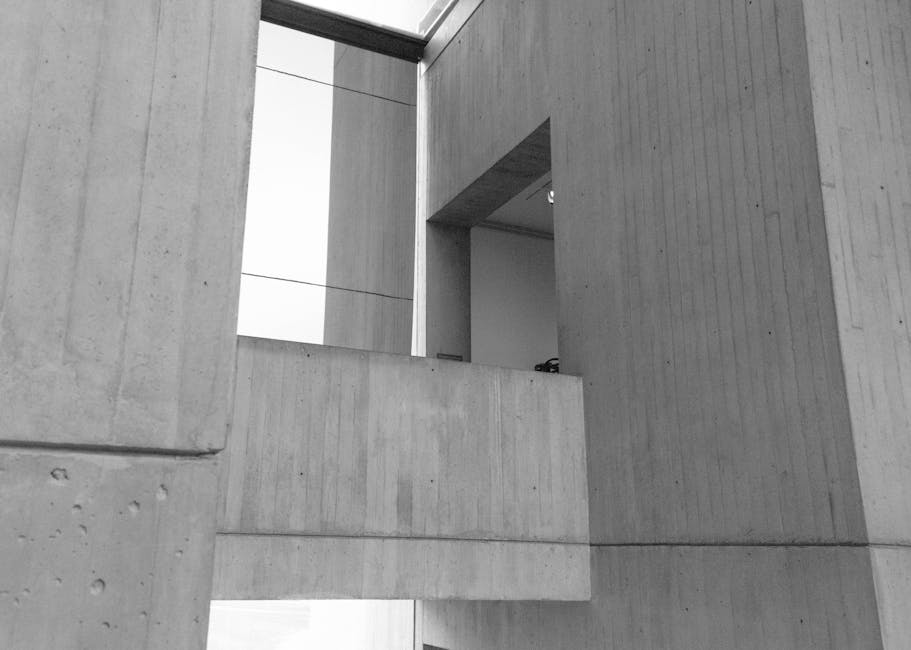
Explore Nicosia’s modern side, from Zaha Hadid’s fluid architecture to vibrant street art and Jean Nouvel's iconic bioclimatic 'White Walls.'
 Easy
EasyNairobi, Kenya
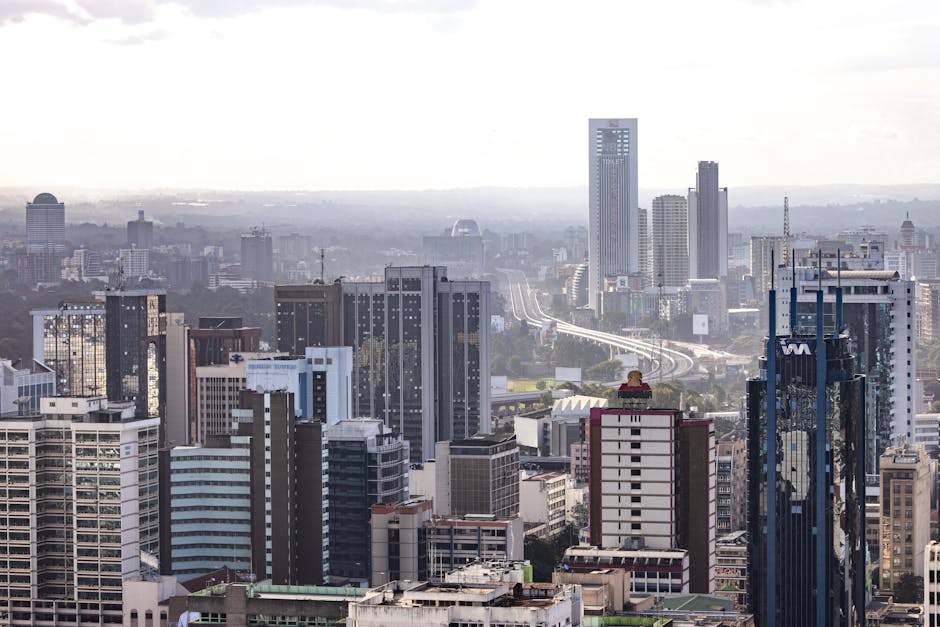
Explore the history of Kenya’s independence through the statues, monuments, and parks that define Nairobi’s political heart on this self-guided walk.
 Easy
EasyNairobi, Kenya
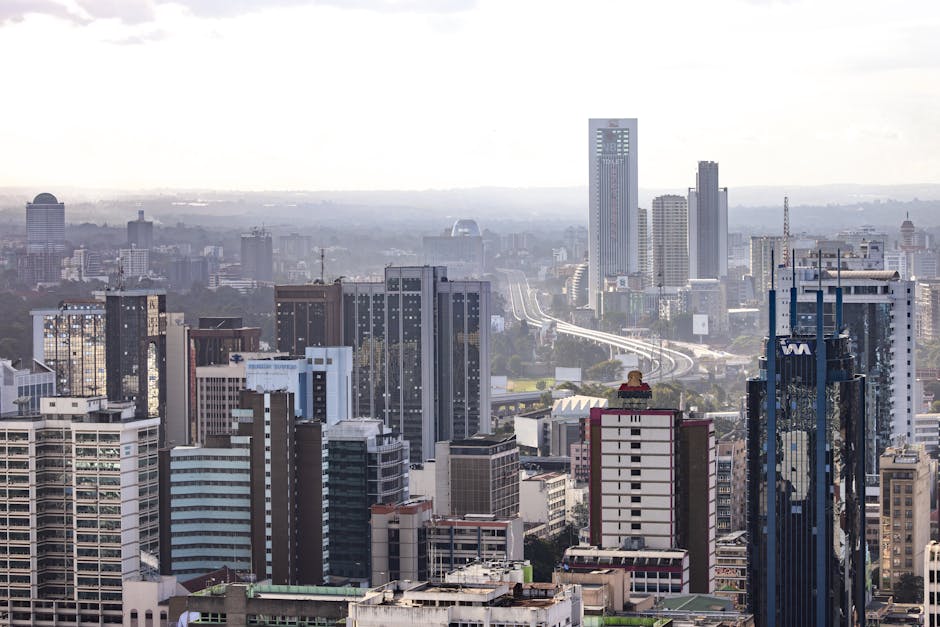
Discover Nairobi's iconic skyline on this self-guided architecture walk through the CBD’s most famous modernist and Brutalist landmarks.
 Moderate
Vienna, Austria
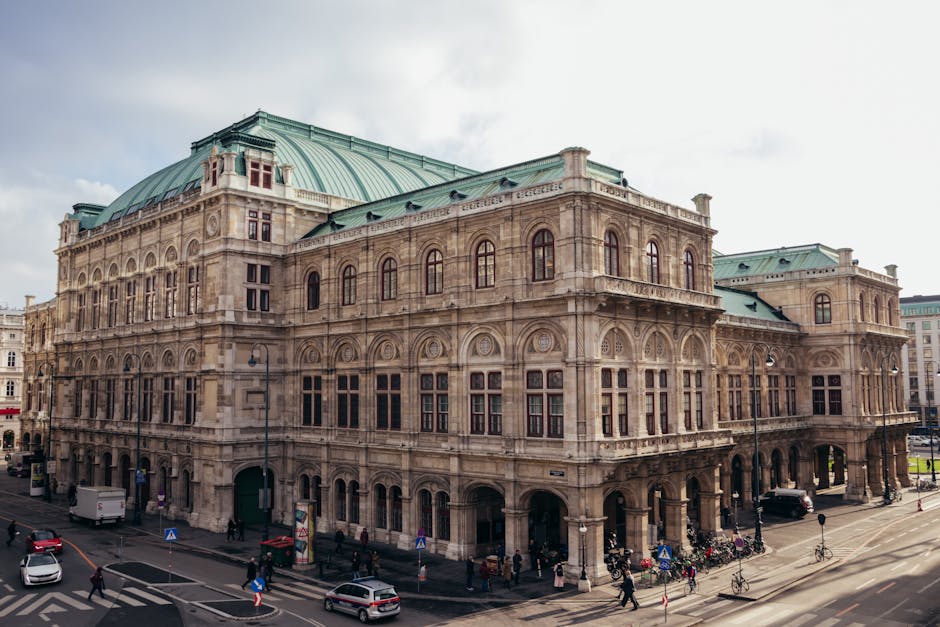
Discover the noir world of The Third Man and Cold War Vienna on this atmospheric self-guided audio walk through the historic Innere Stadt.
 Easy
EasyKrakow, Poland
Explore the historic heart of Kazimierz on this self-guided walk through synagogues, ancient cemeteries, and vibrant squares.
 Easy
EasyPaphos, Cyprus
Explore Paphos' maritime history on this self-guided walk from ancient tombs and Roman mosaics to the iconic harbor fort and a coastal shipwreck.
 Easy
EasyPaphos, Cyprus
Experience the vibrant pulse of Paphos after dark, from the neon lights of Bar Street to sophisticated harbor-side cocktails on this self-guided walk.
 Easy
EasyPaphos, Cyprus
Experience the stunning Mediterranean coastline, historic lighthouse, and medieval castle on this scenic self-guided audio walk in Kato Paphos.
 Easy
EasyPaphos, Cyprus
Discover UNESCO-listed ruins, Byzantine churches, and Roman mosaics on this self-guided audio walk through the historic heart of Paphos.