Self-guided audio tour in Paphos
Start Free on iPhone
Start free on iPhone to unlock this self-guided walking tour in Paphos. Hear all the stories that make it amazing, walk at your own pace, and begin whenever you want.
Your Private Tour Guide
Uncover the layers of history that lie beneath the surface of Paphos on this atmospheric self-guided walk through Fabrica Hill and the surrounding archaeological wonders. This walking route Paphos offers a deep dive into the city's transition from a Hellenistic capital to a Roman powerhouse and a center of early Christianity. You will explore hidden subterranean chambers, ancient quarries, and some of the most intricate floor mosaics in the Mediterranean, all at your own pace without the constraints of a group schedule. The journey begins at the Archaeological Museum of the Paphos District, providing the necessary context for the relics you will encounter. From there, you will venture toward the iconic Tombs of the Kings, a UNESCO World Heritage site carved into solid rock. While the name suggests royalty, these monumental tombs were actually the final resting places of high-ranking officials and aristocrats, designed to mimic the houses of the living. As you move toward Fabrica Hill, the theme of hidden gems truly comes alive. This area is riddled with catacombs like Agia Solomoni and Agios Lambrianos, where early Christians worshipped in secret. The sight of the sacred terebinth tree outside Agia Solomoni, draped in colorful ribbons left by those seeking healing, is a hauntingly beautiful testament to local folk traditions. Continuing toward the harbor, the architecture shifts from the subterranean to the monumental. You will stand by Saint Paul's Pillar, where legend says the Apostle was lashed before converting the Roman governor, and explore the sprawling Kato Pafos Archaeological Park. Here, the House of Dionysus reveals the 'Roman art of living' through vibrant mosaics that have survived for nearly two millennia. The walk concludes with a view of the Paphos Castle and the evocative MV Dimitrios II shipwreck on the horizon, offering a perfect blend of ancient history and maritime mystery. This neighborhood stroll is perfect for history buffs and curious travelers who want to experience the legendary spirit of Cyprus independently.
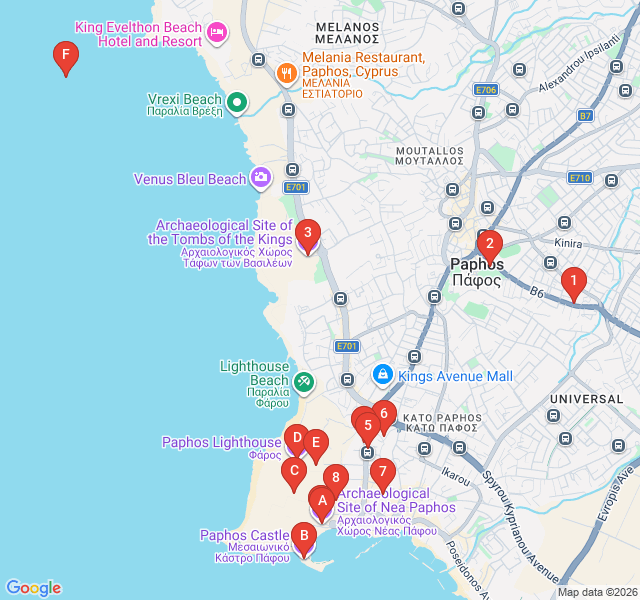
Numbers indicate the order of stops on the tour.
Begin your exploration at the Archaeological Museum of the Paphos District. This museum serves as the perfect introduction to the region's long human history, housing artifacts found across Paphos from the Neolithic age up to the 18th century. As you walk through the rooms, pay close attention to the evolution of Paphos as a capital. You will find intricate pottery, marble statues, and jewelry that tell the story of the city’s trade and religious life. This stop provides the historical foundation needed to appreciate the ruins and catacombs you will encounter later on Fabrica Hill.
A short walk brings you to the Paphos Town Hall, a beautiful example of Neoclassical architecture located in the upper town. Built in the mid-20th century, the building is surrounded by a park and other administrative buildings that reflect the city's modern administrative heart. The columns and symmetrical design echo the ancient Greek heritage that still influences local identity today. It is a peaceful spot to observe the local civic life before descending toward the more ancient, rugged coastal sites of Kato Paphos.
Prepare to enter a city of the dead. Despite the name, no kings were actually buried here; instead, these are the tombs of high-ranking Paphian aristocrats and officials from the 4th century BC. Carved directly into the sandstone cliffs, these tombs are unique for their peristyle courts and Doric columns, which make them look like underground houses. Walking through these chambers, you can feel the immense effort it took to create such grand eternal dwellings. The site offers a stark, beautiful landscape overlooking the Mediterranean Sea, blending natural beauty with human engineering.
Just across the main road lies the Agios Lambrianos Catacombs. This site is often overlooked by tourists, making it a true hidden gem. These large, rock-cut caverns were originally Hellenistic tombs but were later repurposed as places of worship by early Christians. The cool, damp air inside provides a sharp contrast to the Cypriot sun. Explore the different chambers and look for traces of ancient frescoes or carvings. It’s a quiet place that evokes the secrecy and devotion of the early religious communities in Paphos.
One of the most evocative sites in Paphos is the Agia Solomoni Catacombs. Before you descend, notice the large terebinth tree at the entrance, adorned with hundreds of colorful cloth fragments. These are 'votives' left by locals and visitors who believe the tree and the holy water (agiasma) inside the cave can heal ailments. The catacomb itself is a complex of underground chambers, including a small chapel. Legend associates this site with the Seven Sleepers, and it has remained a site of pilgrimage for centuries, bridging the gap between ancient pagan practices and Christian tradition.
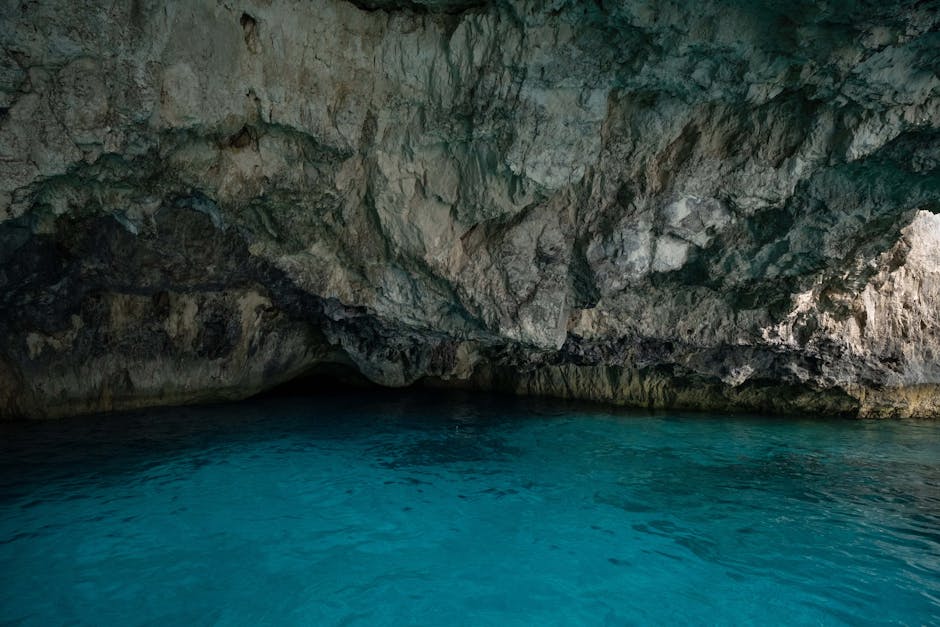
Ascend the rocky outcrop known as Fabrica Hill. This area was the main quarry for the ancient city, but it also served as a defensive point and a residential area. The 'cave' you see is part of a larger network of tunnels and cisterns carved into the hill. From this vantage point, you can look down upon the remains of a Hellenistic theater. Fabrica Hill is the best place to visualize the layout of the ancient capital, Nea Paphos, and enjoy panoramic views of the modern harbor and the sea beyond.
Walking toward the harbor, you reach the grounds of Agia Kyriaki Chrysopolitissa, where you will find Saint Paul’s Pillar. Tradition holds that the Apostle Paul was tied to this white marble pillar and received thirty-nine lashes for preaching Christianity. However, his perseverance supposedly led to the conversion of the Roman proconsul, Sergius Paulus, making Cyprus the first country in the world to be governed by a Christian. The pillar is surrounded by the ruins of a massive Byzantine basilica, featuring beautiful floor mosaics that are still visible today.
Known locally as Saranda Kolones, this site contains the ruins of a 7th-century Byzantine fortress. The name comes from the numerous granite columns found on the site, many of which were likely scavenged from the nearby Roman Agora. The fortress was built to protect the harbor from Arab raids and was later remodeled by the Crusaders before being destroyed by an earthquake in 1222. Today, you can wander through the remains of towers, dungeons, and a forge, getting a sense of the military architecture of the Middle Ages.
You are now entering the heart of the UNESCO World Heritage site. The Kato Pafos Archaeological Park is a sprawling open-air museum that contains the most important monuments of the ancient city. While much of the city remains unexcavated, the parts that have been uncovered reveal a sophisticated urban center with theaters, temples, and villas. As you walk the wooden boardwalks, imagine the bustling streets of Nea Paphos during its peak in the 2nd and 3rd centuries AD, when it was the administrative center of the island under Roman rule.
Nea Paphos, or 'New Paphos,' was founded in the 4th century BC. This specific area of the park allows you to see the foundations of the city’s original grid plan. Unlike the older settlement of Palaepaphos, Nea Paphos was built specifically to take advantage of the natural harbor. The site is a testament to the strategic importance of Cyprus in the Eastern Mediterranean, serving as a hub for the Ptolemaic and later Roman empires. Look for the remnants of public buildings that once showcased the city's wealth and status.
Standing guard at the edge of the harbor is the Paphos Castle. Originally built as a Byzantine fort to protect the port, it has been destroyed and rebuilt multiple times. The Lusignans, Venetians, and finally the Ottomans all left their mark on this structure. The current square building you see is the Ottoman reconstruction from 1592. Over the centuries, it has served as a fortress, a prison, and even a salt warehouse under British rule. Today, it stands as a symbol of the city, hosting cultural events and offering great views of the harbor front.
The House of Dionysus is the jewel of the archaeological park. This Roman villa, dating from the 2nd century AD, is famous for its incredible floor mosaics. The designs are remarkably well-preserved and depict mythological scenes, mostly related to Dionysus, the god of wine. As you look at the intricate details and vibrant colors of the stones, remember that these were the floors of a private residence. They represent the height of Roman luxury and artistry in Cyprus, illustrating stories that were central to the cultural life of the time.
The Paphos Lighthouse stands tall within the archaeological site, a 19th-century addition to an ancient landscape. Built by the British in 1888, it served as a vital navigational aid for ships traveling between the UK and the Suez Canal. Its stark white tower contrasts beautifully with the ancient ruins nearby and the blue of the sea. It represents the modern maritime history of Paphos and remains one of the most photographed landmarks in the city, especially during sunset when the light hits the white stone.
The Agora was the heart of the ancient city—the central marketplace and social gathering spot. Only a portion of this large square has been excavated, but you can see the remains of the columns that once formed the porticos where merchants would sell their goods. Next to the Agora is the Odeon, a small semi-circular theater used for musical performances and poetry competitions. This area was the center of public life, where citizens would discuss politics, trade, and philosophy under the Mediterranean sun.
End your walk by looking out toward the sea to spot the MV Dimitrios II. This cargo ship ran aground in 1998 during a heavy storm while carrying a cargo of timber from Greece to Syria. The crew was rescued, but the ship remained stuck on the rocks. Over the years, the rusting hull has become a local landmark and a favorite subject for photographers. It serves as a modern 'ruin,' a reminder of the treacherous nature of the sea that has brought both wealth and destruction to Paphos for thousands of years.
Start Free on iPhone
Explore “Fabrica Hill Secrets: Ancient Catacombs and Cave Churches” with your very own Private Tour Guide with Zigway. Start free on iPhone, skip the large group and the fixed routes, and hear the city come alive as you go.
Your Private Tour Guide
Don't miss the good stuff
Explore Freely
 Easy
EasyPaphos, Cyprus
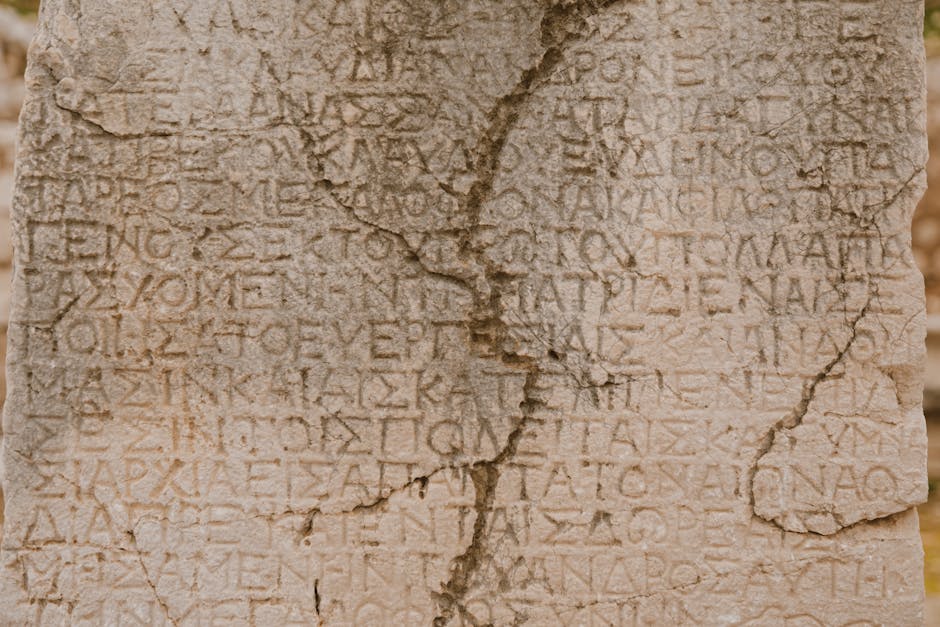
Explore Paphos' maritime history on this self-guided walk from ancient tombs and Roman mosaics to the iconic harbor fort and a coastal shipwreck.
 Easy
EasyPaphos, Cyprus
Experience the vibrant pulse of Paphos after dark, from the neon lights of Bar Street to sophisticated harbor-side cocktails on this self-guided walk.
 Easy
EasyPaphos, Cyprus
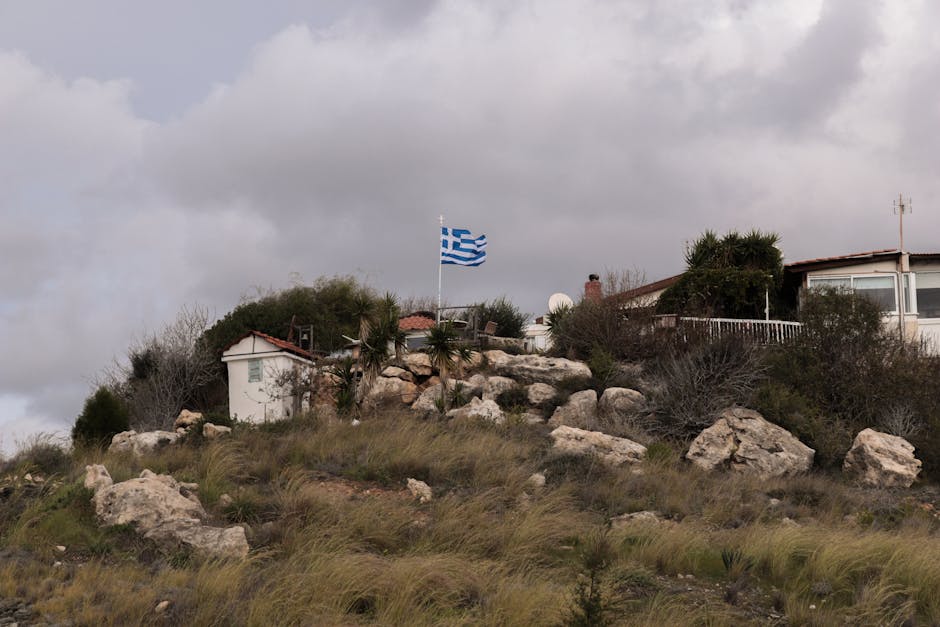
Experience the stunning Mediterranean coastline, historic lighthouse, and medieval castle on this scenic self-guided audio walk in Kato Paphos.
 Easy
EasyPaphos, Cyprus
Discover UNESCO-listed ruins, Byzantine churches, and Roman mosaics on this self-guided audio walk through the historic heart of Paphos.
 Moderate
Helsinki, Finland
Explore the 'Gibraltar of the North' on this independent walking route through the historic bastions and hidden gardens of Suomenlinna Sea Fortress.
 Moderate
Gothenburg, Sweden
Discover Gothenburg’s maritime soul on this self-guided walk from the historic Central Station to the scenic riverfront at Stenpiren.
 Moderate
Nairobi, Kenya
Discover Nairobi's lush side on this self-guided walk through botanical gardens, historic memorials, and vibrant local markets.
 Moderate
Gdansk, Poland
Discover the raw beauty of Gdansk’s Lower Town. Explore industrial ruins, hidden sluices, and riverside bastions on this self-guided walk.
 Easy
EasyNicosia, Cyprus
Explore Nicosia's culinary heart! A self-guided stroll from historic coffee roasters to modern meze spots across the city's unique divided center.
 Easy
EasyNicosia, Cyprus
Capture the soul of the world's last divided capital on this self-guided walk through Nicosia's historic streets, street art, and panoramic views.
 Easy
EasyNicosia, Cyprus
Explore Nicosia's rich heritage on this self-guided walk through premier museums, Ottoman mansions, and world-class archaeological collections.
 Easy
EasyNicosia, Cyprus
Explore Nicosia’s modern side, from Zaha Hadid’s fluid architecture to vibrant street art and Jean Nouvel's iconic bioclimatic 'White Walls.'