Self-guided audio tour in Oxford
Start Free on iPhone
Start free on iPhone to unlock this self-guided walking tour in Oxford. Hear all the stories that make it amazing, walk at your own pace, and begin whenever you want.
Your Private Tour Guide
Oxford is world-renowned for its 'dreaming spires,' but the true heart of the city lies in its emerald embrace. This self-guided walk invites you to step away from the crowded quadrangles and into the vast, interconnected green spaces that have inspired poets, novelists, and scientists for centuries. From the manicured borders of the University Parks to the wild, ancient expanse of Port Meadow, this walking route reveals a side of Oxford that many visitors overlook. You will discover how the River Cherwell and the River Thames (locally known as the Isis) have shaped the city's topography and its leisure culture, from the peculiar history of riverside bathing to the competitive spirit of college rowing. Along the way, this neighborhood stroll highlights the specific spots where J.R.R. Tolkien found inspiration for Middle-earth and where Lewis Carroll shared the stories that became Alice in Wonderland. Whether you are looking for a peaceful retreat or a family-friendly adventure, this nature-focused exploration offers a breath of fresh air. This isn't just a walking tour Oxford style; it is an immersion into the landscapes that ground the university's lofty intellectual pursuits. You will traverse historic bridges, wander through botanical treasures, and find the best vantage points to see the city skyline without the noise of the High Street. By following this route, you can explore at your own pace, stopping for a picnic in a meadow or a pint at a riverside pub whenever the mood strikes.
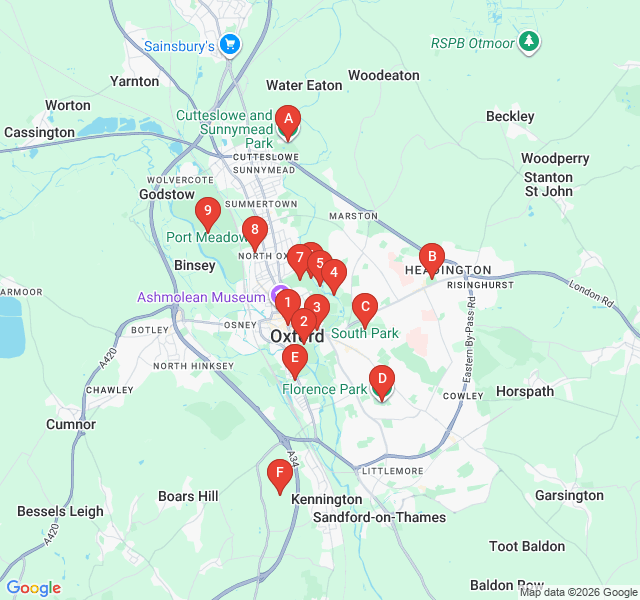
Numbers indicate the order of stops on the tour.
Welcome to the University Parks. You are standing on the Rainbow Bridge, a high-arched concrete footbridge built in 1923. From this vantage point, you can look down the River Cherwell, where students and locals have punted for generations. To your left and right are the University Parks, 70 acres of land that were once owned by Merton College before being purchased by the University in the 1850s. The bridge offers a perfect introduction to the 'town and gown' relationship, as it connects the formal university grounds to the wilder Marston meadows. Keep an eye out for rowers practicing their technique in the narrow channel below.
This historic flood-meadow is a sanctuary in the city center. Enclosed by the River Thames and the River Cherwell, it has remained largely unchanged for centuries. As you walk the perimeter path, look across at the grand facade of Christ Church College. This meadow was a favorite walking spot for Lewis Carroll and the real-life Alice Liddell. It is also the site of early aeronautical history; in 1784, James Sadler made the first English hot-air balloon ascent from these very fields. Today, it remains the primary route for students heading to the college boat houses clustered along the riverbank.
Founded in 1621 as a physic garden for growing medicinal plants, this is the oldest botanic garden in the United Kingdom. It contains over 8,000 different plant species within its walls and glasshouses. Literary fans might recognize the stone bench near the back of the garden—it is a significant location in Philip Pullman's 'His Dark Materials' trilogy. The garden serves as a living library for the university's Department of Plant Sciences, showcasing everything from tropical orchids to hardy alpine flora. It is a masterclass in horticultural design, offering a structured contrast to the wilder meadows nearby.
The name 'Mesopotamia' comes from the Greek for 'between the rivers,' and that is exactly where you are. This narrow strip of land sits between the Upper and Lower levels of the River Cherwell. It is a remarkably peaceful path, shaded by ancient willows and poplars. Originally laid out in the mid-19th century, this walk provides a sense of isolation from the city. As you stroll, listen for the sound of the weir at the northern end. It is a popular spot for birdwatchers; if you are lucky, you might spot the iridescent blue flash of a kingfisher diving for its lunch.
You are now at a spot with a cheeky history. Until 1991, Parson's Pleasure was a secluded riverside area reserved for male-only nude bathing. It was a favorite haunt for university dons who wished to enjoy the sun and water without the 'distraction' of clothing. While the bathers are gone, the area remains a tranquil bend in the river. It sits at the point where the Cherwell splits, creating the island effect of Mesopotamia. Today, it is a quiet waypoint for those exploring the University Parks, marked by the gentle sound of the river flowing over the nearby rollers used to move punts.
J.R.R. Tolkien, the author of 'The Hobbit' and 'The Lord of the Rings,' spent much of his life in Oxford as a professor. He often walked through these parks to clear his mind. This memorial bench commemorates his connection to the landscape. It is said that the ancient, gnarled trees of the University Parks and the nearby rural fringes of Oxford helped inspire the sentient trees, or Ents, of his legendarium. Take a moment to sit and look out over the cricket crease; the slow pace of the game and the timeless greenery reflect the Shire-like peace Tolkien so admired.
As you stand at the main gates on Parks Road, you are at the gateway between the historic Science Area and the university's primary recreation ground. These gates have stood since the Victorian era, welcoming generations of students, researchers, and families. The parks are unique because they are managed by the university but open to the public, featuring a genetic garden, a duck pond, and the university's cricket pavilion. It is a hub of Oxford life where academic rigor meets everyday leisure. Look back at the avenue of trees, which provides a stunning display of color throughout the changing seasons.
This classic Oxford pub serves as the perfect bridge between the residential neighborhood of Jericho and the wild expanse of Port Meadow. The building itself reflects the traditional brickwork of the area. Historically, pubs like this were essential social hubs for the workers on the Oxford Canal and the university staff living nearby. It marks the transition from the structured, college-owned parks to the common land of the meadow. It is a traditional spot to refuel before heading out into the more rugged terrain of the north Oxford grazing lands.
Welcome to the largest common land in Oxford. Port Meadow has never been plowed, meaning its soil has remained undisturbed since at least the Domesday Book of 1086. It is an ancient landscape where Freemen of the city still exercise their right to graze cattle and horses. During the winter, the meadow often floods, turning into a vast, shallow lake that attracts thousands of migratory birds. In the summer, it is a playground for picnickers and sailors. As you walk along the Thames Path here, the city spires seem to rise directly out of the grass in the distance, providing a truly timeless view.
This park is the largest in North Oxford and is famous for a curious bit of social history: the Cutteslowe Walls. These were two-meter-high walls built in 1934 to separate a private housing estate from a council estate. They weren't fully demolished until 1959. Today, the park is a symbol of community, featuring a miniature steam railway, extensive wildflower meadows, and a butterfly house. It represents the 20th-century expansion of Oxford's green philosophy, providing space for modern recreation and biodiversity conservation far beyond the medieval city center.
Located in the Headington area, Bury Knowle Park surrounds a fine late-18th-century house. The park is home to whimsical sculptures that celebrate Oxford's literary heritage, including a 'Narnia' themed story-bench featuring Aslan and the wardrobe. It is a beloved local secret, offering a different vibe from the university-owned spaces. The mature cedar trees and well-maintained borders make it a popular spot for local families. It highlights how Oxford's 'green' character extends deep into its residential suburbs, ensuring that nature is never more than a few minutes' walk away for any resident.
For the definitive view of the 'Dreaming Spires,' there is no better place than South Park. As you climb the gentle slope of Headington Hill, the entire city skyline unfolds before you. You can clearly see the Radcliffe Camera, St. Mary's Church, and the various college towers. This 50-acre space was once part of the Headington Hill Hall estate. Today, it is the city's premier spot for fireworks displays and summer festivals. Standing here, you can appreciate the compact nature of Oxford, seeing how the dense historic center is completely surrounded by the meadows and parks you have been exploring.
Opened in 1934, Florence Park was a gift to the city from a local councillor in memory of his daughter. It is a classic example of an inter-war urban park, characterized by its formal avenues of trees and beautiful Art Deco gates. The park has a strong community focus, with a popular cafe and vibrant flower displays. It represents the 'East Oxford' spirit—diverse, active, and welcoming. The colorful flower beds and the bandstand provide a picturesque setting that feels worlds away from the academic gravity of the city center.
Hinksey Park offers a unique blend of water and land. Originally the site of the city’s waterworks in the 19th century, the settling tanks were converted into a boating lake and a popular outdoor heated swimming pool, known as a lido. The park serves as a green buffer between the bustling Abingdon Road and the railway tracks. With its lakeside paths and diverse birdlife, it is a favorite for those seeking a quick escape to nature on the south side of the city. It perfectly illustrates Oxford’s knack for repurposing industrial infrastructure into beautiful public amenities.
Our final stop takes us to the southern fringe of the city. Bagley Wood is an ancient woodland that has been managed by St John's College since 1555. While largely a working forest and research site, its permissive paths allow you to wander through towering oaks and diverse coniferous plantations. It is a place of deep quiet and ecological importance. Walking here, you are following in the footsteps of many Oxford scholars who sought the solitude of the deep woods for reflection. It is a fitting end to our journey, returning to the wild roots of the Oxfordshire landscape.
Start Free on iPhone
Explore “The Great Stroll: University Parks & The Cherwell” with your very own Private Tour Guide with Zigway. Start free on iPhone, skip the large group and the fixed routes, and hear the city come alive as you go.
Your Private Tour Guide
Don't miss the good stuff
Explore Freely
 Easy
EasyOxford, United Kingdom
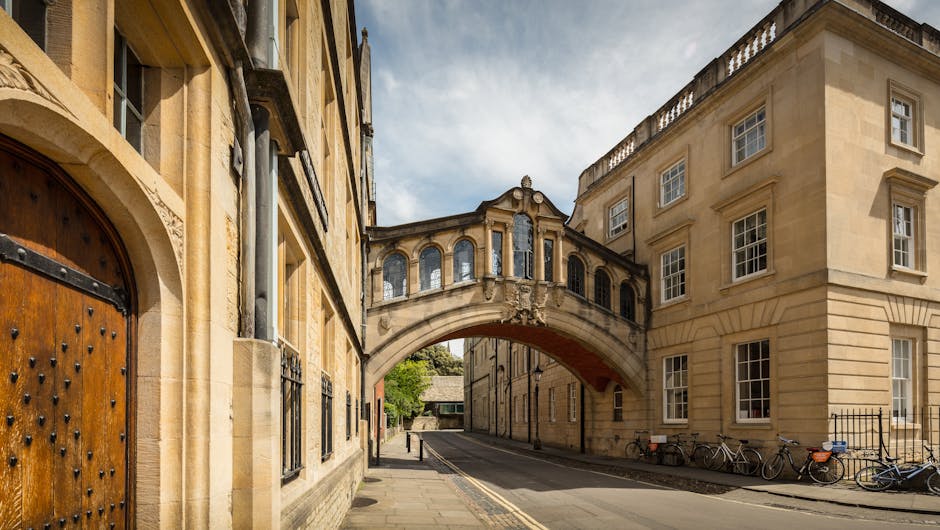
Explore Oxford’s historic food scene on this self-guided walk through the 1774 Covered Market, ancient pubs, and England’s first coffee house site.
 Moderate
Oxford, United Kingdom
Discover the rebellious Headington Shark and the ancient sunken paths of Old Headington on this quirky self-guided neighborhood stroll through Oxford.
 Moderate
Oxford, United Kingdom
Uncover the mysteries of Oxford on this self-guided walk through the iconic filming locations of Inspector Morse, Lewis, and Endeavour.
 Easy
EasyOxford, United Kingdom
Discover the Oxford haunts of J.R.R. Tolkien and C.S. Lewis on this self-guided walking route through literary history.
 Easy
EasyGdansk, Poland
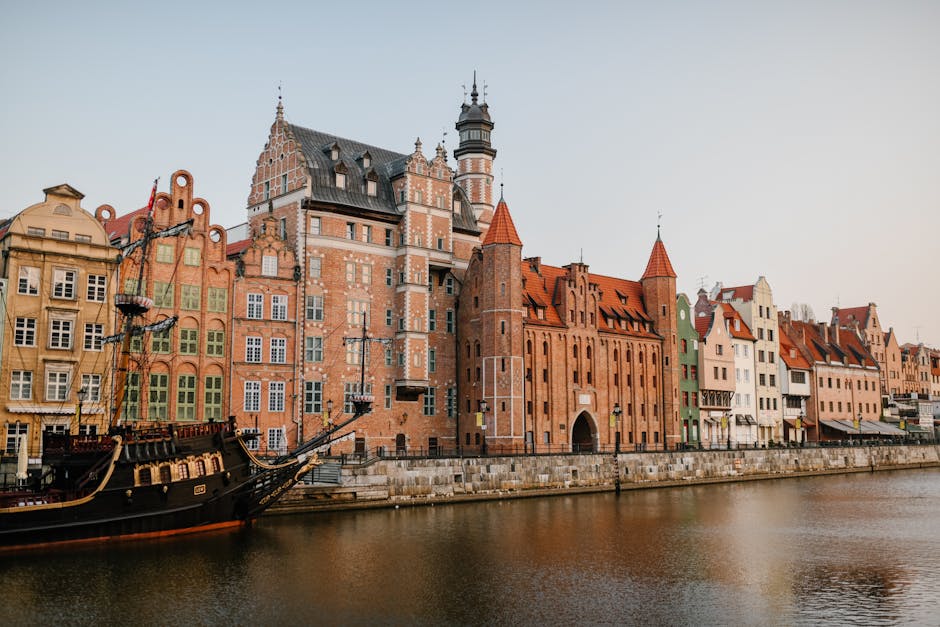
Discover the monastic heritage, world-famous organs, and lush botanical gardens of Oliwa on this peaceful self-guided neighborhood stroll.
 Moderate
Gothenburg, Sweden
Explore Gothenburg’s lush "Green Lung" on this self-guided walk through the Botanical Garden, Slottsskogen park, and rugged Änggård Mountains.
 Easy
EasyWarsaw, Poland
Explore the 'Polish Versailles' at your own pace. Discover Baroque architecture, royal history, and stunning gardens on this self-guided walk.
 Easy
EasyWarsaw, Poland
Explore Warsaw's scenic riverfront, rooftop gardens, and industrial-chic architecture on this self-guided stroll through the Powiśle district.
 Easy
EasyEdinburgh, United Kingdom
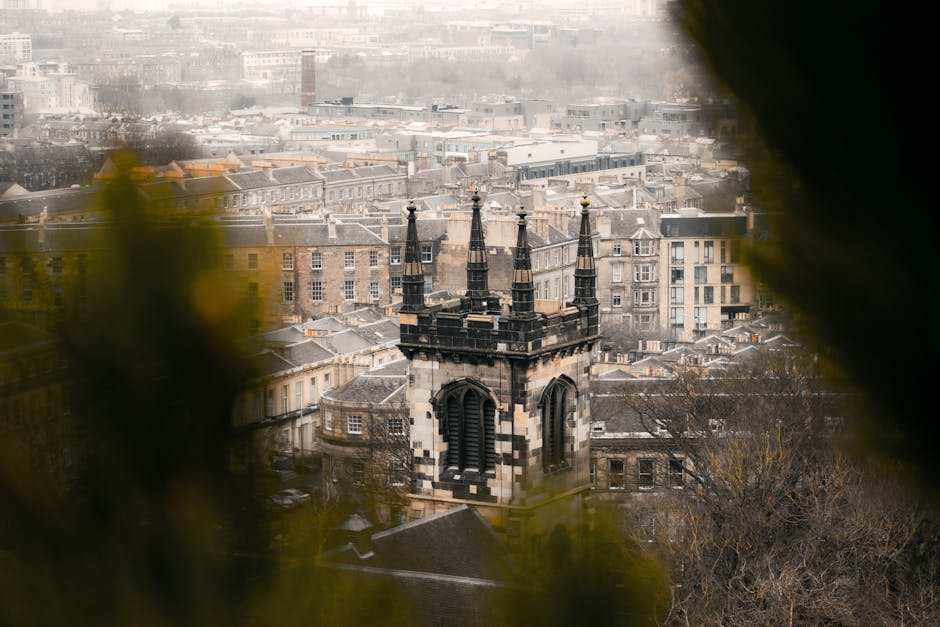
Explore Edinburgh's historic Royal Mile at your own pace, from the heights of the Castle to the royal Palace of Holyroodhouse.
 Easy
EasyEdinburgh, United Kingdom
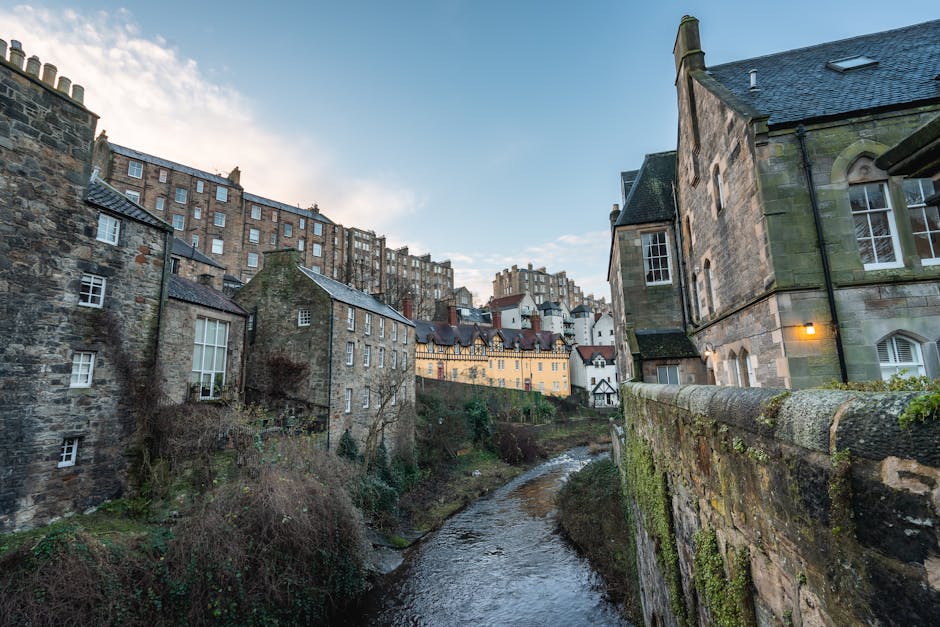
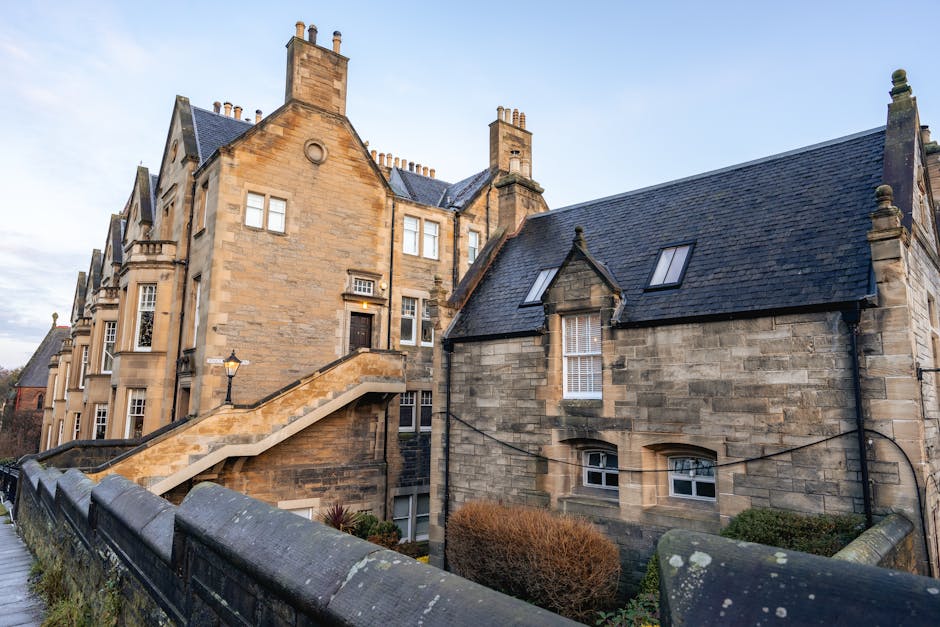
Capture the magic of Edinburgh on this self-guided stroll through the fairy-tale Dean Village, floral Circus Lane, and the scenic Water of Leith.
 Easy
EasyEdinburgh, United Kingdom
Explore Edinburgh's creative soul on this self-guided walk from historic museums to the stylish galleries and boutiques of the West End.
 Challenging
Edinburgh, United Kingdom
Ascend an ancient volcano and discover royal history on this challenging self-guided walk through Edinburgh's iconic Holyrood Park.