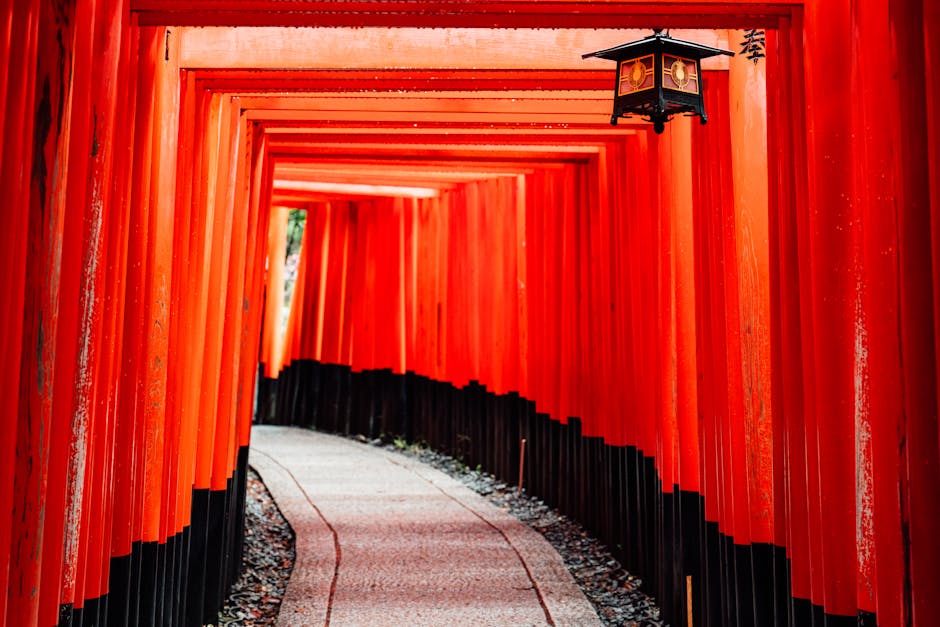
Self-guided audio tour in Kyoto
Start Free on iPhone
Start free on iPhone to unlock this self-guided walking tour in Kyoto. Hear all the stories that make it amazing, walk at your own pace, and begin whenever you want.
Your Private Tour Guide
Escape the crowded tourist hubs of central Kyoto and step into the 'Zen City' of Myoshin-ji. This self-guided walk invites you to explore the head temple of the Myoshin-ji school of Rinzai Zen Buddhism, a sprawling complex of over 40 sub-temples that feels like a village frozen in time. Unlike the more famous Kinkaku-ji, this neighborhood stroll offers a profound sense of tranquility and an authentic look at monastic life. As you traverse the stone-paved paths, you will encounter grand architecture, world-renowned Zen gardens, and hidden artistic masterpieces that have inspired seekers for centuries. This walking route is perfect for those who want to discover the deeper spiritual roots of Japan at their own pace. The journey begins at Myoshin-ji Station and leads you through the towering Sanmon Gate, the symbolic entrance to the enlightened world. One of the primary highlights of this explore-at-your-own-speed experience is the Hatto, or Dharma Hall, where a massive dragon glares down from the ceiling, painted with such skill that its eyes appear to follow you as you walk. Beyond the main halls, the route takes you into the intimate sub-temples like Taizo-in and Keishun-in. These smaller sanctuaries are home to some of the most beautiful dry landscape (karensansui) gardens in Kyoto, where raked gravel and carefully placed stones represent the flow of water and the nature of existence. Whether you are a photography enthusiast, a history buff, or someone seeking a moment of peace, this self-guided adventure provides a comprehensive look at the art and philosophy that define Kyoto's spiritual landscape. It is arguably one of the most rewarding experiences for anyone looking for a walking tour Kyoto alternative that avoids the massive tour groups.
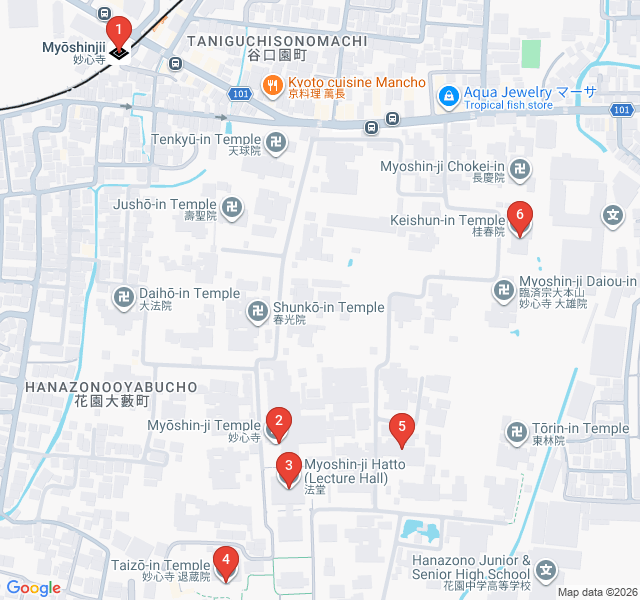
Numbers indicate the order of stops on the tour.
Welcome to the starting point of your self-guided walk through one of Japan's most significant Zen complexes. Myoshin-ji Station, on the charming Randen tram line, serves as the threshold between the modern city of Kyoto and the ancient 'Zen City' you are about to enter. As you step off the train, take a moment to notice the shift in pace. Myoshin-ji was founded in 1337 on the site of a former imperial villa. Today, it stands as the head temple of the largest branch of Rinzai Zen Buddhism. Follow the signs toward the North Gate to begin your immersion into a world where every stone and branch is placed with meditative intent.
Before you stands the Sanmon, or 'Mountain Gate,' which dates back to 1599. In Zen architecture, the gate symbolizes the transition from the mundane, everyday world into the sacred space of the temple. This specific gate is painted in a striking vermillion, a color often associated with protection and divinity. If you look up, you might see the 'Three Gates of Liberation' represented: emptiness, formlessness, and desirelessness. This gate is rarely opened to the public, as it is traditionally reserved for high-ranking monks and special ceremonies, but its imposing presence sets the tone for the spiritual journey ahead.
Step inside the Hatto, the Dharma Hall, to witness one of Kyoto's most awe-inspiring artistic treasures. On the ceiling, you will find the 'Unryu-zu,' or 'Cloud Dragon,' painted by the legendary Kano Tanyu in the mid-17th century. It took the artist eight years to complete this masterpiece. As you walk around the hall, keep your eyes fixed on the dragon; because of the circular composition and the artist's technique, the dragon appears to be moving and its gaze seems to follow you from every angle. This dragon is not just decoration; it is a protector of the Buddhist law and a symbol of the 'rain of Dharma' that nourishes the spirits of all beings.
Taizo-in is perhaps the most famous of the sub-temples within Myoshin-ji. It houses the 'Motonobu-no-niwa,' a dry landscape garden designed by the great painter Kano Motonobu. This garden is unique because it translates the aesthetics of ink wash painting into three-dimensional space using rocks and plants. Taizo-in is also the home of the 'Catching a Catfish with a Gourd' painting, a famous Zen koan (riddle) depicted in art. The riddle asks: How can you catch a slippery catfish with a smooth gourd? The answer lies in the realization that life's truths are often elusive and cannot be grasped by logic alone.
Daishin-in offers a more intimate and quiet experience compared to the larger halls. This sub-temple is particularly beloved for its 'A-un' garden. In Japanese philosophy, 'A' and 'Un' represent the beginning and the end, similar to Alpha and Omega. The garden features beautifully maintained moss and peonies, which bloom spectacularly in late spring. It is a perfect spot to sit on the wooden veranda (engawa) and practice a moment of Zen meditation. The relative obscurity of this temple means you can often enjoy the sound of the wind through the trees without the distraction of large crowds.
Your final stop is Keishun-in, a hidden gem tucked away in the northern corner of the complex. This temple is extraordinary for having four distinct gardens, each representing a different style: the Tea Garden, the Inner Garden, the 'Garden of True Form,' and the 'Garden of Pure Spirit.' As you explore, you will notice the subtle transitions between the manicured dry gardens and the more natural, forest-like areas. The tea house here, which dates back to the Edo period, is a masterpiece of rustic simplicity. It is a fitting end to your walking route, offering a final opportunity to reflect on the layers of history and spirituality you have uncovered today.
Start Free on iPhone
Explore “The Hidden Temples of Myoshin-ji” with your very own Private Tour Guide with Zigway. Start free on iPhone, skip the large group and the fixed routes, and hear the city come alive as you go.
Your Private Tour Guide
Don't miss the good stuff
Explore Freely
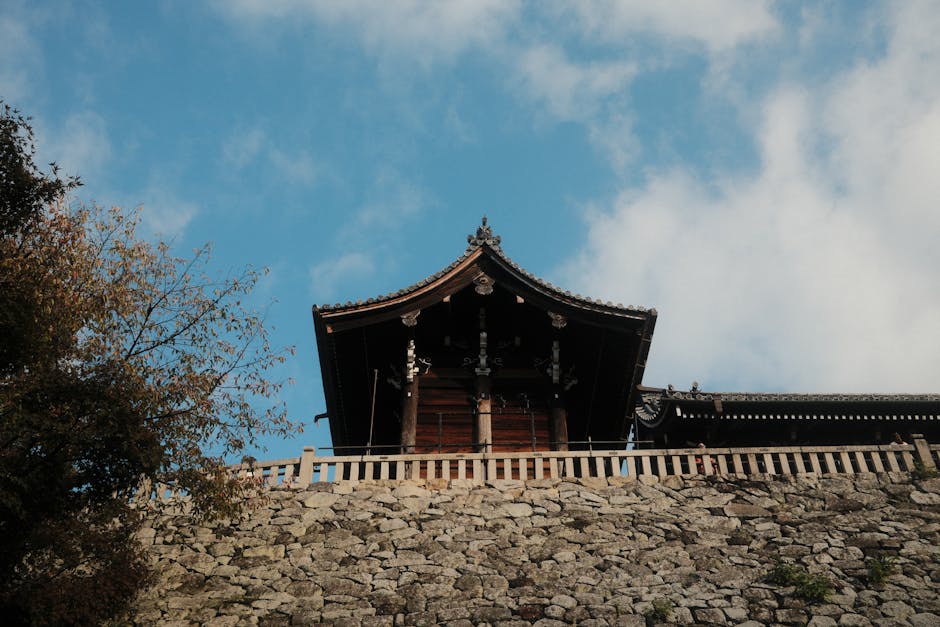 Moderate
Kyoto, Japan
Discover the soul of old Kyoto on this self-guided walk through preserved stone lanes, iconic pagodas, and the grand wooden stage of Kiyomizu-dera.
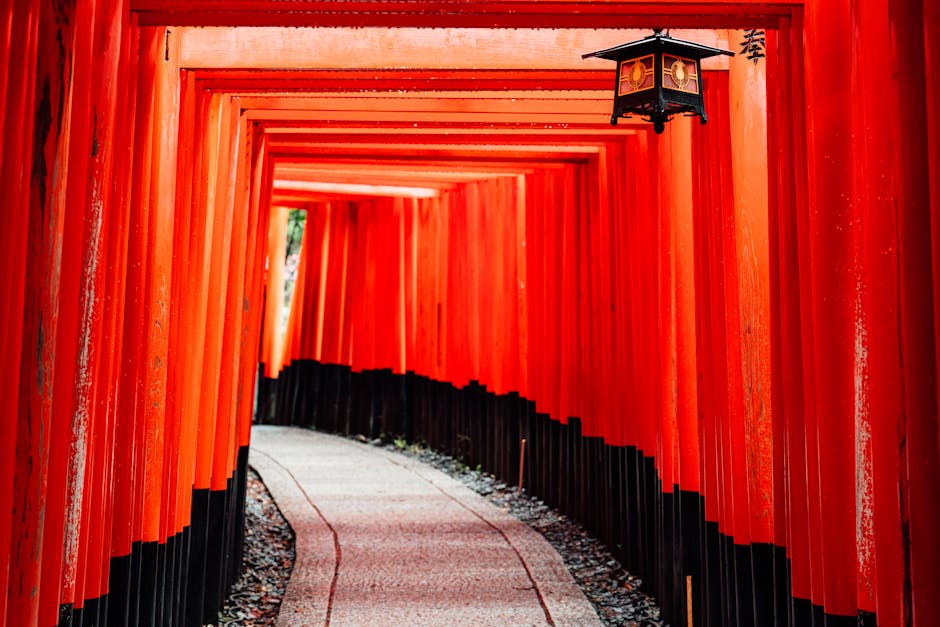 Challenging
Kyoto, Japan
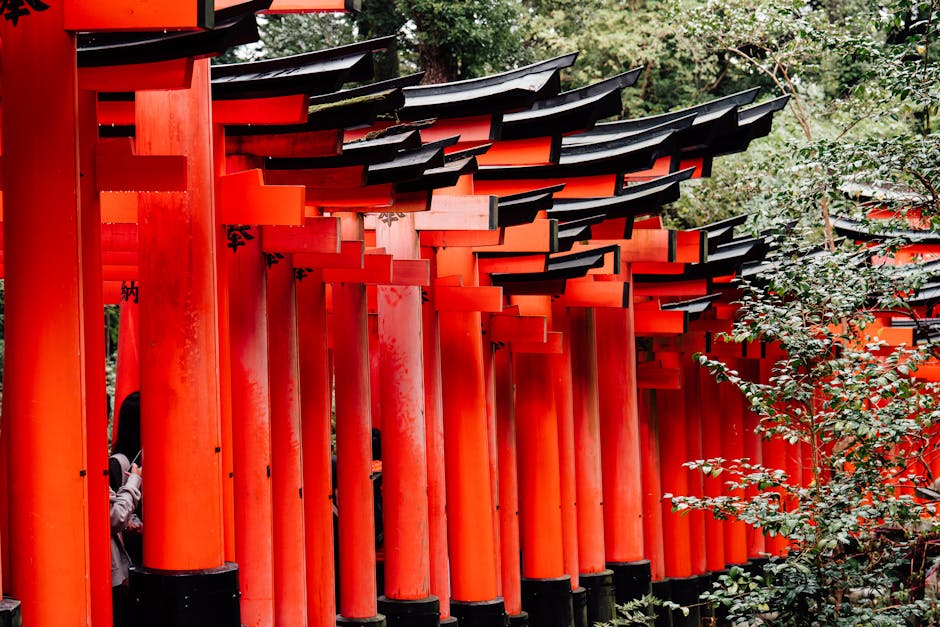
Ascend the sacred Mount Inari through thousands of vermillion torii gates on this challenging and spiritual self-guided walk in Kyoto.
 Easy
EasyKyoto, Japan
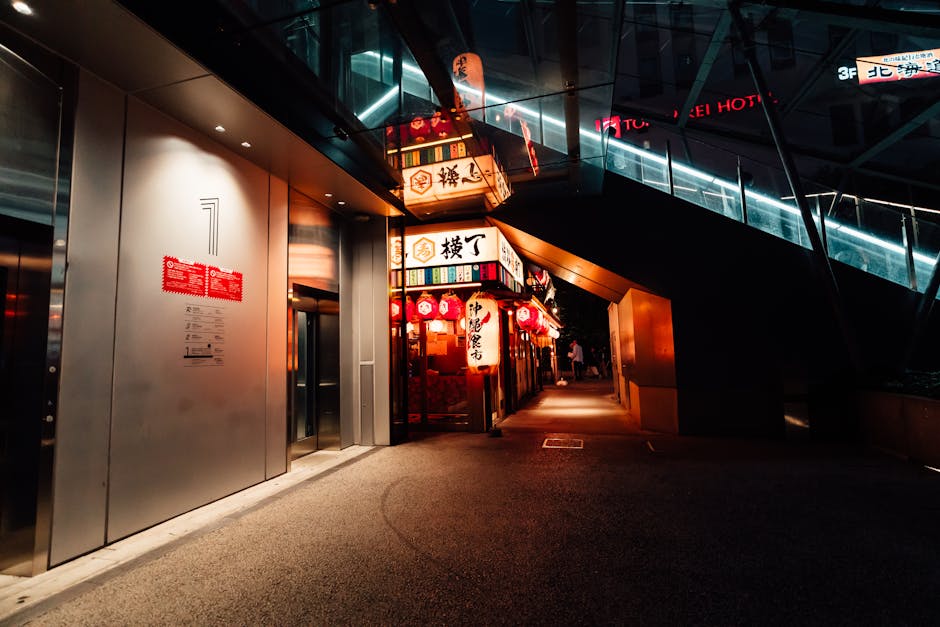
Explore Kyoto's most atmospheric alleyway. Discover geiko history, riverside dining, and hidden nightlife on this self-guided evening stroll.
 Moderate
Kyoto, Japan
Experience a serene self-guided walk along Kyoto's iconic Philosopher's Path, visiting Zen temples, hidden shrines, and the stunning Silver Pavilion.
 Moderate
Nairobi, Kenya
Discover the pulse of Nairobi's contemporary art scene on this self-guided walk through the galleries and creative spaces of Kilimani.
 Easy
EasyGdansk, Poland
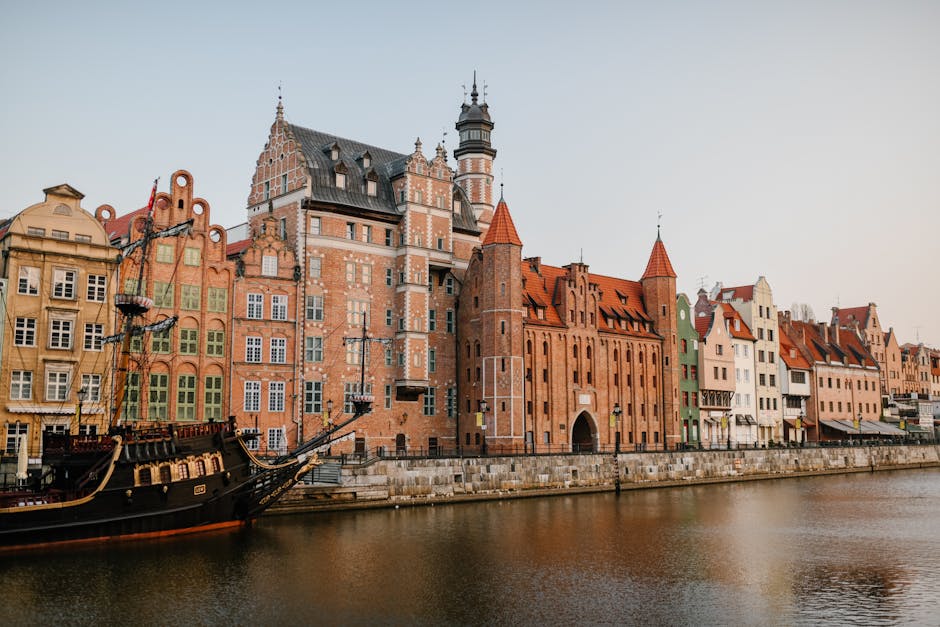
Discover the monastic heritage, world-famous organs, and lush botanical gardens of Oliwa on this peaceful self-guided neighborhood stroll.
 Easy
EasySalzburg, Austria
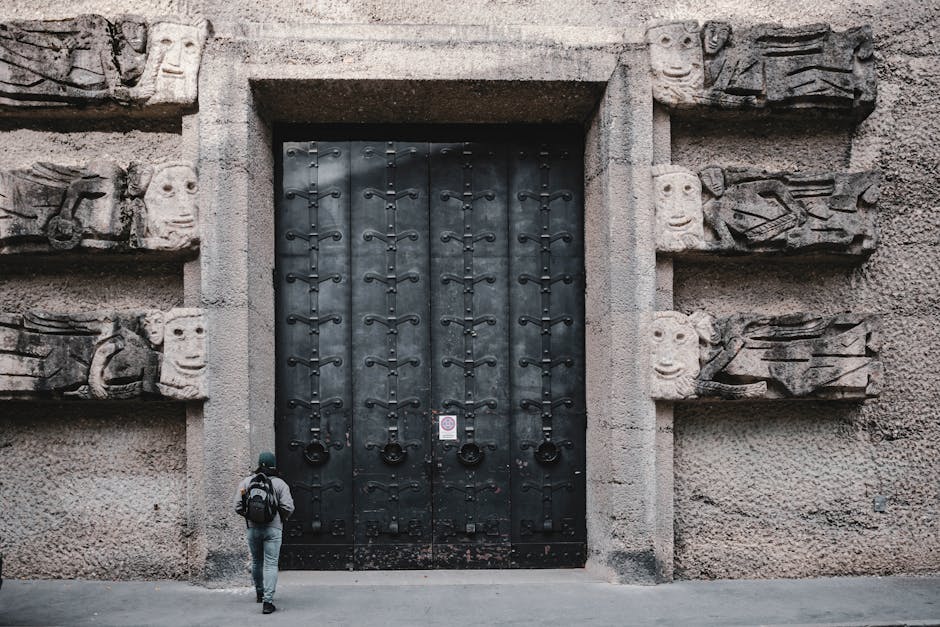
Discover Salzburg's oldest medieval alley, the birthplace of the 'Silent Night' author, and breathtaking views on this quiet self-guided walk.
 Easy
EasyWarsaw, Poland
Explore the 'Polish Versailles' at your own pace. Discover Baroque architecture, royal history, and stunning gardens on this self-guided walk.
 Moderate
Tokyo, Japan
Discover Tokyo's premier creative district on this self-guided walk through Roppongi’s world-class museums and striking modern architecture.
 Easy
EasyTokyo, Japan
Discover the 'Old Tokyo' charm of Yanaka on this self-guided walk through historic temples, artisan alleys, and a stunning torii gate shrine.
 Easy
EasyTokyo, Japan
Experience Shibuya's electric energy on this self-guided walk from the iconic Scramble Crossing to the panoramic views of Shibuya Sky.
 Easy
EasyTokyo, Japan
Explore Tokyo's indie heart. From vintage fashion in Shimokitazawa to world-class art in Shinjuku, discover the city's creative soul independently.