Self-guided audio tour in Edinburgh
Start Free on iPhone
Start free on iPhone to unlock this self-guided walking tour in Edinburgh. Hear all the stories that make it amazing, walk at your own pace, and begin whenever you want.
Your Private Tour Guide
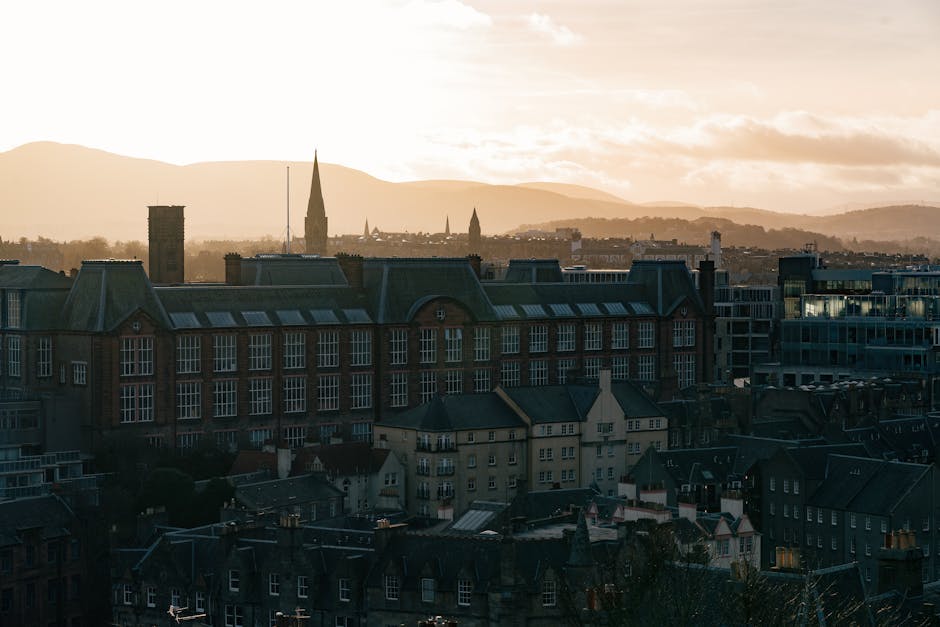
Edinburgh was the first city in the world to be designated a UNESCO City of Literature, and this self-guided walk invites you to uncover why. As you navigate the winding 'closes' and steep staircases of the Old Town, you will step into the world of the Enlightenment, the Gothic, and the legendary 'Makars' who shaped the Scottish identity. This neighborhood stroll captures the essence of a city that lives and breathes through its written word, moving from the hidden courtyards of the Royal Mile to the towering spires of Princes Street. The route begins at the atmospheric Writers' Museum, tucked away in Lady Stair's Close. This 17th-century house serves as a sanctuary for the memories of Robert Burns, Sir Walter Scott, and Robert Louis Stevenson. Just outside, the paving stones of Makars' Court provide a literal path through Scottish literary history, featuring inscriptions from the nation's most celebrated poets. As you continue your self-guided adventure, you will encounter the National Library of Scotland, a repository of millions of items that document the country's intellectual heart. This walking route is more than just a list of landmarks; it is an exploration of the spaces where writers found inspiration, from the cozy, low-beamed interiors of historic taverns to the somber beauty of the Canongate Kirkyard. You will explore the legacy of Sir Walter Scott at his massive Gothic monument and pay respects to the 'forgotten' poets who inspired giants like Robert Burns. Whether you are a fan of classic novels or simply appreciate the historic charm of medieval architecture, this audio walk offers a deep dive into the stories that built Edinburgh. Explore independently and at your own pace, stopping to browse antique bookstores or grab a coffee in a historic wynd. This is a journey through the mind of a city that has always known the power of a well-told tale.
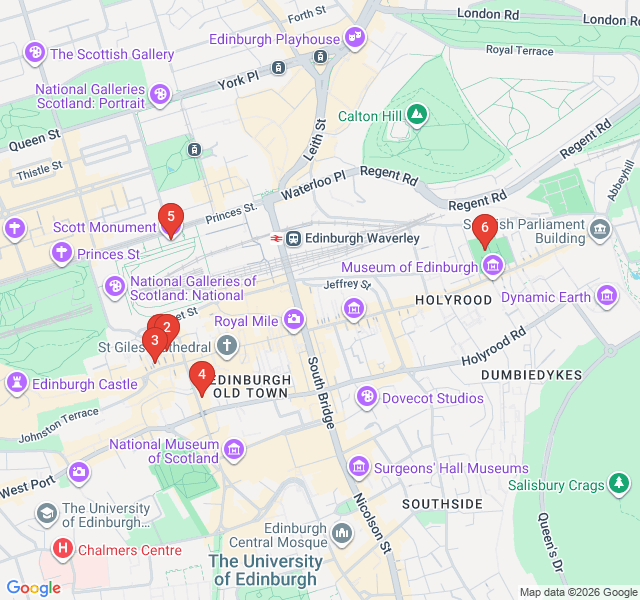
Numbers indicate the order of stops on the tour.
Begin your self-guided adventure at Lady Stair's House, a stunning 1622 mansion that now houses the Writers' Museum. This building is dedicated to the 'Big Three' of Scottish literature: Robert Burns, Sir Walter Scott, and Robert Louis Stevenson. Inside, you can find rare manuscripts, personal items like Burns’s writing desk, and even the printing press on which Scott’s Waverley novels were first produced. The house itself is a masterpiece of Scottish baronial architecture, featuring narrow spiral stairs and dark wood paneling that perfectly set the stage for a journey into the city's storytelling past. Take a moment to appreciate the quiet seclusion of this close, which feels worlds away from the busy Royal Mile just a few steps away.
Step outside the museum into Makars' Court, an evolving national memorial to Scottish writers. The word 'Makar' is a Scots term for a poet or bard, literally meaning 'one who fashions or makes.' As you look down, you will see paving stones inscribed with quotations from famous authors spanning the 14th century to the present day. These stones are added periodically to honor new figures. Look for the words of Muriel Spark or the medieval verses of John Barbour. It is a literal walk through the evolution of the Scots and English languages. This open-air space serves as a reminder that Edinburgh’s literary culture is not just found in books, but is built into the very stones of the city.
Just a short stroll away on the Lawnmarket, you will find The Jolly Judge. While today it is a beloved local pub, it captures the historic spirit of the 17th-century 'tenements' where many of Edinburgh’s writers and thinkers would gather. In the centuries past, the city’s intellectual life was fueled by the 'claret and conversation' found in these low-ceilinged, timber-beamed rooms. The pub is named after the legal figures who frequented this area, reflecting the close ties between the law and literature in Scottish history. It is a perfect example of the hidden, cozy spaces that characterize the Old Town’s social history, offering a glimpse into the atmosphere that inspired many a dark, Gothic tale.
As you move toward George IV Bridge, you reach the National Library of Scotland. This is one of the UK's legal deposit libraries, meaning it has the right to receive a copy of every book published in Great Britain and Ireland. The collections are vast, totaling over 24 million items. While much of the building is for research, the public exhibition space often showcases treasures like the Gutenberg Bible, the last letter of Mary Queen of Scots, or original manuscripts by Byron and Shelley. It stands as a monument to the Scottish Enlightenment, a period when Edinburgh was known as the 'Athens of the North' for its incredible concentration of philosophers, scientists, and writers.
Crossing over toward Princes Street, you cannot miss the Scott Monument, a Victorian Gothic masterpiece and the largest monument to a writer in the world. Standing over 200 feet tall, its blackened stone and intricate pinnacles look like something out of a dark fairytale. It was built in the 1840s to honor Sir Walter Scott, the man who arguably invented the modern historical novel and popularized the image of the Scottish Highlands. If you look closely at the structure, you will see 64 statues representing characters from Scott’s novels. It is a testament to the rock-star status writers held in the 19th century and remains one of the most iconic silhouettes in the Edinburgh skyline.
The final stop on this literary route is the peaceful Canongate Kirkyard. This cemetery is the resting place of several notable figures, including the economist Adam Smith. However, for literary enthusiasts, the most significant grave belongs to Robert Fergusson. Fergusson was a brilliant poet who wrote in Scots and died tragically young in a nearby asylum. Robert Burns, who considered Fergusson his 'elder brother in the muse,' was so moved by his predecessor's talent that he personally paid for the headstone you see today. Standing here at the quieter end of the Royal Mile, you can feel the deep connection and mutual respect that has linked generations of Scottish writers across the centuries.
Start Free on iPhone
Explore “Literary Giants and Hidden Libraries” with your very own Private Tour Guide with Zigway. Start free on iPhone, skip the large group and the fixed routes, and hear the city come alive as you go.
Your Private Tour Guide
Don't miss the good stuff
Explore Freely
 Easy
EasyEdinburgh, United Kingdom
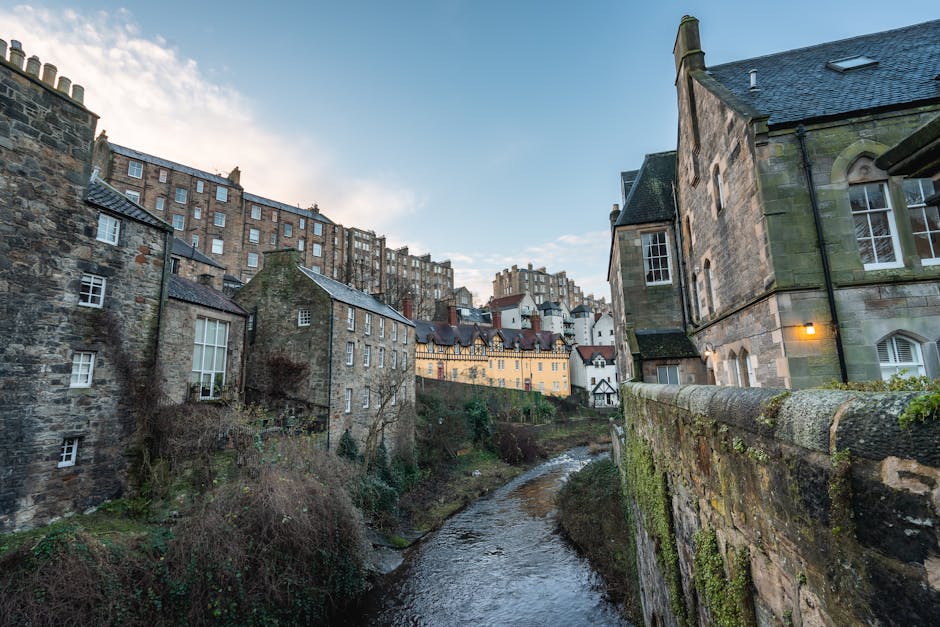
Explore Edinburgh's historic Royal Mile at your own pace, from the heights of the Castle to the royal Palace of Holyroodhouse.
 Easy
EasyEdinburgh, United Kingdom
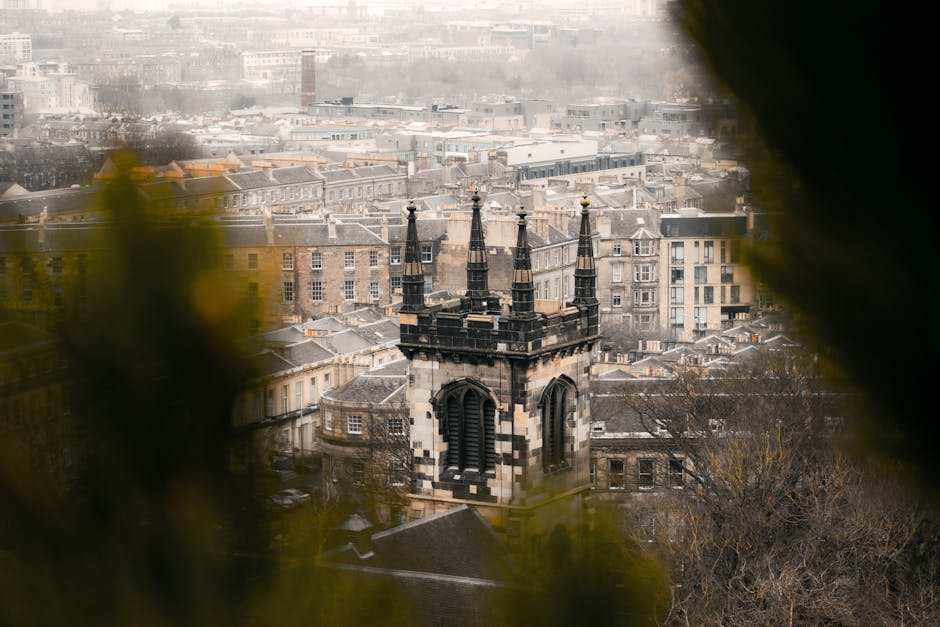
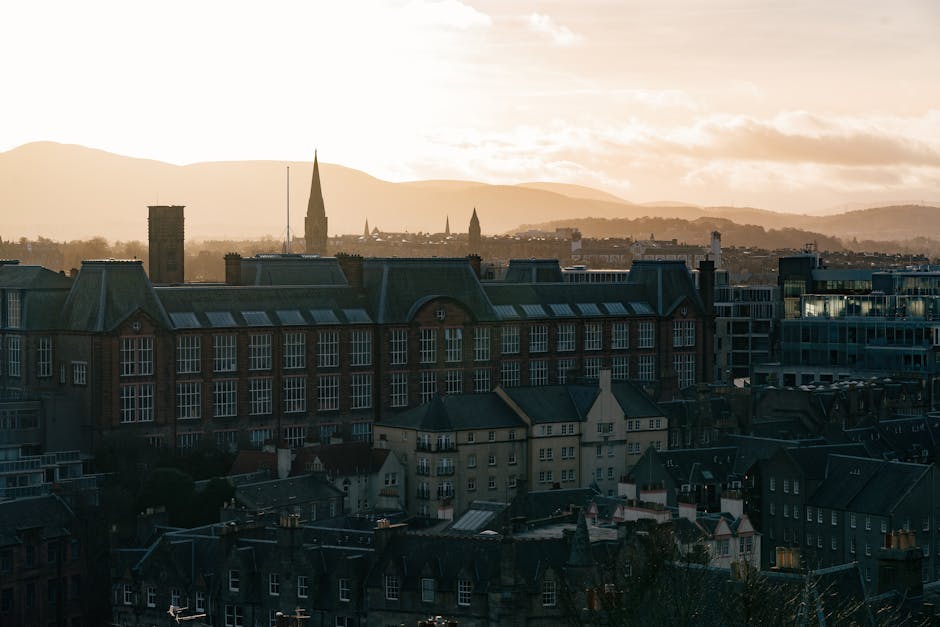
Capture the magic of Edinburgh on this self-guided stroll through the fairy-tale Dean Village, floral Circus Lane, and the scenic Water of Leith.
 Easy
EasyEdinburgh, United Kingdom
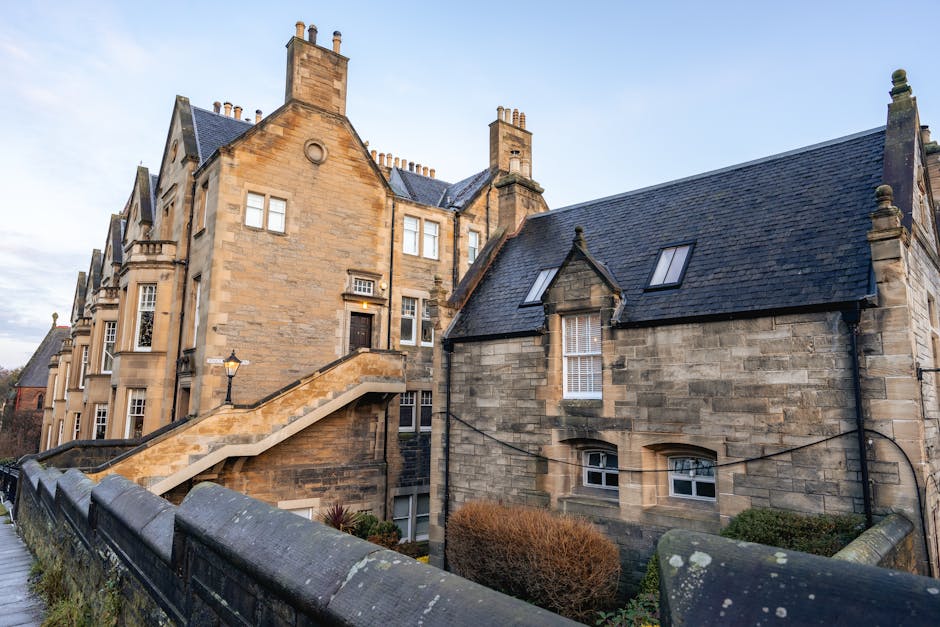
Explore Edinburgh's creative soul on this self-guided walk from historic museums to the stylish galleries and boutiques of the West End.
 Challenging
Edinburgh, United Kingdom
Ascend an ancient volcano and discover royal history on this challenging self-guided walk through Edinburgh's iconic Holyrood Park.
 Easy
EasyNairobi, Kenya
Explore Nairobi's architectural evolution from colonial-era landmarks to iconic Brutalist skyscrapers on this historic self-guided walking route.
 Easy
EasyNairobi, Kenya
Discover Nairobi's iconic skyline on this self-guided architecture walk through the CBD’s most famous modernist and Brutalist landmarks.
 Easy
EasyKrakow, Poland
Explore the prestigious Jagiellonian University district, featuring Neo-Gothic architecture, Baroque churches, and Krakow's hidden scholarly gems.
 Moderate
Gdansk, Poland
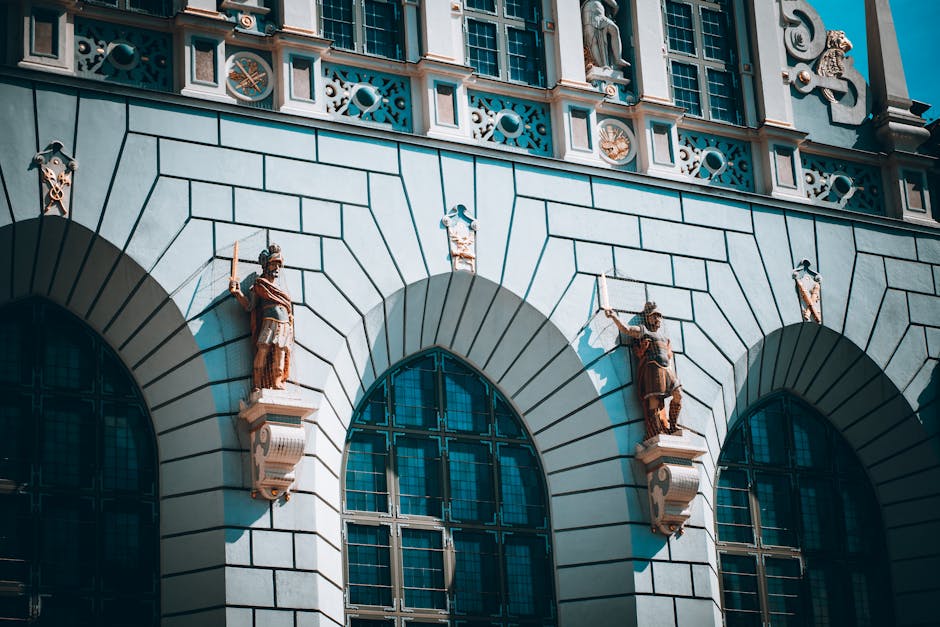
Discover the origins of WWII in Gdansk on this self-guided walk through heroic last stands, massive museums, and strategic hilltop fortifications.
 Moderate
Manchester, United Kingdom
Discover Manchester’s secret green spaces and hidden parks on this self-guided audio walk through the city’s most tranquil and photogenic spots.
 Easy
EasyManchester, United Kingdom
Explore Manchester’s creative soul on this self-guided stroll through the Northern Quarter’s iconic street art and quirky subculture.
 Easy
EasyManchester, United Kingdom
Discover the transformation of Ancoats from industrial 'Little Italy' to Manchester's trendiest culinary district on this self-guided audio walk.
 Moderate
Manchester, United Kingdom
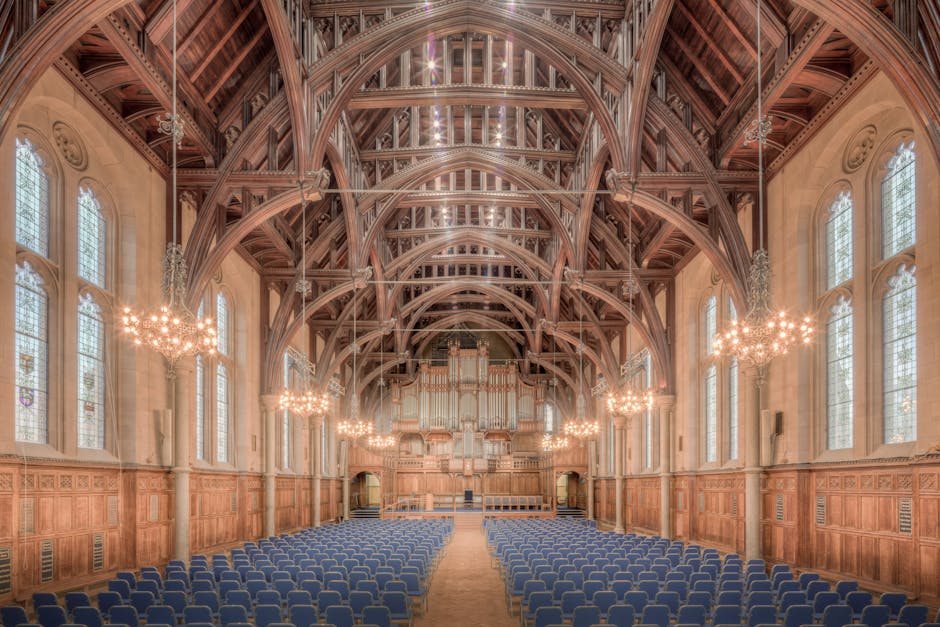
Trace the sonic legacy of Manchester from the birth of punk to the Oasis era on this self-guided walking route through music history.