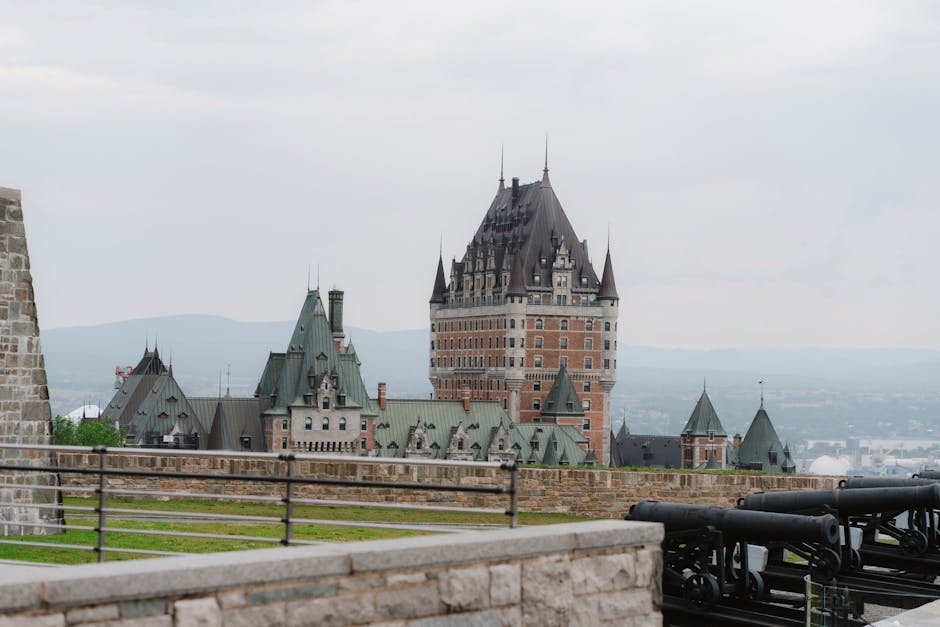
Self-guided audio tour in Quebec City
Start Free on iPhone
Start free on iPhone to unlock this self-guided walking tour in Quebec City. Hear all the stories that make it amazing, walk at your own pace, and begin whenever you want.
Your Private Tour Guide
Step into a world where time seems to have stood still for four centuries. This self-guided walk through Quebec City’s Lower Town, or Bas-Basse-Ville, invites you to explore the very cradle of French civilization in North America. As you move away from the towering heights of the Fairmont Le Château Frontenac and descend toward the banks of the St. Lawrence River, the atmosphere shifts from grand Victorian scale to the intimate, cobblestoned charm of a 17th-century European village. This neighborhood stroll is a journey through the layers of Quebec’s identity, from its origins as a fur-trading post to its role as a fortified military stronghold. On this walking route, you will discover why this area is consistently ranked among the most beautiful in the world. You will wander through the Quartier Petit Champlain, a district filled with narrow lanes and artisan boutiques that once housed the city’s dockworkers and sailors. The heart of the experience is Place Royale, a square so perfectly preserved it feels like a film set. Here, you can stand on the exact spot where Samuel de Champlain founded his first habitation in 1608. Nearby, the Notre-Dame-des-Victoires church serves as a silent witness to the various sieges and battles that shaped the continent’s history. This audio walk also highlights the artistic and defensive spirit of the city. You will encounter the massive Fresque des Québécois, a masterfully executed mural that tells the 400-year story of the province through its most influential figures. Finally, the route leads you to the Royal Battery, where heavy cannons once pointed toward the river to ward off naval invasions. Whether you are a history enthusiast or a photography lover, this walking tour Quebec City provides the independence to linger at every scenic viewpoint and dive deep into the stories of the people who built this riverside enclave. Explore at your own pace and let the spirit of New France guide your steps through these historic alleyways.
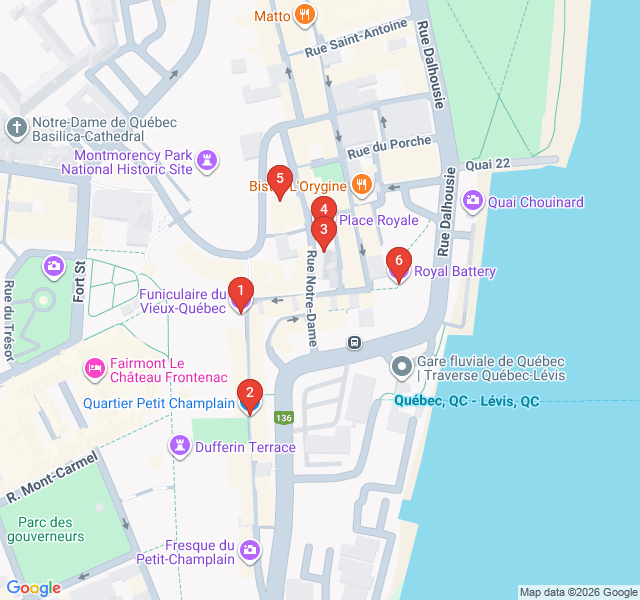
Numbers indicate the order of stops on the tour.
To begin your self-guided adventure, start at the base of the Funiculaire. This iconic cable railway has been transporting residents and visitors between the Upper Town and the Lower Town since 1879. While the original version was powered by water ballast, today’s sleek glass cabins offer a modern way to conquer the steep cliff side. As you stand here, look up toward the Dufferin Terrace. The Funiculaire provides more than just a ride; it offers a unique perspective on the vertical nature of Quebec City’s geography. It was designed to help merchants and workers move goods and themselves without braving the 'Breakneck Steps.' Take a moment to appreciate the engineering that has connected these two distinct levels of the city for over a century before heading into the narrow streets ahead.
Welcome to what is frequently cited as the most charming district in North America. The Quartier Petit Champlain is a pedestrian-only zone defined by its narrow cobblestone streets and historic stone houses. In the 17th and 18th centuries, this area was the commercial heart of New France, bustling with sailors, fur traders, and craftsmen. After a period of decline in the 20th century, a massive restoration project in the 1980s transformed it into the vibrant artisan hub you see today. Look for the intricate signs hanging above the shops; many reflect the traditional trades that once dominated the area. As you walk, notice the 'Escalier Casse-Cou' or Breakneck Stairs at the end of the street—the city's oldest stairway, dating back to 1635.
Standing before you is Notre-Dame-des-Victoires, the oldest stone church in North America. Built on the very foundations of Samuel de Champlain's second 'habitation' or outpost, the church was completed in 1688. Its name, which translates to 'Our Lady of Victories,' commemorates the French military successes against British naval attacks in 1690 and 1711. Inside, the church feels like a sanctuary of peace, featuring a unique altar shaped like a fortress and a hanging model of the 'Le Brézé,' the ship that brought French soldiers to the colony. It remains an active place of worship and a powerful symbol of the resilience of the French-Canadian identity through centuries of conflict and change.
Place Royale is the historical heart of Quebec City. It was here, in 1608, that Samuel de Champlain established a fortified trading post, effectively founding the first permanent French settlement in North America. The square is surrounded by beautifully restored stone buildings with steep roofs and colorful shutters, characteristic of French colonial architecture. In the center stands a bronze bust of King Louis XIV, the 'Sun King,' which was a gift from France. For centuries, this square served as a public market and a focal point for social and political life. As you explore independently, imagine the sounds of the 17th-century marketplace—the haggling over beaver pelts, the clatter of horse-drawn carts, and the proclamations of the town crier.
Turn your attention to this massive work of art, the Fresque des Québécois. This 420-square-meter trompe-l'œil mural is not just a painting; it is a visual encyclopedia of Quebec’s history. It depicts the city through the seasons and features nearly a dozen historical figures who shaped the province. Can you spot Samuel de Champlain, the city’s founder, or Jacques Cartier, the explorer? Look closely at the architectural details in the mural—they mirror the buildings of the surrounding neighborhood, creating an illusion of depth that makes the painted characters seem to step right off the wall. It’s a perfect spot to reflect on how the people of the past continue to influence the vibrant culture of modern-day Quebec.
Your walking route concludes at the Royal Battery, a formidable defensive structure built in 1691. Positioned strategically at the water’s edge, this battery was designed to protect the port from British naval incursions. During the Siege of Quebec in 1759, it saw heavy action, though it was eventually silenced by British fire. After falling into ruin and being buried under commercial wharves for decades, the battery was excavated and reconstructed in the 1970s as part of a heritage preservation initiative. Today, the heavy iron cannons are silent, pointing peacefully toward the St. Lawrence River. Take a moment to look out across the water toward Lévis on the opposite shore and appreciate the strategic military importance of this riverside location.
Start Free on iPhone
Explore “Riverside Roots: Lower Town and Petit-Champlain” with your very own Private Tour Guide with Zigway. Start free on iPhone, skip the large group and the fixed routes, and hear the city come alive as you go.
Your Private Tour Guide
Don't miss the good stuff
Explore Freely
 Easy
EasyQuebec City, Canada
Explore the artistic soul of Quebec City. Discover Gilded Age architecture, iconic murals, and open-air art in the elegant Montcalm neighborhood.
 Moderate
Quebec City, Canada
Explore North America's only remaining fortified city walls on this self-guided walk through Quebec City's iconic military history and stone gates.
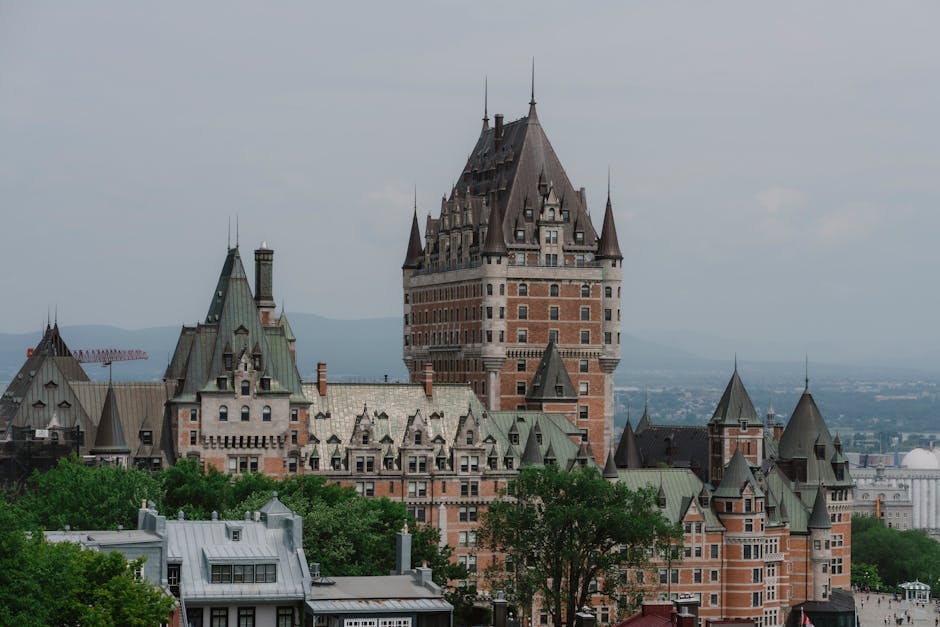 Easy
EasyQuebec City, Canada
Explore the creative soul of Saint-Roch on this self-guided walk featuring street art, craft breweries, and secret gardens.
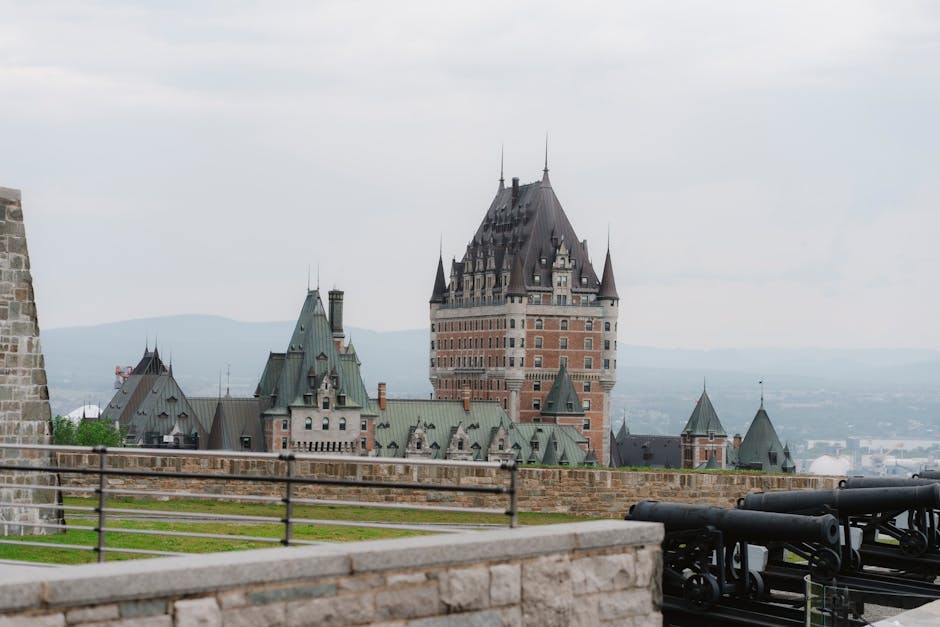 Easy
EasyQuebec City, Canada
Uncover haunted legends and dark history in Old Quebec on this atmospheric self-guided audio walk through the Upper Town's spooky corners.
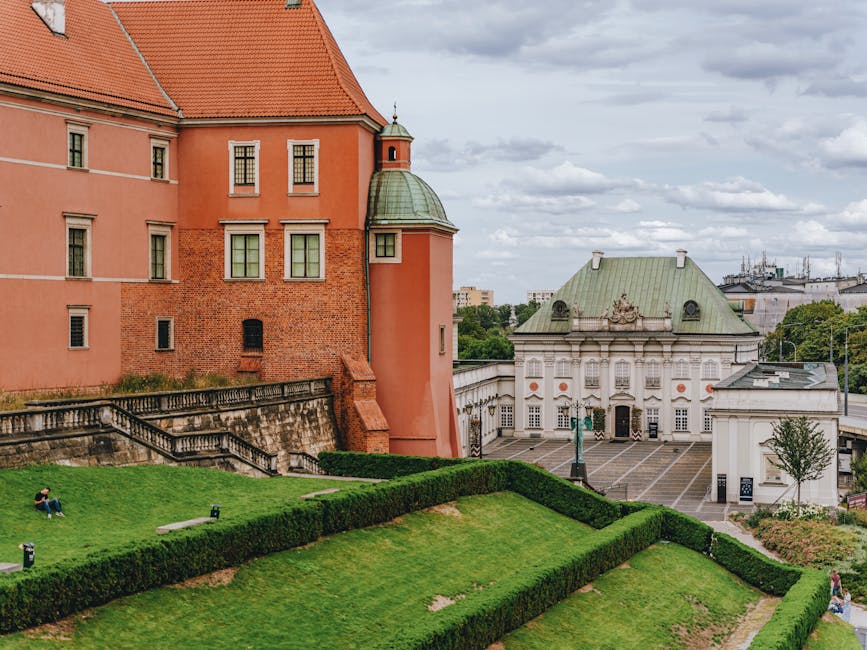 Easy
EasyWarsaw, Poland
Explore the miracle of Warsaw's reconstructed Old Town on this self-guided walk through royal squares, medieval walls, and heroic monuments.
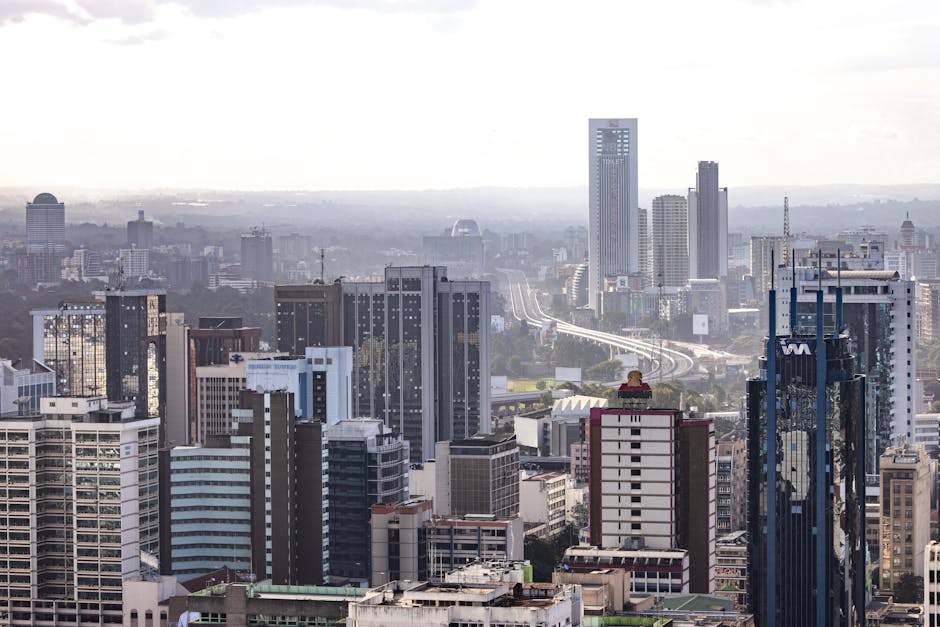 Easy
EasyNairobi, Kenya
Explore the history of Kenya’s independence through the statues, monuments, and parks that define Nairobi’s political heart on this self-guided walk.
 Easy
EasyNairobi, Kenya
Discover Nairobi's iconic skyline on this self-guided architecture walk through the CBD’s most famous modernist and Brutalist landmarks.
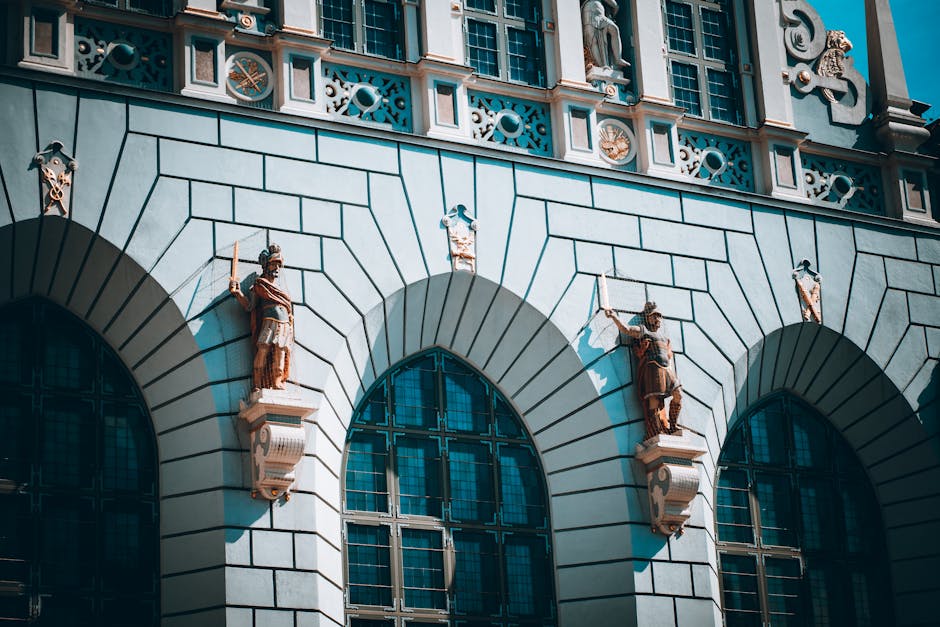 Easy
EasyGdansk, Poland
Discover the opulent Royal Way of Gdansk at your own pace. Explore Hanseatic history, gilded architecture, and the iconic Neptune's Fountain.
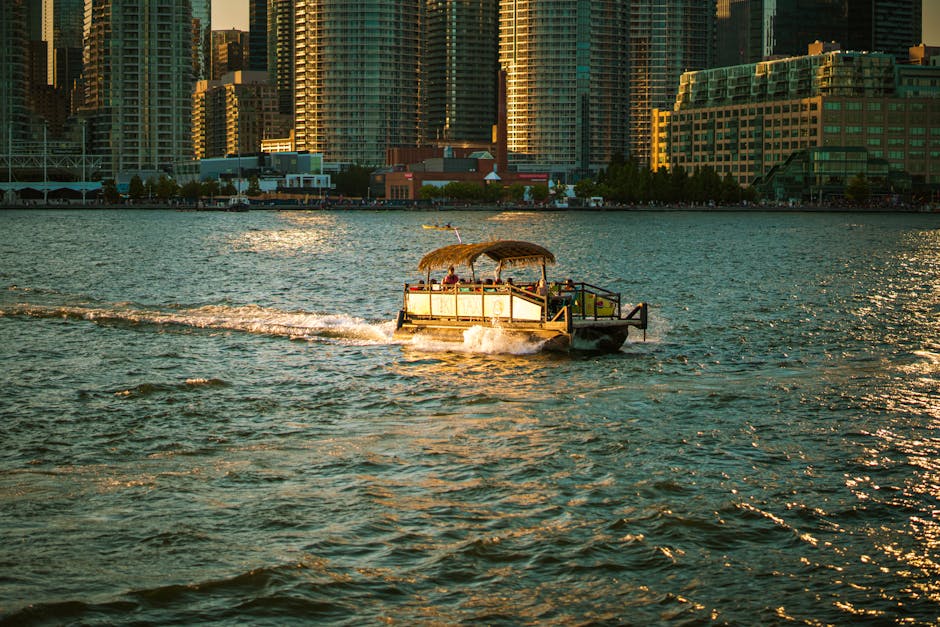 Challenging
Toronto, Canada
Explore Toronto's crown jewel with this self-guided walk through High Park’s hidden gardens, historic lodges, and scenic waterfront trails.
 Easy
EasyToronto, Canada
Explore Toronto's iconic skyline on this self-guided walk through the Financial District's historic stone halls and golden glass towers.
 Easy
EasyToronto, Canada
Explore North America's largest collection of Victorian homes and peaceful green spaces on this self-guided stroll through Toronto's Cabbagetown.
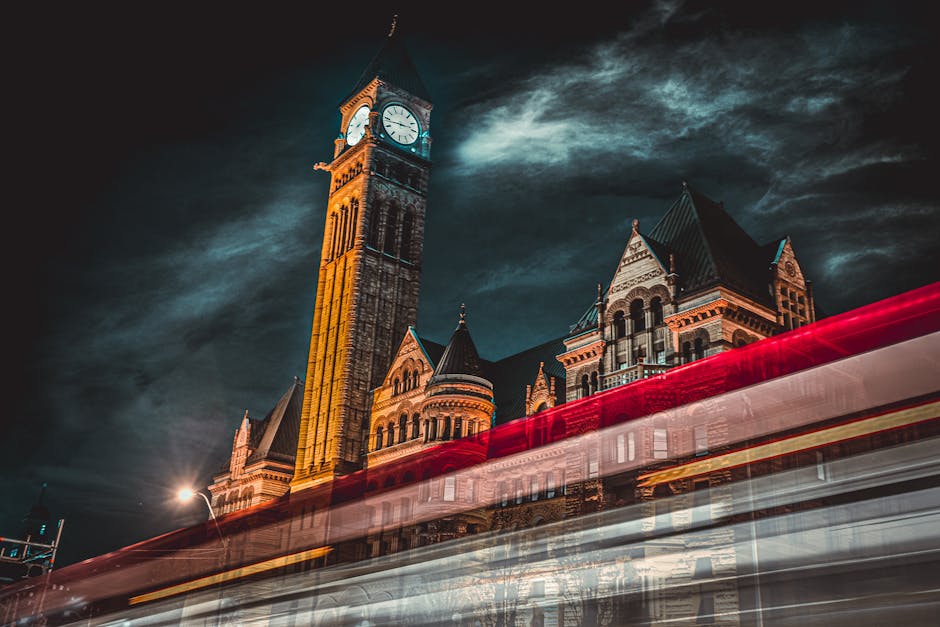 Easy
EasyToronto, Canada
Explore Yorkville’s transformation from 1960s hippie haven to Toronto’s premier luxury district on this self-guided audio walk.