Self-guided audio tour in Santiago
Start Free on iPhone
Start free on iPhone to unlock this self-guided walking tour in Santiago. Hear all the stories that make it amazing, walk at your own pace, and begin whenever you want.
Your Private Tour Guide
Santiago’s historic core is a living archive where colonial foundations meet the architectural expressions of modern civic power. This self-guided walk invites you to explore the heart of Chile’s capital at your own pace, tracing the city's evolution from a Spanish outpost to a thriving South American metropolis. The journey begins at the Plaza de Armas, the symbolic center of the nation since its founding in 1541. Here, the grid-like layout dictated by the Spanish Crown still governs the flow of daily life, surrounded by monumental structures that represent the church, the state, and the history of the people. As you follow this walking route, you will encounter the Metropolitan Cathedral, a masterpiece of neoclassical design that took nearly a century to complete. The path then leads away from the bustling plaza toward the sites of political transformation. You will stand before the Former National Congress, a building that witnessed the turbulent legislative history of the 19th and 20th centuries, before arriving at the imposing La Moneda Palace. Originally designed as a colonial mint, this fortress-like structure became the seat of the presidency and remains the most potent symbol of Chilean democracy and its survival through periods of intense conflict. This neighborhood stroll is designed for those who appreciate the intersection of history and design. By choosing a self-guided experience, you have the freedom to linger in the quiet courtyards of the National History Museum or descend into the modern, light-filled galleries of the La Moneda Cultural Center. Whether you are interested in the colonial legacy of the Spanish Empire or the dramatic events of the 1973 coup, this walking tour Santiago route provides the context needed to understand the complex identity of modern Chile. The route is compact and mostly flat, making it an accessible way to immerse yourself in the civic grandeur of Santiago Centro.
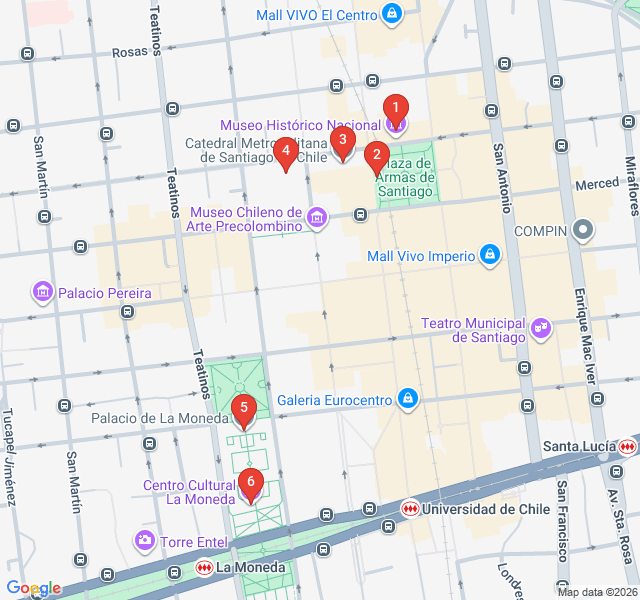
Numbers indicate the order of stops on the tour.
Welcome to the starting point of your self-guided adventure. This building, the Palacio de la Real Audiencia, was constructed between 1804 and 1807. It originally served as the high court for the Spanish Crown. During the push for independence, it became the seat of the first national government in 1810. Today, it houses the National History Museum. Notice the yellow facade and the central clock tower, which was added later in the 19th century. This building stands as a bridge between the colonial era and the birth of the Republic, housing artifacts that range from indigenous textiles to the personal belongings of Chile's founding fathers.
Step into the Plaza de Armas, the true kilometer zero of Santiago. When Pedro de Valdivia founded the city in 1541, he established this square as the center of a 'checkerboard' grid. For centuries, this was the marketplace, the gallows, and the social hub. Today, it is a vibrant cross-section of Chilean society. Look for the street painters, the preachers, and the famous chess players near the center. The bronze monuments scattered around the plaza celebrate both the indigenous Mapuche heritage and the Spanish conquerors, reflecting the complex, often clashing, layers of Chilean identity.
Dominating the western side of the Plaza is the Metropolitan Cathedral. This is actually the fifth cathedral built on this site; previous versions were destroyed by earthquakes and fires. The current structure was largely designed by the Italian architect Joaquín Toesca in the late 1700s. Step inside to witness the transition from the sober neoclassical exterior to the lavish, gilded baroque details of the interior. The cathedral serves as the final resting place for many of Chile's most prominent historical figures and remains the spiritual heart of the city's Catholic community.
A short walk from the plaza brings you to the Former National Congress. Completed in 1895, this building is a stunning example of French neoclassical architecture, featuring Corinthian columns and lush surrounding gardens. It served as the seat of both houses of the Chilean legislature until the 1973 military coup. Today, while the main Congress sits in Valparaíso, this building is used for special sessions and the Constitutional Convention. The gardens offer a peaceful respite from the city noise and are home to a monument dedicated to the victims of the 1863 Church of the Company fire.
You are now standing before La Moneda, the seat of the President of the Republic. Designed by Joaquín Toesca and opened in 1805, it was originally the colonial mint—hence the name 'La Moneda.' It is the only building of its kind in the Spanish colonies that follows the pure Italian neoclassical style. This palace gained worldwide notoriety on September 11, 1973, when it was bombed during the military coup that brought Augusto Pinochet to power. The building was meticulously restored and remains a symbol of national resilience. Look for the statue of Salvador Allende in the square nearby, a tribute to the president who died here during the coup.
The final stop on this walking route is located directly beneath the Citizen's Square in front of the palace. The Centro Cultural La Moneda is a modern, underground facility that serves as a stark contrast to the historic palace above. Opened in 2006 to commemorate the bicentennial of Chile, its sleek concrete ramps and glass ceilings flood the space with natural light. It hosts rotating world-class art exhibitions, a film archive, and local craft shops. It represents the 'New Chile'—transparent, modern, and dedicated to public access to culture.
Start Free on iPhone
Explore “Colonial Foundations and Civic Power” with your very own Private Tour Guide with Zigway. Start free on iPhone, skip the large group and the fixed routes, and hear the city come alive as you go.
Your Private Tour Guide
Don't miss the good stuff
Explore Freely
 Easy
EasySantiago, Chile
Explore the opulent mansions and grand architecture of Santiago’s Belle Époque on this self-guided stroll through the historic Barrio Dieciocho.
 Easy
EasySantiago, Chile
Explore Santiago's 'Sanhattan' on a self-guided walk featuring South America's tallest skyscrapers and modern art.
 Easy
EasySantiago, Chile
Explore Santiago’s most exclusive neighborhood on this self-guided walk featuring luxury boutiques, modern art, and world-class gastronomy.
 Moderate
Santiago, Chile
Discover the vibrant murals and poetic legacy of Bellavista on this self-guided walk through Santiago's most artistic and bohemian neighborhood.
 Easy
EasyNairobi, Kenya
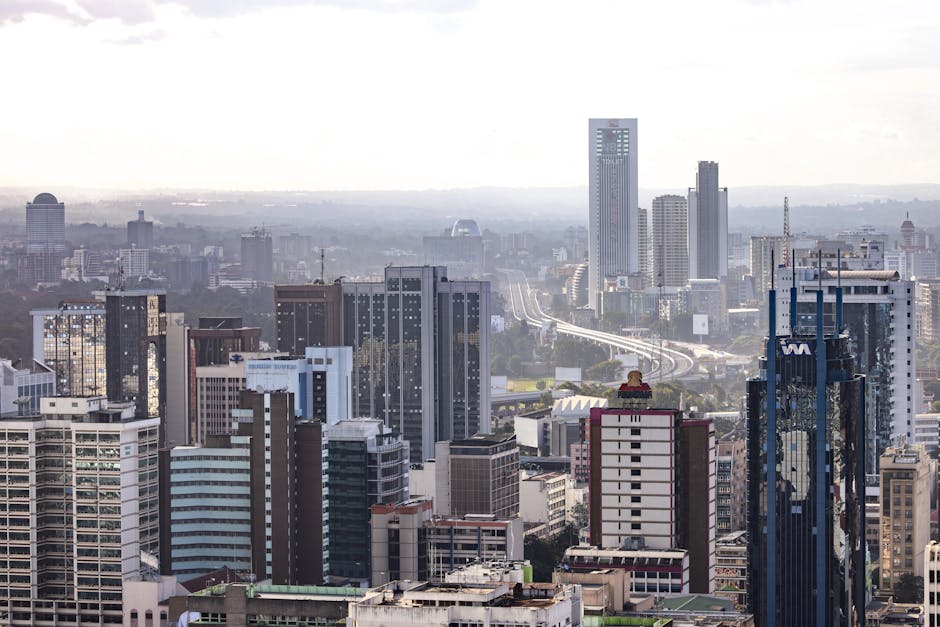
Explore Nairobi's architectural evolution from colonial-era landmarks to iconic Brutalist skyscrapers on this historic self-guided walking route.
 Easy
EasyNairobi, Kenya
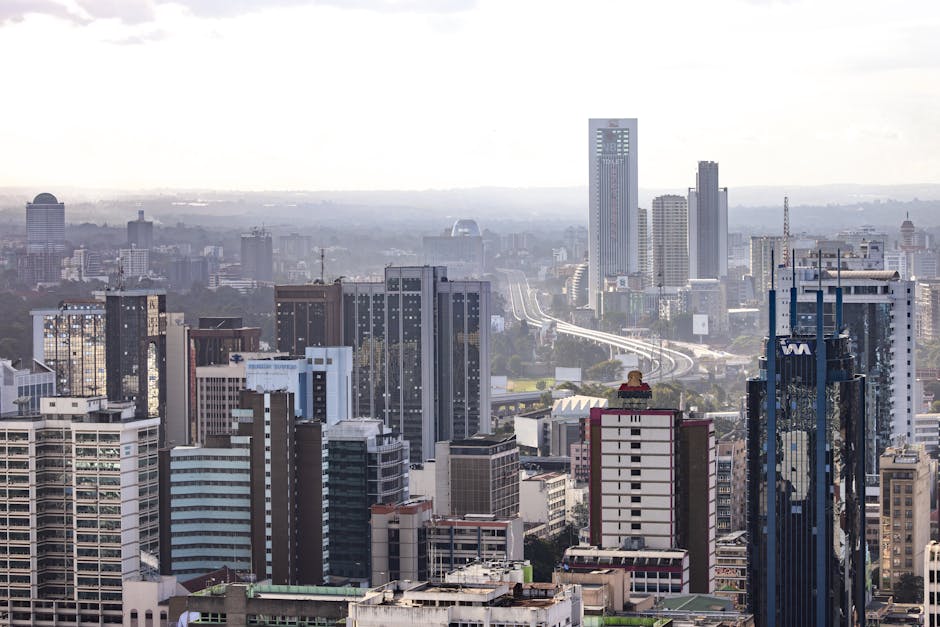
Discover Nairobi's iconic skyline on this self-guided architecture walk through the CBD’s most famous modernist and Brutalist landmarks.
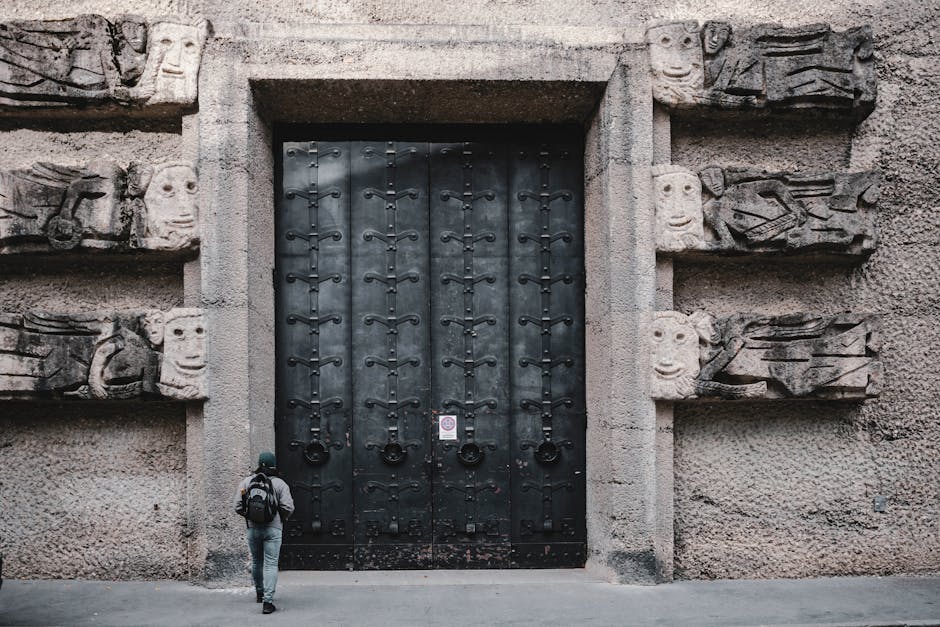 Easy
EasySalzburg, Austria
Discover the 'Rome of the North' on this self-guided walk through the Baroque squares and monumental legacy of Salzburg’s Prince-Archbishops.
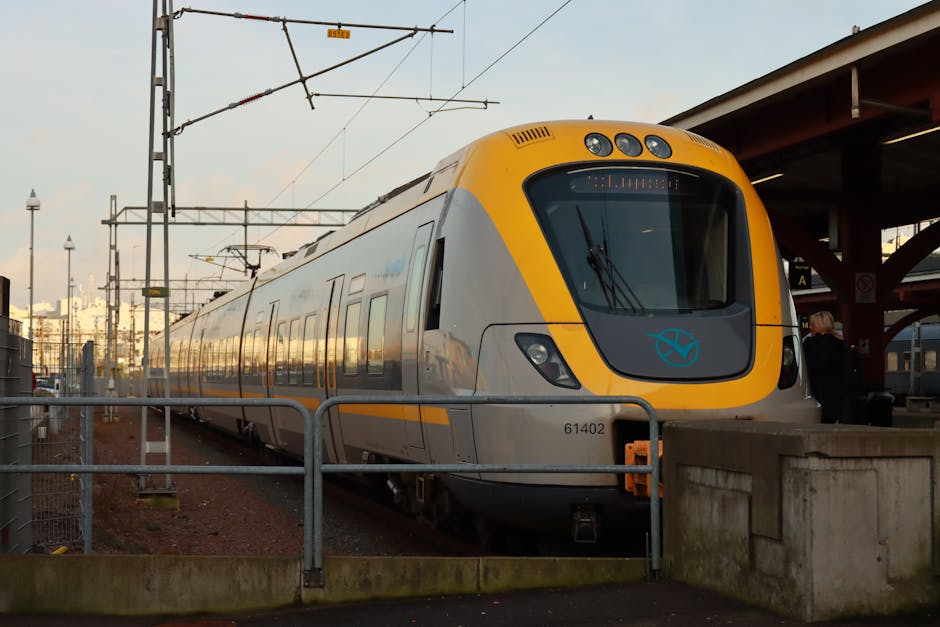 Easy
EasyGothenburg, Sweden
Discover Gothenburg’s 17th-century Dutch foundations, historic canals, and military fortifications on this self-guided architectural walk.
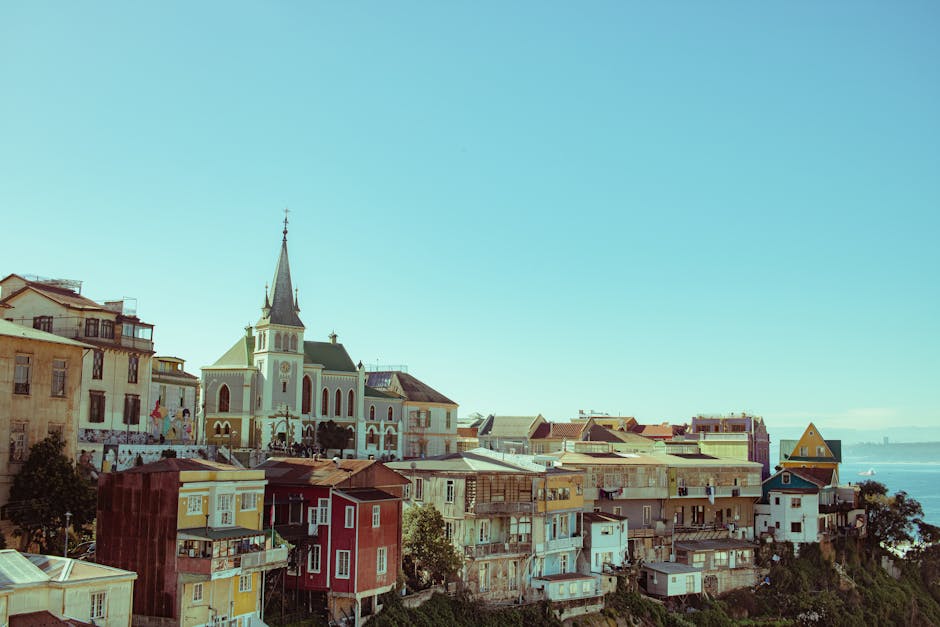 Moderate
Valparaiso, Chile
Explore Valparaíso’s iconic funiculars and stunning clifftop vistas on this self-guided audio walk through the 'Vertical City.'
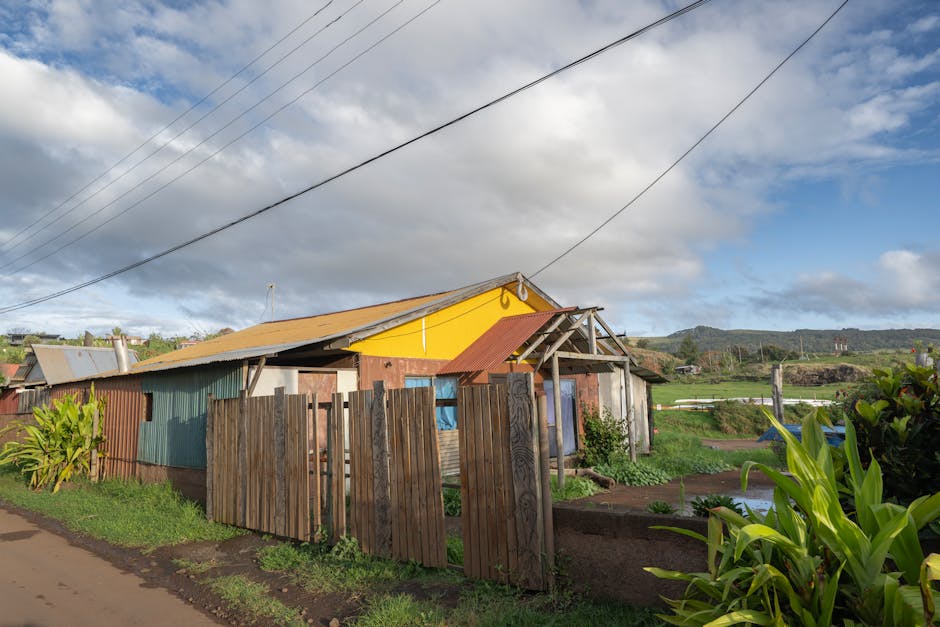 Easy
EasyValparaiso, Chile
Taste the heart of Valparaiso on this self-guided stroll through historic markets, legendary bars, and the birthplace of the famous Chorrillana.
 Challenging
Valparaiso, Chile
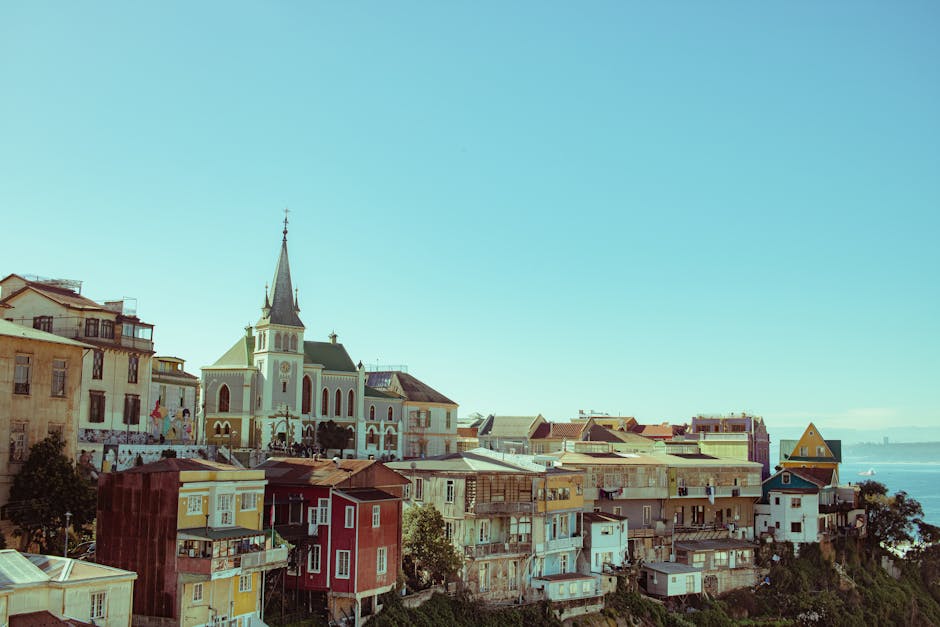
Discover Valparaiso’s vertical magic on this self-guided walk through the hidden stairways and vibrant street art of Cerro Alegre.
 Moderate
Valparaiso, Chile
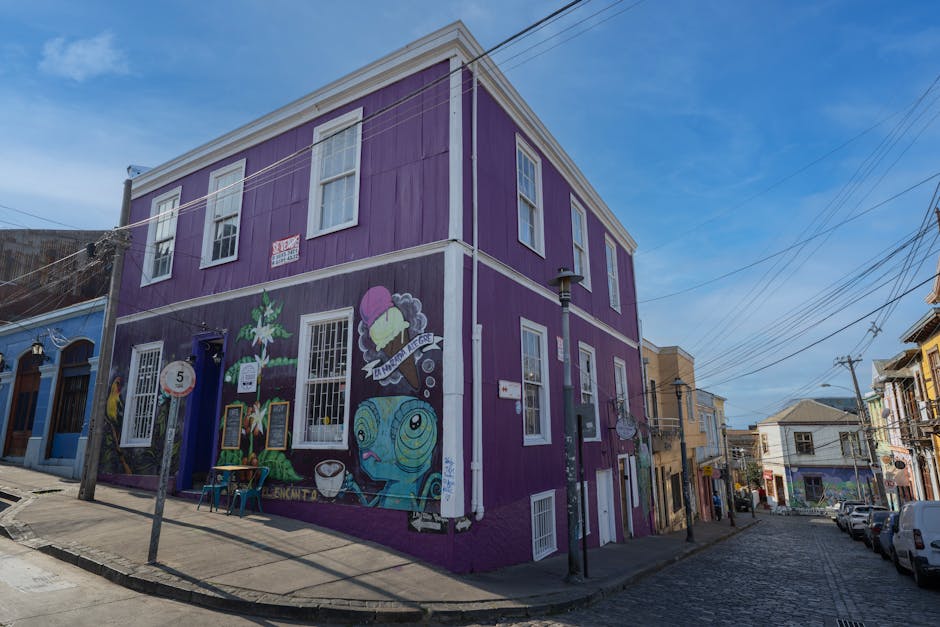
Discover the vibrant street art and historic charm of Valparaiso's Cerro Alegre and Concepción on this self-guided neighborhood stroll.