Self-guided audio tour in Jerusalem
Start Free on iPhone
Start free on iPhone to unlock this self-guided walking tour in Jerusalem. Hear all the stories that make it amazing, walk at your own pace, and begin whenever you want.
Your Private Tour Guide
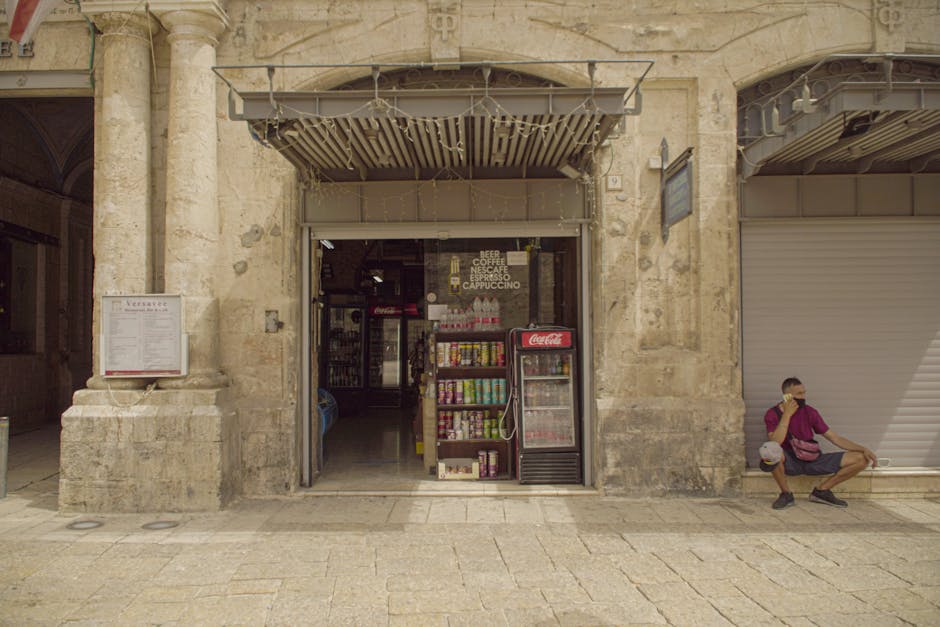
Step into a world that feels as though it has been preserved in amber. This self-guided walk through Jerusalem’s Mea Shearim neighborhood offers a rare glimpse into the life and traditions of the ultra-Orthodox Jewish community. Established in 1874 as the fifth neighborhood built outside the Old City walls, Mea Shearim—meaning 'A Hundred Gates'—was designed for security and seclusion, features that define its unique character to this day. Your walking route begins at the vibrant Mahaneh Yehudah Market, where the modern and traditional flavors of Jerusalem collide. From there, you will cross into a district where the sounds of Hebrew and Yiddish fill the air and the architecture recalls the shtetls of 19th-century Eastern Europe. As you explore independently, you will see the famous pashkevilim—the hand-printed posters that serve as the community’s news source and moral compass. This neighborhood stroll takes you through Kikar HaShabbat, the spiritual and political heart of the district, and past the 'Shtiblach,' where prayer never stops. You will also discover the unique courtyard architecture of Batei Ungarin, one of the most picturesque corners of the area. This route is not just about seeing historic buildings; it is about witnessing a living, breathing culture that prioritizes faith and community above the fast-paced modern world. The walk concludes at the striking Italian Hospital building, a surprising architectural contrast that marks the edge of this secluded world. Please remember to dress modestly—shoulders and knees covered for all—and respect the local custom of avoiding photography of residents to ensure a peaceful and immersive experience during your self-guided adventure.
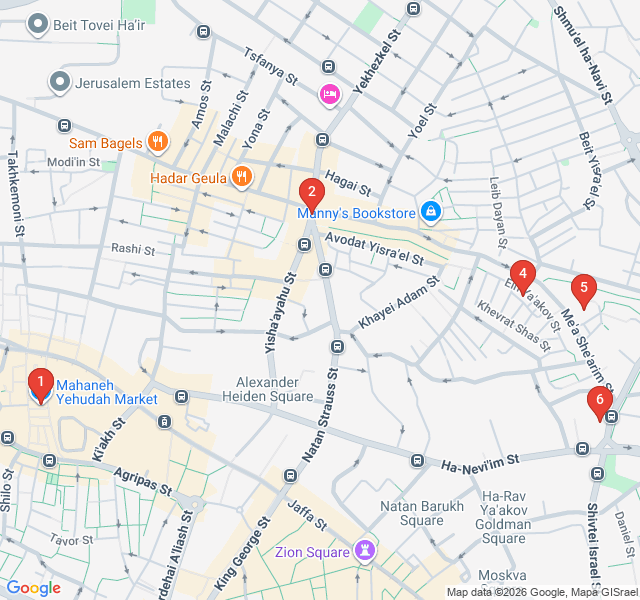
Numbers indicate the order of stops on the tour.
Start your self-guided walk at the sensory heart of Jerusalem. Mahaneh Yehudah, often called the 'Shuk,' has evolved from a 19th-century empty lot into a bustling marketplace. As you walk through, notice the transition from the modern city into this historic space. The market serves as a bridge between the various cultures of Jerusalem. While it is famous for its produce, spices, and halva, it also marks the boundary before you enter the more secluded religious neighborhoods. Take a moment to soak in the energy here before the atmosphere shifts significantly as you head toward Mea Shearim.
As you enter Mea Shearim, you are stepping back into 1874. This was one of the first neighborhoods built outside the Old City walls, designed as a 'courtyard neighborhood' for safety. The name 'Mea Shearim' translates to 'a hundred gates' or 'a hundredfold,' referencing a verse from Genesis. Look at the walls and you will see 'pashkevilim'—black and white posters. In a community that largely eschews the internet and television, these posters are the primary way to communicate news, deaths, and rabbinical decrees. The quiet, narrow streets here are designed to keep the modern world at a distance.
You are now at Kikar HaShabbat, the intersection of Yehezkel and Mea Shearim streets. This is the pulse of the neighborhood. While it looks like a standard busy intersection, it is the site of many community gatherings and demonstrations. On the Sabbath, this area is completely closed to vehicle traffic, becoming a sea of white and black as residents walk to prayer. The buildings surrounding the square house various 'yeshivas' or religious schools. It is a place where the social and spiritual life of the community converges, standing as a symbol of their autonomy and dedication to tradition.
The word 'Shtiblach' is Yiddish for 'small rooms.' Unlike a grand central synagogue, this building contains many small rooms where prayer services, or 'minyanim,' begin every few minutes. It is a 24-hour hub of spiritual activity. You will notice men moving in and out quickly; the pace of prayer here is constant. This reflects the community's commitment to the 'eternal flame' of Jewish law. While the interiors are private, the exterior bustle tells the story of a life governed by a strict schedule of ancient rituals and communal responsibility.
Batei Ungarin, or the 'Hungarian Houses,' is perhaps the most photogenic part of the neighborhood, though residents prefer you don't take photos of them. Built in the late 19th century with funds from Hungarian Jews, the architecture features beautiful stone arches, external staircases, and interconnected balconies. This design was practical, allowing for high-density living while maintaining a sense of community. The narrow alleys and hanging laundry create an atmosphere reminiscent of an Eastern European village. It is a testament to the 'Kolel' system, where Diaspora communities supported those living and studying in the Holy Land.
Your neighborhood stroll concludes at a building that looks like it was plucked straight from Florence. The Italian Hospital, designed by Antonio Barluzzi and completed in 1919, features distinct Gothic and Renaissance elements, including a bell tower that mimics the Palazzo Vecchio. Today it houses the Israeli Ministry of Education, but its presence here is a reminder of the international 'competition' for influence in Jerusalem during the late Ottoman and British Mandate periods. It stands as a striking architectural bookend to the traditional stone dwellings of Mea Shearim just a few steps away.
Start Free on iPhone
Explore “Traditions of Mea Shearim: A Step Back in Time” with your very own Private Tour Guide with Zigway. Start free on iPhone, skip the large group and the fixed routes, and hear the city come alive as you go.
Your Private Tour Guide
Don't miss the good stuff
Explore Freely
 Easy
EasyJerusalem, Israel
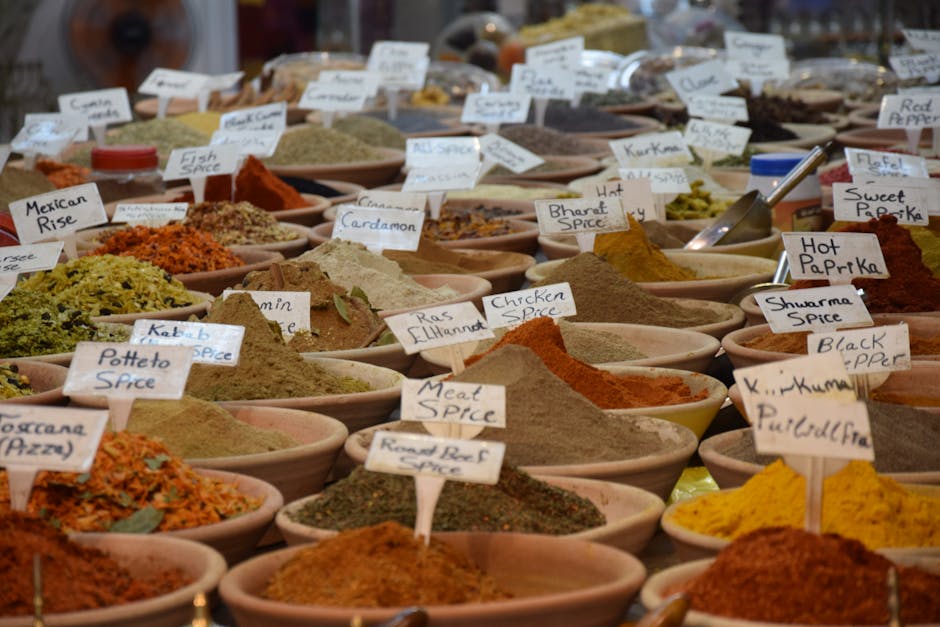
Taste the heart of Jerusalem on this self-guided walk through the legendary stalls and hidden gems of Mahane Yehuda Market.
 Easy
EasyJerusalem, Israel
Explore Jerusalem's nightlife and street art, from the shutter murals of the Shuk to secret speakeasies and creative hubs in the City Center.
 Easy
EasyJerusalem, Israel
Explore the 'Garden Suburb' of Jerusalem's elite. Discover Bauhaus architecture, historic residences of prime ministers, and intellectual landmarks.
 Easy
EasyJerusalem, Israel
Explore Jerusalem's 19th-century expansion on this self-guided walk through Yemin Moshe, featuring iconic hotels, windmills, and artisan lanes.
 Easy
EasyKrakow, Poland
Explore the prestigious Jagiellonian University district, featuring Neo-Gothic architecture, Baroque churches, and Krakow's hidden scholarly gems.
 Easy
EasyKrakow, Poland
Explore the historic heart of Kazimierz on this self-guided walk through synagogues, ancient cemeteries, and vibrant squares.
 Easy
EasySalzburg, Austria
Discover the 'Rome of the North' on this self-guided walk through the Baroque squares and monumental legacy of Salzburg’s Prince-Archbishops.
 Easy
EasySalzburg, Austria
Discover Salzburg's oldest medieval alley, the birthplace of the 'Silent Night' author, and breathtaking views on this quiet self-guided walk.
 Easy
EasyTel Aviv, Israel
Explore a hidden New England-style village in Tel Aviv. Discover wooden houses and 19th-century history on this peaceful self-guided walk.
 Easy
EasyTel Aviv, Israel
Explore the literary heart and stunning architecture of Tel Aviv's most beautiful historic street on this self-guided neighborhood stroll.
 Easy
EasyTel Aviv, Israel
Experience the sea breeze on this self-guided walk through Tel Aviv's historic port, featuring iconic boardwalks, markets, and sunset views.
 Easy
EasyTel Aviv, Israel
Explore the birthplace of Tel Aviv on a self-guided adventure through Bauhaus architecture and the historic site of Israel's independence.