Self-guided audio tour in Rome
Start Free on iPhone
Start free on iPhone to unlock this self-guided walking tour in Rome. Hear all the stories that make it amazing, walk at your own pace, and begin whenever you want.
Your Private Tour Guide
Step away from the typical tourist trails and immerse yourself in the layered history of Rome on this self-guided walk from the Jewish Ghetto to the bohemian alleys of Trastevere. This neighborhood stroll captures the transition from ancient Roman grandeur to the intimate, medieval charm of the city's left bank. Your journey begins in the heart of the former Ghetto, a district defined by centuries of resilience and a unique culinary heritage. As you navigate these narrow streets, you will encounter the haunting beauty of the Portico d'Ottavia and the monumental presence of the Great Synagogue, standing as a testament to one of the oldest Jewish communities in Europe. This walking route highlights the architectural evolution of Rome, where 16th-century fountains and ancient ruins exist side-by-side with modern life. Crossing the Tiber River is a symbolic transition, taking you via the historic Tiber Island—a site associated with healing for over two millennia. Once across the water, the atmosphere shifts as you enter Trastevere. This part of the walking tour Rome experience focuses on the hidden gems of the 'Rione', from the quiet, residential Piazza in Piscinula to the glittering golden mosaics of Santa Maria in Trastevere. Whether you are interested in religious history, ancient architecture, or simply soaking up the local atmosphere, this self-guided adventure offers the flexibility to explore at your own pace. Discover the stories of the Mattei family, the legends of the Tiber, and the enduring spirit of Rome's most authentic neighborhoods without the constraints of a rigid schedule.
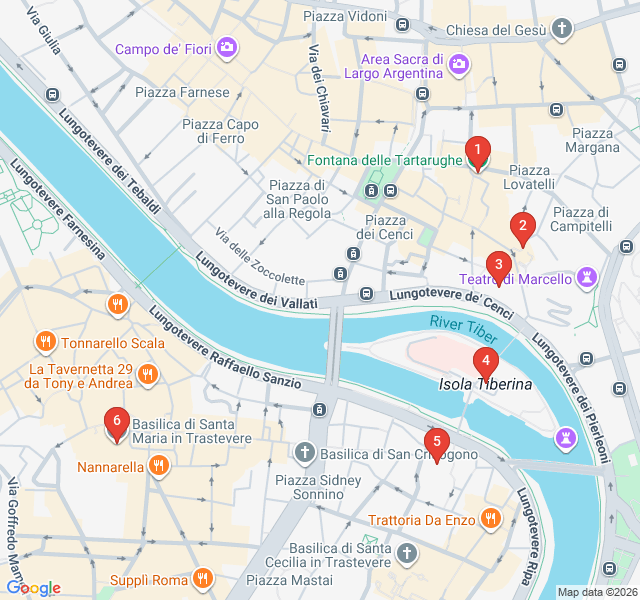
Numbers indicate the order of stops on the tour.
Welcome to Piazza Mattei, home to one of Rome’s most charming Renaissance landmarks: the Fontana delle Tartarughe, or Tortoise Fountain. Designed by Giacomo della Porta in the late 16th century, it features four bronze youths holding up dolphins. Legend says the powerful Duke Mattei had it built in a single night to impress his future father-in-law, though history suggests a more gradual construction. The bronze tortoises climbing into the upper basin were actually added nearly a century later, often attributed to the great Gian Lorenzo Bernini. This square was the private domain of the Mattei family, who were so influential they held the keys to the nearby Ghetto gates.
Standing before the Portico d'Ottavia, you are looking at a magnificent collage of Roman history. Originally built by Augustus in the 1st century BC and dedicated to his sister Octavia, this massive structure once housed libraries and temples. Over the centuries, it was repurposed as a medieval fish market, which operated here until the late 19th century. Notice the Christian church, Sant'Angelo in Pescheria, built right into the ancient ruins. This site marks the entrance to the historic Jewish Ghetto, established in 1555. The ruins serve as a somber reminder of the community's long history, including the 1943 deportation during World War II.
The Tempio Maggiore, or Great Synagogue, is an unmistakable landmark on the Roman skyline. Completed in 1904, shortly after the walls of the Ghetto were finally torn down, its architecture is intentionally distinct from the city’s many Catholic basilicas. The unique square aluminum dome and Babylonian-inspired motifs were chosen to celebrate the Jewish community's newfound freedom and citizenship. It stands on the site of the former Ghetto, which for over 300 years was a cramped, walled-in district subject to the flooding of the Tiber. Today, it remains the spiritual and cultural heart of Roman Jews, whose presence in the city dates back to the 2nd century BC.
As you cross the Ponte Fabricio—the oldest original bridge in Rome, dating to 62 BC—you reach Tiber Island. This small, boat-shaped island has been a place of healing since the 3rd century BC, when a temple to Aesculapius, the god of medicine, was established here. Legend says the island formed around the discarded grain of the hated tyrant Tarquin the Proud. Today, the tradition of healing continues with the Fatebenefratelli Hospital. The island offers a peaceful escape from the city bustle, with its stone embankments and the rushing water of the Tiber. It serves as the physical and metaphorical bridge between the Ghetto and Trastevere.
Welcome to the quieter side of Trastevere. Piazza in Piscinula feels like a step back into the Middle Ages. The square is named after the ancient 'piscinulae' or baths that once existed here. Look for the Casa dei Mattei, a group of 14th-century houses that belonged to the same noble family you encountered at the Tortoise Fountain. This area escaped much of the heavy-handed 19th-century urban renewal that changed other parts of Rome. Take a moment to appreciate the small bell tower of San Benedetto in Piscinula; it is said to be the smallest Romanesque bell tower in the city, housing a bell cast in 1069.
The walk concludes at the Basilica of Santa Maria in Trastevere, one of the oldest churches in Rome. While the current structure dates largely to the 1140s, a house-church was established on this spot as early as the 3rd century. The facade is famous for its 12th-century golden mosaics depicting the Virgin Mary. Inside, you'll find a forest of ancient Roman columns salvaged from the Baths of Caracalla. The shimmering apse mosaics by Pietro Cavallini are a masterpiece of medieval art. The piazza outside, with its central fountain, is the social heart of the neighborhood—a perfect place to sit and reflect on your journey through Roman history.
Start Free on iPhone
Explore “Cross the Tiber: Ghetto to Trastevere” with your very own Private Tour Guide with Zigway. Start free on iPhone, skip the large group and the fixed routes, and hear the city come alive as you go.
Your Private Tour Guide
Don't miss the good stuff
Explore Freely
 Easy
EasyRome, Italy
Explore Rome’s industrial heart on this self-guided walk featuring massive murals, the 'Iron Colosseum,' and unique industrial archaeology.
 Easy
EasyRome, Italy
Explore Rome’s whimsical Fairytale District. A self-guided walk through Art Nouveau palaces, mythical fountains, and the magical Coppedè architecture.
 Moderate
Rome, Italy
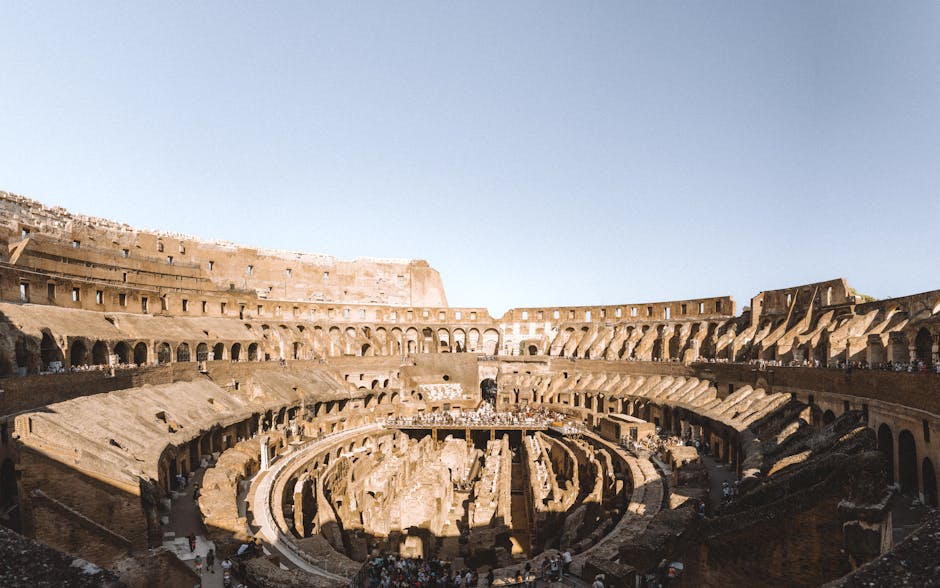
Uncover Rome's hidden history on this self-guided walk through ancient gladiator pits, subterranean temples, and buried Roman houses.
 Challenging
Rome, Italy
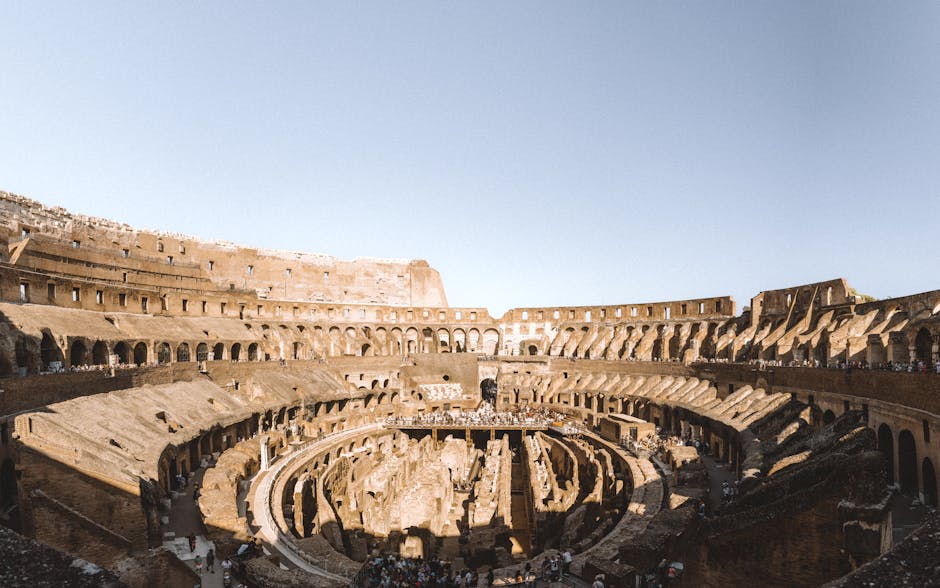
Walk the 'Queen of Roads.' Explore ancient catacombs, imperial villas, and historic basalt stones on this scenic self-guided Roman adventure.
 Moderate
Vienna, Austria
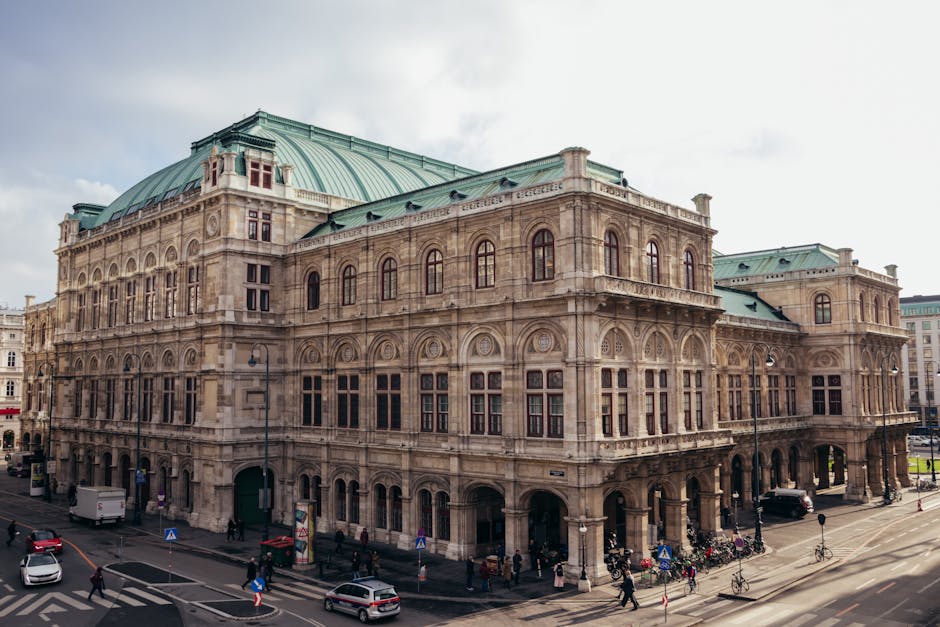
Discover the noir world of The Third Man and Cold War Vienna on this atmospheric self-guided audio walk through the historic Innere Stadt.
 Moderate
Gdansk, Poland
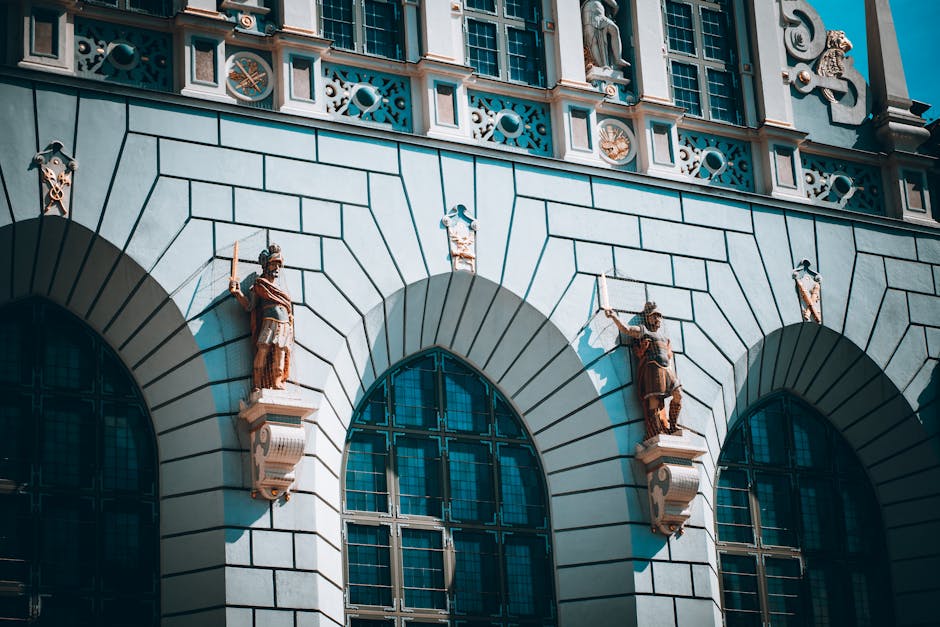
Discover Zaspa, a massive open-air gallery where grey housing blocks are transformed by over 60 monumental murals. Explore at your own pace.
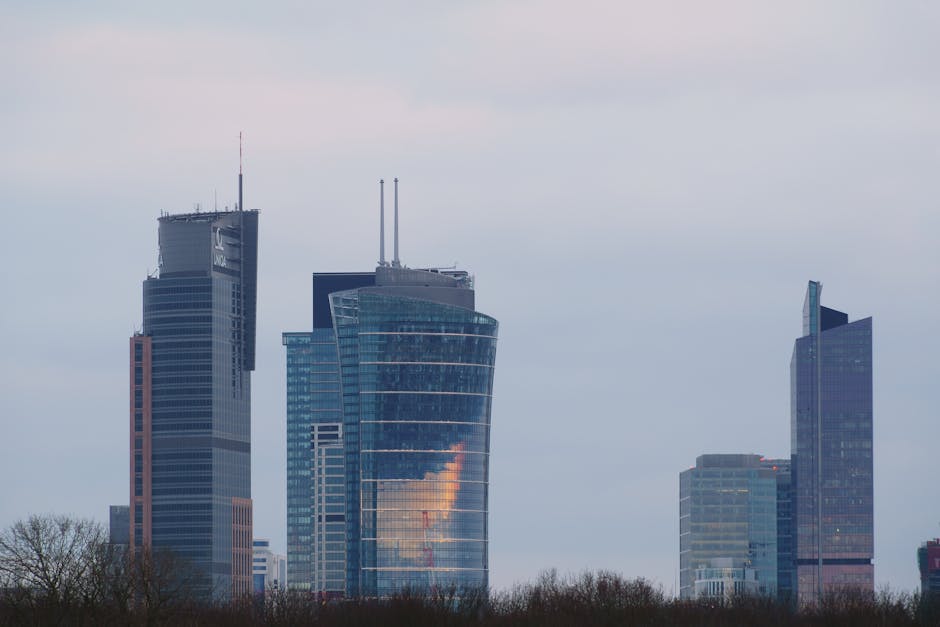 Easy
EasyWarsaw, Poland
Discover the hidden courtyards and grand pre-war architecture of Warsaw's most atmospheric neighborhood on this self-guided stroll.
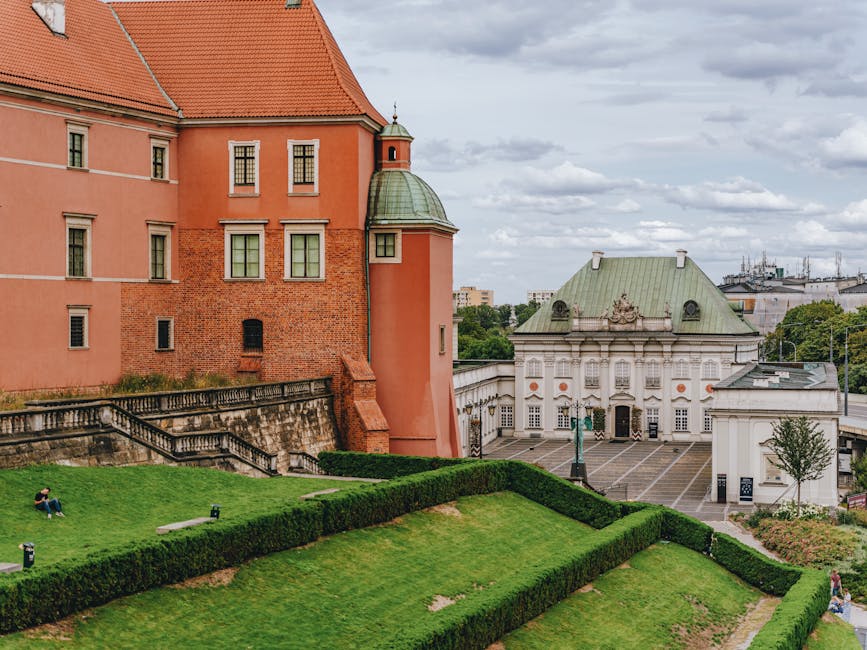 Moderate
Warsaw, Poland
Explore the resilient spirit of Warsaw's Muranów district on this self-guided walk through the history and landmarks of the former Jewish Ghetto.
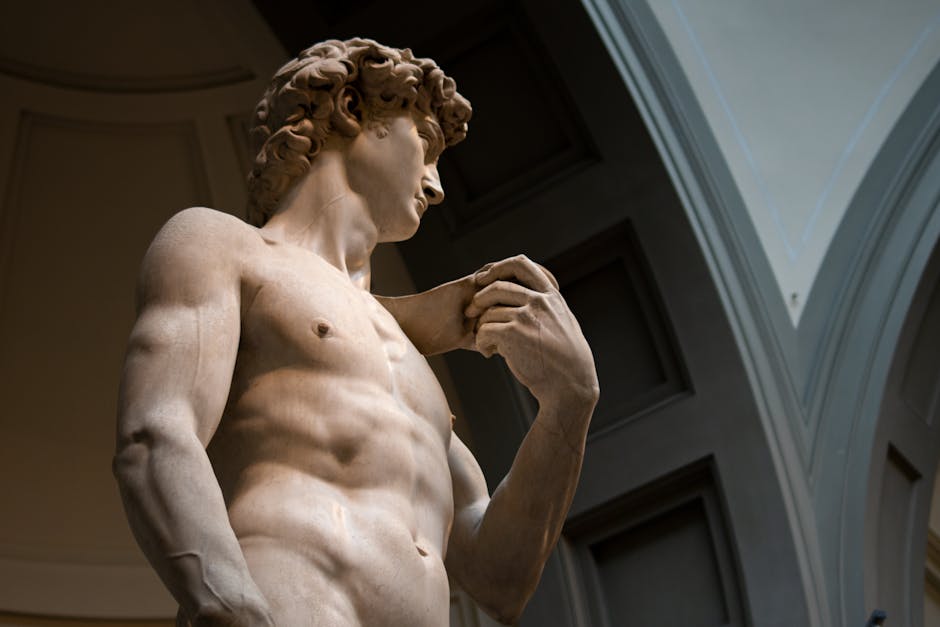 Easy
EasyFlorence, Italy
Discover the intersection of Renaissance architecture and modern luxury on this self-guided walk through Florence’s high-fashion districts.
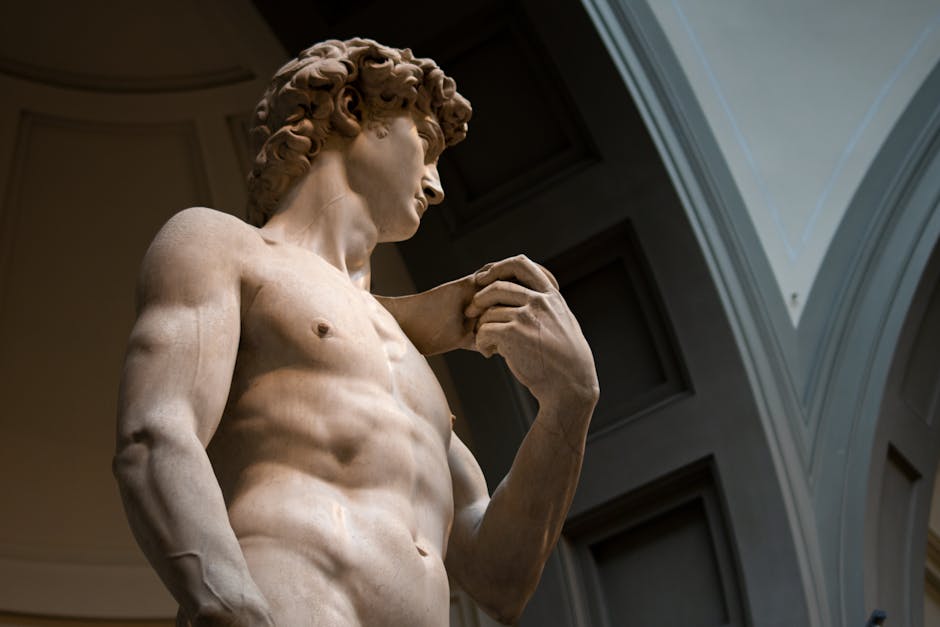 Easy
EasyFlorence, Italy
Explore the medieval streets of Florence through the eyes of Dante Alighieri on this self-guided literary and historical walking route.
 Easy
EasyFlorence, Italy
Experience the magic of Florence at sunset. Discover iconic bridges and breathtaking river views on this romantic self-guided audio walk.
 Easy
EasyFlorence, Italy
Discover the 'buchette del vino'—Florence's unique Renaissance wine windows—on this self-guided walk through the city's historic streets.