Self-guided audio tour in Beijing
Start Free on iPhone
Start free on iPhone to unlock this self-guided walking tour in Beijing. Hear all the stories that make it amazing, walk at your own pace, and begin whenever you want.
Your Private Tour Guide
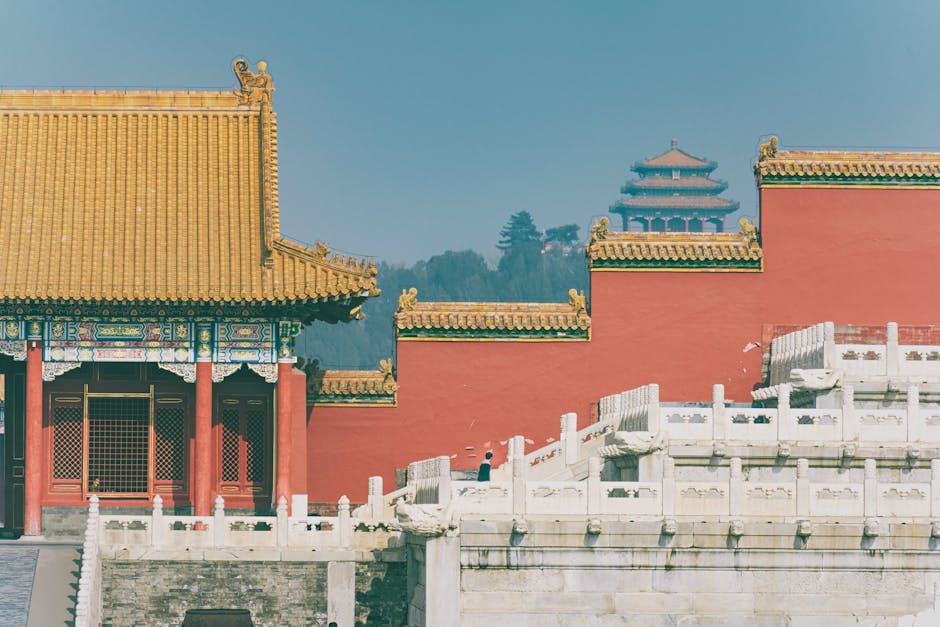
Rising above the geometric precision of the Forbidden City, this self-guided walk through Jingshan and Beihai Parks offers a breathtaking perspective on Beijing’s imperial legacy. For centuries, these grounds were the private sanctuaries of emperors, designed to harmonize the rugged power of man-made mountains with the serene fluidity of expansive lakes. This walking route begins at the summit of Jingshan, an artificial hill created from the soil excavated to build the palace moats. From the Wanchun Pavilion, you can capture the most iconic photography in the city: a perfect, symmetrical bird's-eye view of the golden roofs of the Forbidden City stretching toward the horizon. It is a moment where the scale of Chinese dynastic ambition becomes truly tangible. After descending through the cypress groves, the journey transitions into the tranquil atmosphere of Beihai Park. As one of the oldest and best-preserved imperial gardens in China, Beihai serves as a living museum of traditional landscape design. You will encounter the striking White Dagoba, a Tibetan-style stupa that dominates the skyline of Qionghua Island, symbolizing the spiritual connection between the Qing court and the Himalayan regions. The route continues along the lakeside, where the willow-lined paths offer a peaceful escape from the modern city’s bustle. The climax of this neighborhood stroll is the Nine Dragon Screen, a masterpiece of glazed tilework that remains one of the most intricate examples of Ming Dynasty artistry in existence. Unlike the screen found inside the Forbidden City, this version is double-sided, featuring 635 dragons if you count the smaller ornaments. This walking tour Beijing experience is perfect for those who want to blend history with natural beauty, providing ample opportunities for photography and quiet reflection. By exploring independently, you can linger at the pavilions or watch local residents practice calligraphy in the park, gaining a deeper insight into how Beijing’s royal past integrates with its present-day rhythm.
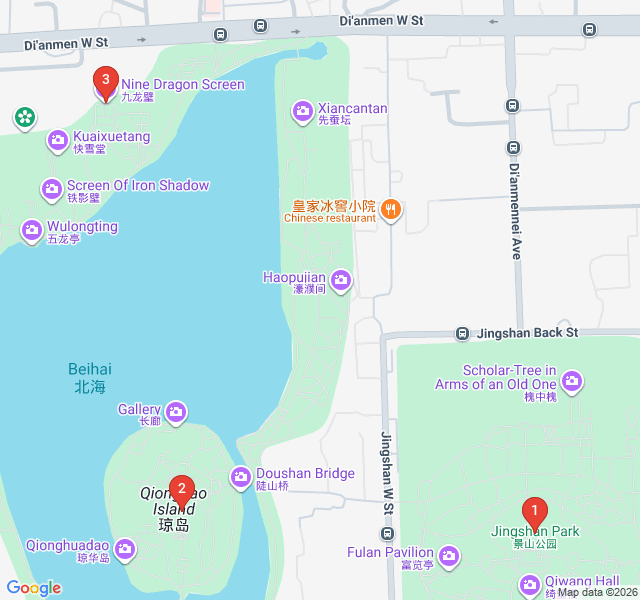
Numbers indicate the order of stops on the tour.
Standing at the summit of Jingshan Park, you are at the highest point of old Beijing. This hill is entirely man-made, constructed from the earth moved to create the Forbidden City’s moat during the Ming Dynasty. Looking south, the symmetry of the imperial palace is laid bare before you, a masterpiece of urban planning based on Feng Shui principles. To the north, you can see the Drum and Bell Towers. Beyond the views, Jingshan holds a somber place in history; near the eastern base of the hill stands a scholar tree where the last Ming Emperor, Chongzhen, is said to have ended his life as rebel forces entered the city in 1644. Today, the park is a vibrant community hub where you can hear local choirs and see traditional dancers among the ancient trees.
Enter Beihai Park, a royal retreat with over a millennium of history. This park was the center of the city during the Yuan Dynasty, long before the Forbidden City was even built. The centerpiece is Qionghua Island, crowned by the White Dagoba. Built in 1651 to honor a visit by the Dalai Lama, this stupa is a brilliant example of Tibetan Buddhist influence on Qing architecture. As you explore the island’s winding paths and rockries, you are walking through a landscape designed to represent the Buddhist concept of the universe. The surrounding lake, often filled with lotus flowers in summer, was once the private playground for the imperial family, who enjoyed boat rides and ice skating here depending on the season.
Located on the north shore of Beihai Lake, the Nine Dragon Screen is one of only three such screens in China, and arguably the most beautiful. Built in 1756, it is over 25 meters long and made of 424 specially fired glazed tiles. The nine massive dragons are depicted chasing flaming pearls amidst crashing waves and clouds, symbolizing the emperor's power over the elements. Take a close look at the craftsmanship; the colors remain incredibly vivid after two and a half centuries. Unlike most spirit screens that protect the entrance to a temple or palace, this one is double-sided, meaning you can walk around it to see another nine dragons on the reverse, each with distinct expressions and poses.
Start Free on iPhone
Explore “Imperial Horizons: Jingshan and Beihai” with your very own Private Tour Guide with Zigway. Start free on iPhone, skip the large group and the fixed routes, and hear the city come alive as you go.
Your Private Tour Guide
Don't miss the good stuff
Explore Freely
 Easy
EasyBeijing, China
Explore Beijing's premier art district on this self-guided walk through the industrial-chic 798 Art Zone and the massive tanks of 751 D・PARK.
 Moderate
Beijing, China
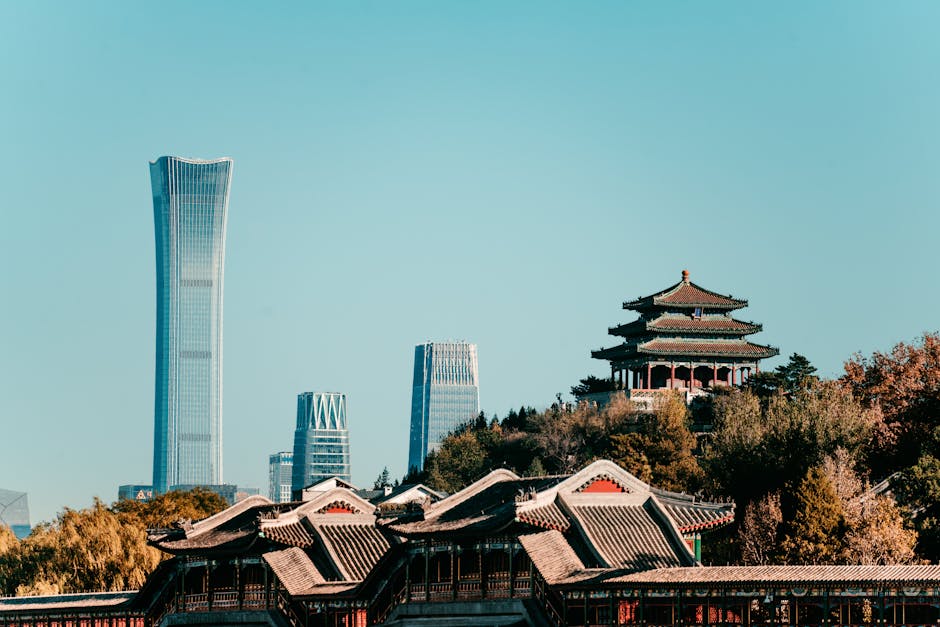
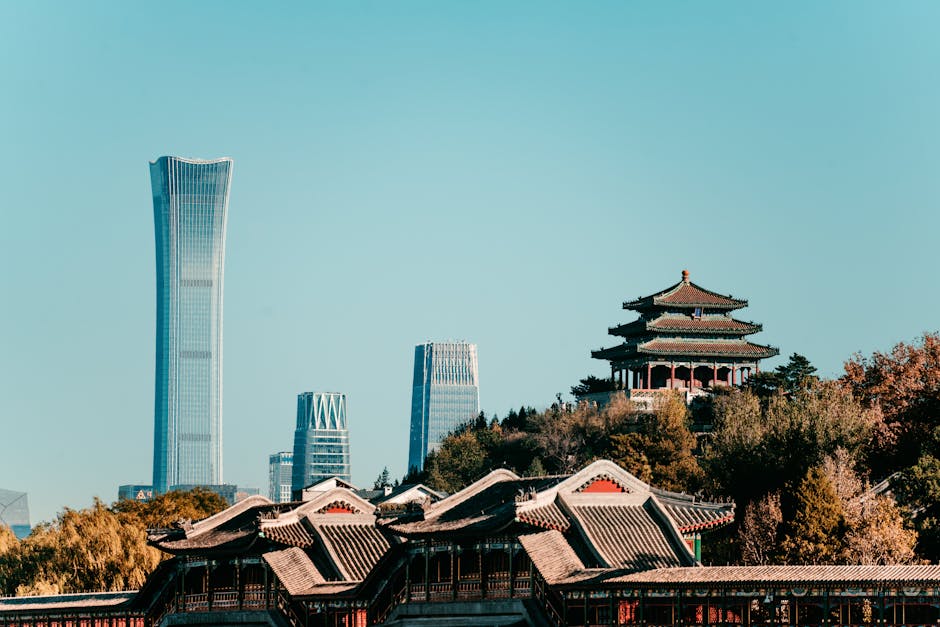
Explore the majestic red walls, imperial moats, and hilltop vistas of Beijing's Forbidden City on this self-guided architectural walking route.
 Moderate
Beijing, China
Explore the spiritual heart of Beijing on this self-guided walk through the Temple of Heaven's iconic altars, ancient pines, and vibrant park life.
 Easy
EasyBeijing, China
A culinary and cultural self-guided walk through Beijing's historic Dongsi neighborhood, featuring ancient mosques, hutongs, and iconic local eats.
 Moderate
Nairobi, Kenya
Discover Nairobi's lush side on this self-guided walk through botanical gardens, historic memorials, and vibrant local markets.
 Moderate
Gdansk, Poland
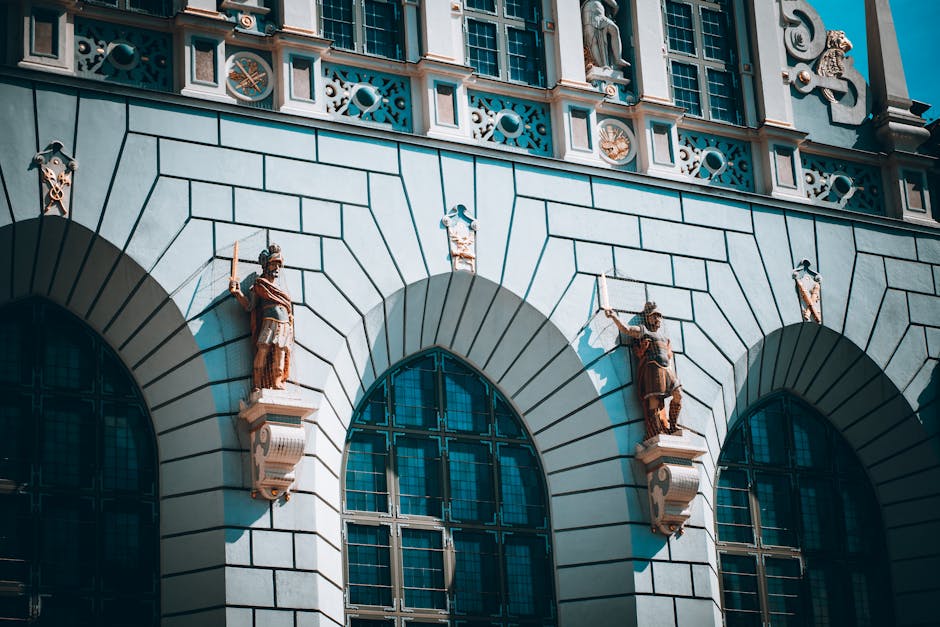
Discover the origins of WWII in Gdansk on this self-guided walk through heroic last stands, massive museums, and strategic hilltop fortifications.
 Easy
EasyNairobi, Kenya
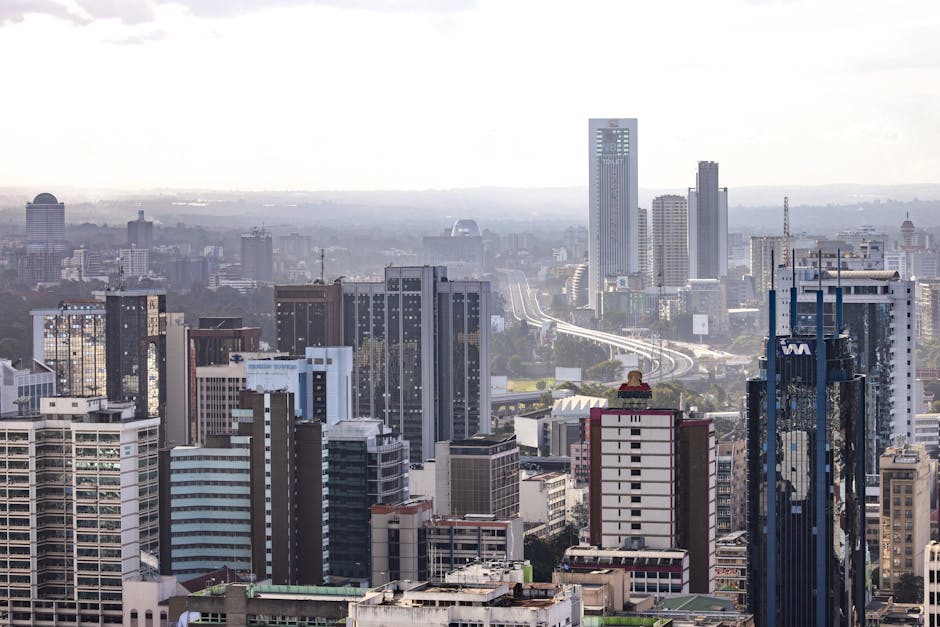
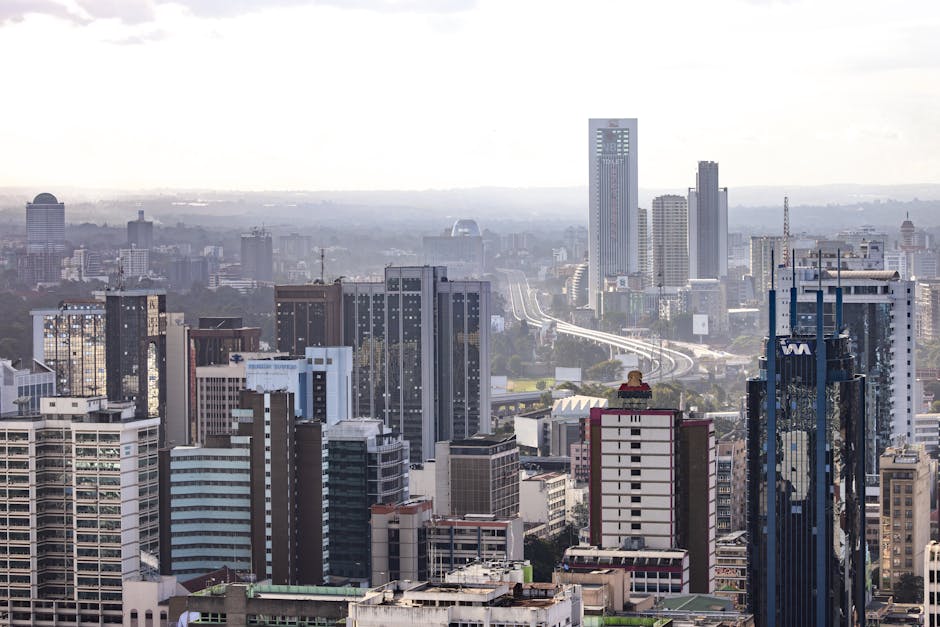
Discover Nairobi's iconic skyline on this self-guided architecture walk through the CBD’s most famous modernist and Brutalist landmarks.
 Moderate
Vienna, Austria
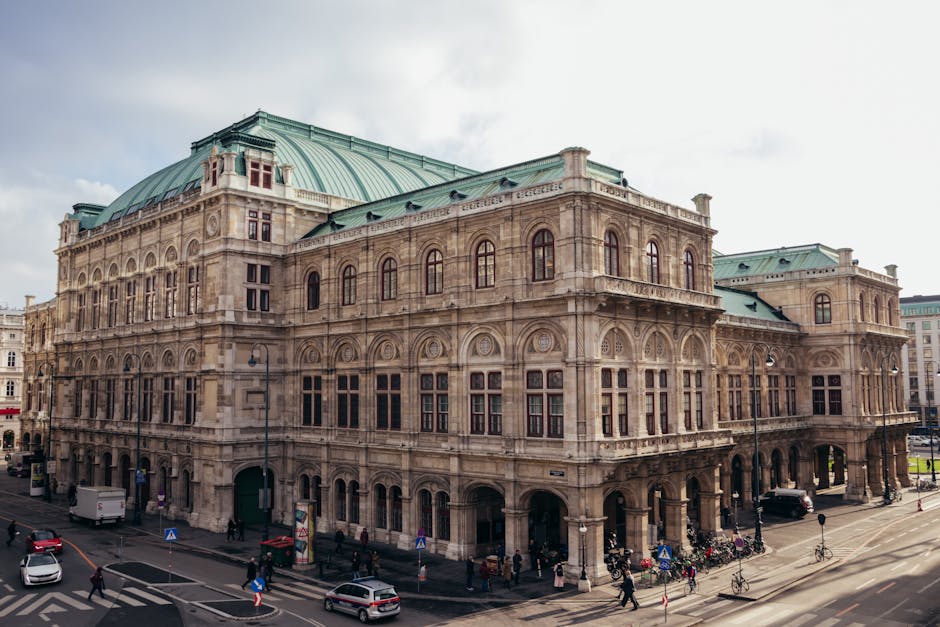
Discover the noir world of The Third Man and Cold War Vienna on this atmospheric self-guided audio walk through the historic Innere Stadt.
 Moderate
Shanghai, China
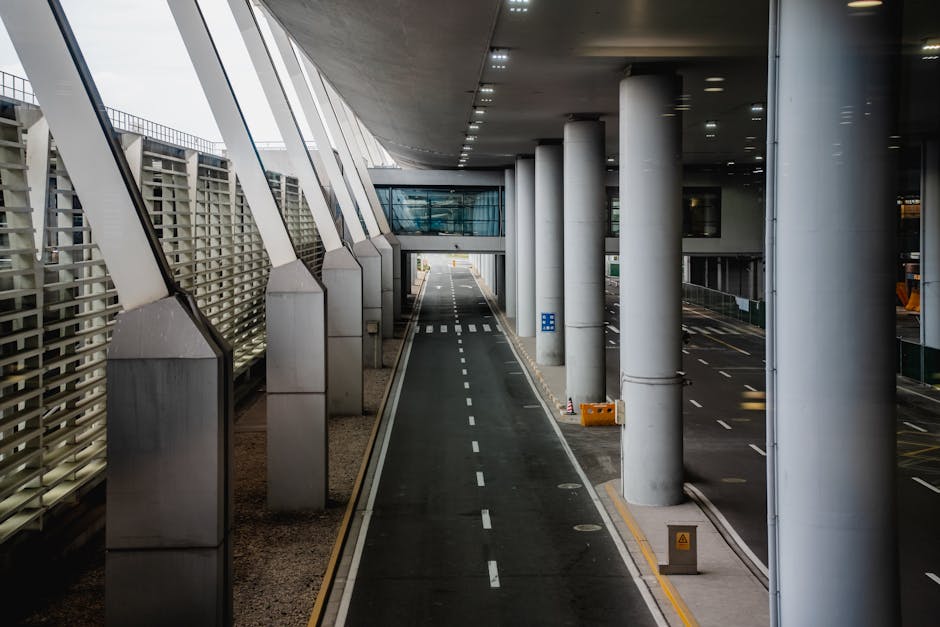
Discover the 'Golden Mile' on this self-guided walking route through Shanghai's historic department stores and Art Deco landmarks.
 Easy
EasyShanghai, China
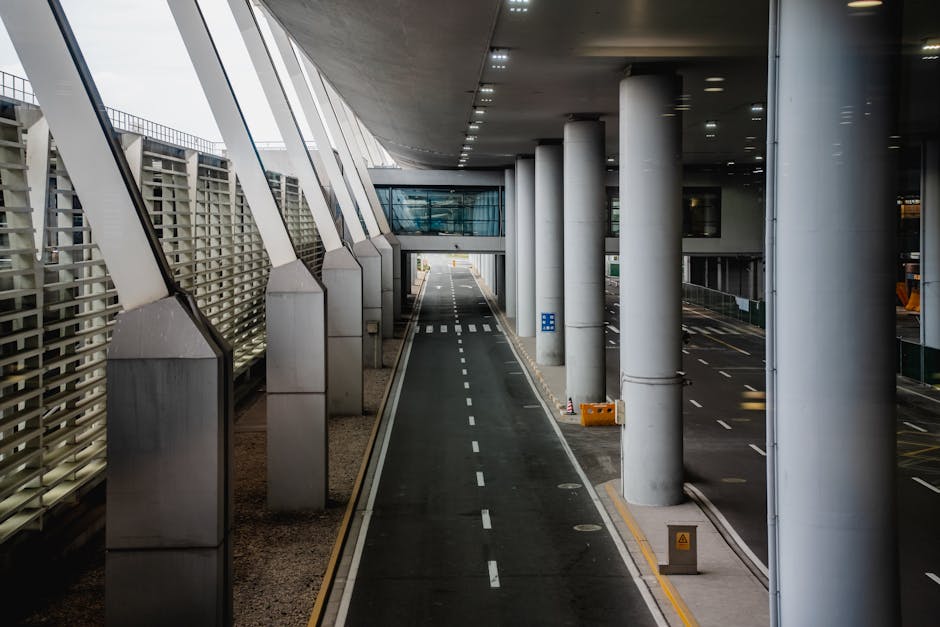
Explore Art Deco architecture, leafy boulevards, and hidden villas on this self-guided walk through the French Concession.
 Easy
EasyShanghai, China
Explore the intellectual heart of 1930s Shanghai on this self-guided stroll through Hongkou's historic literary landmarks and hidden alleys.
 Easy
EasyShanghai, China
Discover the 'Wall Street of the Orient' on this self-guided walk through Shanghai's legendary waterfront and its Art Deco architectural treasures.