Self-guided audio tour in Cesky Krumlov
Start Free on iPhone
Start free on iPhone to unlock this self-guided walking tour in Cesky Krumlov. Hear all the stories that make it amazing, walk at your own pace, and begin whenever you want.
Your Private Tour Guide
Cesky Krumlov is a town of shadows and light, where the medieval street plan remains almost exactly as it was five centuries ago. While most visitors gravitate toward the massive castle complex, the true magic of this UNESCO World Heritage site is found within its labyrinthine inner streets and hidden courtyards. This self-guided walk invites you to step away from the souvenir shops and delve into the quiet corners of the Latrán and Inner City districts. This walking tour Cesky Krumlov route offers a deeper look at the spiritual and industrial history that shaped the region, from the scholarly halls of the former Jesuit College to the brewing vats of the town’s historic breweries. You will discover how the Rosenberg and Schwarzenberg families transformed this bend in the Vltava River into a Renaissance jewel. Along the way, this neighborhood stroll highlights the contrast between the town's grand ecclesiastical architecture and its gritty industrial roots. You will pass through the only surviving medieval gate, explore the serene cloisters of a double monastery, and see how 19th-century photography captured a world on the brink of change. While a guided tour Cesky Krumlov might show you the main square, this independent route takes you further to the Stations of the Cross on the hill and the entrance to the town's historic graphite mines. If you are looking for a walking tour Cesky Krumlov that focuses on the authentic, lived-in layers of the city, this path is for you. Explore independently as you navigate narrow passages known as 'fortnas' that once served as vital links between the fortified streets and the river. Whether you are admiring the sgraffito facades or the quiet flow of the Vltava, this self-guided adventure ensures you see the hidden gems that many travelers miss. Prepare to see Cesky Krumlov not just as a museum piece, but as a complex tapestry of art, faith, and industry.
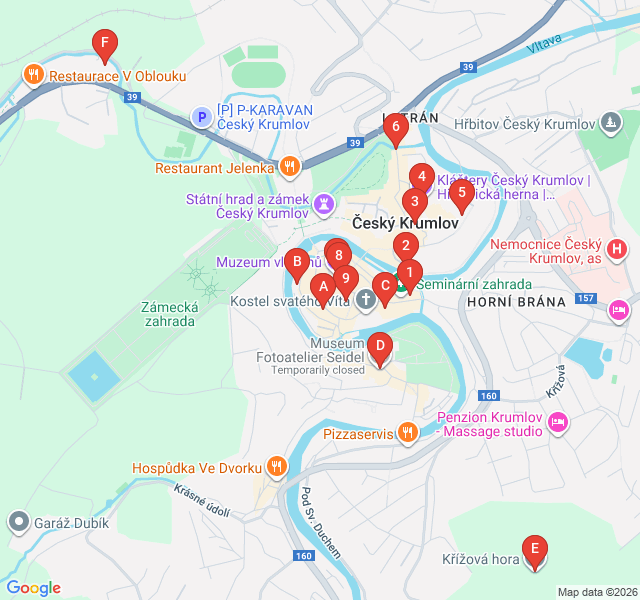
Numbers indicate the order of stops on the tour.
Begin your self-guided adventure at the former Jesuit Seminary, now the Regional Museum. This building, dating back to the late 17th century, was once the center of learning in the region. Before heading inside, walk to the adjacent terrace. This viewpoint offers one of the most iconic vistas of the castle and the river, providing a perfect overview of the town's layout. The museum itself houses a remarkable ceramic model of the town as it appeared in the 19th century, offering a fascinating 'before' and 'after' perspective as you prepare to explore the modern-day streets.
As you walk down from the museum, you will encounter 'Ta Fortna'. In medieval terminology, a fortna was a narrow passage or 'postern' gate that connected the main streets within the walls to the riverbank. These narrow gaps were essential for water access and waste management. Today, they serve as atmospheric shortcuts. Notice the thickness of the surrounding walls and the uneven cobblestones that have been polished by centuries of footsteps. It is a reminder of the defensive mindset required when the town was a vital stronghold for the Rosenberg family.
This street leads you into the heart of the Latrán district, the historic neighborhood that grew up around the castle's service entrance. The name 'Klášterní' refers to the proximity of the great monastery complex. As you walk, look up at the facades; many of these buildings started as humble Gothic structures and were later 'dressed up' with Renaissance sgraffito or Baroque flourishes. The street retains a quiet, residential feel that contrasts with the busier commercial lanes nearby, offering a glimpse into the everyday life of Krumlov residents through the ages.
Step into the double monastery of the Minorites and the Poor Clares, founded in the mid-14th century. This is one of the most tranquil spots in town. The complex features a unique layout where two separate orders shared a single church. Explore the courtyards to see the mix of Gothic and Baroque architecture. The monasteries were centers of both prayer and production, with gardens that provided medicinal herbs and food. It is a space designed for reflection, far removed from the bustle of the castle across the river.
Continue to Port 1560, a beautifully restored industrial site that celebrates the town's brewing heritage. This brewery complex dates back centuries but has recently been transformed into a cultural hub. It represents the 'modern' side of Cesky Krumlov's history, where 16th-century foundations met 19th-century technology. The architecture here is more functional and robust than the delicate townhouses of the center. It is a testament to the town's resilience and its ability to adapt historic spaces for contemporary art, craft, and community gatherings.
You are standing before the only survivor of the town's nine original medieval gates. Built between 1598 and 1602 by the Italian architect Domenico Benedetto Cometta, the Budějovická Gate served as the main entrance from the north. Notice the two distinct faces: the inner side is decorated with colorful Renaissance sgraffito, while the outer side presents a more formidable, defensive appearance. Passing through this gate was once a highly regulated event, marking the transition from the dangerous open road to the safety of the town's jurisdiction.
Located in a historic building on Panská street, this museum is dedicated to a stone that literally came from the stars. Moldavites are green glass-like tektites formed by a meteorite impact in southern Germany nearly 15 million years ago, which rained down on the Czech lands. The museum explores the science and folklore behind these unique gems. The building itself is a classic example of how the town’s narrow plots were used to create deep, multi-story residences for the wealthy burghers of the Renaissance era.
Panská street, or 'Lord’s Street', was historically one of the most prestigious addresses in the Inner City. As you stroll, pay attention to the architectural details: the stone portals, the decorative window surrounds, and the vaulted ceilings visible through some of the open doorways. This street connects the main square with the quieter residential quarters. It captures the essence of the town's golden age under the Rosenbergs, when merchants and officials vied to build the most impressive homes within the limited space of the river's bend.
In the center of the Town Square stands the Marian Plague Column and the stone fountain. Erected in the early 18th century, the column is a monument of gratitude for the end of a plague epidemic. The statues represent the patron saints of the town and protectors against disease. The fountain provided the townspeople with a centralized water source for centuries. This square has always been the civic heart of Krumlov, where markets were held and justice was administered, all under the watchful eyes of the saints atop the column.
The Wax Museum is housed in a magnificent Renaissance building that once served as the town hall and later as a major inn. While the museum inside features figures from Czech history, the building itself is a masterpiece of sgraffito—a technique where layers of plaster are scratched away to create patterns. Look for the 'envelope' style patterns on the facade, a hallmark of the Bohemian Renaissance. This site demonstrates how even 'tourist' attractions in Krumlov are often wrapped in layers of genuine, centuries-old architectural history.
This stop highlights the adaptive reuse of Krumlov's historic spaces. Located in a building with medieval foundations, this venue shows how the town’s nightlife has found a home within ancient stone walls. The transition from a quiet historic street to a vibrant modern lounge is a key part of the town's current identity. It serves as a reminder that Cesky Krumlov is not just a museum, but a living city where people still gather to socialize, much as they did in the taverns of the 16th century.
The Prelatura was the residence of the high-ranking clergy and the administrative heart of the parish. This massive complex hides one of the town's most beautiful secrets: a courtyard with a Renaissance loggia and interiors decorated with rare Rococo frescoes. It represents the power and wealth of the Catholic Church in Krumlov history. The quiet dignity of this building, tucked away from the main thoroughfare, offers a sense of the intellectual and spiritual life that once dominated the town's upper social strata.
This is a true hidden gem. The Seidel studio is a time capsule from the early 20th century, preserved exactly as it was when the Seidel family lived and worked here. It is one of the few fully preserved Art Nouveau photo studios in Europe. The collection of glass plate negatives, cameras, and original furnishings tells the story of the border region between Bohemia and Austria. It captures the faces of the people who lived here before the upheavals of the 20th century, providing a hauntingly beautiful connection to the town's recent past.
Leaving the town center, follow the path leading up toward Křížová hora (Mountain of the Cross). This pilgrimage route is lined with small chapels representing the Stations of the Cross. As you climb, the town begins to unfold below you. This path was traditionally walked by locals during religious festivals, seeking spiritual solace. Today, it offers one of the most peaceful walks in the area, leading away from the crowds and toward a hilltop chapel that provides a sweeping view of the entire Krumlov basin and the surrounding Blanský Forest.
Your self-guided walk concludes at the Graphite Mine on the edge of town. For centuries, mining was as important to the region as brewing or the castle. This mine operated well into the 20th century. While the town center is all about aesthetics and nobility, this site is about the hard work and raw materials that fueled the local economy. It serves as a grounded, industrial bookend to your journey through Krumlov's history, reminding us that beneath the fairy-tale facades lies a foundation of solid rock and centuries of human labor.
Start Free on iPhone
Explore “Secret Courtyards and Hidden Passages” with your very own Private Tour Guide with Zigway. Start free on iPhone, skip the large group and the fixed routes, and hear the city come alive as you go.
Your Private Tour Guide
Don't miss the good stuff
Explore Freely
 Easy
EasyCesky Krumlov, Czech Republic
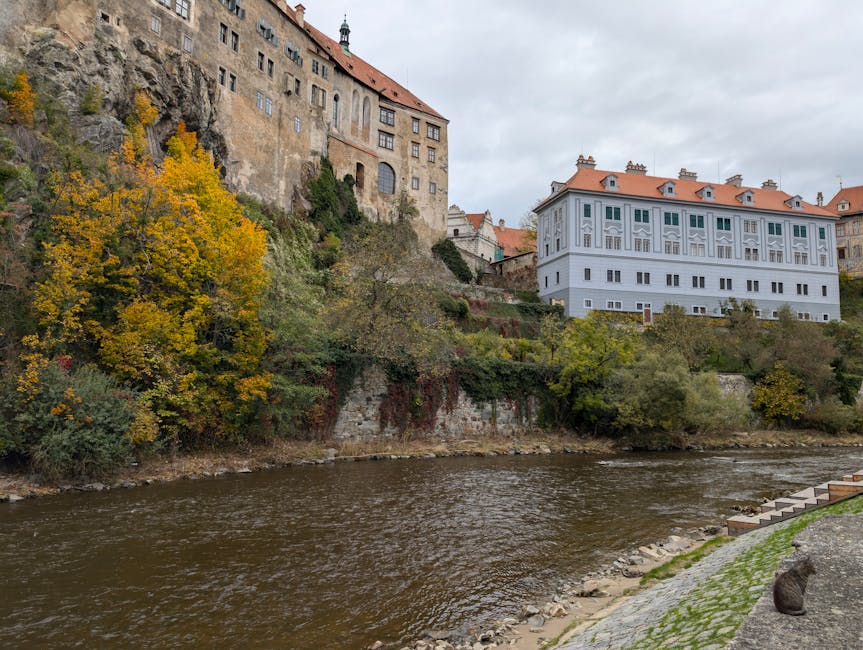
Discover the flavors of South Bohemia on this self-guided walk through the historic taverns, breweries, and riverside cafes of Cesky Krumlov.
 Moderate
Cesky Krumlov, Czech Republic
Escape the crowds and discover the artistic soul, historic villas, and hidden stories of Cesky Krumlov's most authentic neighborhood, Plešivec.
 Easy
EasyCesky Krumlov, Czech Republic
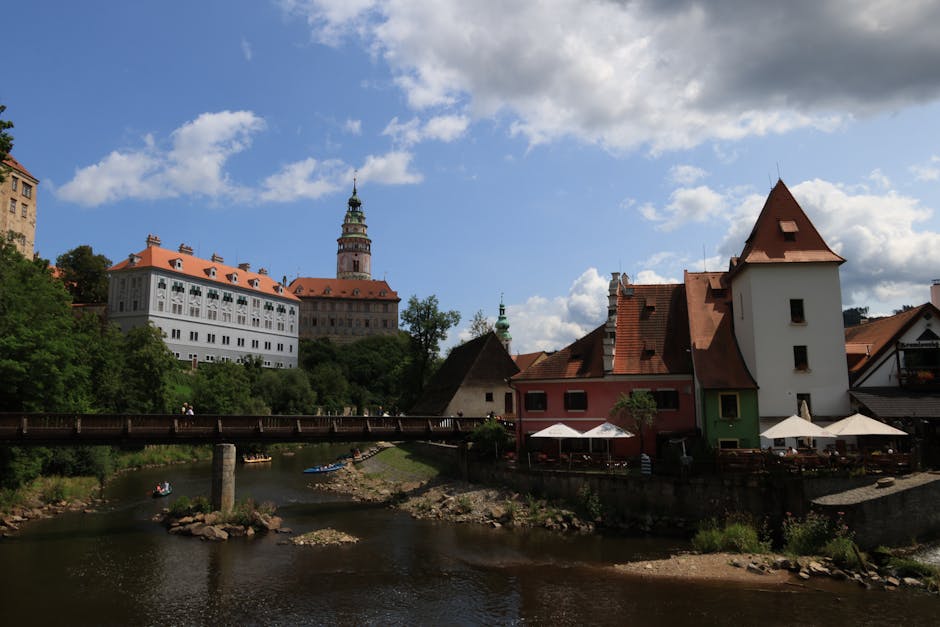
Discover the haunting legends and eerie history of Cesky Krumlov on this atmospheric self-guided audio walk through the moonlit Inner City.
 Easy
EasyCesky Krumlov, Czech Republic
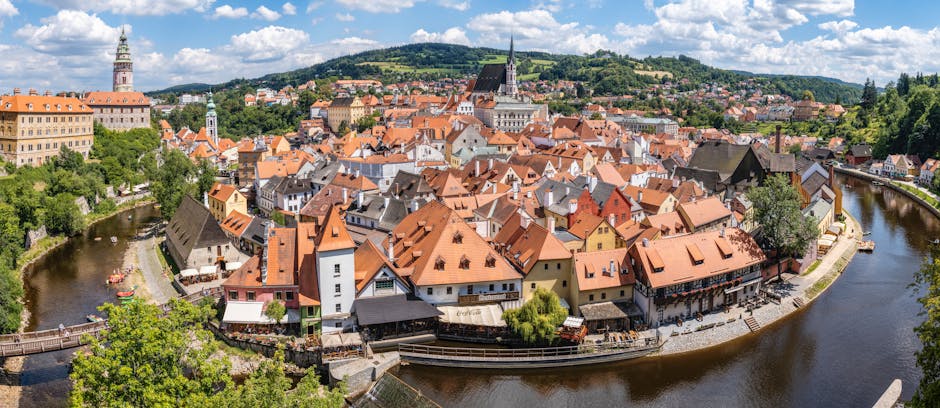
Explore the romantic Vltava riverbanks, hidden medieval alleys, and iconic bridges of Cesky Krumlov on this scenic self-guided photography walk.
 Easy
EasyWarsaw, Poland
Discover the hidden courtyards and grand pre-war architecture of Warsaw's most atmospheric neighborhood on this self-guided stroll.
 Easy
EasyGothenburg, Sweden
Explore Gothenburg's elegant academic district, featuring grand 19th-century stone architecture and the iconic cultural hub of Götaplatsen.
 Easy
EasyKrakow, Poland
Explore the prestigious Jagiellonian University district, featuring Neo-Gothic architecture, Baroque churches, and Krakow's hidden scholarly gems.
 Easy
EasyGdansk, Poland
Discover the 'Baltic Gold' on this self-guided walk through Gdansk's historic mills, massive cathedrals, and the magical Mariacka Street.
 Easy
EasyPrague, Czech Republic
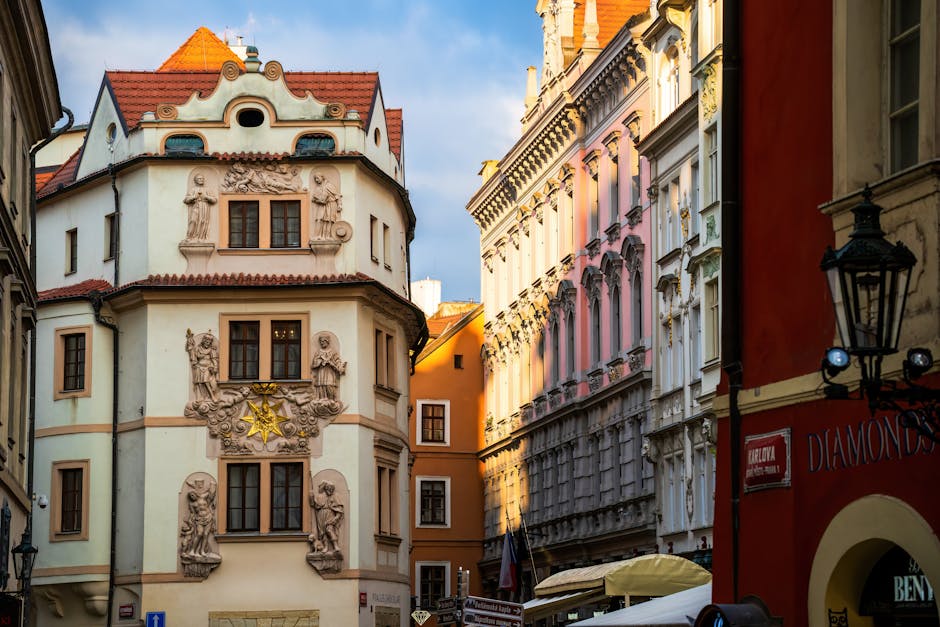
Explore the world's only Cubist architecture on this self-guided walking route through Prague's New Town and Old Town.
 Easy
EasyPrague, Czech Republic
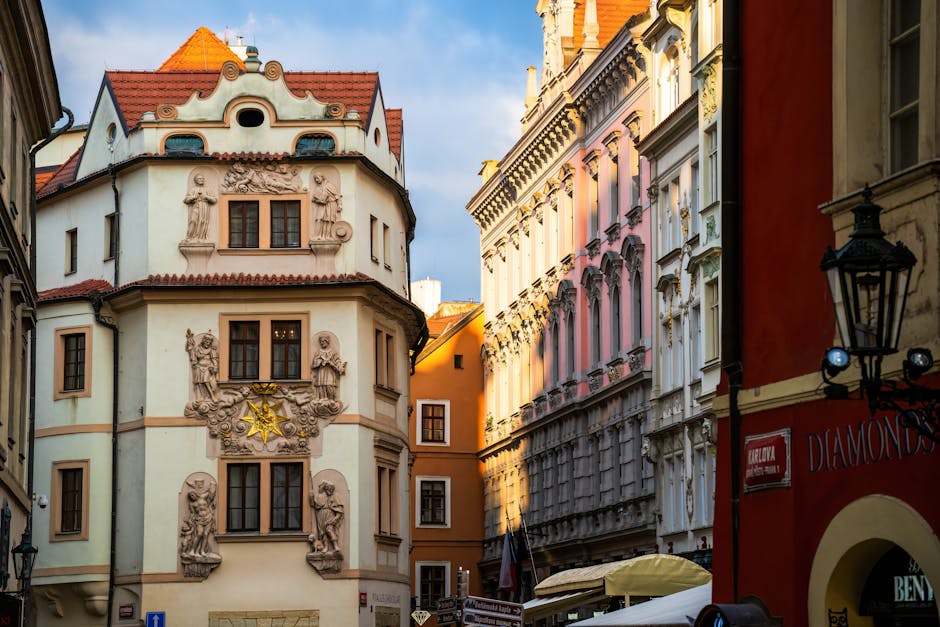
Discover Prague's Golden Age on this self-guided walk through stunning Art Nouveau landmarks, from the Municipal House to Mucha's masterpieces.
 Challenging
Prague, Czech Republic
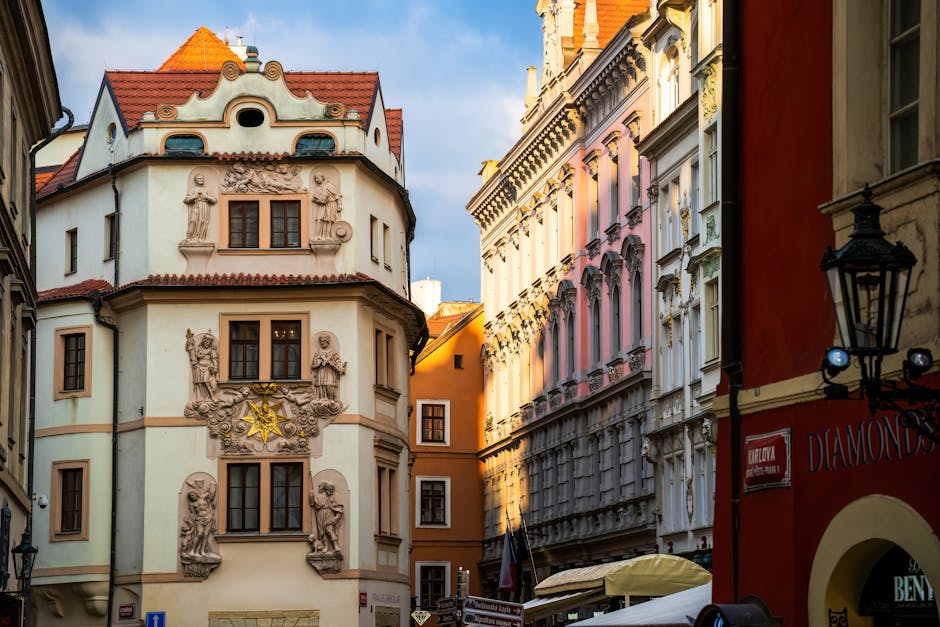
Discover Prague’s royal district and capture stunning panoramic vistas on this self-guided walking route through Hradčany and the Castle complex.
 Easy
EasyPrague, Czech Republic
Discover the history of Pilsner and Prague's legendary pub culture on this self-guided audio walk through historic breweries and hidden local haunts.