Self-guided audio tour in Geneva
Start Free on iPhone
Start free on iPhone to unlock this self-guided walking tour in Geneva. Hear all the stories that make it amazing, walk at your own pace, and begin whenever you want.
Your Private Tour Guide
Geneva is often celebrated for its medieval old town and its role as a global diplomatic hub, but beyond the stone facades lies a radical world of experimental design. This self-guided walk invites you to explore the city's evolution through the lens of concrete, glass, and steel. From the whimsical, organic curves of residential complexes to the sharp, transparent lines of international institutions, this route reveals a Geneva that is as much about artistic rebellion as it is about clockwork precision. You will discover how architects have pushed the boundaries of materials to create functional art that challenges our perception of urban living. The journey begins near the bustling transport hub of Cornavin, where the city’s 19th-century expansion met the high-speed demands of the 20th century. As you navigate the neighborhood of Les Grottes, the scenery shifts dramatically from traditional blocks to the 'Smurfs Buildings'—a riot of colors and non-linear shapes that feel like they were plucked from a storybook. This area serves as a testament to community-driven architecture and the rejection of the 'gray box' aesthetic. This walking route Geneva offers provides a stark contrast between these playful forms and the sleek, high-tech glass of the international district, exemplified by the World Intellectual Property Organization (WIPO) building. Highlighting the route is a visit to a UNESCO World Heritage site: the Immeuble Clarté. Designed by the legendary Le Corbusier, this 'glass house' was a precursor to modern apartment living, showcasing a revolutionary use of prefabricated steel and glass. Whether you are an architecture enthusiast or a curious traveler, this neighborhood stroll offers a unique perspective on Geneva’s identity. By the time you reach the shores of Lake Geneva to see repurposed industrial structures, you will have experienced a diverse gallery of modernist marvels. Explore independently and uncover the stories behind the structures that define Geneva’s contemporary skyline.
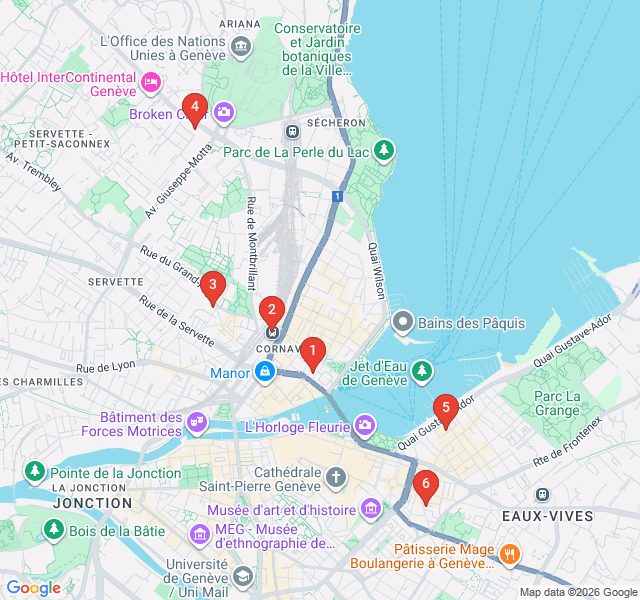
Numbers indicate the order of stops on the tour.
Start your self-guided adventure at the Holy Trinity Church, an English Anglican church that stands as a serene sentinel near the city's main station. Built in the mid-19th century in the Neo-Gothic style, it marks the period when Geneva began expanding beyond its ancient walls. While its stone spires look back to medieval traditions, the church actually sits on the edge of the districts that would become the testing grounds for modernism. Notice the intricate stonework and the peaceful atmosphere, which provides a grounding contrast to the experimental glass and concrete structures you are about to encounter on this walking route.
The area surrounding Gare Cornavin is the gateway to modern Geneva. As you walk through this transit hub, observe the blend of early 20th-century monumentalism and post-war reconstruction. Following a major fire in 1909, the station was rebuilt to reflect Geneva’s rising status as a center for international diplomacy. The surrounding streets showcase the transition from heavy masonry to the lighter, more functional designs of the mid-century. This area serves as a busy intersection where the city's historic core meets the rapidly evolving urban landscape, setting the stage for the architectural surprises hidden just behind the station in the Les Grottes neighborhood.
Welcome to 'Les Schtroumpfs' or the Smurfs Buildings. This residential complex, built between 1982 and 1984 by architects Frei, Hunziker, and Berthoud, is a masterpiece of organic architecture. There isn't a single straight line in sight. Inspired by the works of Antoni Gaudí, the buildings feature curved balconies, colorful mosaics, and whimsical chimneys that resemble mushrooms. The project was born out of a desire to create social housing that felt human and imaginative rather than industrial. It remains one of the most beloved and photographed examples of postmodern design in Switzerland, proving that concrete can be used to evoke joy and community spirit.
Heading toward the international district, you will find the World Intellectual Property Organization (WIPO) or OMPI. The 'Nouveau Bâtiment' is a striking example of 21st-century glass architecture. Completed in 2011, this blue-tinted glass structure was designed to be a symbol of transparency and innovation. Its sleek, aerodynamic shape and high-performance glass skin allow natural light to flood the interior while reflecting the shifting Swiss sky. This building represents the 'Glass' half of our theme, demonstrating how modern materials are used to create sustainable, light-filled spaces for global cooperation. It stands in sharp, sophisticated contrast to the playful curves of the Smurfs buildings.
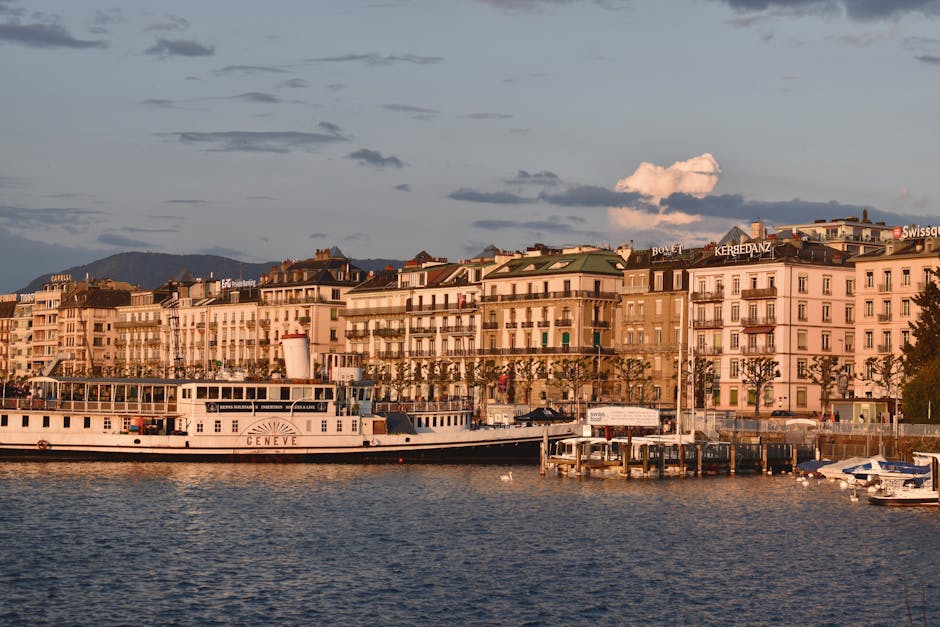
Walking down toward the lake, you encounter the 'Bateau de Genève.' While not a building in the traditional sense, this vessel—the 'Genève'—is a significant piece of floating heritage. Launched in 1896, it was once a luxury steamer. Today, it is managed by an association that uses the space for social projects and community events. From an architectural perspective, it represents the industrial and nautical engineering that influenced many modernist architects, including Le Corbusier. The ship’s steel hull and functional layout mirror the 'machine for living' philosophy that would later dominate 20th-century design. It is a beautiful example of repurposing historical structures for contemporary social good.
Your final stop is a true pilgrimage site for fans of modernism: the Immeuble Clarté. Designed by the Swiss-French architect Le Corbusier and Pierre Jeanneret in 1932, this building is a UNESCO World Heritage site. It was revolutionary for its time, featuring a dry-steel frame and extensive glass walls—a radical departure from the heavy stone buildings of the era. By using prefabricated elements, Le Corbusier created a flexible, light-filled living space that anticipated the future of urban apartments. As you stand before this 'Glass House,' notice how the balconies and sliding windows create a rhythmic, transparent facade. It remains a pinnacle of the International Style and a fitting end to our exploration of concrete and glass.
Start Free on iPhone
Explore “Concrete and Glass: Modernist Marvels in Geneva” with your very own Private Tour Guide with Zigway. Start free on iPhone, skip the large group and the fixed routes, and hear the city come alive as you go.
Your Private Tour Guide
Don't miss the good stuff
Explore Freely
 Easy
EasyGeneva, Switzerland
Explore Geneva's bohemian heart on this self-guided walk through flea markets, contemporary art galleries, and literary landmarks.
 Easy
EasyGeneva, Switzerland
Discover the lives of Rousseau and Voltaire on this self-guided literary walking route through the historic heart of Enlightenment-era Geneva.
 Moderate
Geneva, Switzerland
Uncover Geneva’s secrets on this self-guided walk through the Old Town’s historic streets, from the Reformation Wall to medieval cathedrals.
 Easy
EasyGeneva, Switzerland
Discover the Mediterranean soul of Geneva. Explore Carouge’s Sardinian architecture, artisan workshops, and hidden gardens on this self-guided walk.
 Moderate
Krakow, Poland
Discover Krakow’s stunning skyline and riverside charm on this self-guided audio walk through scenic viewpoints and historic mounds.
 Easy
EasyWarsaw, Poland
Discover the hidden courtyards and grand pre-war architecture of Warsaw's most atmospheric neighborhood on this self-guided stroll.
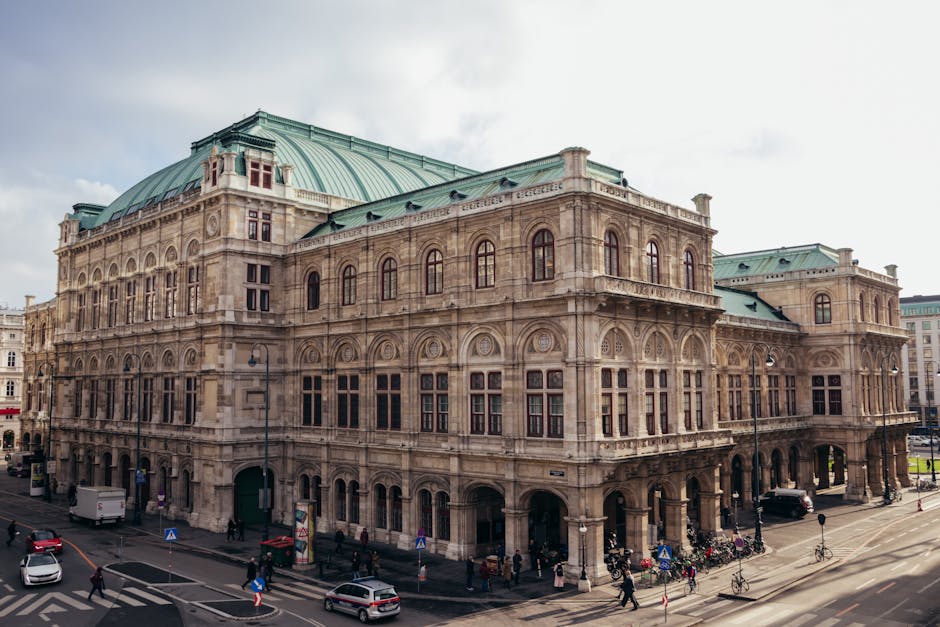 Moderate
Vienna, Austria
Discover the noir world of The Third Man and Cold War Vienna on this atmospheric self-guided audio walk through the historic Innere Stadt.
 Easy
EasyKrakow, Poland
Explore the prestigious Jagiellonian University district, featuring Neo-Gothic architecture, Baroque churches, and Krakow's hidden scholarly gems.
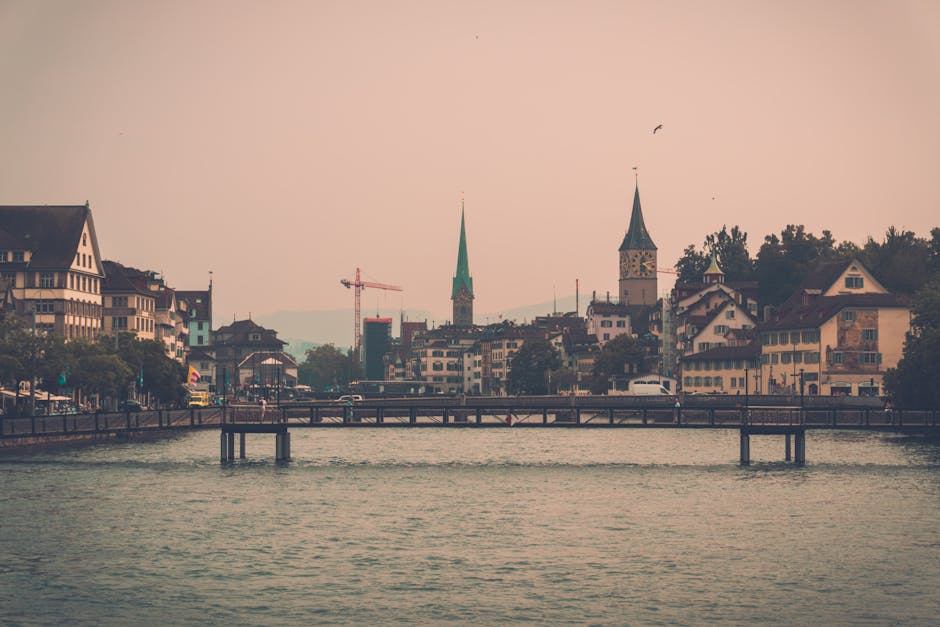 Moderate
Zurich, Switzerland
Follow the footsteps of Einstein and James Joyce on a self-guided walk through Zurich's intellectual and literary heart.
 Easy
EasyZurich, Switzerland
Explore Zurich's edgy side on this self-guided walk through Langstrasse, from red-light history to contemporary art and vibrant nightlife.
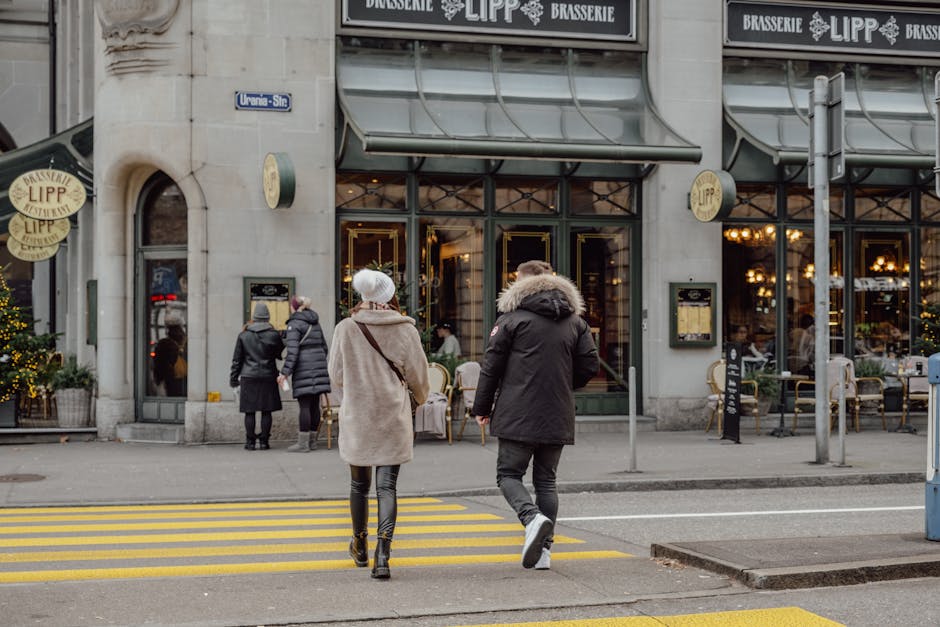 Moderate
Zurich, Switzerland
Explore Zurich's most breathtaking panoramas and hidden photography spots on this self-guided walking route through the historic city center.
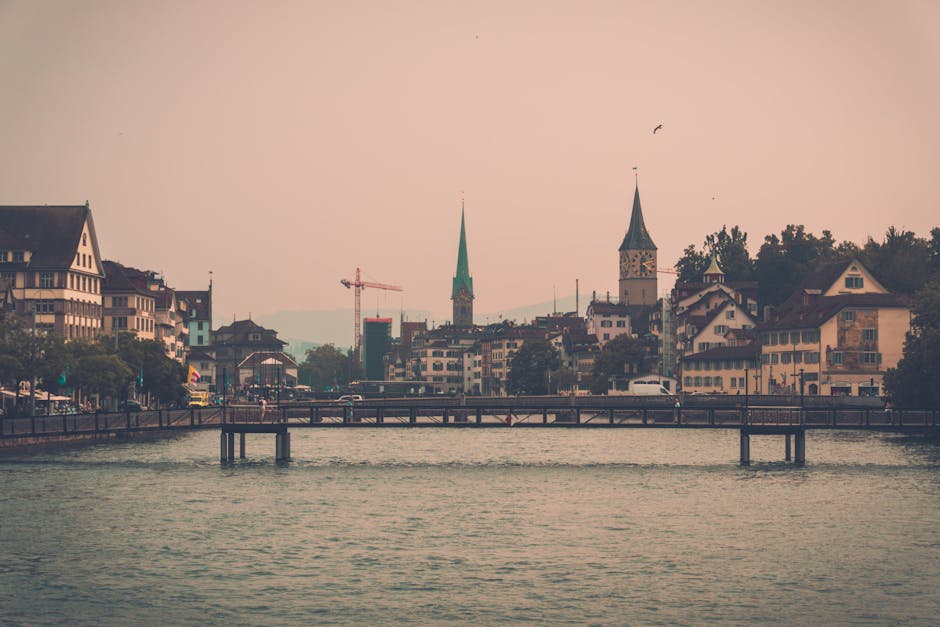 Easy
EasyZurich, Switzerland
Discover Zurich's medieval heart, from Dadaist rebels to Reformation history, on this atmospheric self-guided audio walk through the Altstadt.