Self-guided audio tour in Geneva
Start Free on iPhone
Start free on iPhone to unlock this self-guided walking tour in Geneva. Hear all the stories that make it amazing, walk at your own pace, and begin whenever you want.
Your Private Tour Guide
Perched on a hilltop overlooking the lake, Geneva’s Old Town (Vieille Ville) is a labyrinth of cobblestone streets and hidden courtyards that whispers stories of defiance, faith, and political ingenuity. This neighborhood stroll invites you to explore the 'Protestant Rome,' a city-state that shaped the modern world through the Reformation and the birth of international diplomacy. As you navigate the winding alleys, you will encounter architectural relics ranging from medieval fortresses to neoclassical cathedrals, all while discovering how Geneva maintained its sovereignty against powerful neighbors. This self-guided walk is designed for those who appreciate history in its most tangible form—where every stone tells a story of independence. The journey begins at the Maison Tavel, the oldest private residence in the city, which serves as a perfect introduction to Genevan urban life. You will then transition to the political heart of the republic at the City Hall, where the first Geneva Convention was signed, marking the city's rise as a global center for peace. The narrative deepens as you descend to the Reformation Wall, a monumental tribute to the thinkers who challenged the status quo of Europe. No walking route through Geneva is complete without the Cathédrale Saint-Pierre, a site that bridges the gap between ancient Roman foundations and the austere beauty of Calvinist worship. Finally, the walk concludes in the vibrant Place du Bourg-de-Four, the city's oldest square, which has served as a marketplace since the Roman era. This walking tour Geneva offers is a deep dive into the soul of a city that transformed from a small alpine town into a global symbol of neutrality and human rights. Whether you are a history buff or an architecture enthusiast, this independent travel experience allows you to soak in the atmosphere of the Old Town at your own pace, away from the constraints of a traditional guided tour Geneva.
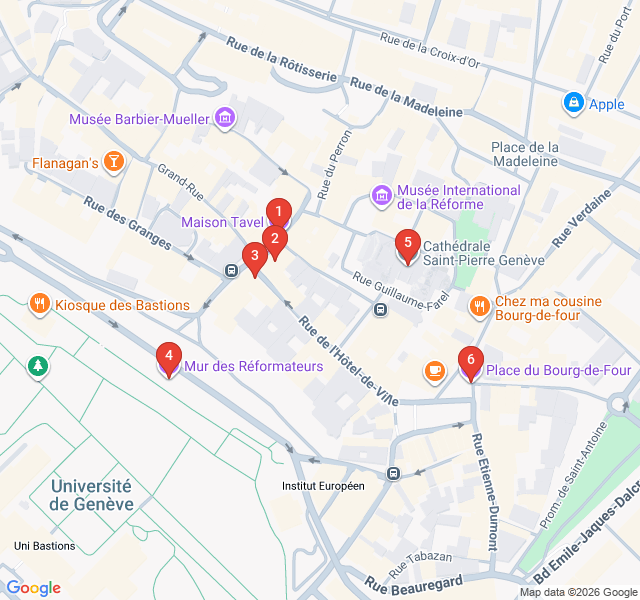
Numbers indicate the order of stops on the tour.
Welcome to the oldest private residence in Geneva. Built in the 12th century and meticulously reconstructed after a devastating fire in 1334, Maison Tavel is a prime example of medieval civil architecture. Notice the stone facade adorned with sculpted heads, representing various social classes of the era. Today, it serves as a museum of urban history and daily life. It offers a glimpse into how Genevans lived through the centuries, featuring everything from historic kitchens to a massive relief map of the city as it appeared in 1850. This house stands as a symbol of the city's resilience and its commitment to preserving its heritage amidst modern growth.
Just a few steps away, you will find a covered gallery housing five impressive bronze cannons. This is the Old Arsenal, originally built as a granary in the 17th century but later repurposed to store the city's military defenses. The cannons on display were used to defend Geneva’s ramparts during its long struggle for independence. Behind the artillery, look at the three large mosaics depicting pivotal moments in Geneva’s history: the arrival of Julius Caesar, the medieval fairs, and the reception of Huguenot refugees. It is a quiet spot that perfectly encapsulates the city's transition from a fortified military outpost to a welcoming haven for those seeking religious freedom.
The Hôtel de Ville has been the seat of political power in Geneva for over 500 years. One of its most unique architectural features is the paved ramp within the courtyard, designed without stairs so that high-ranking officials could reach the upper floors on horseback. Historically, this building is globally significant; the 'Alabama Room' on the ground floor hosted the 1864 signing of the first Geneva Convention, which founded the Red Cross. It was also here that the League of Nations held its first assembly. This site represents Geneva’s long-standing tradition of sovereignty and its pivotal role in international diplomacy and humanitarian law.
Located within the Parc des Bastions, this massive monument stretches 100 meters along the old city walls. Built in 1909 to commemorate the 400th anniversary of John Calvin’s birth, it honors the primary figures of the Protestant Reformation. The four central statues represent William Farel, John Calvin, Theodore Beza, and John Knox. The wall is inscribed with the city’s motto, 'Post Tenebras Lux' (After Darkness, Light), which became a rallying cry for the Reformation. As you walk along the wall, you will see smaller statues and reliefs depicting the spread of Protestantism across Europe and America, illustrating how this small city-state’s religious movement had a global impact.
Dominating the highest point of the Old Town, St. Pierre Cathedral is an architectural patchwork reflecting Geneva’s religious shift. While the exterior features a 18th-century neoclassical portico, the interior remains largely Gothic. During the Reformation, the cathedral was stripped of its ornate Catholic decorations, reflecting the austerity of Calvinism. You can still see 'Calvin’s Chair' inside, a simple wooden seat used by the reformer. For those who don't mind a climb, the north and south towers offer the best panoramic views of the city, the lake, and the surrounding Alps. Beneath the floor lies one of the largest archaeological sites in Europe, revealing Roman and early Christian foundations.
Your walk concludes in the oldest square in Geneva. The Place du Bourg-de-Four was once a Roman forum and later a medieval marketplace located at the crossroads of major trade routes. Today, it is the social heart of the Old Town, surrounded by 16th and 17th-century buildings that now house charming bistros and antique shops. Notice the central 18th-century fountain, a popular meeting spot for locals. It is the perfect place to sit and reflect on the layers of history you have just traversed. Whether you stop for a coffee or simply enjoy the atmosphere, you are standing in a space that has been the center of Genevan life for over two millennia.
Start Free on iPhone
Explore “Secrets of the Old Town: Reformation and Sovereignty” with your very own Private Tour Guide with Zigway. Start free on iPhone, skip the large group and the fixed routes, and hear the city come alive as you go.
Your Private Tour Guide
Don't miss the good stuff
Explore Freely
 Easy
EasyGeneva, Switzerland
Explore Geneva's bohemian heart on this self-guided walk through flea markets, contemporary art galleries, and literary landmarks.
 Easy
EasyGeneva, Switzerland
Discover the lives of Rousseau and Voltaire on this self-guided literary walking route through the historic heart of Enlightenment-era Geneva.
 Easy
EasyGeneva, Switzerland
Discover the Mediterranean soul of Geneva. Explore Carouge’s Sardinian architecture, artisan workshops, and hidden gardens on this self-guided walk.
 Moderate
Geneva, Switzerland
Discover Geneva’s radical architecture on this self-guided walk from the whimsical Smurfs buildings to Le Corbusier’s modernist glass masterpieces.
 Easy
EasyGothenburg, Sweden
Discover Gothenburg’s 17th-century Dutch foundations, historic canals, and military fortifications on this self-guided architectural walk.
 Moderate
Vienna, Austria
Discover the noir world of The Third Man and Cold War Vienna on this atmospheric self-guided audio walk through the historic Innere Stadt.
 Easy
EasyKrakow, Poland
Explore the historic heart of Kazimierz on this self-guided walk through synagogues, ancient cemeteries, and vibrant squares.
 Easy
EasySalzburg, Austria
Discover the 'Rome of the North' on this self-guided walk through the Baroque squares and monumental legacy of Salzburg’s Prince-Archbishops.
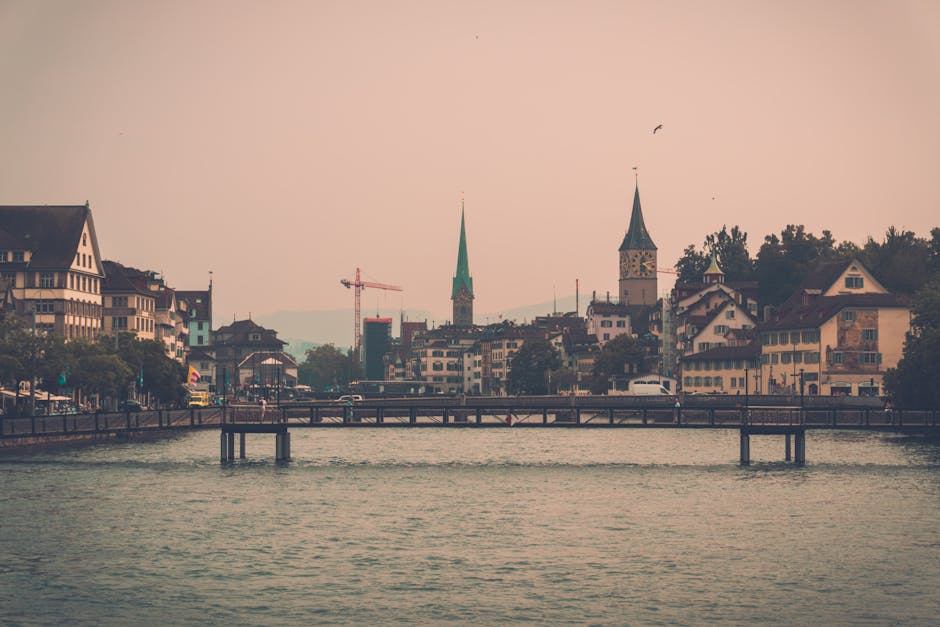 Moderate
Zurich, Switzerland
Follow the footsteps of Einstein and James Joyce on a self-guided walk through Zurich's intellectual and literary heart.
 Easy
EasyZurich, Switzerland
Explore Zurich's edgy side on this self-guided walk through Langstrasse, from red-light history to contemporary art and vibrant nightlife.
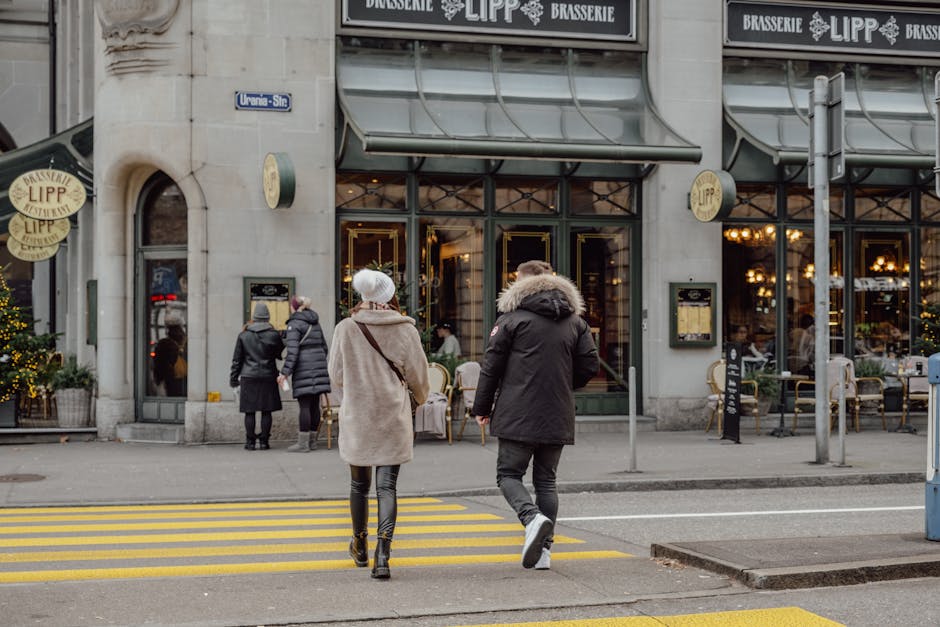 Moderate
Zurich, Switzerland
Explore Zurich's most breathtaking panoramas and hidden photography spots on this self-guided walking route through the historic city center.
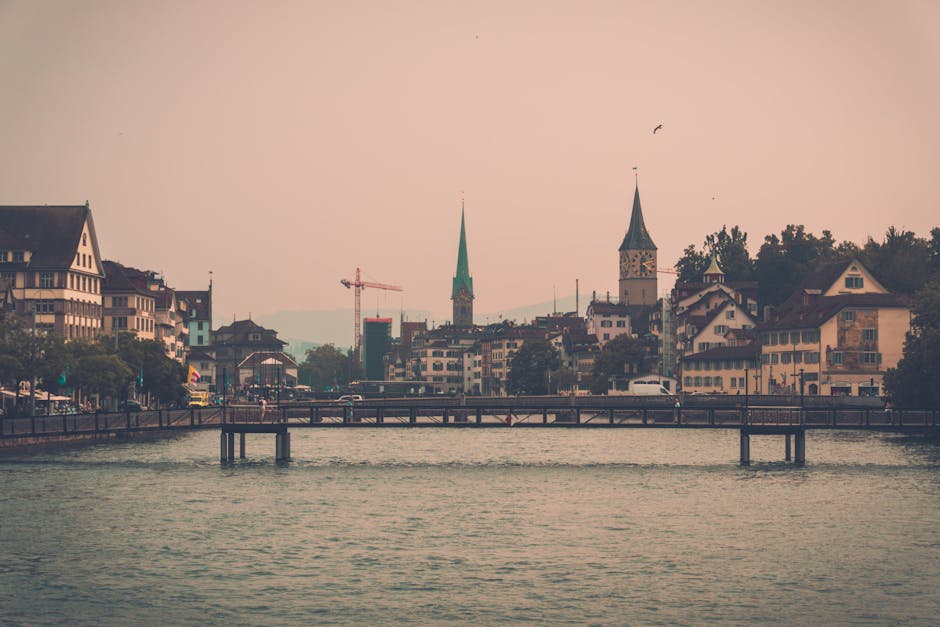 Easy
EasyZurich, Switzerland
Discover Zurich's medieval heart, from Dadaist rebels to Reformation history, on this atmospheric self-guided audio walk through the Altstadt.