Self-guided audio tour in Buenos Aires
Start Free on iPhone
Start free on iPhone to unlock this self-guided walking tour in Buenos Aires. Hear all the stories that make it amazing, walk at your own pace, and begin whenever you want.
Your Private Tour Guide
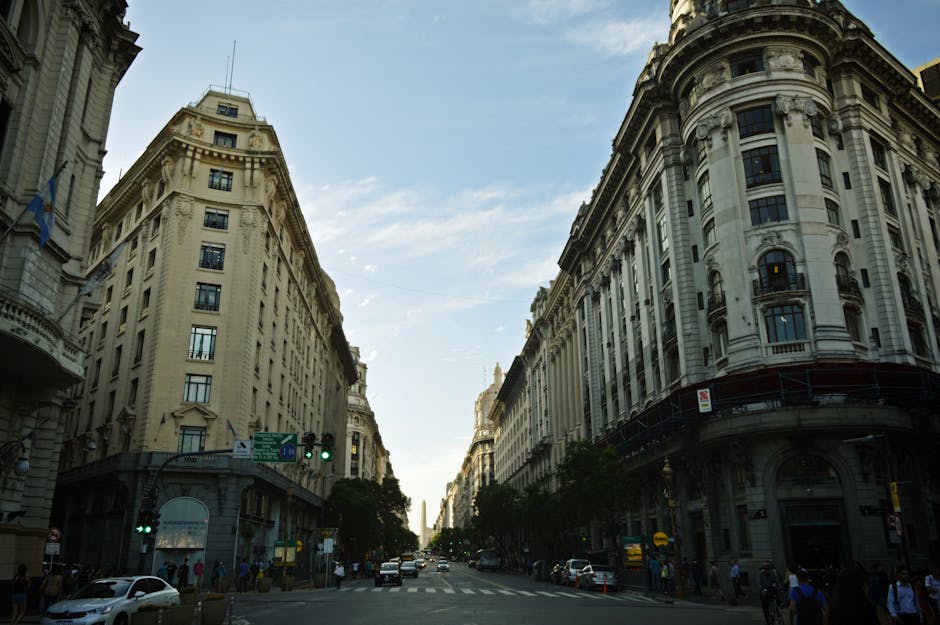
Step into a world where Buenos Aires earned its title as the 'Paris of the South.' This self-guided walk invites you to look beyond the modern storefronts of the Microcentro and Retiro neighborhoods to discover the city's golden age of architecture. During the late 19th and early 20th centuries, Argentina's elite looked to Europe for inspiration, resulting in an urban landscape filled with ornate ironwork, marble facades, and hidden residential passages that feel frozen in time. This walking route highlights the 'passages'—unique architectural solutions designed to provide shortcuts through city blocks while offering high-end shopping and living spaces. Your self-guided adventure begins at the Galería Güemes, a masterpiece of Art Nouveau that once reigned as the city's tallest building. From there, you will explore the historic Pasaje Roverano, which uniquely connects to the city’s underground transit system. As you move toward the elegant Galerías Pacífico, you will encounter some of the most significant mural art in the country, housed within a building modeled after the Le Bon Marché in Paris. The route then shifts from the commercial bustle to the refined quiet of Tres Sargentos and Calle Arroyo, often cited as the most beautiful street in the city. Finally, the walk concludes at the Pasaje de la Piedad, a hidden horseshoe-shaped alleyway that offers a glimpse into 19th-century residential life. This walking tour Buenos Aires provides a deep dive into the hidden gems of the Microcentro, allowing you to discover the stories of the architects, dreamers, and literary giants who walked these same halls. Whether you are an architecture enthusiast or a first-time visitor, this neighborhood stroll reveals the sophisticated soul of the Argentine capital at your own pace. By focusing on these interior spaces and quiet side streets, you get a perspective of the city that most travelers miss, moving through the layers of history that define the unique identity of Buenos Aires.
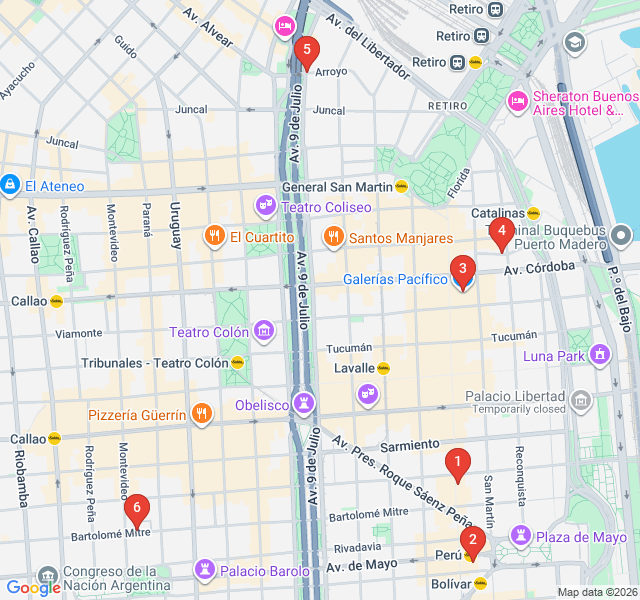
Numbers indicate the order of stops on the tour.
Welcome to Galería Güemes, a pinnacle of Art Nouveau architecture in Buenos Aires. Opened in 1915, this was the city's first true skyscraper and was considered one of the most modern buildings in the world at the time. As you stand in the central nave, look up at the intricate bronze work and the high glass domes. This passage wasn't just for shopping; it was a city within a city, featuring a theater, a restaurant, and luxury apartments. One of its most famous residents was Antoine de Saint-Exupéry, the author of 'The Little Prince,' who lived in an apartment here while working as a postal pilot. If the weather is clear, consider visiting the lighthouse-style viewpoint at the top for a 360-degree view of the skyline, revealing the city's diverse rooftops and the nearby Rio de la Plata.
Just a short stroll away is the Pasaje Roverano, an elegant building that serves as a bridge between the Avenida de Mayo and the adjacent street. Originally built in 1878 and later redesigned in the Art Nouveau style in 1918, it holds a unique secret: it has its own private entrance to the 'Catedral' station of the Subte Line A, the oldest subway line in South America. Inside, the passage maintains its Belle Époque atmosphere with original wood-paneled elevators and a historic barbershop that has been serving locals for decades. The stained glass and decorative ironwork here reflect a time when even a simple shortcut through a city block was treated as a work of art. It remains a favorite spot for those seeking a quiet moment away from the surrounding political hubbub of the Plaza de Mayo.
Galerías Pacífico is perhaps the most famous shopping gallery in Argentina, but its history is far more than commercial. Built in 1889, it was originally intended to house the 'Bon Marché' department store, modeled after the Parisian original. Later, it served as the headquarters for the Buenos Aires Pacific Railway. The building's most stunning feature is its central cupola, which features magnificent murals painted in 1946 by five master Argentine artists: Berni, Castagnino, Colmeiro, Spilimbergo, and Urruchúa. These murals depict universal themes of human labor, family, and nature. As you walk through the cross-shaped interior, take a moment to look up at the intersection; the fusion of 19th-century Beaux-Arts architecture and mid-century modern art creates an atmosphere of timeless elegance that is rare to find in a modern retail space.
As we move into the Retiro neighborhood, we encounter Tres Sargentos, a charming pedestrian passage that feels worlds away from the city's heavy traffic. This cobblestone alley is a perfect example of the architectural transition that occurred as the city expanded northward. Named after three heroic sergeants from the Argentine War of Independence, the street is lined with low-rise buildings, small bars, and ivy-covered walls. It has a distinctly British or European feel, reminiscent of the mews found in London. This area was historically home to many English-speaking expats and sailors, which influenced the local architecture. Today, it serves as a peaceful corridor connecting the bustling Microcentro with the more residential and upscale areas of Retiro, offering a glimpse into the city's quieter, more intimate side.
Calle Arroyo is often called the most 'French' street in Buenos Aires, and for good reason. Its gentle curve, a rarity in the city's strict grid system, is lined with some of the most beautiful palaces and apartment buildings in the country. The most notable is the Estrugamou Building, an eclectic masterpiece featuring a bronze replica of the Winged Victory of Samothrace in its courtyard. For decades, Arroyo has been the heart of the city's art scene, home to numerous galleries and antique shops. The street's history is also marked by tragedy; it was the site of the Israeli Embassy bombing in 1992. Today, a memorial plaza stands where the embassy once was, serving as a place of reflection. Despite its past, Arroyo remains a symbol of the city's resilience and its enduring love for European aesthetics and high culture.
Our final stop is the Pasaje de la Piedad, a hidden architectural treasure tucked away behind an unassuming entrance. Built in the 1880s by Arturo Gramajo, this horseshoe-shaped residential passage was designed to maximize space while providing a private, quiet environment for its inhabitants. It is one of the few examples of this style of urban planning left in the city. As you look through the gates, you can see the symmetrical facades and the cobblestone path that circles back to the street. It has a distinctly cinematic quality and has been used as a filming location for numerous period movies. The passage remains a private residential complex, standing as a testament to the creative ways 19th-century architects sought to bring European-style charm to the rapidly growing Argentine capital. This quiet corner marks the end of our journey through the hidden galleries and passages of Buenos Aires.
Start Free on iPhone
Explore “Secret Passages and Hidden Galleries” with your very own Private Tour Guide with Zigway. Start free on iPhone, skip the large group and the fixed routes, and hear the city come alive as you go.
Your Private Tour Guide
Don't miss the good stuff
Explore Freely
 Easy
EasyBuenos Aires, Argentina
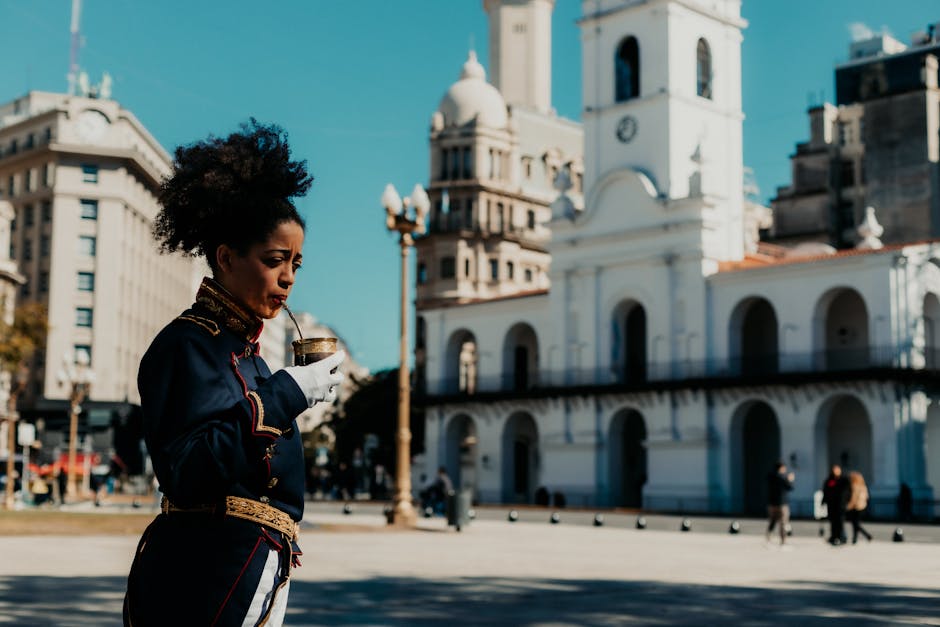
Explore the elegance of Recoleta on this self-guided walk featuring grand museums, colonial churches, and the legendary Recoleta Cemetery.
 Easy
EasyBuenos Aires, Argentina
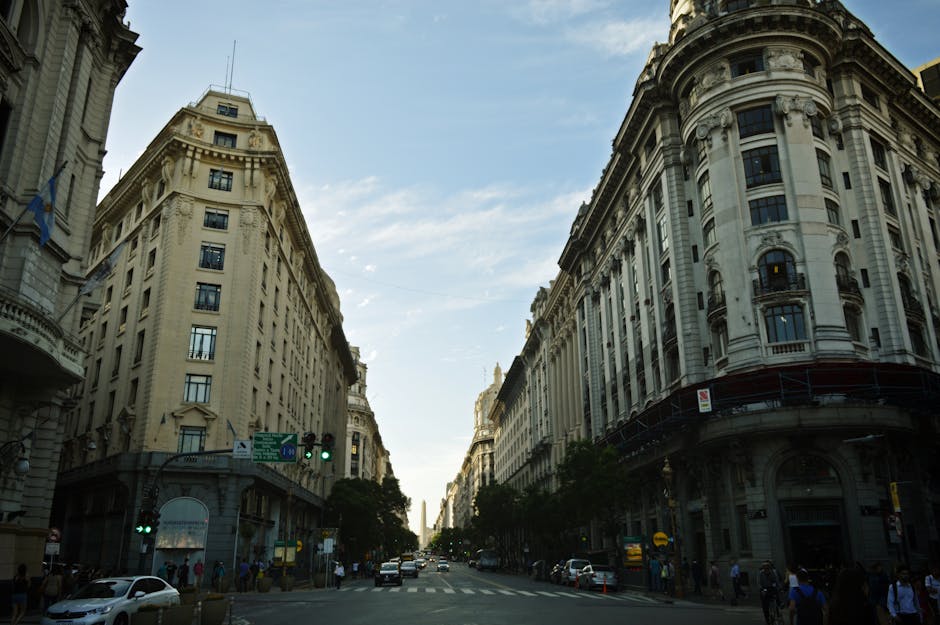
Discover a blend of aristocratic mansions, lush gardens, and vibrant Asian culture on this self-guided walk through Buenos Aires' Belgrano district.
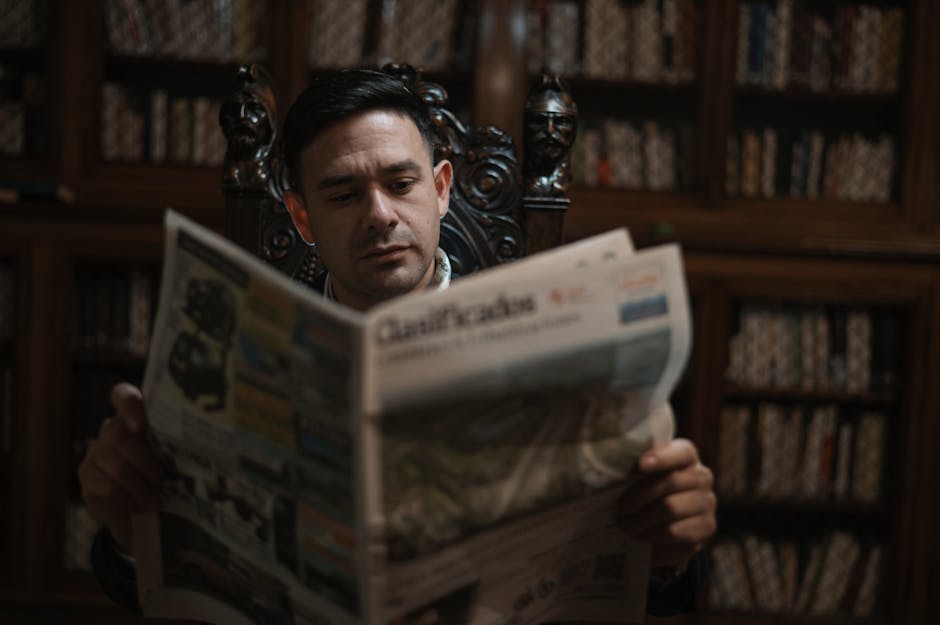 Moderate
Buenos Aires, Argentina
Follow the footsteps of Borges and Ocampo through the bookstores, libraries, and historic cafes of Buenos Aires' most elegant neighborhoods.
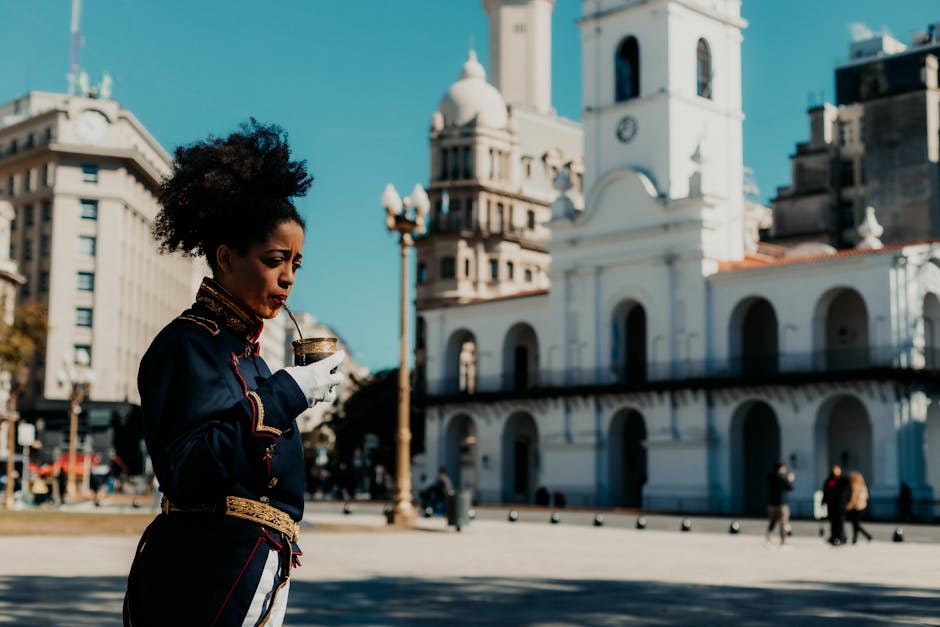 Moderate
Buenos Aires, Argentina
Explore the soulful heart of Buenos Aires on this self-guided walk through San Telmo’s historic markets, hidden tunnels, and antique-filled plazas.
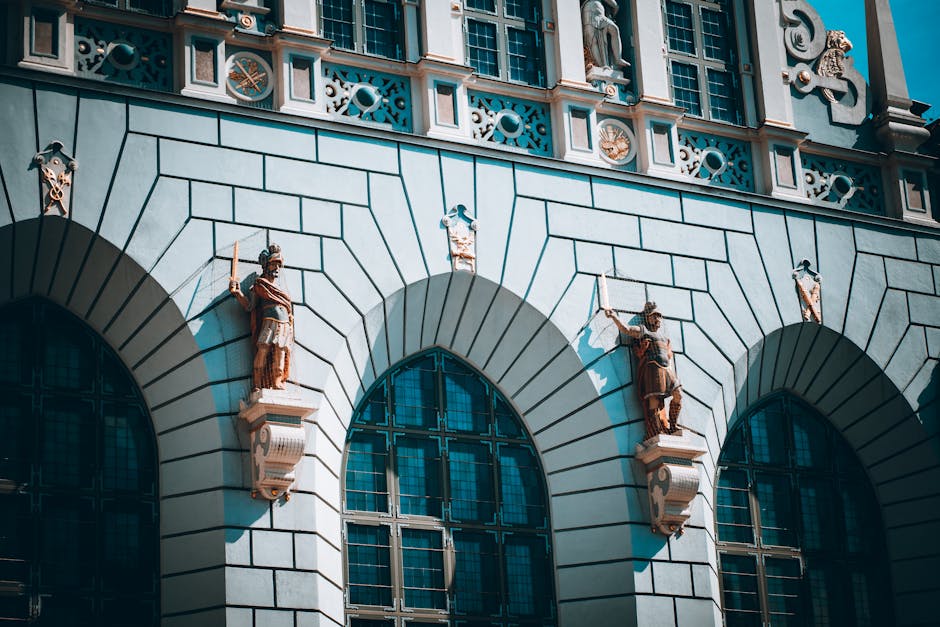 Easy
EasyGdansk, Poland
Discover the opulent Royal Way of Gdansk at your own pace. Explore Hanseatic history, gilded architecture, and the iconic Neptune's Fountain.
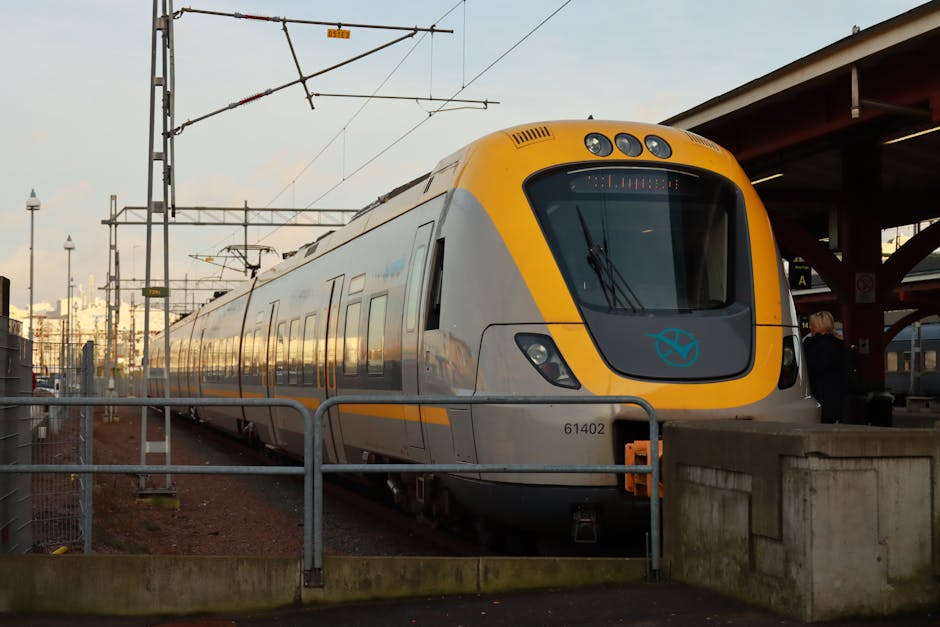 Moderate
Gothenburg, Sweden
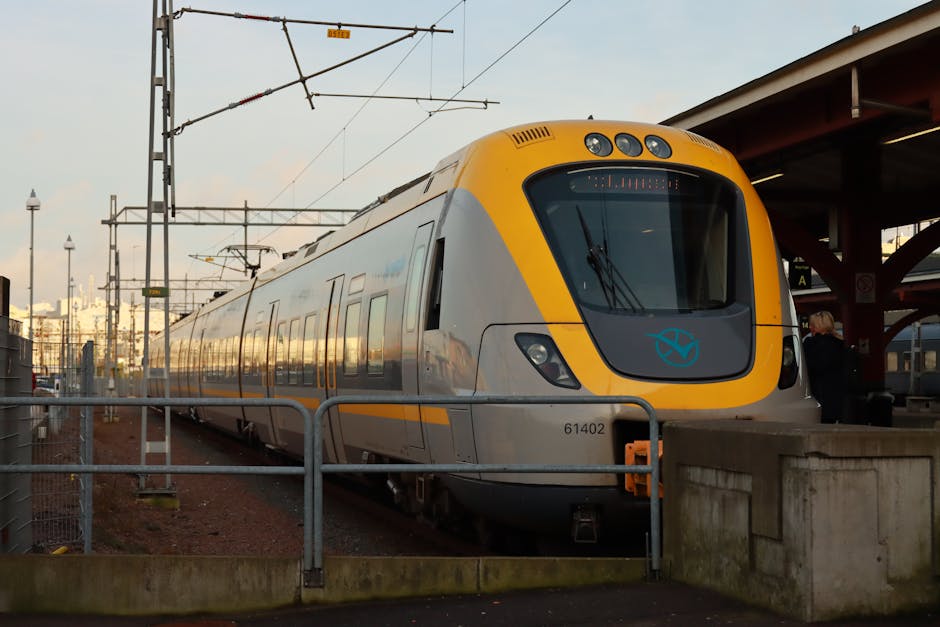
Discover Gothenburg’s maritime soul on this self-guided walk from the historic Central Station to the scenic riverfront at Stenpiren.
 Easy
EasyGothenburg, Sweden
Explore Gothenburg's elegant academic district, featuring grand 19th-century stone architecture and the iconic cultural hub of Götaplatsen.
 Easy
EasyNairobi, Kenya
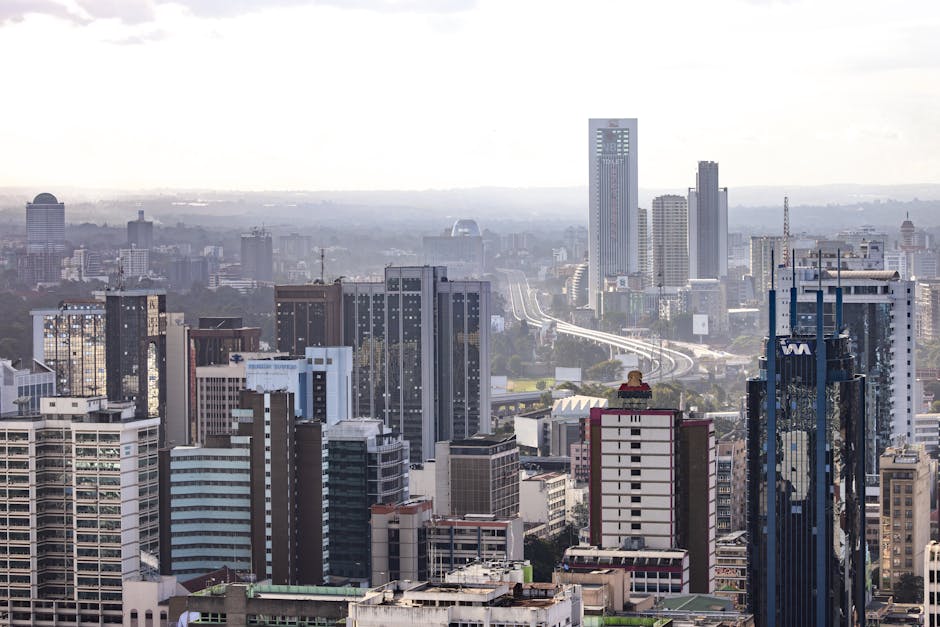
Discover Nairobi's iconic skyline on this self-guided architecture walk through the CBD’s most famous modernist and Brutalist landmarks.