Self-guided audio tour in Wellington
Start Free on iPhone
Start free on iPhone to unlock this self-guided walking tour in Wellington. Hear all the stories that make it amazing, walk at your own pace, and begin whenever you want.
Your Private Tour Guide
Step into Thorndon, Wellington's oldest suburb, where the echoes of colonial history meet the pulse of modern New Zealand power. This self-guided walk invites you to explore a landscape defined by grand architecture and political significance. As you wander through leafy streets, you will discover the evolution of a nation, from the early domestic life of its most famous writer to the brutalist concrete of its executive leadership. This neighborhood stroll reveals how Thorndon transitioned from a colonial residential enclave into the heart of the capital city. You will encounter the striking contrast of the Beehive against the classic neo-classical lines of the Parliament Buildings, and the delicate timber craftsmanship of a 19th-century cathedral. This walking tour Wellington experience is designed for those who want to understand the intersection of heritage and governance at their own pace. Along the way, the route highlights the stories of influential figures, from footwear moguls to groundbreaking literary icons. Whether you are interested in the intricate details of Victorian mansions or the heavy weight of national archives, this neighborhood provides a quiet yet profound look at the identity of Aotearoa. This walking route offers a deep dive into the stories that shaped the country, making it an essential experience for history buffs and architecture enthusiasts alike.
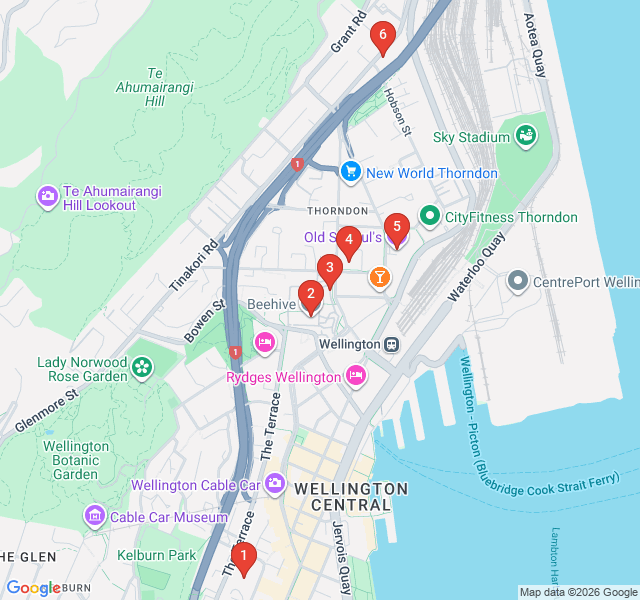
Numbers indicate the order of stops on the tour.
Welcome to Antrim House, a stunning example of High-Victorian Italianate architecture. Built in 1905 for Robert Hannah, a successful businessman who founded the Hannahs footwear empire, this house was once a symbol of private wealth in what was then a premier residential district. Note the ornate tower and the intricate ironwork, which were designed to impress. Today, it serves as the headquarters for Heritage New Zealand. While the interior is often used for offices, the exterior and the surrounding grounds offer a window into the opulent lifestyle of Wellington’s early 20th-century elite. It stands as a rare survivor of the grand mansions that once lined this part of the city before the government precinct expanded.
Standing before you is perhaps New Zealand's most recognizable building: the Beehive. Formally known as the Executive Wing of the New Zealand Parliament, it was designed by British architect Sir Basil Spence. Legend has it that he sketched the initial concept on the back of a napkin during dinner. Completed in stages between 1969 and 1981, its distinctive circular shape is a bold example of modernist architecture. Inside, the Prime Minister and Cabinet ministers have their offices. The circular design was intended to represent the unity of the nation, though its 'Brutalist' aesthetic remains a point of debate among locals. It is a functional seat of power that serves as the backdrop for the country’s most significant political announcements.
Adjacent to the Beehive is Parliament House, a grand neo-classical building that stands in sharp contrast to its circular neighbor. Construction began in 1914 but was delayed by the First World War and a lack of funding, meaning the building was never actually completed to its original plan. If you look closely at the facade, you can see the Takaka marble, a local stone that gives the building its distinctive pale glow. This is where the House of Representatives meets to debate and pass laws. The grounds also contain the Parliamentary Library, a beautiful Victorian Gothic building that survived a devastating fire in 1907, which destroyed the original wooden parliament buildings that once stood here.
The National Library of New Zealand is more than just a collection of books; it is the guardian of the nation’s memory. This modern building houses the Alexander Turnbull Library collections and the 'He Tohu' exhibition. Inside, you can find three of New Zealand's most important documents: the 1835 Declaration of Independence, the 1840 Treaty of Waitangi (Te Tiriti o Waitangi), and the 1893 Women’s Suffrage Petition. The architecture is intentionally understated, designed to protect the fragile heritage within. It serves as a research hub and a public space where the complex history of New Zealand’s founding is preserved for future generations.
Old St Paul's is one of the world's best examples of timber Gothic Revival architecture. Built in 1866, this was the cathedral church of the Diocese of Wellington until 1964. While the exterior is charming, the interior is truly breathtaking, constructed entirely from New Zealand native timbers like totara, rimu, and kauri. The warm wood and stained glass create a peaceful, atmospheric space that feels worlds away from the busy political district just a block away. It was nearly demolished in the 1960s to make way for a new concrete cathedral, but a massive public outcry saved it, leading to its current status as a heritage site and beloved venue for events and reflection.
Our final stop is the birthplace of Katherine Mansfield, New Zealand's most famous short-story writer. Born here in 1888, Mansfield spent her early childhood in this house, and many of her most famous stories, like 'The Garden Party' and 'Prelude,' were inspired by her memories of Thorndon. The house has been meticulously restored to reflect the late 19th-century period when the Beauchamp family lived here. As you look at the house and its heritage garden, consider how the domestic life described in Mansfield’s modernist literature contrasts with the grand political structures you saw earlier. It is a fitting end to a walk that explores the personal and the political history of the nation.
Start Free on iPhone
Explore “Political Power & Heritage in Thorndon” with your very own Private Tour Guide with Zigway. Start free on iPhone, skip the large group and the fixed routes, and hear the city come alive as you go.
Your Private Tour Guide
Don't miss the good stuff
Explore Freely
 Challenging
Wellington, New Zealand
Explore cinematic forests and 360-degree harbor views on this self-guided walk to Wellington's iconic Mount Victoria summit.
 Easy
EasyWellington, New Zealand
Discover iconic sculptures and harbor views on this easy self-guided walk along Wellington's vibrant waterfront.
 Moderate
Wellington, New Zealand
Discover panoramic views, celestial history, and lush floral displays on this scenic self-guided stroll from Kelburn heights to the city center.
 Easy
EasyWellington, New Zealand
Uncover Wellington’s hidden history and haunted theaters on this atmospheric self-guided walk through the city's dark past and vibrant nightlife.
 Easy
EasySalzburg, Austria
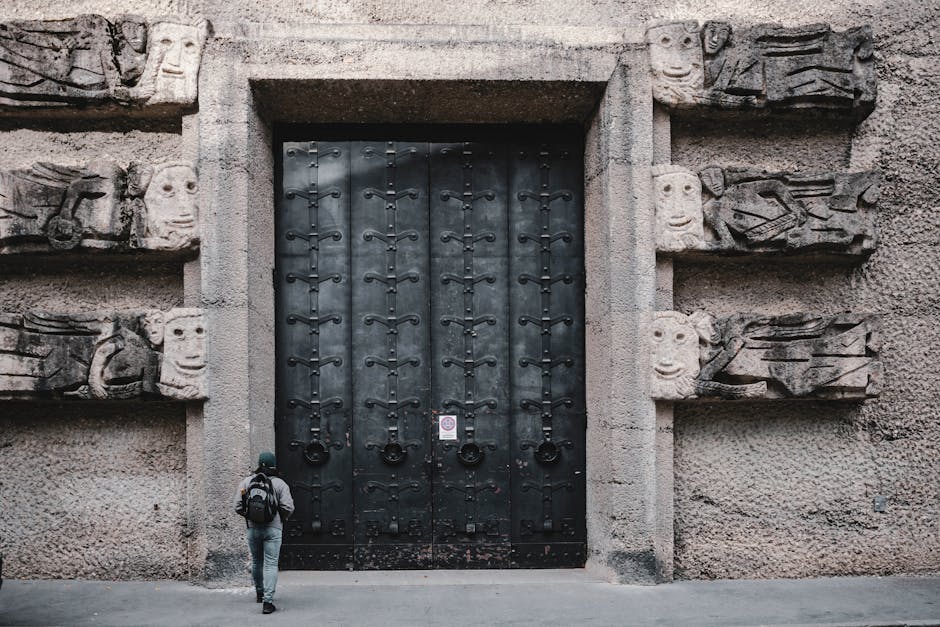
Discover the 'Rome of the North' on this self-guided walk through the Baroque squares and monumental legacy of Salzburg’s Prince-Archbishops.
 Easy
EasyNairobi, Kenya
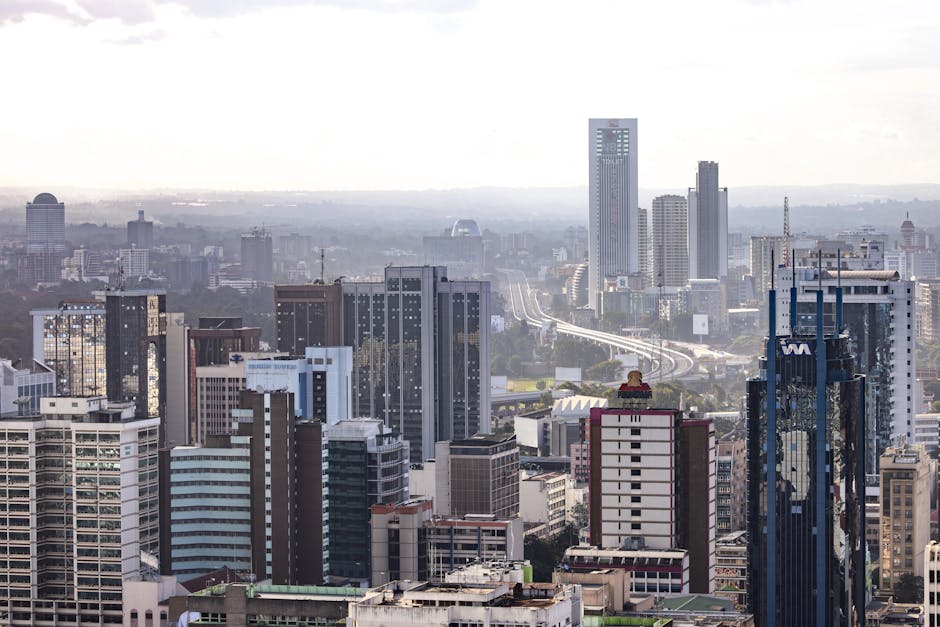
Explore Nairobi's architectural evolution from colonial-era landmarks to iconic Brutalist skyscrapers on this historic self-guided walking route.
 Easy
EasyNairobi, Kenya
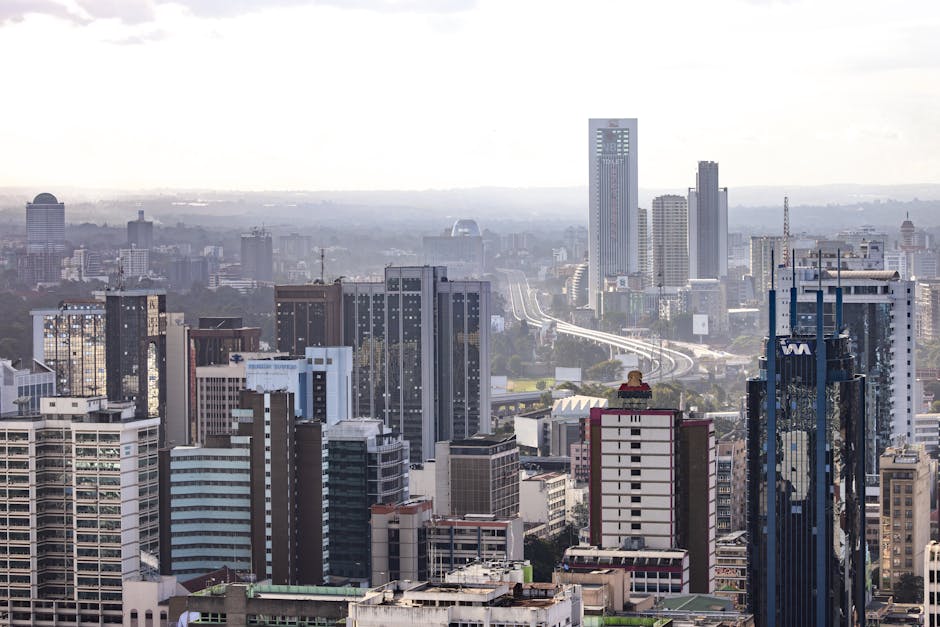
Discover Nairobi's iconic skyline on this self-guided architecture walk through the CBD’s most famous modernist and Brutalist landmarks.
 Easy
EasyKrakow, Poland
Explore the prestigious Jagiellonian University district, featuring Neo-Gothic architecture, Baroque churches, and Krakow's hidden scholarly gems.
 Easy
EasyAuckland, New Zealand
Discover Auckland's sustainable future on this self-guided walk through the award-winning architecture and industrial history of Wynyard Quarter.
 Moderate
Auckland, New Zealand
Discover Auckland's highest volcanic peak, sacred Māori history, and stunning 360-degree views on this self-guided walking route up Maungawhau.
 Easy
EasyAuckland, New Zealand
Explore the gritty soul of Auckland on this self-guided walk through Karangahape Road’s street art, heritage, and legendary nightlife spots.
 Moderate
Auckland, New Zealand
Explore Auckland's iconic coastline, Art Deco architecture, and Maori heritage on this scenic self-guided walking route from Bastion Point to the Bay.