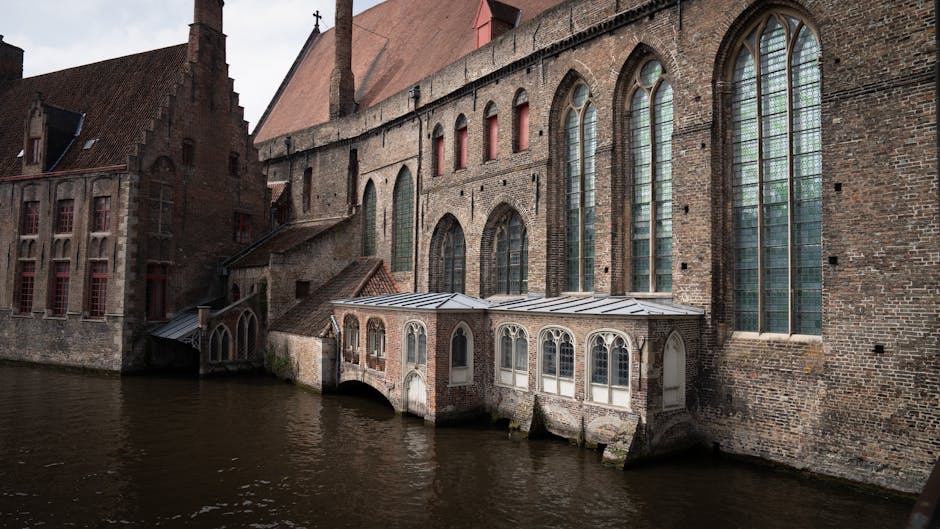
Self-guided audio tour in Bruges
Start Free on iPhone
Start free on iPhone to unlock this self-guided walking tour in Bruges. Hear all the stories that make it amazing, walk at your own pace, and begin whenever you want.
Your Private Tour Guide
While most visitors flock to Bruges to see the 'Venice of the North' through a medieval lens, there is a vibrant, contemporary pulse beating just beyond the shadow of the Belfry. This self-guided walk invites you to step away from the chocolate shops and horse-drawn carriages to discover a city of bold architecture, cutting-edge performance spaces, and a thriving urban art scene. You will explore West-Brugge, a neighborhood that seamlessly blends 19th-century grandeur with 21st-century innovation. This walking route highlights how Bruges refuses to be a mere museum piece, instead evolving into a canvas for modern creators. From the terracotta-clad walls of the Concertgebouw to the hidden murals tucked away in the Langestraat, this neighborhood stroll reveals a side of the city often missed by those sticking to the main squares. Along the way, you will encounter impressive public sculptures, learn about the city's transformation for its stint as the European Capital of Culture, and see how local artisans are keeping the creative spirit alive in historic workshops. This is a walking tour Bruges enthusiasts should take if they want to see the city's future alongside its past. By exploring independently, you have the freedom to linger by a piece of street art or duck into a modern gallery without the constraints of a group. Whether you are a fan of brutalist-inspired design or looking for the best spots for contemporary photography, this route offers a refreshing perspective on one of Europe's most famous destinations. It is the perfect way to experience a guided tour Bruges style but on your own terms, focusing on the textures and tones of the modern era. **Note:** This area is known for its ever-changing character. Street art, pop-up venues, and temporary exhibitions may differ from what's described. That's part of the adventure - you might discover something entirely new!
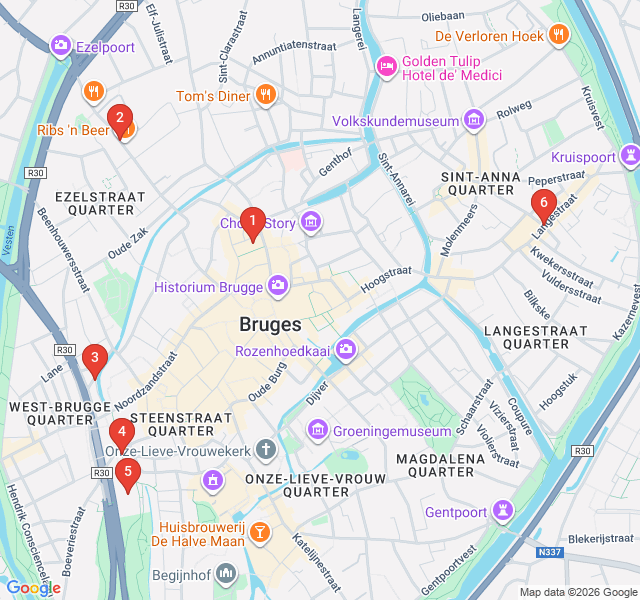
Numbers indicate the order of stops on the tour.
Start your self-guided adventure at the Stadsschouwburg, one of the best-preserved city theaters in Europe. Completed in 1869, this neo-Renaissance building stands as a testament to Bruges' 19th-century wealth and its desire to move beyond its medieval image. Look up at the ornate facade, which was designed to rival the great theaters of Paris and Brussels. While the interior is a lavish world of velvet and gold leaf, the building itself represents the first major 'modern' intervention in the city's historic fabric. It serves as a reminder that Bruges has always been a place of performance and high culture, evolving through the centuries to accommodate new artistic tastes and social gatherings.
As you wander down Ezelstraat, or 'Donkey Street,' you will notice a distinct shift from the tourist-heavy center. This long, winding road is one of the city's oldest arteries, but today it is the heart of a trendy, local-first neighborhood. Keep an eye out for small art galleries and independent boutiques that occupy historic storefronts. The street art here is often subtle—look for small interventions on doorways or in alleyways. This street represents the 'real' Bruges, where residents live and work. The mix of traditional stepped gables and modern window displays showcases the city's ability to adapt its historic heritage for contemporary life without losing its soul.
Take a moment to enjoy the tranquility of the Speelmansrei. This canal is named after the 'Speelmannen' or musicians who once lived in this quarter. While many canals in Bruges are crowded with tour boats, this stretch offers a more reflective atmosphere. The architecture here is a blend of private residences and former industrial spaces, some of which have been converted into modern lofts and studios. It is a favorite spot for local painters and photographers who are drawn to the way the modern glass extensions of some buildings reflect in the ancient waters. This area perfectly encapsulates the quiet, creative energy that defines the West-Brugge neighborhood.
You are now standing in 't Zand, the largest square in Bruges. For decades, this was a busy traffic hub, but a massive renovation completed in 2018 transformed it into a pedestrian-friendly gateway to the city. The most striking feature is the large fountain sculpture by artists Stefaan Depuydt and Livia Canestraro, depicting various elements of Flemish history and folklore in a bold, modern style. The square serves as a bridge between the old city and the new, frequently hosting contemporary markets and festivals. Notice the clean lines and modern materials used in the paving and seating, which provide a sharp contrast to the medieval spires visible in the distance.
Standing before you is the Concertgebouw, an architectural marvel completed in 2002 when Bruges was the European Capital of Culture. Designed by Paul Robbrecht and Hilde Daem, the building is famous for its exterior clad in 68,000 red terracotta tiles, a modern nod to the traditional red brick of Bruges. This is a world-class venue for music and contemporary dance, boasting some of the best acoustics in the world. The building’s 'Sound Factory' and its rooftop terrace offer a contemporary perspective of the city skyline. It is a bold statement of modernism that proved Bruges could embrace avant-garde design while respecting its historic surroundings.
Finish your walking route in Langestraat, the epicenter of the city's urban art and creative scene. This street is known for its 'The Bridges' project, where various walls have been turned into canvases for local and international street artists. Because street art is by nature temporary, the murals you see today might be different from those seen a few months ago, adding an element of discovery to every visit. The street is also home to artisanal bakeries, vinyl shops, and craft cocktail bars. It is the perfect place to see how the 'New Bruges' celebrates its heritage through a lens of modern creativity and community-driven art projects.
Start Free on iPhone
Explore “Beyond the Belfry: Modern Bruges and Urban Art” with your very own Private Tour Guide with Zigway. Start free on iPhone, skip the large group and the fixed routes, and hear the city come alive as you go.
Your Private Tour Guide
Don't miss the good stuff
Explore Freely
 Easy
EasyBruges, Belgium
Discover the most iconic canal views in Bruges on this scenic self-guided audio walk through the historic "Venice of the North".
 Easy
EasyBruges, Belgium
Discover the tranquil almshouses and hidden courtyards of Bruges on this peaceful self-guided audio walk through the historic St. Anna district.
 Moderate
Bruges, Belgium
Discover the artistic soul of Bruges, from world-class Flemish Primitive paintings to the delicate traditions of handmade lace in the St. Anna district.
 Easy
EasyBruges, Belgium
Discover the artisanal secrets of Bruges' world-class chocolatiers on this delicious self-guided walking route through the medieval center.
 Moderate
Gdansk, Poland
Discover Zaspa, a massive open-air gallery where grey housing blocks are transformed by over 60 monumental murals. Explore at your own pace.
 Moderate
Nairobi, Kenya
Discover Nairobi's lush side on this self-guided walk through botanical gardens, historic memorials, and vibrant local markets.
 Moderate
Gothenburg, Sweden
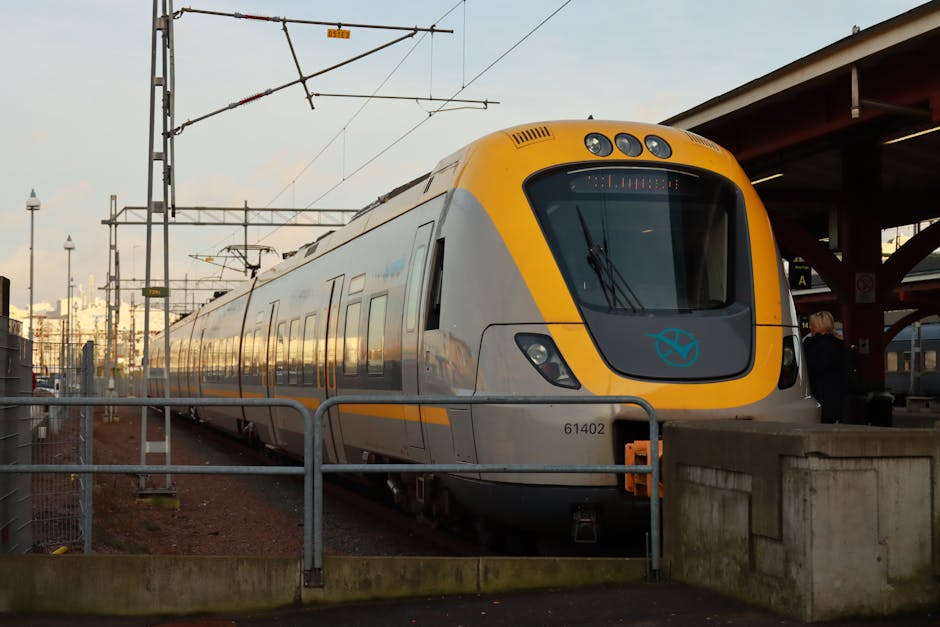
Discover Gothenburg’s maritime soul on this self-guided walk from the historic Central Station to the scenic riverfront at Stenpiren.
 Moderate
Nairobi, Kenya
Discover the creative soul of Nairobi on this self-guided walk through the city's premier art galleries, markets, and artisan workshops.
 Easy
EasyBrussels, Belgium
Discover the colorful world of Belgian comics on this independent walking route through the creative streets and murals of central Brussels.
 Moderate
Brussels, Belgium
Explore the majestic Royal Quarter, from Art Nouveau gems to the King's Palace and the iconic views of Mont des Arts on this self-guided walk.
 Moderate
Brussels, Belgium
Explore Brussels' industrial heart and artistic rebirth on this self-guided walk through Molenbeek and the Canal district's iconic landmarks.
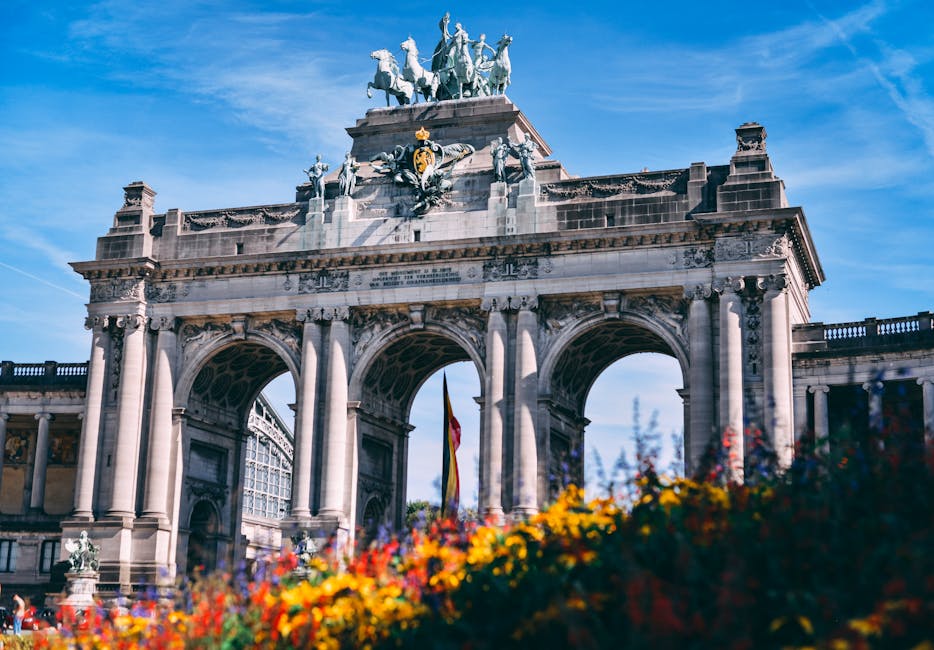 Moderate
Brussels, Belgium
Discover Brussels' Art Nouveau masterpieces at your own pace, from Victor Horta's UNESCO sites to the flamboyant Maison Saint-Cyr.