Self-guided audio tour in Brasov
Start Free on iPhone
Start free on iPhone to unlock this self-guided walking tour in Brasov. Hear all the stories that make it amazing, walk at your own pace, and begin whenever you want.
Your Private Tour Guide
Step into the heart of Transylvania's medieval legacy with this self-guided walking route through Brasov's historic core. Known to its Saxon founders as Kronstadt, or 'City of the Crown,' this city served as a vital crossroads for trade between Western Europe and the Ottoman Empire for centuries. This neighborhood stroll invites you to explore the architectural fingerprints left by the wealthy merchant class that once dominated the region. The journey begins in the expansive Council Square, where the echoes of centuries-old markets still linger among the vibrant, colorful facades. As you explore independently, you will encounter the Council House, a building that evolved from a simple watchtower into the administrative nerve center of the city. Nearby, the Mureșenilor House offers a glimpse into the intellectual and cultural life of a family that helped shape the modern Romanian identity through music and literature. No exploration of Brasov is complete without visiting the Black Church. This massive Gothic structure is not only a religious landmark but a testament to the city's resilience after the Great Fire of 1689. You will also discover the Hirscher House, once the largest building in the city and a symbol of the Hirscher family's philanthropic influence and merchant power. The route concludes on Republicii Street, a bustling pedestrian artery where historic merchant homes have been transformed into lively cafes and shops. This walking tour Brasov allows you to move at your own pace, pausing to admire the intricate stone carvings or to soak in the atmosphere of a medieval citadel that remains very much alive today. By following this trail, you will understand the strategic importance of the Saxon settlers who were invited by Hungarian kings to defend the frontier. Their influence is visible in the sturdy masonry and the organized layout of the Old Town. This self-guided adventure is perfect for those who want to skip rigid schedules and instead immerse themselves in the local stories that define this historic mountain city.
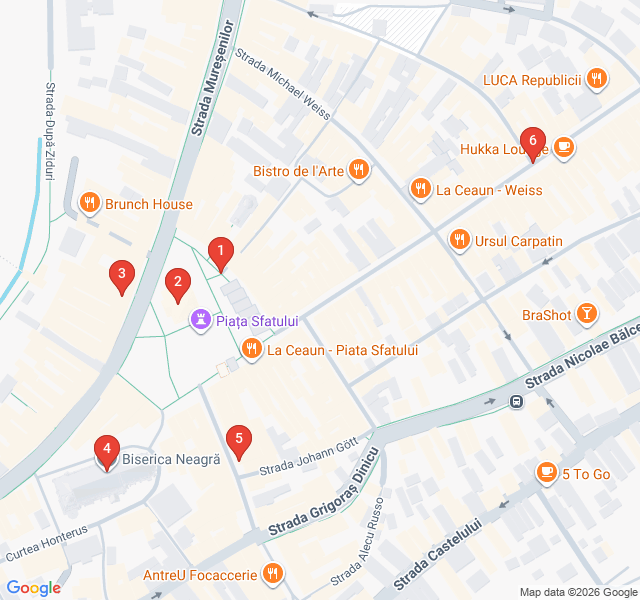
Numbers indicate the order of stops on the tour.
Welcome to the heart of Brasov. For centuries, this square, known in German as Marktplatz, was the pulse of the city's commercial life. Saxon merchants from across Transylvania and traders from the East gathered here to exchange wool, spices, and metals. The square has seen everything from medieval markets to public trials. Look around at the surrounding buildings; many of them sit on foundations dating back to the 14th century. Legend even says that the Pied Piper of Hamelin led the children of Germany through a cave, and they eventually emerged right here in this square. Today, it remains the city's most iconic gathering spot, framed by the beautiful Carpathian mountains in the background.
Standing prominently in the center of the square is the Council House. Originally built as a watchtower to keep an eye on approaching invaders, it was expanded over the centuries into the town hall. The 'Trumpeter’s Tower' above you was used by guards to announce the time or sound alarms for fires and attacks. Inside, the city's magistrates made decisions that governed trade and defense for the Saxon community. The building has survived earthquakes, fires, and lightning strikes, each time being rebuilt with a mix of Gothic, Renaissance, and Baroque elements. It now serves as a history museum, housing artifacts that tell the story of Brasov’s evolution from a frontier outpost to a thriving trade hub.
Just a few steps from the square, we find the Mureșenilor House. While the Saxons were the primary merchant class, the Mureșanu family represents the rising Romanian cultural influence in the 19th century. This house was a hub for intellectuals and revolutionaries. The family founded the first political newspaper in Transylvania, the 'Gazeta Transilvaniei,' which was printed right here. Most significantly, Andrei Mureșanu, a member of this circle, wrote the lyrics to 'Deșteaptă-te, române!', which is now the national anthem of Romania. The architecture here is more refined and residential compared to the defensive structures nearby, reflecting the cultural and literary wealth of its former inhabitants.
Dominating the skyline is the Black Church, the largest Gothic cathedral between Vienna and Istanbul. Its name isn't its original one; it was dubbed the 'Black Church' after the Great Fire of 1689, which left its walls charred and blackened by soot. Inside, the church holds two world-class treasures: a massive Buchholz organ with nearly 4,000 pipes and one of the largest collections of Anatolian rugs in Europe. These rugs were donated by wealthy Saxon merchants as thanks for returning safely from dangerous trading missions to the Ottoman Empire. The exterior features impressive stone buttresses and statues, though many have been weathered by time, adding to the church's ancient, somber majesty.
This long, elegant building is the Hirscher House, also known as the Merchant's House. It was built in the mid-16th century by Apollonia Hirscher, the widow of the city’s judge and a powerful merchant in her own right. Legend says she built it after her daughter, who was thought dead, woke up in her tomb and tried to claw her way out to save her jewelry. In reality, the building served as a massive trade hall where local guilds could store and sell their wares. Its design, with wide arches and a long silhouette, was inspired by the trade halls of Western Europe, showcasing how connected Brasov’s merchant elite were to the rest of the continent.
We end our walk on Republicii Street, the main pedestrian artery of the Old Town. In the medieval era, this street was lined with the homes and workshops of the city's most prosperous craftsmen and traders. If you look up at the second floors of these buildings, you will see a variety of architectural styles, from Baroque flourishes to Neoclassical lines. Each house often had a narrow entrance leading to a deep courtyard where goods were unloaded from wagons. Today, the street is the social heart of the city, filled with outdoor terraces and boutiques. It is the perfect place to sit back, enjoy a local pastry, and watch the modern life of Brasov unfold against its historic backdrop.
Start Free on iPhone
Explore “Saxon Merchant Heritage Trail” with your very own Private Tour Guide with Zigway. Start free on iPhone, skip the large group and the fixed routes, and hear the city come alive as you go.
Your Private Tour Guide
Don't miss the good stuff
Explore Freely
 Moderate
Brasov, Romania
Explore Brasov's medieval fortress walls and guild-defended bastions on this atmospheric self-guided audio walk through the historic Old Town.
 Challenging
Brasov, Romania
Experience Brasov from above. A high-altitude self-guided walk through medieval towers, mountain trails, and the city's most iconic panoramic points.
 Easy
EasyBrasov, Romania
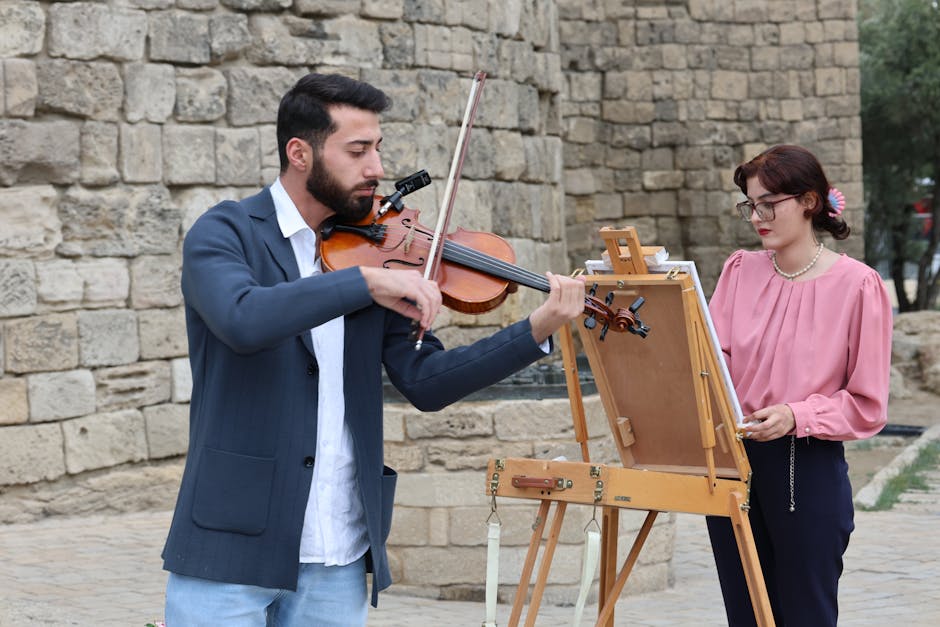
Discover the artistic soul of Brașov on this self-guided walk through historic theaters, art galleries, and legendary concert halls.
 Easy
EasyBrasov, Romania
Explore Brasov’s vibrant craft beer and wine scene on this self-guided stroll through the medieval Old Town and beyond.
 Easy
EasyGothenburg, Sweden
Discover Gothenburg’s 17th-century Dutch foundations, historic canals, and military fortifications on this self-guided architectural walk.
 Easy
EasyNairobi, Kenya
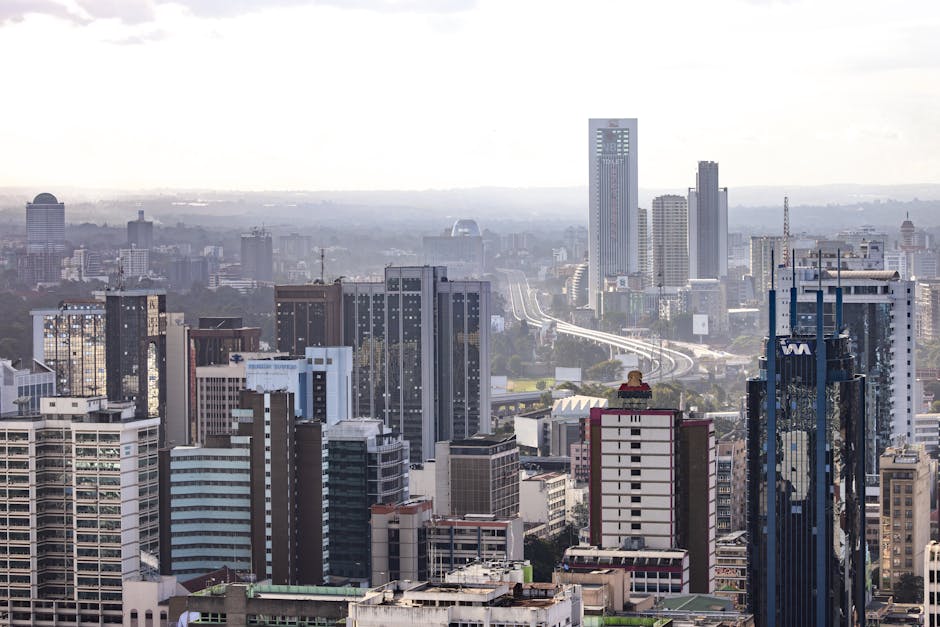
Explore Nairobi's architectural evolution from colonial-era landmarks to iconic Brutalist skyscrapers on this historic self-guided walking route.
 Easy
EasyNairobi, Kenya
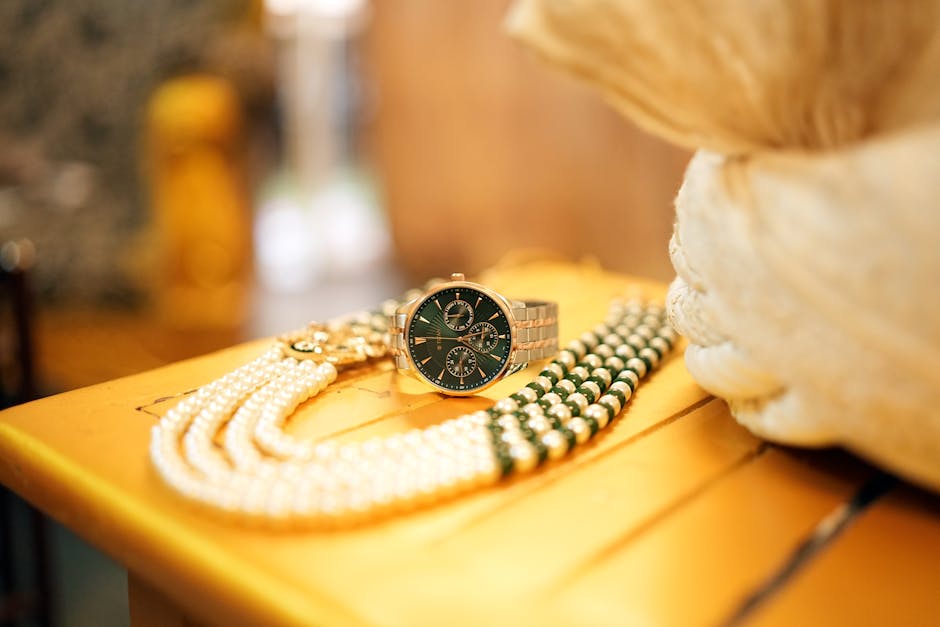
Discover Nairobi's iconic skyline on this self-guided architecture walk through the CBD’s most famous modernist and Brutalist landmarks.
 Easy
EasyKrakow, Poland
Explore the historic heart of Kazimierz on this self-guided walk through synagogues, ancient cemeteries, and vibrant squares.
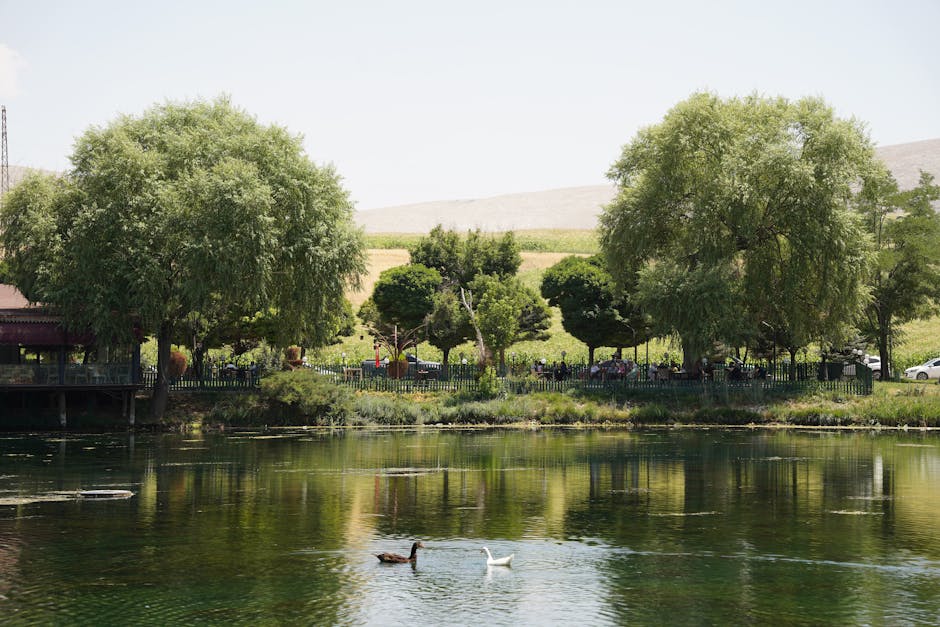 Moderate
Bucharest, Romania
Explore Bucharest’s 'Little Paris' on this self-guided walk through grand parks, royal monuments, and the world-renowned National Village Museum.
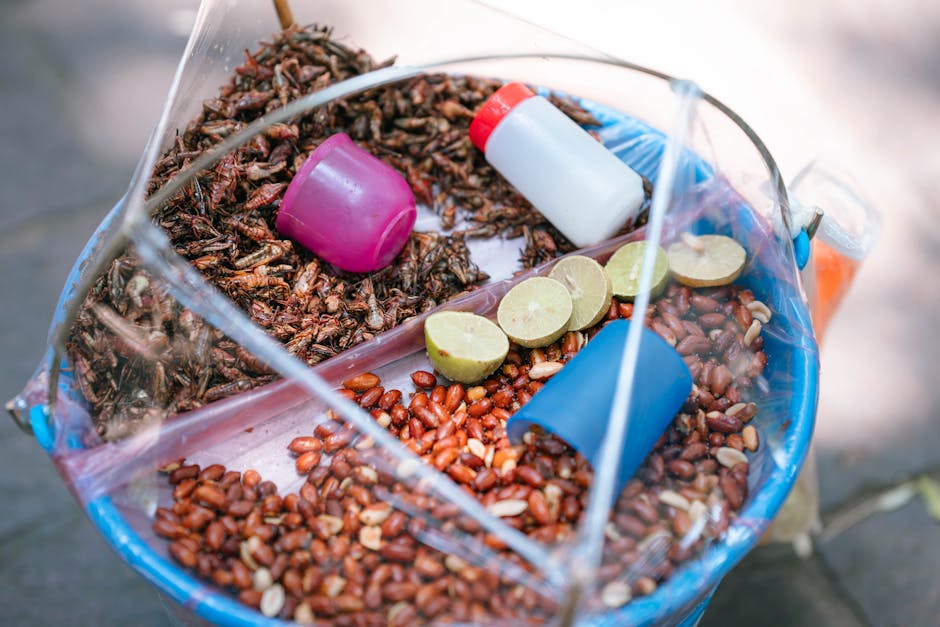 Moderate
Bucharest, Romania
Discover Bucharest’s soul through its flavors, from legendary market 'mici' to historic Old Town gems on this self-guided foodie adventure.
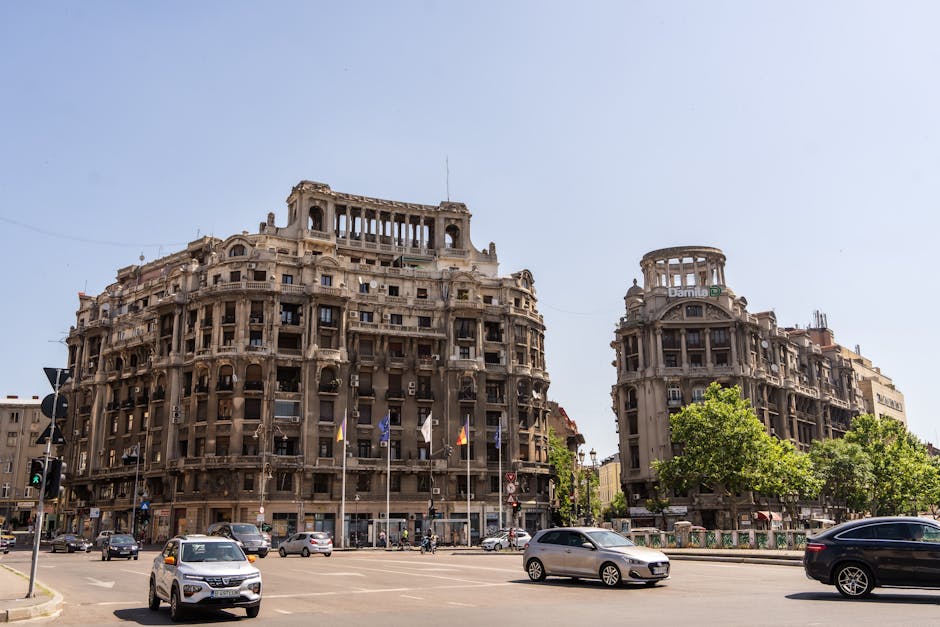 Easy
EasyBucharest, Romania
Discover the elegance of Cotroceni, a neighborhood of royal palaces, lush botanical gardens, and stunning interwar villas on this self-guided walk.
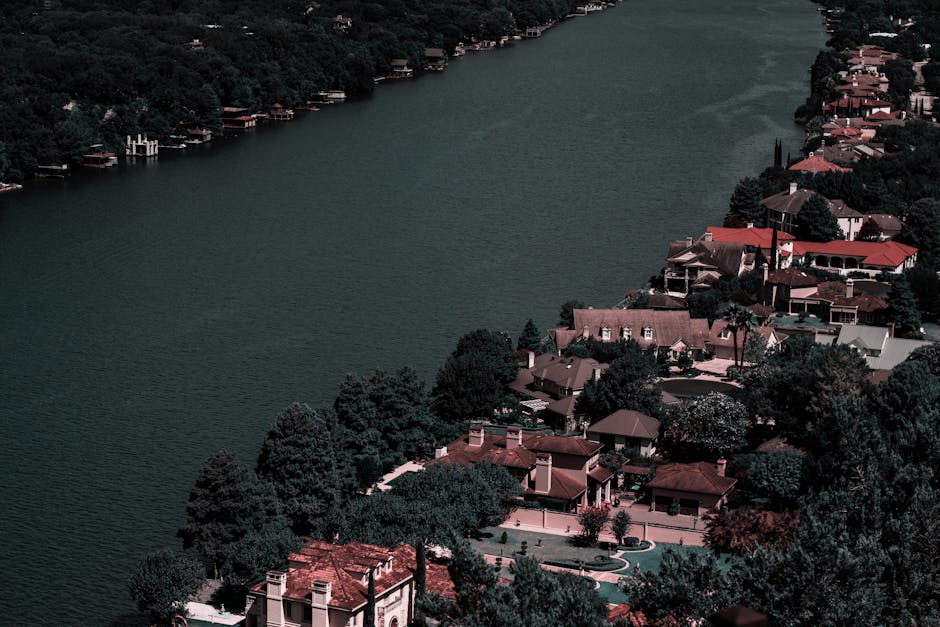 Easy
EasyBucharest, Romania
Discover Bucharest's hidden Armenian Quarter on this self-guided walk through merchant history, elegant villas, and the city's oldest private home.