Self-guided audio tour in Vilnius
Start Free on iPhone
Start free on iPhone to unlock this self-guided walking tour in Vilnius. Hear all the stories that make it amazing, walk at your own pace, and begin whenever you want.
Your Private Tour Guide
Vilnius is a city where every cobblestone seems to whisper a line of poetry. This self-guided walk invites you to uncover the literary soul of Lithuania's capital, wandering through the narrow, atmospheric alleys of the Old Town and beyond. Known for its UNESCO-listed architecture, Vilnius has long been a sanctuary for writers, dreamers, and rebels. From the Romanticism of the 19th century to the avant-garde spirit of the modern era, this neighborhood stroll reveals how the city’s complex history is etched into its walls and statues. You will begin in the heart of the historic center, exploring the legacy of Adam Mickiewicz, the quintessential Romantic poet of the region. As you move through the winding streets, you will encounter Literatų Street, a unique open-air gallery where hundreds of small artworks pay tribute to the giants of Lithuanian and international literature. The route also takes you past the prestigious Vilnius University, a bastion of knowledge since the 16th century, and the elegant headquarters of the Lithuanian Writers' Union. This walking route isn't just about the classics; it also embraces the city's quirky artistic defiance. You will see how Vilnius honors its legends—from the autobiographical statues of Romain Gary to the unexpectedly iconic memorial of Frank Zappa, which symbolizes the city's hard-won cultural freedom. Whether you are a book lover or simply a traveler looking to see a different side of the city, this audio walk provides the context and stories that turn a simple walk into a journey through time. Discover the places where Nobel laureates lived, where forbidden books were smuggled, and where contemporary art meets ancient tradition. This self-guided adventure allows you to set your own pace, perhaps stopping for a coffee in a hidden courtyard or spending extra time admiring the intricate details of the literary wall. It is the perfect way to experience a walking tour Vilnius offers to those who prefer independence over a rigid schedule.
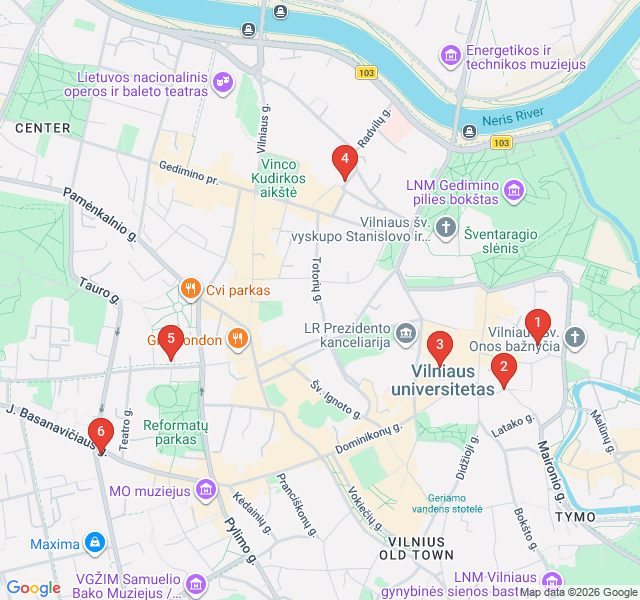
Numbers indicate the order of stops on the tour.
Welcome to the start of your literary journey. This apartment-museum is where Adam Mickiewicz, the most celebrated Romantic poet of Poland and Lithuania, lived in 1822. It was here that he worked on 'Gražyna,' a poem that celebrated Lithuanian history. Mickiewicz was a man between worlds, writing in Polish but deeply rooted in the Lithuanian landscape. The museum is tucked away in a quiet courtyard, offering a glimpse into the 19th-century intellectual life of Vilnius. As you stand here, imagine the secret student societies that met in rooms like these, plotting both literary revolutions and national uprisings against the Russian Empire. His life of exile and passion set the stage for the city's romantic identity.
This narrow street is perhaps the most Instagram-worthy spot for book lovers in Europe. In 2008, a group of artists decided to revitalize this alleyway by installing small pieces of art—metal, ceramic, and glass—dedicated to writers who have a connection to Vilnius. There are now over 200 plaques. Look for the small teeth, the wooden carvings, and the abstract metalwork. You'll find tributes to Nobel Prize winners like Czesław Miłosz and Wisława Szymborska, alongside local legends. It’s an evolving gallery that proves literature isn't just found in books, but is a living, breathing part of the city’s physical structure. Take your time to find a piece that speaks to you.
You are standing near one of the oldest libraries in Central and Eastern Europe, founded in 1570. This institution has been the intellectual heartbeat of Lithuania for centuries. The library houses the first printed Lithuanian book, the Catechism of Martynas Mažvydas. The architecture here is a stunning mix of Gothic, Renaissance, and Baroque styles. During the periods of occupation, this library served as a secret vault for Lithuanian culture and language. The courtyards surrounding the library are named after famous alumni and professors, many of whom were the very poets and writers we celebrate today. It is a monument to the enduring power of the written word in the face of history.
This grand building, with its ornate interiors, is the headquarters of the Lithuanian Writers' Union. During the Soviet era, this was a place of both prestige and intense scrutiny. Authors would gather here to discuss their work, often navigating the fine line between artistic expression and political censorship. Today, it remains a hub for the city's literary elite, hosting readings and festivals. The architecture itself, with its neo-Baroque flourishes, reflects the importance Lithuania places on its storytellers. It represents the formal side of the city's literary life, contrasting with the bohemian street art you saw earlier. It is a place where the craft of writing is still treated with immense reverence.
You might wonder what an American rock musician is doing on a literary and historical walk. Frank Zappa never actually visited Vilnius, but in the mid-1990s, shortly after Lithuania regained independence, a group of local artists erected this bust. For the youth of Vilnius, Zappa represented the ultimate spirit of non-conformity and freedom of speech—values that are central to any literary tradition. It was a test of the new democracy: could they put up a statue of a counter-culture icon just because they wanted to? The government said yes, and today it stands as a symbol of the city's quirky, rebellious, and artistic character that emerged from the shadows of the Iron Curtain.
Our walk ends with a tribute to Romain Gary, the only writer to win the Prix Goncourt twice—a feat he achieved by using a pseudonym. Born in Vilnius as Roman Kacew, he immortalized his childhood here in his autobiographical novel 'Promise at Dawn.' This charming statue depicts Gary as a young boy, clutching a galosh to his chest—a reference to a story where he ate a rubber boot to prove his love to a girl. It’s a poignant reminder of how the streets of Vilnius shaped international literary giants. From here, you are perfectly placed to explore the cafes of the New Town or head back into the heart of the Old Town.
Start Free on iPhone
Explore “Literary Alleys and Romantic Poets” with your very own Private Tour Guide with Zigway. Start free on iPhone, skip the large group and the fixed routes, and hear the city come alive as you go.
Your Private Tour Guide
Don't miss the good stuff
Explore Freely
 Easy
EasyVilnius, Lithuania
Discover the 'Rome of the North' on this self-guided walk through the Baroque churches and historic courtyards of Vilnius Old Town.
 Easy
EasyVilnius, Lithuania
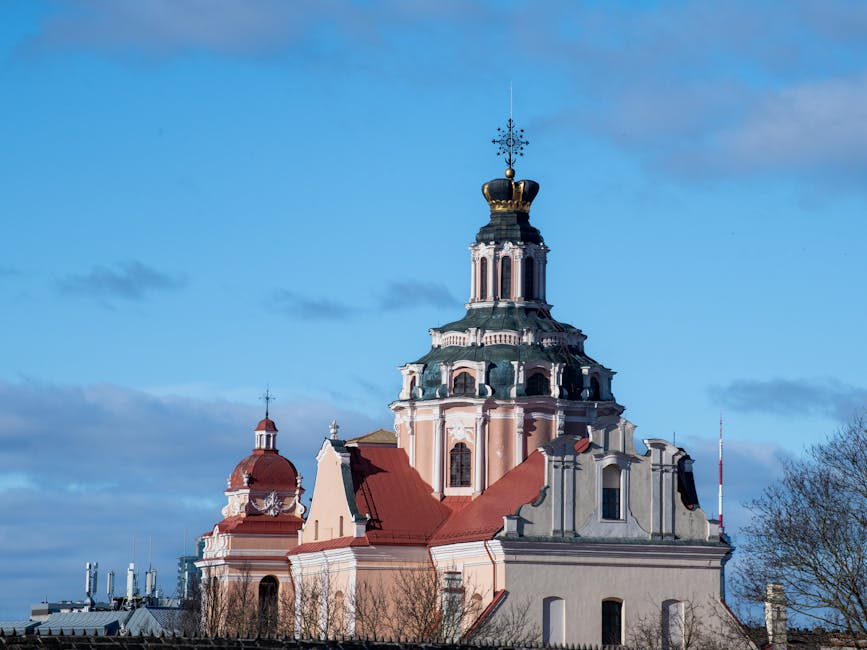
Explore fairy-tale wooden villas, a rare Karaite Kenesa, and peaceful river paths on this self-guided audio walk through Vilnius’ greenest district.
 Easy
EasyVilnius, Lithuania
Explore the quirky, artistic, and self-proclaimed Independent Republic of Užupis on this creative self-guided walk through Vilnius' bohemian heart.
 Challenging
Vilnius, Lithuania
Scale the historic hills of Vilnius on this self-guided walk for breathtaking panoramas and photography of the Old Town.
 Easy
EasyNairobi, Kenya
Discover Nairobi’s literary soul on this self-guided walk through historic libraries, iconic bookshops, and cultural centers in the heart of the CBD.
 Easy
EasyKrakow, Poland
Explore the prestigious Jagiellonian University district, featuring Neo-Gothic architecture, Baroque churches, and Krakow's hidden scholarly gems.
 Easy
EasyKrakow, Poland
Explore the historic heart of Kazimierz on this self-guided walk through synagogues, ancient cemeteries, and vibrant squares.
 Easy
EasyWarsaw, Poland
Discover the hidden courtyards and grand pre-war architecture of Warsaw's most atmospheric neighborhood on this self-guided stroll.