Self-guided audio tour in Bratislava
Start Free on iPhone
Start free on iPhone to unlock this self-guided walking tour in Bratislava. Hear all the stories that make it amazing, walk at your own pace, and begin whenever you want.
Your Private Tour Guide
Rising above the silver waters of the Danube, the Bratislava Castle Heights offer a journey through time and elevation. This self-guided walk invites you to climb from the riverfront to the 'inverted table' castle that defines the city's skyline, before descending into the labyrinthine alleys of the Old Town. Bratislava is a city where every corner tells a story, from the grandeur of the Austro-Hungarian Empire to the somber reminders of the 20th century. The experience begins along the waterfront, where grand museums and galleries showcase the city’s cultural weight. As you ascend toward the castle, the terrain shifts from wide boulevards to steep, winding paths lined with architectural gems. One such highlight is the House of the Good Shepherd, a Rococo masterpiece that stands as one of the narrowest buildings in Europe. Reaching the castle plateau, you are rewarded with sweeping panoramas of three countries—Slovakia, Austria, and Hungary—on a clear day. The meticulously restored Baroque Garden provides a moment of symmetry and peace amidst the history of royal coronations. Descending back into the medieval core, the walking route leads you through Michael’s Gate, the only surviving entrance of the city's original fortifications. The atmosphere shifts to one of civic pride as you enter the Main Square (Hlavné námestie). Here, history is literally embedded in the walls; look for the cannonball fired by Napoleon’s troops still lodged in the Old Town Hall. You will meet local legends in statue form, like the whimsical Schöne Náci, and explore the Neoclassical elegance of the Primatial Palace. This neighborhood stroll concludes with a transition toward the city's industrial past at the Transport Museum near the main station. This route is perfect for those who enjoy a mix of physical activity and deep historical immersion. While the climb to the castle is challenging, the views and the hidden courtyards discovered along the way make it a quintessential Bratislava experience. Use this walking tour Bratislava to explore at your own pace, pausing for a coffee in a hidden courtyard or spending extra time soaking in the vistas from the castle walls.
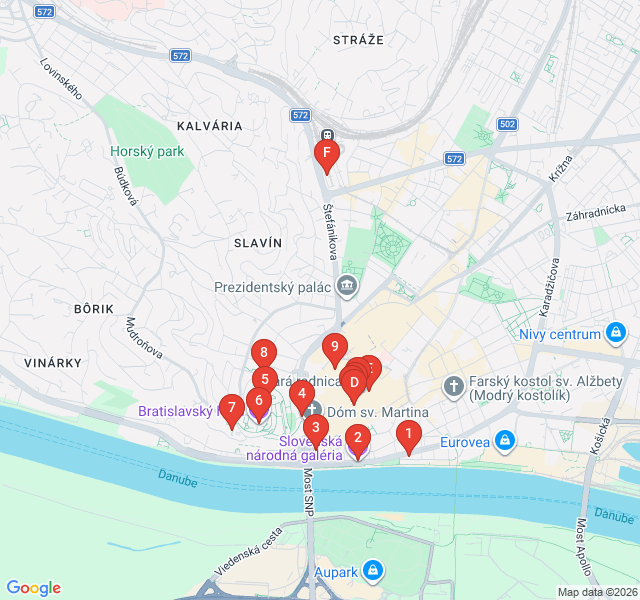
Numbers indicate the order of stops on the tour.
Your self-guided walk begins here at the Slovak National Museum’s Natural History branch. This imposing building on the banks of the Danube serves as a grand introduction to the city's intellectual history. While the exhibits inside cover everything from geology to biodiversity, the building itself is a landmark of the early 20th century. Standing here, you can feel the influence of the river, which has shaped Bratislava's destiny for millennia. The Danube was not just a trade route but a natural defense for the castle you will soon encounter. Take a moment to enjoy the breeze from the water before turning your sights upward toward the hills.
Just a short stroll along the embankment brings you to the Slovak National Gallery. This complex is a fascinating architectural dialogue between the historical Esterházy Palace and the controversial 1970s 'Bridge' extension. This modern addition, which seems to hover over the sidewalk, is a prime example of Slovak architecture from the socialist era. The gallery houses the nation's most significant art collections, but even from the outside, it tells the story of Bratislava's 20th-century transformation. It represents a city that is not afraid to mix the old with the startlingly new, a theme that repeats throughout this route.
This site is one of the most poignant stops in Bratislava. Located near the foot of the SNP Bridge, this memorial stands where the Neolog Synagogue once stood before it was demolished in 1969 to make way for the bridge. The black wall featuring the silhouette of the lost synagogue and the 'Mandatory' sculpture serve as a solemn reminder of the city's vibrant Jewish quarter that was destroyed during the Holocaust and subsequent urban planning. It is a place for reflection on the layers of history that lie beneath the modern pavement, honoring a community that was central to the city's cultural life for centuries.
As you begin your ascent toward the castle, you will encounter one of the most beautiful Rococo buildings in Central Europe. Built in the 1760s, the House of the Good Shepherd is remarkably narrow—constructed to fit a tiny wedge of land at the corner of the castle hill. Legend says it was named after the statue of the Good Shepherd on its corner. Today, it houses a fascinating Museum of Clocks, featuring timepieces from the 17th to the 19th centuries. Its mustard-yellow facade and ornate decorations make it one of the most photographed buildings in the city, standing as a survivor of the old Jewish quarter.
Before you reach the main castle building, take a breath in the Baroque Garden. This space was meticulously restored based on historical plans from the time of Empress Maria Theresa. During her reign in the 18th century, the castle was transformed from a fortress into a royal residence. The garden features perfectly manicured hedges, white statues, and symmetrical gravel paths that offer a stark contrast to the rugged stone walls of the fortifications. It is a peaceful oasis that recreates the aristocratic atmosphere of the Enlightenment era, offering a glimpse into the luxurious lifestyle of the Hungarian royalty who once walked here.
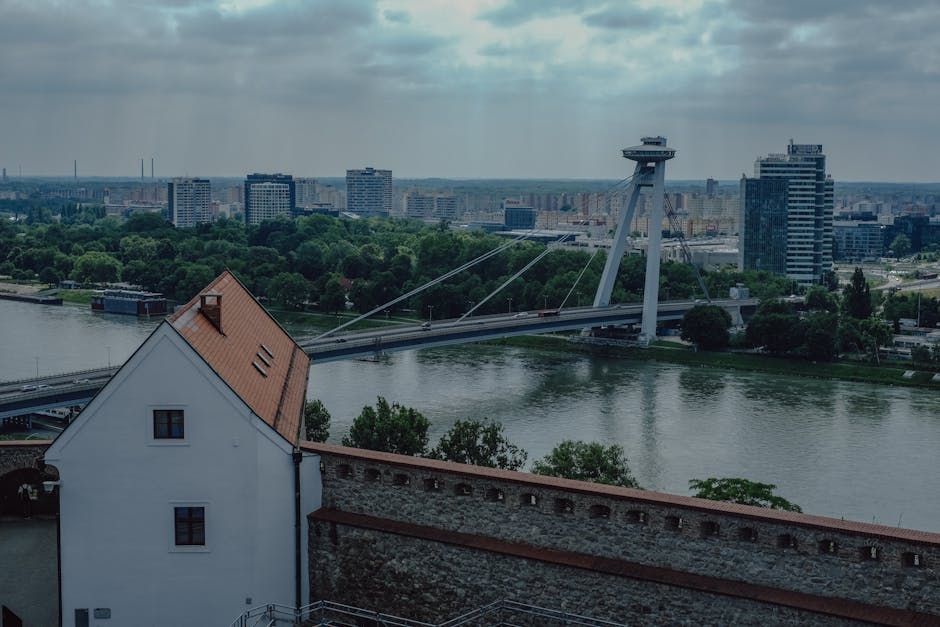
Standing atop the rocky hill, Bratislava Castle is the unmistakable icon of the city. Often described as looking like an 'inverted table' due to its four corner towers, the castle site has been inhabited since the Stone Age. It has served as a Celtic oppidum, a Roman border post, and a seat for Hungarian kings. The current look is a result of a massive mid-20th-century reconstruction after the castle sat in ruins for over 140 years following a fire in 1811. From the terrace, look out over the Danube; you can see the modern Petržalka district and, on clear days, the wind turbines of Austria and the hills of Hungary.
Right next to the castle stands the National Council of the Slovak Republic. This modernist building, completed in the 1990s, serves as the seat of the Slovak parliament. While it lacks the ancient history of the castle, its location emphasizes the continuity of power in Bratislava. The square in front of the parliament offers some of the best unobstructed views of the UFO Bridge (Most SNP). This stop highlights the modern political identity of Slovakia as a young independent nation, standing literally and figuratively on the foundations of its long and complex history.
Descending from the castle heights, we move into the realm of modern art and optical illusions. Gallery Multium is a unique space inspired by the works of Matej Krén and Yayoi Kusama. It uses mirrors and lights to create six different 'infinity' rooms that play with your perception of space and depth. It is a playful, contemporary contrast to the heavy stone history of the castle. The gallery demonstrates how Bratislava's creative scene is evolving, using the historic buildings of the Old Town to house experiences that are entirely forward-looking and immersive.
You are now entering the medieval heart of Bratislava through Michael's Gate. This is the only gate preserved from the city's original medieval fortifications, which once included four entrances. The copper-roofed tower, topped with a statue of St. Michael and the Dragon, dates back to the 14th century, though its current Baroque appearance is from the 1750s. As you pass through the gate's arch, look for the 'Zero Kilometer' plate on the ground, showing the distances to 29 world capitals. This gate was the traditional entrance for kings arriving for their coronation ceremonies.
The Old Town Hall is not just one building, but a complex of several houses joined together over centuries. It is the oldest city hall in the country. If you look closely at the tower's facade, you can see a cannonball embedded in the wall—a souvenir from the Napoleonic Siege of 1809. The inner courtyard is a hidden gem of Renaissance architecture, often hosting concerts and markets. Today, it houses the Bratislava City Museum, documenting the town's history from ancient times. The mix of Gothic, Renaissance, and Baroque styles here perfectly encapsulates the architectural evolution of the city.
Welcome to the Main Square, the civic heart of Bratislava. For centuries, this was where markets were held, proclamations were read, and executions took place. Today, it is a vibrant meeting spot lined with embassies and historic buildings. The square is famous for its atmosphere and its statues. Notice the French soldier leaning on a bench—a nod to Napoleon's presence here. The square's architecture is a tapestry of the city's wealthy past, showcasing the influence of the various cultures—Slovak, German, and Hungarian—that have called Bratislava home.
At the center of the Main Square stands Maximilian's Fountain, also known as Roland's Fountain. Commissioned by King Maximilian II in 1572, it was the city's first public water supply. The statue at the top depicts a knight in armor, often identified as the legendary knight Roland, the protector of city rights. Local legend says that the knight turns around and bows toward the Old Town Hall exactly at the stroke of midnight on New Year's Eve, but only to those with a pure heart. It remains a favorite meeting point for locals and a symbol of the city's royal patronage.
Among the many statues in the Old Town, Schöne Náci is perhaps the most beloved. Unlike the kings and soldiers, this silver statue represents a real person: Ignác Lamár. He was a local character in the early 20th century who, despite having a difficult life, walked the streets in a top hat and tails, bowing to women and offering them flowers or songs. He became a symbol of the city's polite, old-world charm. His presence here reminds us that the history of a city is built not just by its rulers, but by the unique personalities who brought joy to its streets.
This Neoclassical palace is one of the most significant buildings in Slovakia. Completed in 1781 for Archbishop József Batthyány, it is topped with a massive cast-iron cardinal's hat. The palace is most famous for its 'Hall of Mirrors,' where the Peace of Pressburg was signed in 1805 after Napoleon’s victory at Austerlitz. Inside, you can also find a rare collection of 17th-century English tapestries that were hidden in the walls and rediscovered during a renovation in 1903. Today, it serves as the seat of the Mayor of Bratislava, continuing its role as a center of power.
Located in the original site of the first steam railway station in Bratislava, this museum offers a fascinating look at the evolution of movement in Slovakia. From vintage automobiles and motorcycles to massive steam locomotives and historical signaling equipment, the collection is housed in warehouses dating back to the 19th century. It provides a unique industrial contrast to the Baroque and Rococo beauty seen earlier on the heights. As you walk through the various halls, you can see how technology transformed the city from a royal coronation site into a modern industrial hub. This stop marks a shift from the royal history of the castle to the practical innovation that drove the city's growth.
Start Free on iPhone
Explore “Bratislava Castle Heights and Hidden Courtyards” with your very own Private Tour Guide with Zigway. Start free on iPhone, skip the large group and the fixed routes, and hear the city come alive as you go.
Your Private Tour Guide
Don't miss the good stuff
Explore Freely
 Easy
EasyBratislava, Slovakia
Discover Bratislava’s soul through its historic pubs and traditional flavors on this self-guided walk through the atmospheric Old Town.
 Moderate
Bratislava, Slovakia
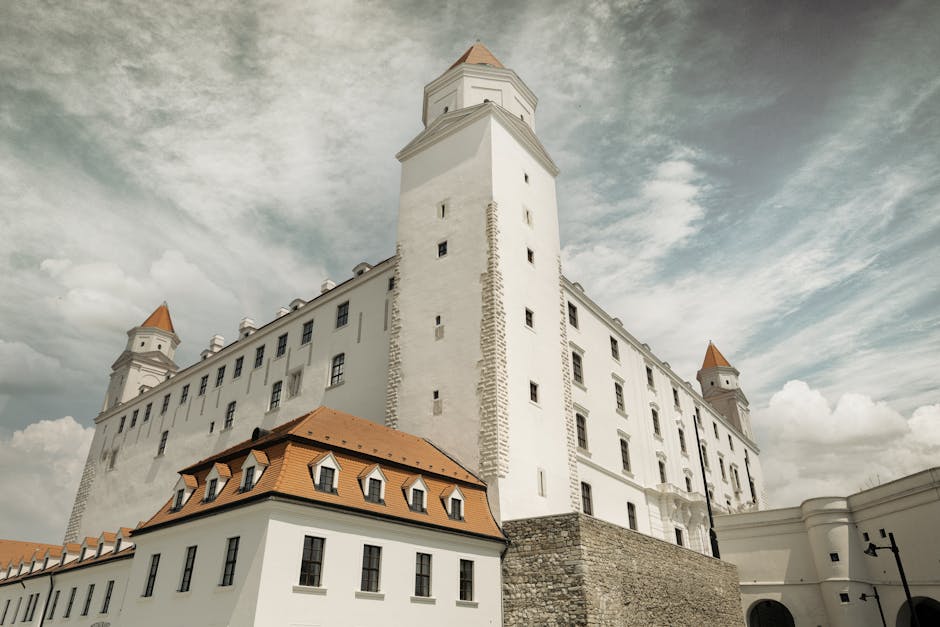
Explore the resilient history of Pressburg's Jewish community on this poignant self-guided walk through Bratislava's Old Town and Castle Hill.
 Moderate
Bratislava, Slovakia
Discover Bratislava’s transformation from industrial heartland to a hub of street art and futuristic Zaha Hadid architecture on this self-guided walk.
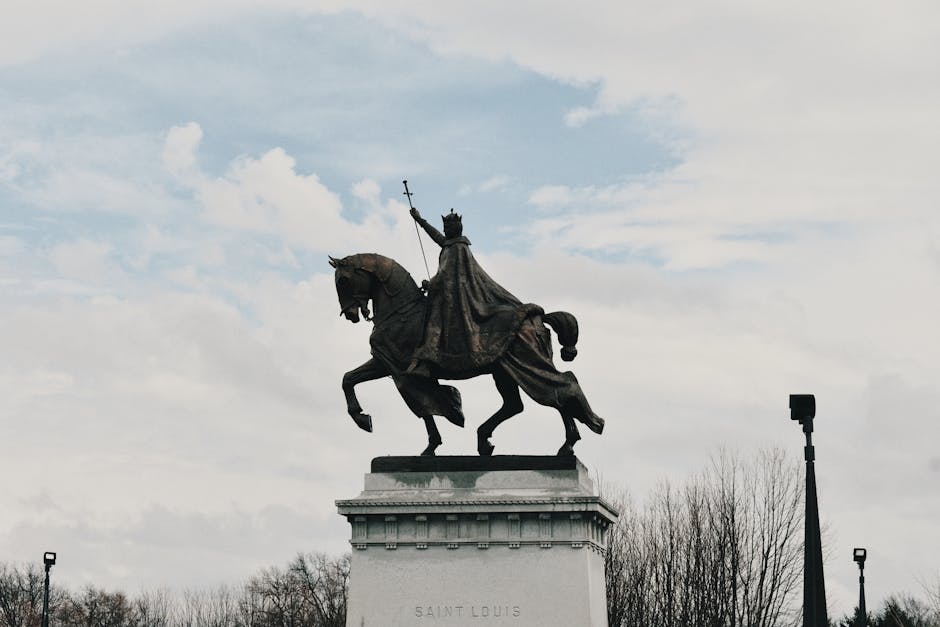 Easy
EasyBratislava, Slovakia
Follow the path of Hungarian kings through Bratislava's Old Town. Discover Michael's Gate, royal palaces, and the cathedral of coronations.
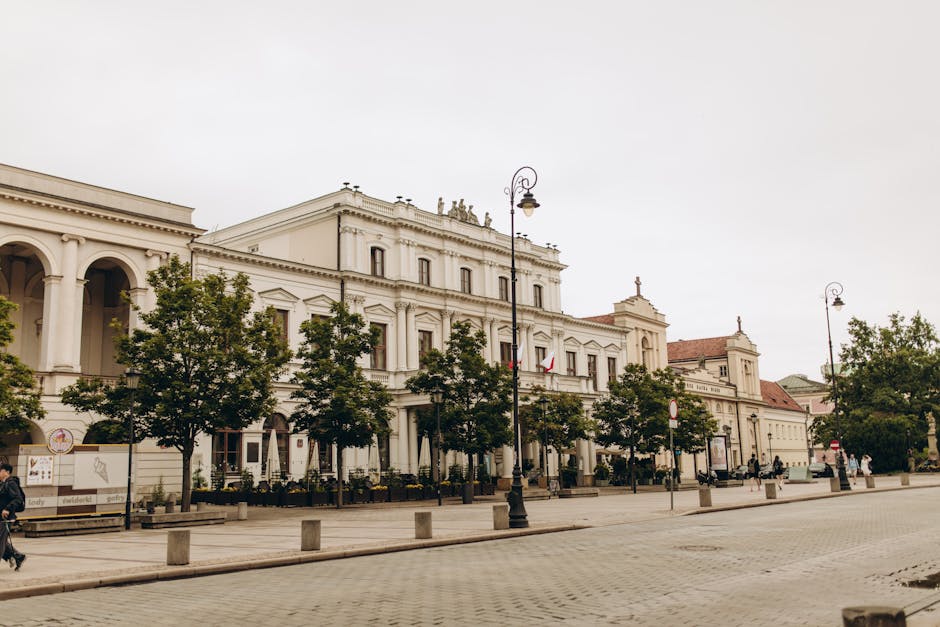 Easy
EasyWarsaw, Poland
Explore the 'Polish Versailles' at your own pace. Discover Baroque architecture, royal history, and stunning gardens on this self-guided walk.
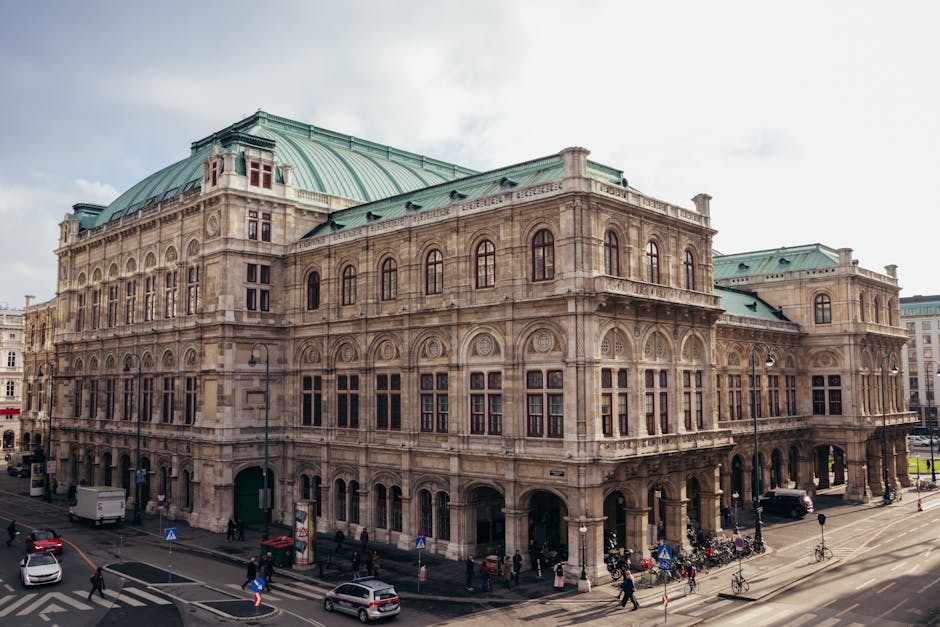 Moderate
Vienna, Austria
Follow the footsteps of Mozart and Strauss through Vienna’s historic center on this self-guided walk through the city's rich musical history.
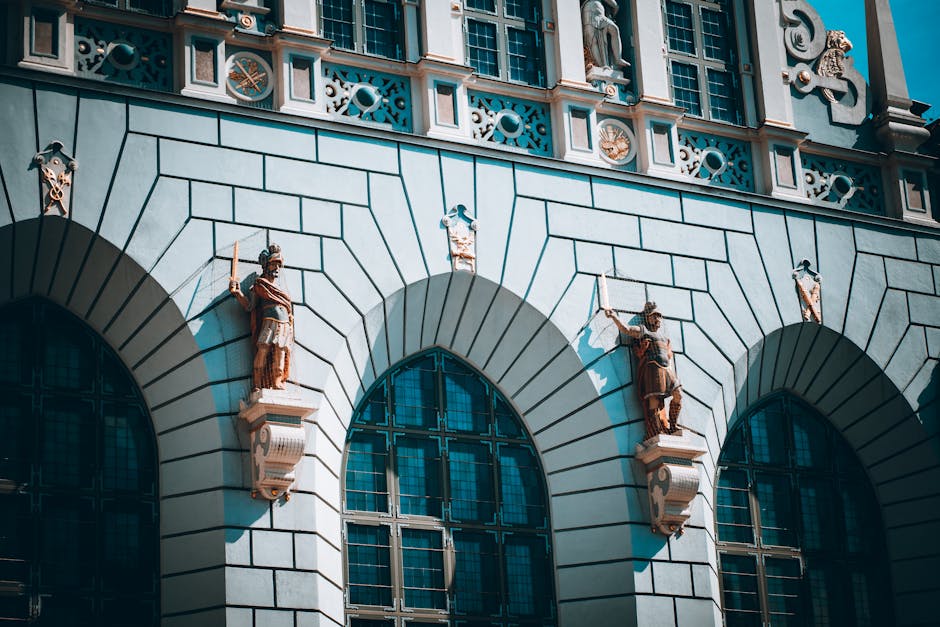 Easy
EasyGdansk, Poland
Discover the opulent Royal Way of Gdansk at your own pace. Explore Hanseatic history, gilded architecture, and the iconic Neptune's Fountain.
 Moderate
Gdansk, Poland
Discover the origins of WWII in Gdansk on this self-guided walk through heroic last stands, massive museums, and strategic hilltop fortifications.