Self-guided audio tour in Riga
Start Free on iPhone
Start free on iPhone to unlock this self-guided walking tour in Riga. Hear all the stories that make it amazing, walk at your own pace, and begin whenever you want.
Your Private Tour Guide
While Riga is famous for its fairytale Old Town and whimsical Art Nouveau, another layer of history defines the city skyline: the Soviet era. This self-guided walk invites you to explore the architectural and historical legacy left by five decades of occupation, from the brutalist monuments in the city center to the soaring 'Stalinist skyscraper' that dominates the Moscow District. You will discover how the city's urban fabric was reshaped to reflect Communist ideals and how these spaces have been repurposed in modern-day Latvia. The journey begins at the edge of the Old Town, where the Museum of the Occupation stands as a stark contrast to its medieval surroundings. From there, you will stroll through the central parks to see the Riga Congress Centre, a prime example of late-Soviet functionalism, before heading toward the darker side of history at 'The Corner House'—the former KGB headquarters. The walking route concludes in the Latgale Suburb at the Latvian Academy of Sciences, a building that echoes the 'Seven Sisters' of Moscow. This audio walk provides a nuanced look at Riga's complex 20th-century history, offering a deeper understanding of the city beyond the typical tourist paths. Whether you are an architecture enthusiast or a history buff, this neighborhood stroll offers a compelling narrative of resilience and transformation. Explore at your own pace and see how Riga balances its Soviet past with its European future.
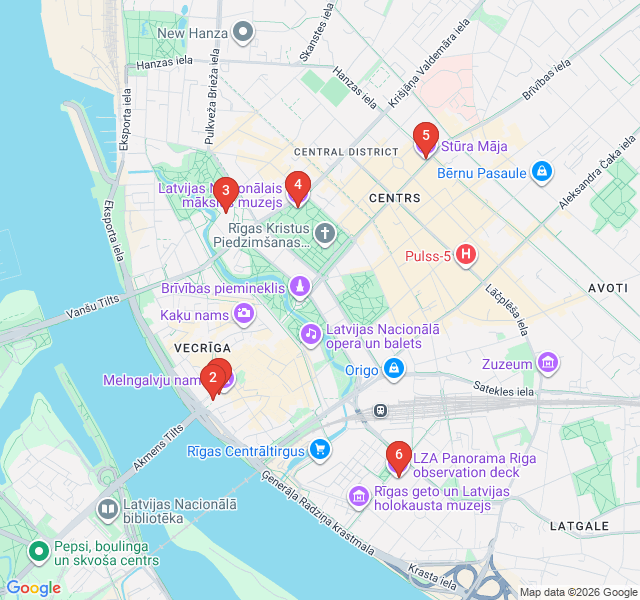
Numbers indicate the order of stops on the tour.
Start your journey at a building that intentionally breaks the medieval aesthetic of Town Hall Square. This dark, copper-clad structure was originally built in 1970 to commemorate the Latvian Red Riflemen. Today, it serves as the Museum of the Occupation. Its windowless, boxy design was meant to project Soviet strength and modernity. Since Latvia regained independence, the building has been expanded with a 'House of the Future' addition, creating a dialogue between the dark years of the past and a bright, transparent future. Take a moment to observe the contrast between the museum and the reconstructed House of the Blackheads nearby.
Just outside the museum stands the red granite Latvian Riflemen Monument, erected in 1971. This is one of the most complex symbols in Riga. Originally dedicated to the 'Red Riflemen' who protected Lenin during the Russian Revolution, the monument's meaning has shifted over time. Today, the inscription simply honors the 'Latvian Riflemen,' acknowledging those who fought for Latvian independence as well as those who supported the Bolsheviks. The three figures stand tall in a style known as Soviet Heroic Realism, characterized by blocky shapes and an imposing, stoic presence that was meant to inspire awe and loyalty to the state.
As you walk toward Kronvalda Park, you will encounter the Riga Congress Centre, built in 1982. This was originally the Political Education Center of the Communist Party. It is an excellent example of late-Soviet architecture, featuring heavy use of dolomite and a horizontal, functionalist form. Notice the large plaza in front, designed for mass gatherings and official ceremonies. While many buildings from this era have been demolished, the Congress Centre remains a vital part of Riga’s cultural life, now hosting concerts and conferences, showing how the city has repurposed Communist-era infrastructure for democratic use.
While the main building of the National Museum of Art dates back to the Czarist era, it played a central role during the Soviet occupation as the primary venue for Socialist Realism. This state-approved art style was designed to promote Communist values, often depicting heroic workers and idealized rural life. In the post-Soviet era, the museum underwent a massive renovation, adding a modern glass and underground wing. This blend of Czarist grandeur, Soviet-era curation history, and contemporary Latvian design makes it a perfect spot to reflect on how art was used as a tool for propaganda and how it has since been reclaimed.
Located at the intersection of Brīvības and Stabu streets, this beautiful neoclassical building hides a dark secret. Known as the 'Corner House,' it was the headquarters of the KGB in Latvia. For decades, it was a place of surveillance, interrogation, and imprisonment. The windows on the ground floor were often boarded up or painted over to hide the activities inside from the public. Today, part of the building is open as a museum. It remains one of the most somber reminders of the Soviet security apparatus and the atmosphere of fear that defined life under the regime. The contrast between its elegant exterior and its grim history is striking.
To reach the final stop, head toward the Moscow District to find Riga’s only 'Stalinist skyscraper.' Completed in 1958, this building was originally intended to be a 'Kolkhoz Workers' House,' but it was eventually given to the Academy of Sciences. It is part of a series of similar skyscrapers built across the Eastern Bloc, nicknamed 'Stalin’s Birthday Cakes' due to their tiered, wedding-cake shape. Look closely at the facade to see Soviet symbols like hammers, sickles, and wheat ears integrated into the stone. Today, it stands as a landmark of the Latgale Suburb and offers an observation deck with views of the Central Market and the Daugava River.
Start Free on iPhone
Explore “Soviet Legacy and Stalinist Skyscrapers” with your very own Private Tour Guide with Zigway. Start free on iPhone, skip the large group and the fixed routes, and hear the city come alive as you go.
Your Private Tour Guide
Don't miss the good stuff
Explore Freely
 Easy
EasyRiga, Latvia
Explore Riga's lush 'Green Belt,' a scenic chain of historic parks, monuments, and romantic canals along the city's grand 19th-century boulevards.
 Easy
EasyRiga, Latvia
Explore Riga's poetic soul through its grand parks and iconic libraries on this self-guided literary walking route.
 Moderate
Riga, Latvia
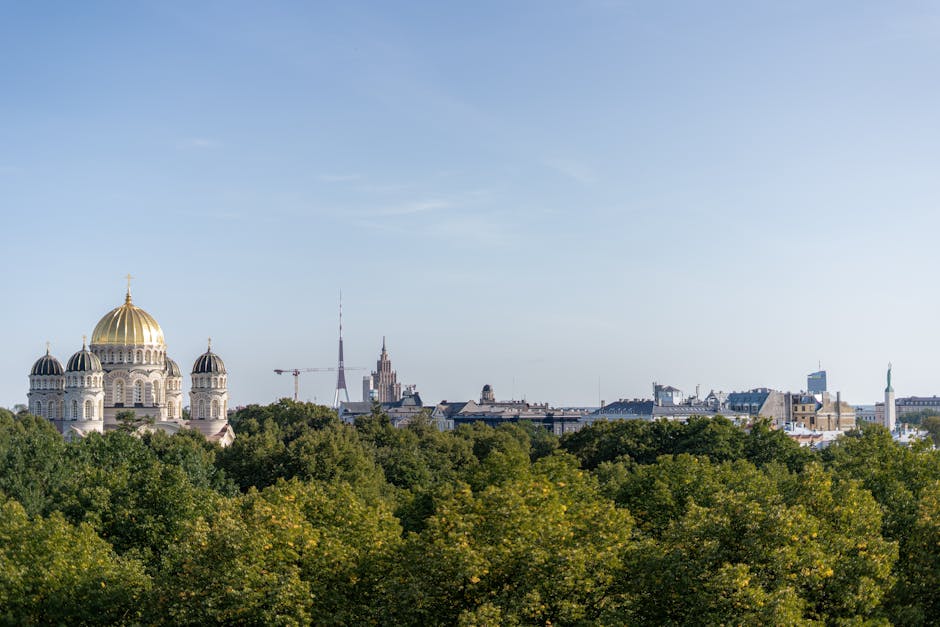
Discover Riga's modern skyline and historic wooden architecture on a scenic island walk with stunning river views and futuristic design.
 Moderate
Riga, Latvia
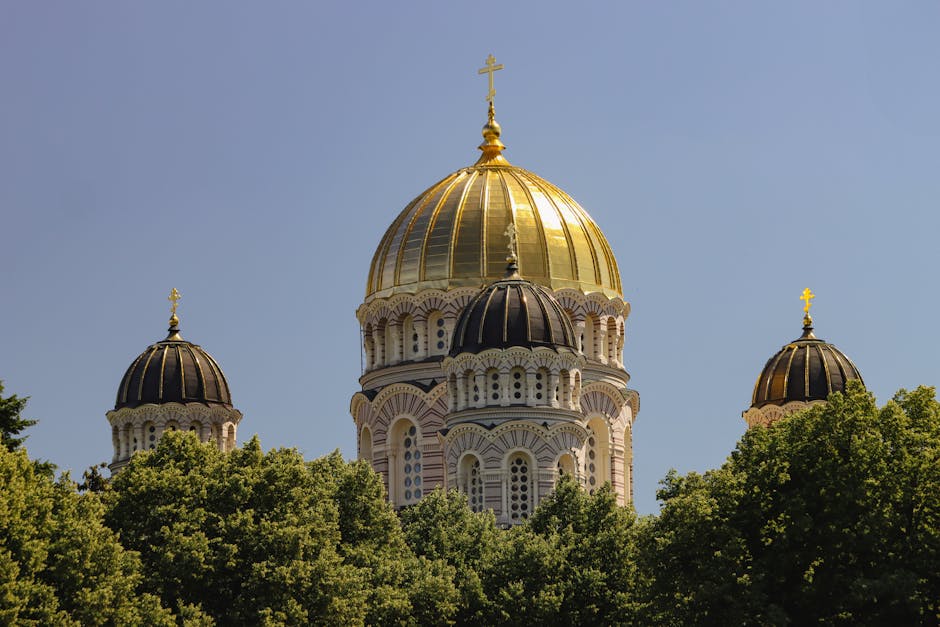
Explore the poignant history of Riga's Jewish community and the Moscow District on this self-guided audio walk through memorials and heritage sites.
 Moderate
Vienna, Austria
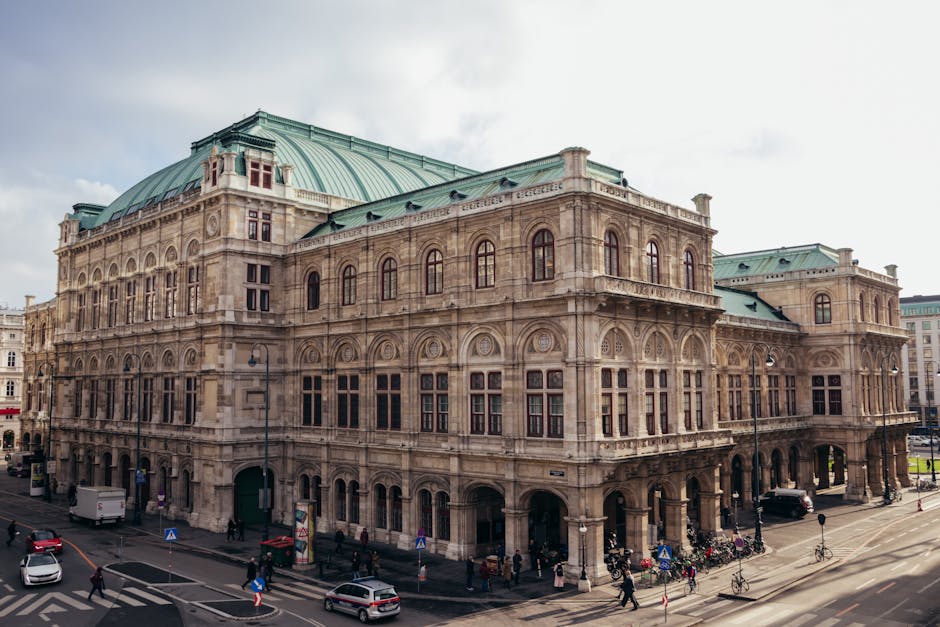
Discover the noir world of The Third Man and Cold War Vienna on this atmospheric self-guided audio walk through the historic Innere Stadt.
 Easy
EasyKrakow, Poland
Explore the prestigious Jagiellonian University district, featuring Neo-Gothic architecture, Baroque churches, and Krakow's hidden scholarly gems.
 Moderate
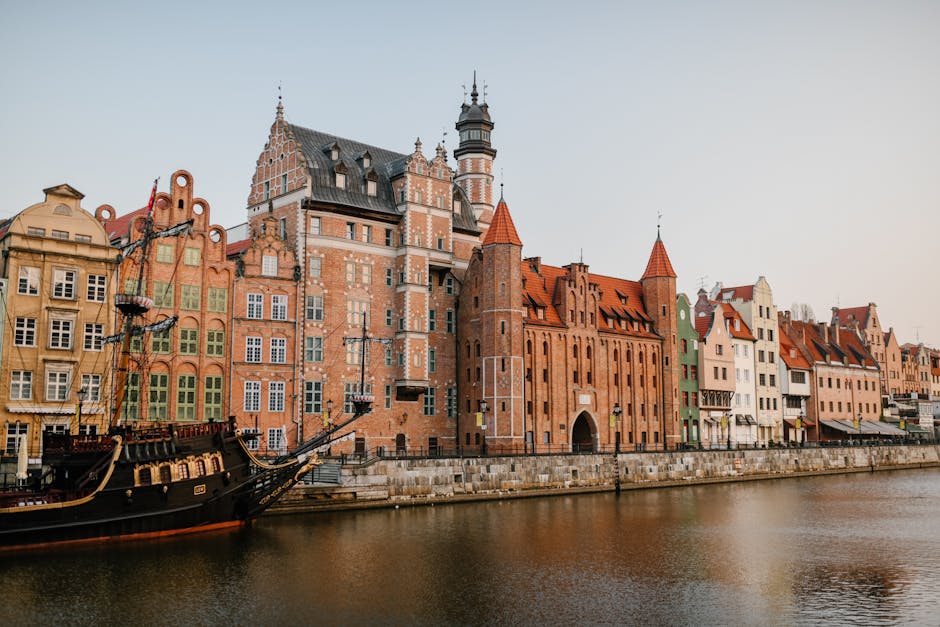
Gdansk, Poland
Discover the bohemian soul of Gdańsk. Explore the literary landmarks of Günter Grass, Prussian villas, and the trendy cafes of historic Wrzeszcz.
 Moderate
Helsinki, Finland
Explore Helsinki's bohemian heart. Discover historic saunas, granite churches, and the vibrant local life of the Kallio neighborhood at your own pace.