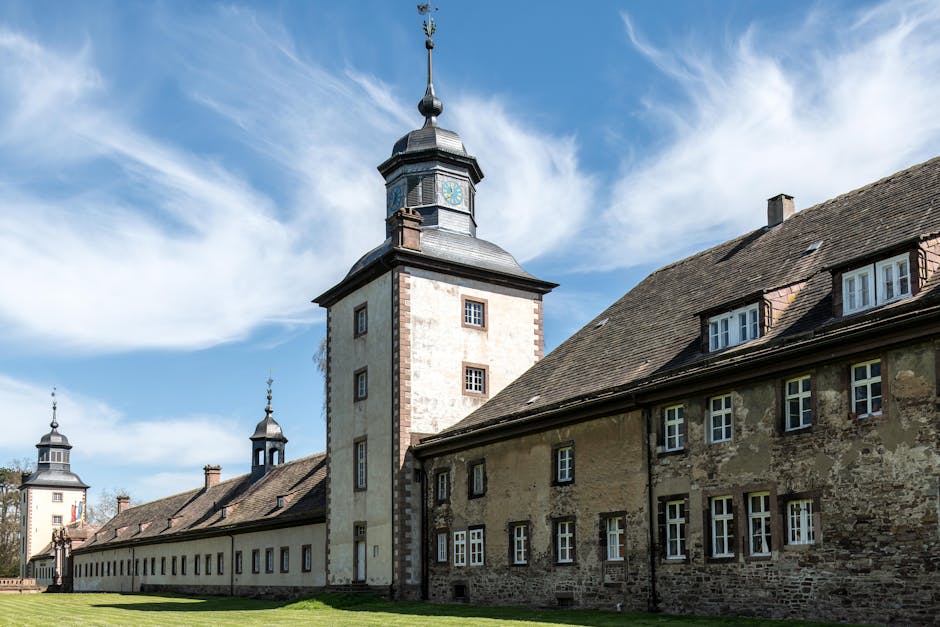
Self-guided audio tour in Limassol
Start Free on iPhone
Start free on iPhone to unlock this self-guided walking tour in Limassol. Hear all the stories that make it amazing, walk at your own pace, and begin whenever you want.
Your Private Tour Guide
Step into the heart of Cyprus’s coastal history with this self-guided walk through Limassol’s Old Town. As you explore this neighborhood stroll, you will uncover the layers of a city that has evolved from a medieval stronghold into a vibrant Mediterranean hub. The journey begins in the shadow of the industrial era at the Lanitis Carob Mill, once the center of the island's 'black gold' trade, before transitioning into the romantic legends of the Middle Ages. Limassol is famously the site where Richard the Lionheart married Berengaria of Navarre in 1191, and this route takes you through the very areas where those royal echoes still linger. This walking tour Limassol experience offers a unique perspective on how maritime commerce and military history shaped the local architecture. You will wander past the imposing stone walls of Limassol Castle, a structure that has served as a fort, a prison, and now a museum. The route then leads you to the Old Port, where the salty breeze meets modern design, providing a perfect contrast between the city’s fishing heritage and its contemporary revitalization. As you continue your self-guided adventure, the path weaves through narrow alleys to discover the religious diversity of the Old Town. From the serene Byzantine presence of St. Antonios Church to the striking minaret of the Grand Mosque (Djami Kebir), you will witness the multicultural tapestry of Cyprus. This walking tour Limassol route is designed for those who want to discover at their own pace, allowing time to linger at a seaside café or admire the intricate stonework of historic facades. Whether you are a history enthusiast or a fan of atmospheric architecture, this walking route provides a comprehensive introduction to the soul of the city.
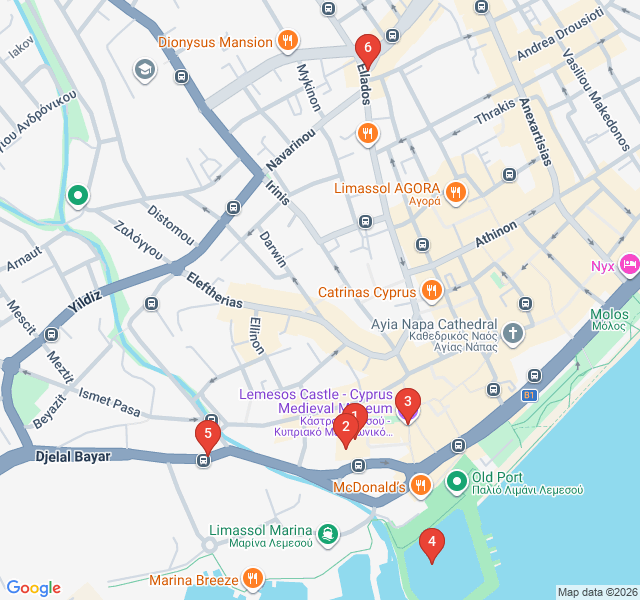
Numbers indicate the order of stops on the tour.
Start your self-guided adventure at the Lanitis Carob Mill. In the early 20th century, carobs were known as the 'black gold' of Cyprus. This mill was one of the largest on the island, processing the pods of the carob tree for export across the globe. As you look at the stone structure, imagine the bustle of workers and the sweet, earthy scent that once filled the air. The carob industry was the backbone of Limassol's economy before tourism took over. Today, the building stands as a beautifully preserved example of industrial heritage, housing museum exhibits that showcase the original machinery used to crush the pods and extract their valuable seeds.
Just a short walk away, you encounter a name that evokes the city's most famous royal legend. In 1191, during the Third Crusade, King Richard the Lionheart of England was forced ashore in Limassol by a storm. It was here that he married Berengaria of Navarre, making her the Queen of England. This is historically significant as it is the only time an English Queen has been crowned outside of the British Isles. While the ballroom itself is a modern tribute within a restored historic building, the surrounding area is steeped in the medieval atmosphere of that era. It serves as a reminder of Limassol's brief but pivotal role in the Crusader history of the Mediterranean.
The imposing Limassol Castle is the centerpiece of the Old Town. Though the current structure dates largely from the Ottoman period in the 16th century, it sits upon the foundations of a much earlier Byzantine fortress. Over the centuries, it has served as a defensive stronghold, a residence for the Lusignan kings, and even a prison under British rule. Its thick stone walls have withstood earthquakes and sieges. Today, it houses the Cyprus Medieval Museum, containing fascinating artifacts ranging from pottery to tombstones. Take a moment to walk around the perimeter and appreciate the blend of architectural styles that reflect the various empires that have claimed Cyprus as their own.
Moving toward the water, you reach the Old Port Square. For decades, this was the primary gateway for trade in Limassol, where fishing boats and cargo ships docked to unload their goods. Following a major renovation, the area has been transformed into a vibrant public space. The modern glass-and-steel buildings now house restaurants and shops, yet the square retains its maritime soul. You can still see small fishing boats bobbing in the water nearby, a testament to the city's enduring connection to the sea. It is a perfect spot to observe the contrast between the historic stone castle behind you and the sleek, contemporary lines of the modern waterfront.
As you head deeper into the western edge of the Old Town, you arrive at St. Antonios Church. This church is a beautiful example of traditional Cypriot ecclesiastical architecture, characterized by its Byzantine influences and sturdy stone construction. It stands in an area that was historically the heart of the Greek Cypriot neighborhood near the port. The interior, often filled with the scent of incense, features traditional icons and a peaceful atmosphere that offers a quiet respite from the busier tourist areas. The church remains an active place of worship and a symbol of the community's spiritual endurance through the centuries.
The final stop on your walking route is the Grand Mosque, also known as Djami Kebir. Located right next to the Limassol Castle, this mosque is one of the most important religious sites for the Turkish Cypriot community in the city. Its slender minaret is a prominent feature of the Old Town skyline. The building was constructed in the 16th century on the site of an earlier Christian church, a common practice in Cyprus that highlights the layered religious history of the island. The surrounding narrow streets are filled with traditional houses and small workshops, providing a glimpse into the daily life of Limassol's diverse past. This is where your journey through the medieval echoes of the city concludes.
Start Free on iPhone
Explore “Medieval Echoes: The Castle and Old Port” with your very own Private Tour Guide with Zigway. Start free on iPhone, skip the large group and the fixed routes, and hear the city come alive as you go.
Your Private Tour Guide
Don't miss the good stuff
Explore Freely
 Easy
EasyLimassol, Cyprus
Explore Limassol's spiritual heart on this self-guided walk through medieval castles, Orthodox cathedrals, and historic mosques.
 Easy
EasyLimassol, Cyprus
Discover tranquility on this self-guided walk through Limassol's coastal forest, featuring eucalyptus groves, sea breezes, and scenic viewpoints.
 Easy
EasyLimassol, Cyprus
Explore the heart of Limassol! Discover colonial architecture, vibrant university life, and the city's best shopping on this self-guided walk.
 Easy
EasyLimassol, Cyprus
Discover Limassol’s architectural evolution from neoclassical libraries to the ultra-modern luxury of the Marina on this self-guided audio walk.
 Easy
EasyGothenburg, Sweden
Discover Gothenburg’s 17th-century Dutch foundations, historic canals, and military fortifications on this self-guided architectural walk.
 Easy
EasyKrakow, Poland
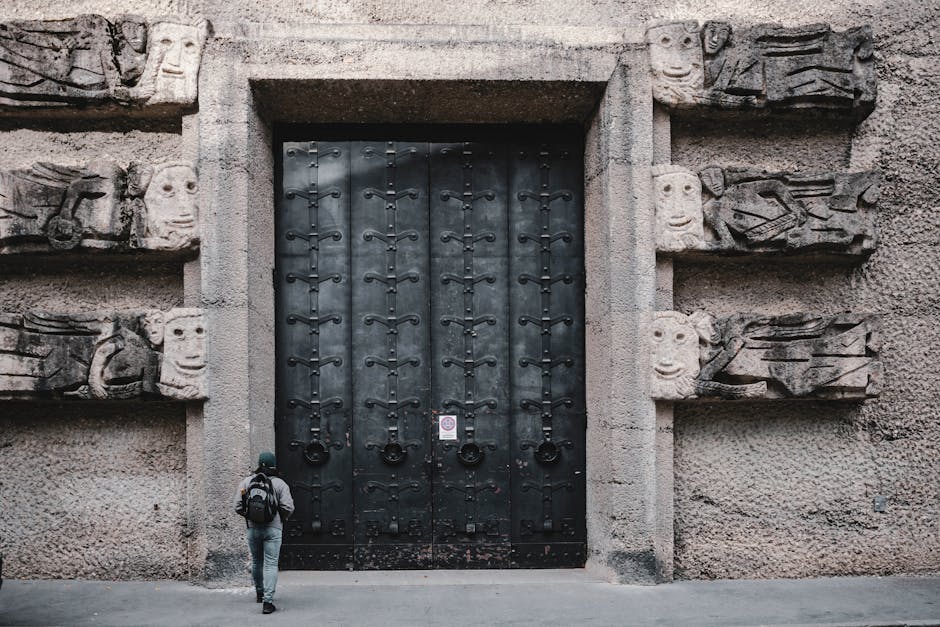
Explore the historic heart of Kazimierz on this self-guided walk through synagogues, ancient cemeteries, and vibrant squares.
 Easy
EasySalzburg, Austria
Discover the 'Rome of the North' on this self-guided walk through the Baroque squares and monumental legacy of Salzburg’s Prince-Archbishops.
 Easy
EasyNairobi, Kenya
Explore Nairobi's architectural evolution from colonial-era landmarks to iconic Brutalist skyscrapers on this historic self-guided walking route.
 Easy
EasyNicosia, Cyprus
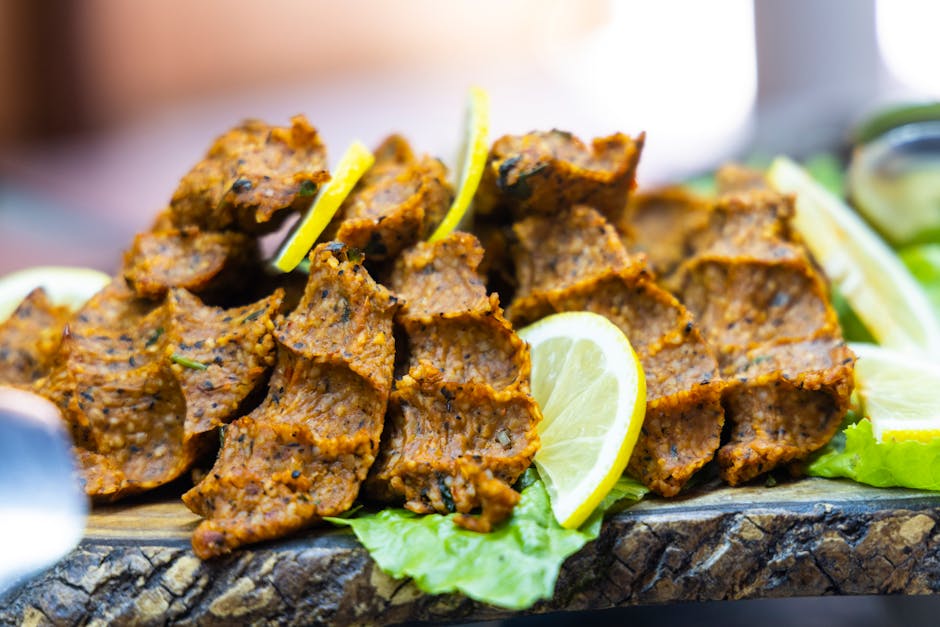
Explore Nicosia's culinary heart! A self-guided stroll from historic coffee roasters to modern meze spots across the city's unique divided center.
 Easy
EasyNicosia, Cyprus
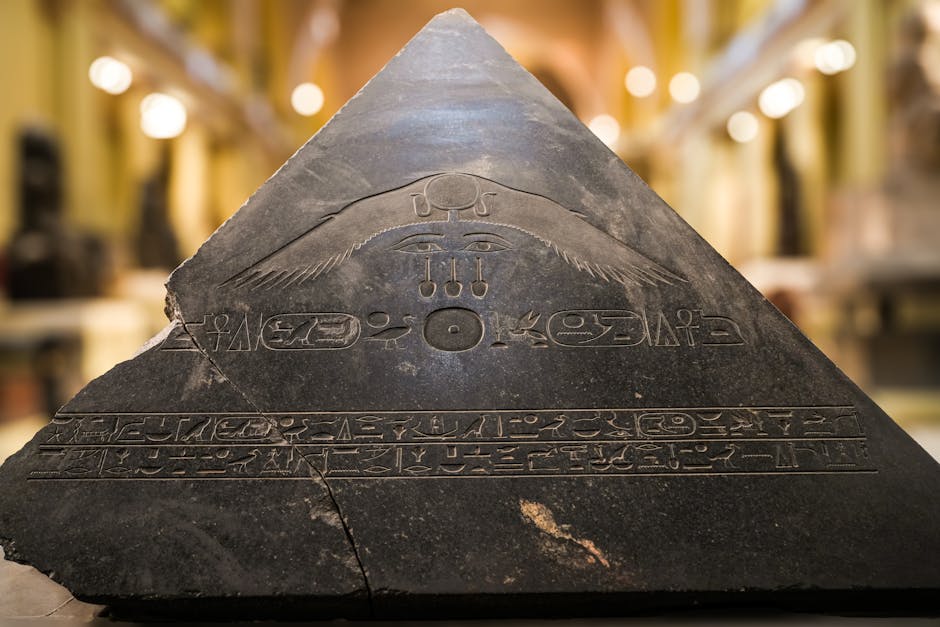
Capture the soul of the world's last divided capital on this self-guided walk through Nicosia's historic streets, street art, and panoramic views.
 Easy
EasyNicosia, Cyprus
Explore Nicosia's rich heritage on this self-guided walk through premier museums, Ottoman mansions, and world-class archaeological collections.
 Easy
EasyNicosia, Cyprus
Explore Nicosia’s modern side, from Zaha Hadid’s fluid architecture to vibrant street art and Jean Nouvel's iconic bioclimatic 'White Walls.'