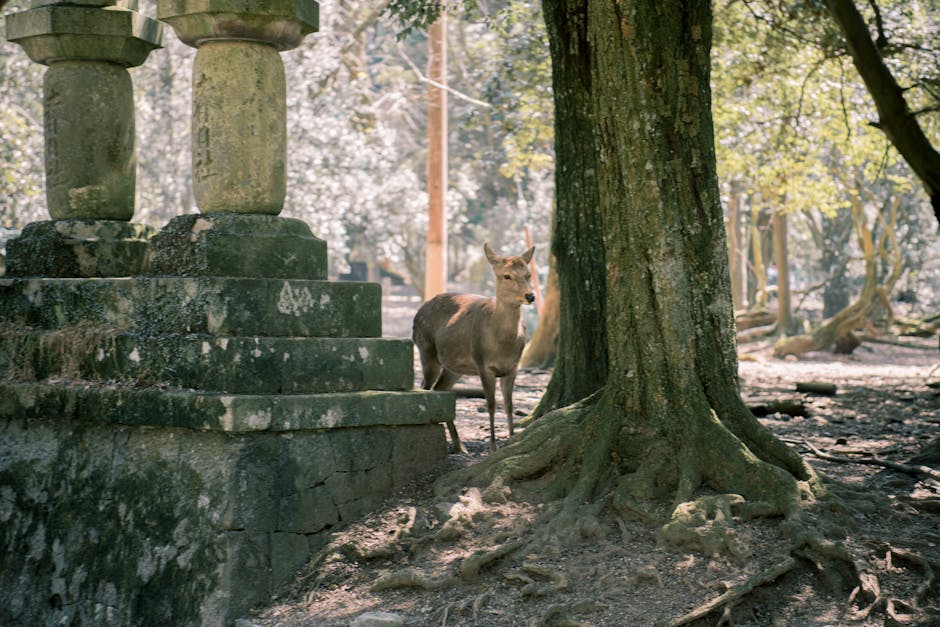
Self-guided audio tour in Nara
Start Free on iPhone
Start free on iPhone to unlock this self-guided walking tour in Nara. Hear all the stories that make it amazing, walk at your own pace, and begin whenever you want.
Your Private Tour Guide
As the afternoon sun begins its descent over the ancient capital of Nara, a specific kind of magic settles over the eastern edge of Nara Park. This self-guided walk, "Golden Hour: The Nigatsu-do Twilight Route," invites you to witness the city’s transition from the bustling energy of the Great Buddha to the meditative stillness of the hillsides. While most visitors depart after seeing the Daibutsu, this route leads you upward, following stone-paved paths lined with flickering lanterns and ancient cedar trees. The journey begins at the towering Nandaimon Gate, where fierce wooden guardians have kept watch for centuries. From there, you will skirt the edge of the Mirror Pond, capturing the symmetry of the temple grounds before ascending toward the higher elevations of the Todai-ji complex. This neighborhood stroll emphasizes the architectural evolution of Japan, moving from the massive scale of the Kamakura period to the intimate, spiritual spaces of the Hokke-do and Nigatsu-do. The highlight of this walking route is undoubtedly the balcony of Nigatsu-do. Known for the dramatic Omizutori fire ceremony held every March, the temple offers a panoramic viewpoint that is unparalleled in Nara. As the sky turns shades of amber and violet, the sounds of temple bells and the distant call of deer create a sensory experience that feels suspended in time. It is a perfect opportunity for photography enthusiasts to capture the "roof of Nara" without the mid-day crowds. Concluding at the peaceful Tamukeyama Hachiman-gu Shrine, this experience offers a deeper look at the syncretic history of Japanese faith, where Shinto and Buddhist traditions exist side-by-side. This is not just a walk through history; it is a chance to explore Nara at its most atmospheric. Whether you are a first-time visitor or a returning traveler, this self-guided adventure provides the freedom to pause, reflect, and soak in the twilight glow of one of Japan’s most sacred landscapes.
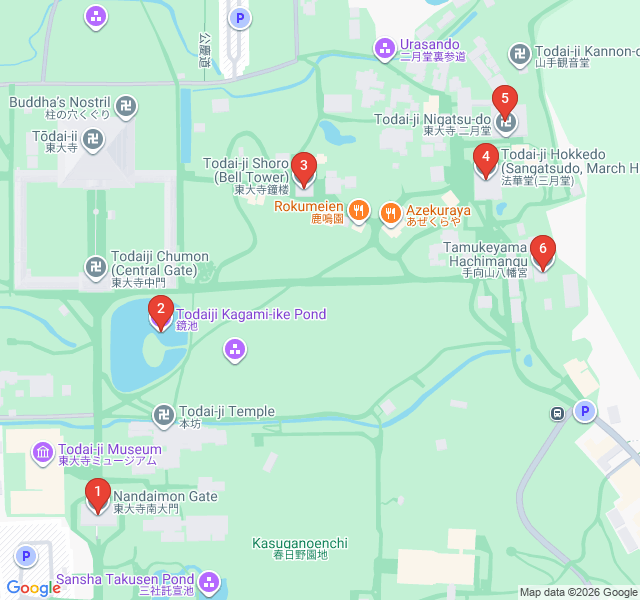
Numbers indicate the order of stops on the tour.
Your self-guided walk begins at the Nandaimon, or Great South Gate, the imposing entrance to the Todai-ji temple complex. Standing nearly 20 meters tall, this is the largest temple gate in Japan and a masterpiece of the 'Daibutsu-yo' architectural style. As you pass through, look up at the two massive Nio Guardian statues. Carved in 1203 by the legendary sculptors Unkei and Kaikei, these figures were completed in just 69 days. Their fierce expressions and dynamic poses are designed to ward off evil and protect the sacred grounds within. Notice the intricate joinery of the wood—no nails were used in the original construction. This gate serves as a threshold, marking your transition from the secular world into a space that has been a center of Japanese Buddhism for over 1,200 years.
Just past the gate lies Kagami-ike, aptly named 'Mirror Pond.' On a still day, the water provides a perfect reflection of the Daibutsuden (Great Buddha Hall) and the surrounding pine trees. This is a premier spot for photography, especially as the late afternoon light softens the colors of the temple's tile roof. In the center of the pond sits a small island with a shrine dedicated to Itsukushima-jinja, adding a touch of Shinto presence to the Buddhist grounds. Take a moment to observe the local deer, which often congregate here. They are considered messengers of the gods in Nara and have been protected for centuries, becoming an inseparable part of the landscape's spiritual and natural charm.
Leaving the main path, head uphill toward the Shoro, or Bell Tower. This structure dates back to the Kamakura period and houses one of Japan's three great bells. Known as 'Ogane,' it weighs approximately 26 tons. The bell is so massive that it requires a heavy wooden beam swung by several people to ring it, though it is usually only sounded at the start of the New Year or for special ceremonies. The tower itself is architecturally significant for its 'zen-style' brackets that support the heavy thatched roof. Standing here, away from the main tourist flow, you can feel the weight of history in the quiet air of the hillside.
A short walk further up the hill brings you to Sangatsu-do, the oldest building in the Todai-ji complex. While parts of it date back to the 8th century, the structure is a fascinating hybrid of Nara-period and Kamakura-period architecture. It was originally built for the chanting of the Lotus Sutra, a practice that gave it the name 'Hokke-do.' The building’s weathered wood and simple lines stand in stark contrast to the grand scale of the Great Buddha Hall you saw earlier. It represents the endurance of early Buddhist practice in Japan, surviving fires and wars that claimed much of the rest of the original temple city.
You have reached the pinnacle of this walking route: Nigatsu-do, the 'Hall of the Second Month.' This sub-temple is world-renowned for the Omizutori ceremony, a 1,200-year-old purification ritual involving massive flaming torches. Step onto the wide wooden balcony to find one of the best viewpoints in Nara. From here, you can see the sweeping tile roofs of the Daibutsuden and the modern city stretching toward the horizon. The bronze lanterns hanging from the eaves provide a classic frame for photography, especially as the sun begins to set. It is a place for quiet contemplation; listen for the rhythmic chanting that often drifts from the inner sanctum, echoing the centuries of devotion practiced on this very hillside.
Conclude your journey at the Tamukeyama Hachiman-gu, a Shinto shrine located just down the steps from Nigatsu-do. This shrine was established to protect Todai-ji during the construction of the Great Buddha, highlighting the 'Shinbutsu-shugo' or syncretism of Shinto and Buddhism that defined Japanese religion for over a millennium. The shrine is particularly famous for its maple trees, which turn a brilliant crimson in autumn. As the final stop on your twilight stroll, the shrine's quiet courtyard offers a peaceful transition back to reality. The lanterns here are often lit as darkness falls, guiding your way back down toward the center of Nara Park.
Start Free on iPhone
Explore “Golden Hour: The Nigatsu-do Twilight Route” with your very own Private Tour Guide with Zigway. Start free on iPhone, skip the large group and the fixed routes, and hear the city come alive as you go.
Your Private Tour Guide
Don't miss the good stuff
Explore Freely
 Moderate
Nara, Japan
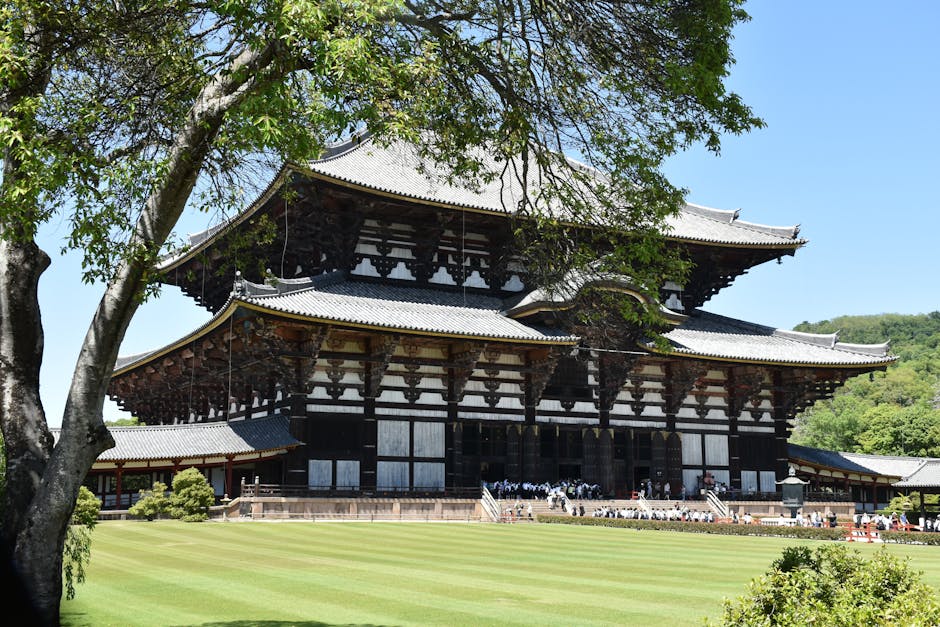
Discover a mystical path through Nara's ancient forest, lined with 3,000 lanterns and sacred deer on this serene self-guided walk.
 Challenging
Nara, Japan
Journey from Nara's imperial ruins and refined gardens into the ancient, sacred silence of the UNESCO-protected Mount Kasuga Primeval Forest.
 Moderate
Nara, Japan
Discover Nara’s literary soul on this self-guided walk through historic Takabatake’s temples, writer residences, and poetic gardens.
 Easy
EasyNara, Japan
Explore Nara's evening charm on this self-guided walk through illuminated pagodas, historic shopping streets, and world-class hidden bars.
 Moderate
Krakow, Poland
Discover Krakow’s stunning skyline and riverside charm on this self-guided audio walk through scenic viewpoints and historic mounds.
 Moderate
Vienna, Austria
Discover the noir world of The Third Man and Cold War Vienna on this atmospheric self-guided audio walk through the historic Innere Stadt.
 Easy
EasyWarsaw, Poland
Explore Warsaw's scenic riverfront, rooftop gardens, and industrial-chic architecture on this self-guided stroll through the Powiśle district.
 Easy
EasyWarsaw, Poland
Discover Warsaw's intellectual heart through historic campuses, peaceful parks, and the stunning rooftop gardens of the University Library.
 Moderate
Tokyo, Japan
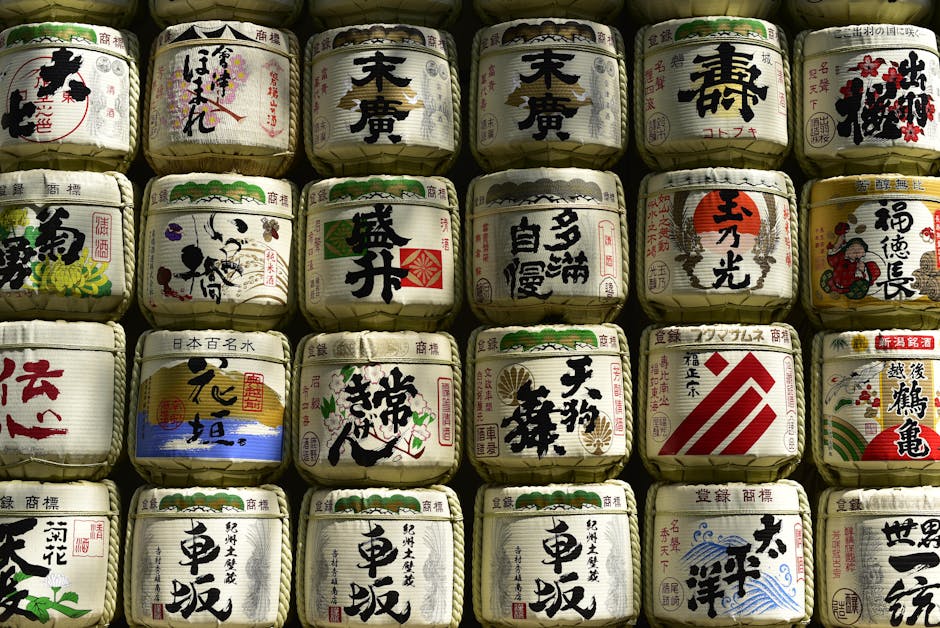
Discover Tokyo's premier creative district on this self-guided walk through Roppongi’s world-class museums and striking modern architecture.
 Easy
EasyTokyo, Japan
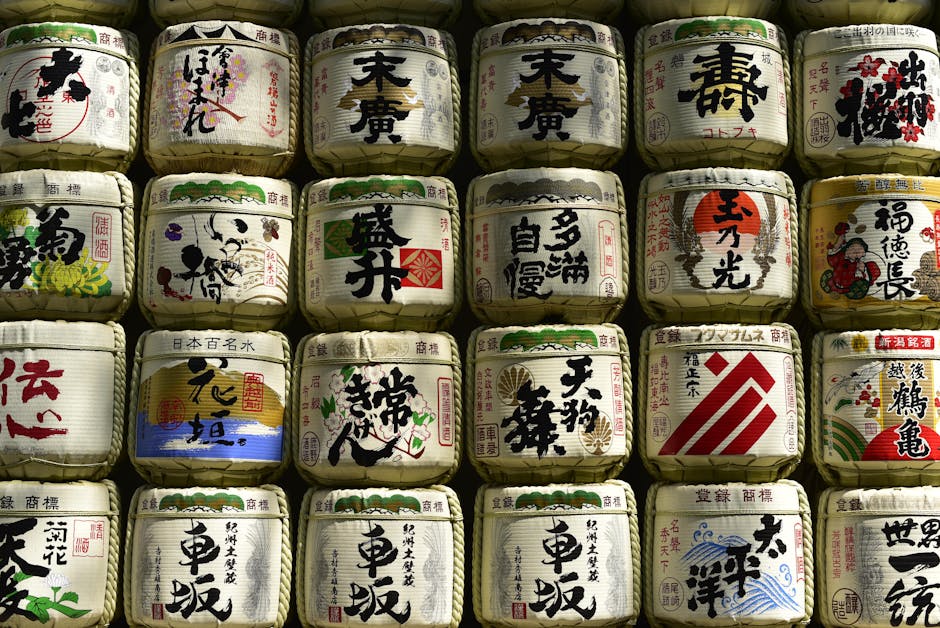
Discover the 'Old Tokyo' charm of Yanaka on this self-guided walk through historic temples, artisan alleys, and a stunning torii gate shrine.
 Easy
EasyTokyo, Japan
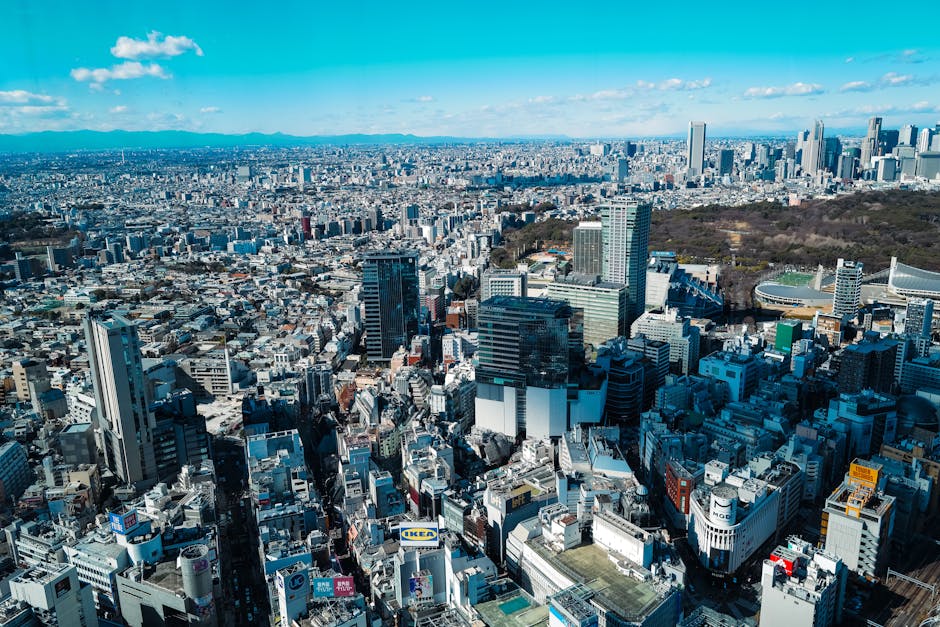
Experience Shibuya's electric energy on this self-guided walk from the iconic Scramble Crossing to the panoramic views of Shibuya Sky.
 Easy
EasyTokyo, Japan
Explore Tokyo's indie heart. From vintage fashion in Shimokitazawa to world-class art in Shinjuku, discover the city's creative soul independently.