Self-guided audio tour in Miami
Start Free on iPhone
Start free on iPhone to unlock this self-guided walking tour in Miami. Hear all the stories that make it amazing, walk at your own pace, and begin whenever you want.
Your Private Tour Guide
Step into a world where futuristic optimism meets tropical flair. This self-guided walk through Miami's Upper East Side invites you to explore the MiMo (Miami Modern) Biscayne Boulevard Historic District. Unlike the famous Art Deco of South Beach, MiMo represents the post-war era's fascination with the Space Age, car culture, and whimsical luxury. As you navigate this neighborhood stroll, you'll encounter a parade of restored motels featuring cantilevered roofs, geometric patterns, and vibrant neon signs that once beckoned 1950s road-trippers. The route highlights the architectural evolution of the city, showing how historic preservation has breathed new life into these mid-century gems. You'll see the iconic Shalimar and New Yorker motels, catch a breeze at Legion Park overlooking the bay, and marvel at the legendary Coppertone Girl sign. The journey concludes at the stunningly restored Vagabond Hotel, a testament to the area's glamorous past and vibrant present. This walking route offers a quieter, more local perspective on Miami’s design history, far from the neon-soaked crowds of Ocean Drive. It is perfect for photography enthusiasts and history buffs looking to discover the hidden-gems of the "Magic City" at their own pace. By exploring independently, you can linger at the architectural details or grab a bite at one of the trendy eateries housed within these historic structures. This Miami walking route captures a unique slice of Americana, where the spirit of the 1950s is preserved in the stucco and steel of the Upper East Side. Discover the charm of the 20th century on this unique walking tour Miami experience that celebrates the city's architectural heritage.
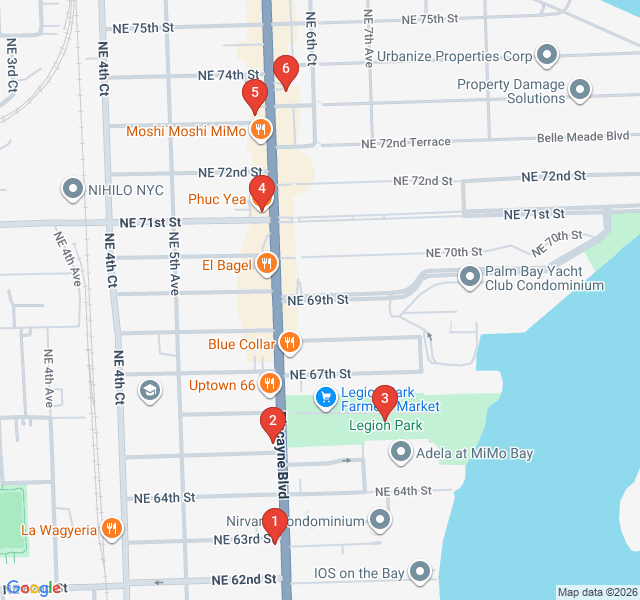
Numbers indicate the order of stops on the tour.
The Shalimar Motel is a quintessential example of the MiMo style that defined Biscayne Boulevard in the 1950s. Its name, likely inspired by the Shalimar Gardens in Pakistan, reflects the era's obsession with exotic and far-flung destinations. Notice the sharp, angular rooflines and the use of 'cheese holes'—circular cutouts in the masonry that provide both decoration and ventilation. These motels were designed to be billboard architecture, meant to catch the eye of drivers speeding by in their tail-finned Chevrolets. The Shalimar has survived the ups and downs of the district, standing today as a colorful reminder of the mid-century motor court craze. It represents the transition from the modest guest houses of the 1940s to the more adventurous, space-age designs that followed the end of World War II.
Standing tall with its iconic vertical neon sign, The New Yorker Miami Hotel is a beacon of mid-century cool. Built in 1953 and designed by Norman Giller—one of the pioneers of the MiMo movement—it features classic elements like glass block walls, open-air walkways, and a dramatic pylon sign. This hotel was part of the post-war boom that transformed Biscayne Boulevard into a premier tourist corridor. Architects during this period wanted to move away from the rigid symmetry of Art Deco, embracing asymmetrical forms and playful geometric shapes instead. Today, the New Yorker’s meticulously restored facade serves as a gateway to the district's history. It reminds us of a time when the journey was just as important as the destination, and every motel was a stage set for a tropical vacation.
After soaking in the neon and concrete of the boulevard, Legion Park offers a refreshing change of pace and a glimpse into the natural beauty of the Upper East Side. This bayside park is a favorite among locals, often hosting a popular farmers' market on weekends. As you walk toward the water, you get a sense of why this area was so attractive to early developers—the proximity to Biscayne Bay provided a constant breeze and stunning views. The park is named after the American Legion Post #29, which has a long history in the community. It’s a great spot to pause your self-guided adventure and watch the boats on the water. The transition from the commercial strip of the boulevard to this lush green space highlights the diverse character of the neighborhood, blending urban design with the coastal environment.
Phuc Yea is a perfect example of how the MiMo District has reinvented itself for the modern era. The restaurant is housed in what was once the Sir William Hotel, a historic structure that dates back to the neighborhood's mid-century heyday. While the interiors have been updated to reflect a vibrant, funky energy, the building's bones remain a part of the district's architectural fabric. This stop represents the New MiMo—a community where historic preservation meets culinary innovation. The area was once in decline, but the arrival of creative businesses like this one helped revitalize the Upper East Side. It’s a reminder that history isn't just about old buildings; it's about how we inhabit and repurpose those spaces for today’s world. The name itself is a playful nod to the fusion of cultures you find throughout Miami.
You are looking at one of the most recognizable pieces of Americana in Florida: the Coppertone Girl sign. Originally installed in 1959 at a different location downtown, this mechanical billboard became a cultural icon. It depicts a young girl and her dog, with the dog playfully pulling at her swimsuit. When the original building was slated for demolition, the sign was saved and eventually relocated here to the MiMo District—a fitting home for a piece of mid-century pop culture. The sign is a masterpiece of early outdoor advertising, using neon and mechanical movement to grab attention. Its presence here underscores the district's commitment to preserving the kitschy, optimistic spirit of the 1950s and 60s. It’s more than just an advertisement; it’s a nostalgic landmark that evokes memories of sun-drenched Florida vacations.
The Vagabond Hotel is arguably the most famous restoration project in the MiMo District. Designed by Robert Swartburg and opened in 1953, it was once a legendary hangout for the Rat Pack and other celebrities of the era. For years, it sat derelict, a symbol of the boulevard's decay, until a massive renovation in 2014 returned it to its former glory. Look for the whimsical mosaic tile art by the pool, the vaulted ceilings, and the iconic neon sign featuring a vagabond traveler. The design is a celebration of Tropical Modernism, blending futuristic shapes with organic materials. Today, it serves as a boutique hotel and a social hub, proving that these mid-century dinosaurs can still be relevant and luxurious. It is the perfect place to conclude your stroll through the MiMo District’s colorful history.
Start Free on iPhone
Explore “Mid-Century Magic: The MiMo District” with your very own Private Tour Guide with Zigway. Start free on iPhone, skip the large group and the fixed routes, and hear the city come alive as you go.
Your Private Tour Guide
Don't miss the good stuff
Explore Freely
 Moderate
Miami, United States
Explore the Mediterranean Revival architecture and lush history of Coral Gables on this elegant self-guided audio walk through 'The City Beautiful.'
 Challenging
Miami, United States
Discover pristine beaches, mangrove forests, and the historic 1825 lighthouse on this scenic self-guided coastal walk through Key Biscayne.
 Easy
EasyMiami, United States
Explore Miami’s 'Manhattan of the South' on this self-guided walk through Brickell’s glittering skyscrapers, ancient ruins, and urban parks.
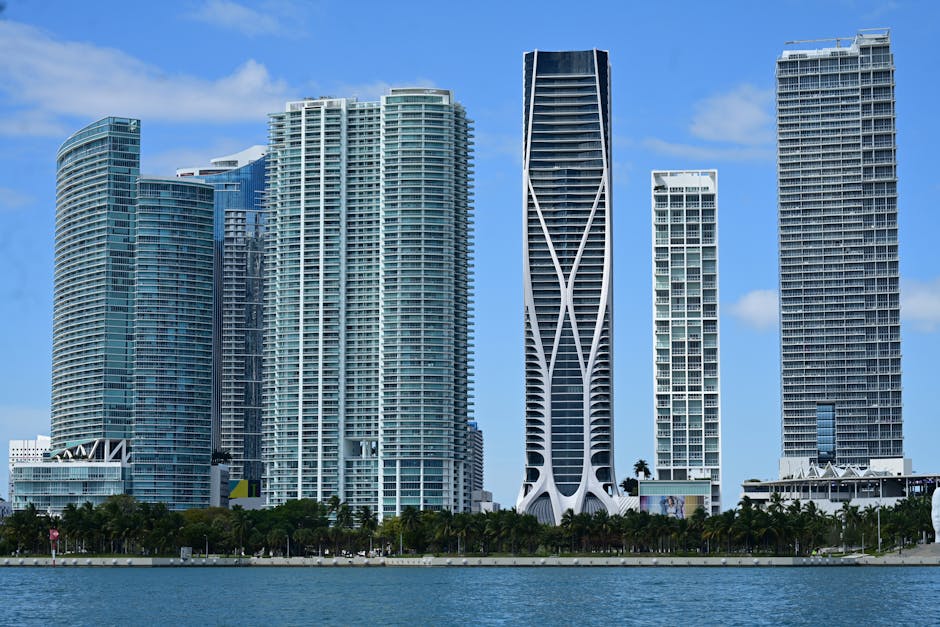 Easy
EasyMiami, United States
Explore Miami's iconic Art Deco district and neon-lit Ocean Drive on this self-guided architecture and photography walk through South Beach.
 Easy
EasyGdansk, Poland
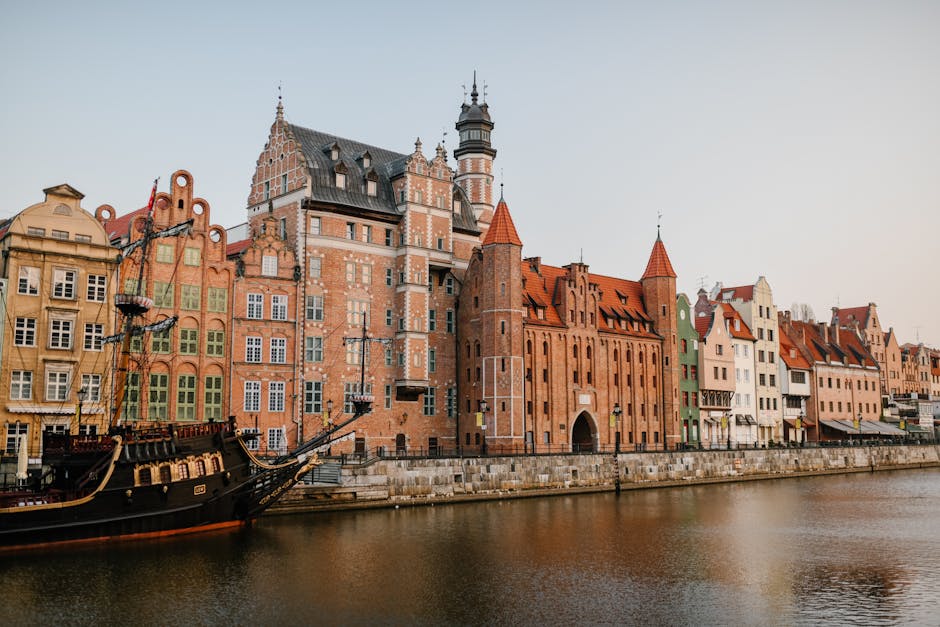
Discover the 'Baltic Gold' on this self-guided walk through Gdansk's historic mills, massive cathedrals, and the magical Mariacka Street.
 Moderate
Vienna, Austria
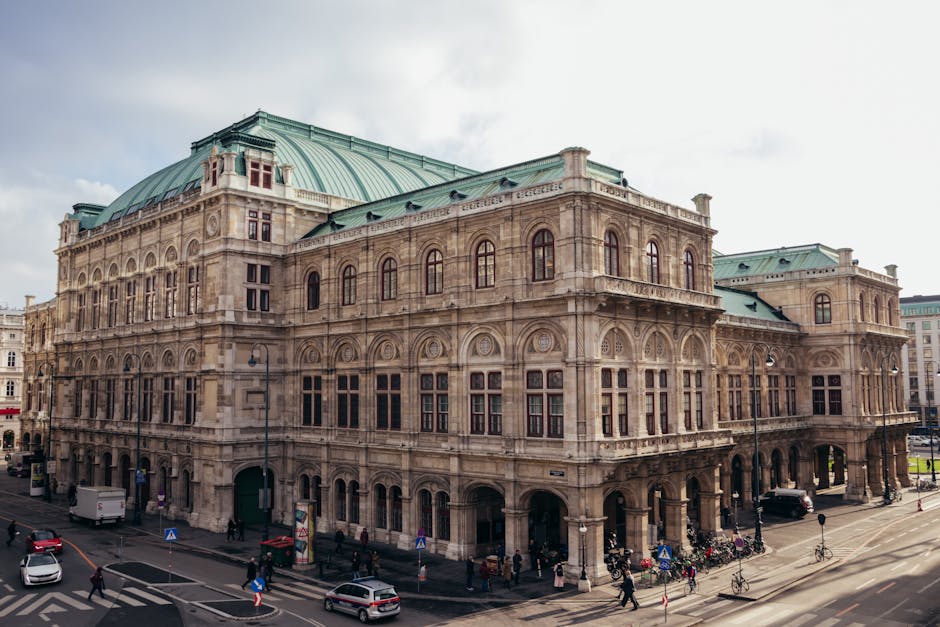
Discover the noir world of The Third Man and Cold War Vienna on this atmospheric self-guided audio walk through the historic Innere Stadt.
 Easy
EasyWarsaw, Poland
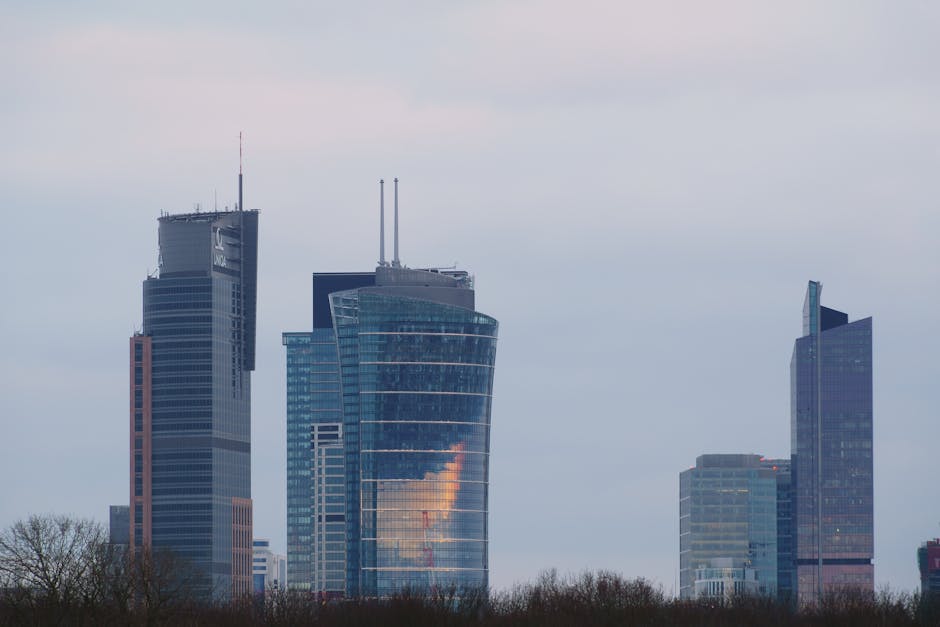
Discover the hidden courtyards and grand pre-war architecture of Warsaw's most atmospheric neighborhood on this self-guided stroll.
 Easy
EasyHelsinki, Finland
Discover Helsinki's oldest neighborhood on this self-guided audio walk through Kruununhaka’s historic streets, hidden courtyards, and scenic shores.
 Easy
EasyNashville, United States
Explore the 'Athens of the South' on this self-guided walk through Centennial Park, featuring the world's only full-scale Parthenon replica.
 Easy
EasyNashville, United States
Explore Nashville's academic heart and Art Deco gems on this self-guided walk through historic Hillsboro Village.
 Easy
EasyNashville, United States
Explore the heart of Nashville's music industry. Discover iconic studios and the history of the legendary Nashville Sound at your own pace.
 Easy
EasyNashville, United States
Explore Nashville's oldest neighborhood! Discover Victorian architecture, Civil War history, and world-class craft beer on this self-guided walk.