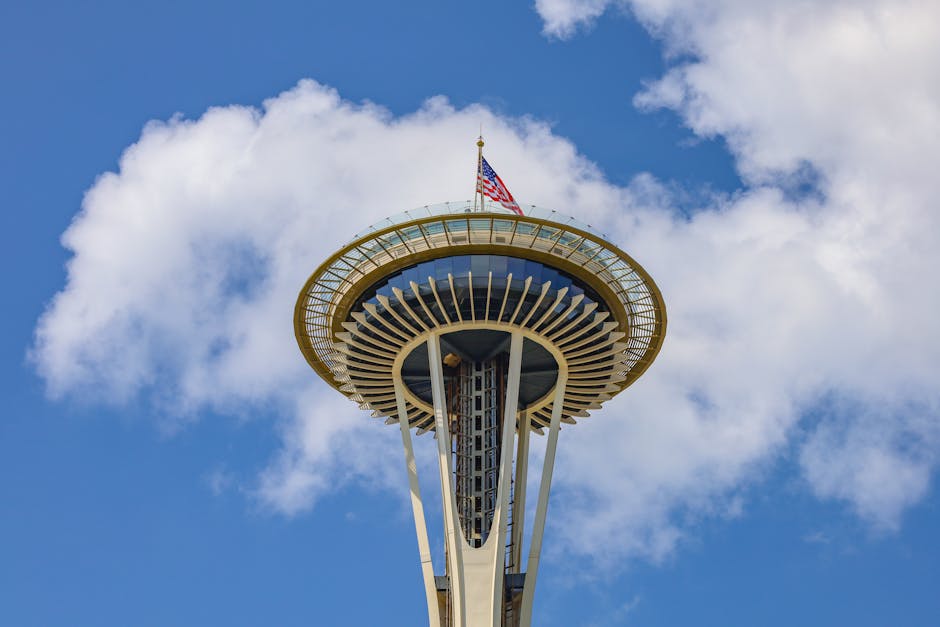
Self-guided audio tour in Seattle
Start Free on iPhone
Start free on iPhone to unlock this self-guided walking tour in Seattle. Hear all the stories that make it amazing, walk at your own pace, and begin whenever you want.
Your Private Tour Guide
Step into a vibrant tapestry of heritage and flavor with this self-guided walk through Seattle's Chinatown-International District (CID). Unlike a standard walking tour Seattle experience, this neighborhood stroll invites you to peel back the layers of one of the most diverse districts in the Pacific Northwest at your own pace. The CID is unique for being a pan-Asian hub, where Chinese, Japanese, Filipino, and Vietnamese communities have built a shared legacy over more than a century. Your walking route begins at the Wing Luke Museum, a cultural cornerstone that honors the Asian Pacific American experience. From there, you will explore the heart of the district, passing through Hing Hay Park, the neighborhood's living room, where the ornate grand pavilion serves as a symbol of community pride. As you move through the streets, you will encounter the historic Panama Hotel, a site of profound literary and historical significance that preserves the stories of Japanese American families during World War II. This audio walk also takes you upward to the Danny Woo Community Garden and Kobe Terrace, offering a peaceful retreat from the urban bustle. Here, you can admire the 200-year-old stone lantern and take in sweeping views of the city skyline and Elliott Bay. Your journey concludes at Uwajimaya, an iconic Asian marketplace that is a feast for the senses. Whether you are interested in the resilience of immigrant communities, the intricate architecture of historic family association buildings, or simply finding the best spot for dim sum, this self-guided adventure provides the context you need. This is a must-do for anyone looking for a deep dive into the culture and history of the area without the constraints of a guided tour Seattle schedule. Explore the hidden gems and local favorites that make this district the soul of the city. **Note:** This area is known for its ever-changing character. Street art, pop-up venues, and temporary exhibitions may differ from what's described. That's part of the adventure - you might discover something entirely new!
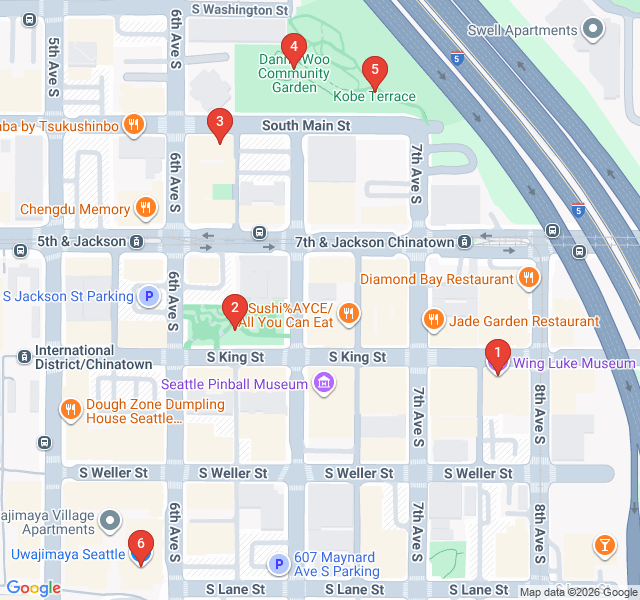
Numbers indicate the order of stops on the tour.
Start your journey at the Wing Luke Museum of the Asian Pacific American Experience. This isn't just a museum; it's a community hub located in the historic East Kong Yick Building. Named after Wing Luke, the first Asian American elected to public office in the Pacific Northwest, the museum preserves the history of the entire district. Inside, you'll find exhibits ranging from the life of Bruce Lee, who frequented this neighborhood, to the stories of the 'paper sons' who immigrated here. The building itself once served as a hotel for single laborers, and its preserved rooms offer a window into the early 20th-century immigrant experience. Note that museum exhibits change frequently, so check their current offerings to see what unique stories are being highlighted today.
Welcome to Hing Hay Park, which translates to the 'Park of Joyful Gatherings.' This is the neighborhood's town square. The centerpiece is the ornate, red-tiled grand pavilion, which was handcrafted in Taipei and gifted to the city in the 1970s. Look around and you'll see locals practicing Tai Chi, families playing, and people enjoying takeout from nearby eateries. The park was expanded recently, adding modern artistic elements and more space for community events. It sits at the intersection of several historic streets, making it the perfect spot to observe the blend of old-world traditions and modern Seattle life. It is a testament to the district's resilience and its role as a gathering place for all.
Standing before the Panama Hotel, you are looking at a National Historic Landmark. Built in 1910 by the first Japanese architect in Seattle, Sabro Ozasa, this hotel was a cornerstone of what was once Nihonmachi, or Japantown. It gained international fame through the novel 'Hotel on the Corner of Bitter and Sweet.' One of the most moving features is a glass floorboards section inside the tea house, where you can look down into the basement. There, the belongings of Japanese American families, stored for safekeeping before they were forced into incarceration camps during World War II, remain untouched. It is a quiet, powerful place of memory and one of the few remaining examples of an urban Japanese bathhouse in the country.
Walk up the slope to the Danny Woo Community Garden. This unique urban oasis was founded in 1975 to provide the district's elderly residents with a space to grow their own food and stay active. Today, it consists of nearly 100 plots tended by local seniors, primarily of Chinese, Korean, and Southeast Asian descent. As you stroll through the terraced paths, you'll see a variety of traditional vegetables and herbs. The garden is more than just a place for agriculture; it's a social lifeline. It also features a traditional Korean 'pajung' or pavilion and a children's garden. Because this is a living community space, please stay on the paths and respect the hard work of the gardeners.
Continue your ascent to Kobe Terrace, named after Seattle's sister city in Japan. This park offers one of the best viewpoints in the city, overlooking the district, the stadiums, and the waterfront. The most prominent feature here is the 200-year-old Yukutoro stone lantern, a gift from the people of Kobe. Surrounded by cherry trees that erupt in pink blossoms every spring, the park provides a peaceful contrast to the busy streets below. It's a great spot to pause and reflect on the geographic layout of the city. The trail here also connects to the larger Sturgus Park, but the terrace itself is the highlight for its historic significance and scenic beauty.
Your walk concludes at Uwajimaya, one of the largest Asian grocery stores in the United States. Founded as a small business selling fish cakes from a truck in the 1920s, it has grown into a massive cultural and culinary destination. Inside, you can find everything from live seafood and exotic fruits to a vast array of international snacks. Don't miss the Kinokuniya Bookstore tucked inside, which features a huge collection of Japanese stationery and manga. The food hall is a local favorite, offering a wide variety of Asian cuisines under one roof. It is the perfect place to grab a snack or a souvenir and reflect on the diverse cultures you've encountered on this self-guided adventure.
Start Free on iPhone
Explore “Dim Sum & Dynasties: Chinatown-ID Discovery” with your very own Private Tour Guide with Zigway. Start free on iPhone, skip the large group and the fixed routes, and hear the city come alive as you go.
Your Private Tour Guide
Don't miss the good stuff
Explore Freely
 Easy
EasySeattle, United States
Discover the birthplace of Seattle on this self-guided walk through historic Pioneer Square, featuring Gold Rush history and Romanesque architecture.
 Easy
EasySeattle, United States
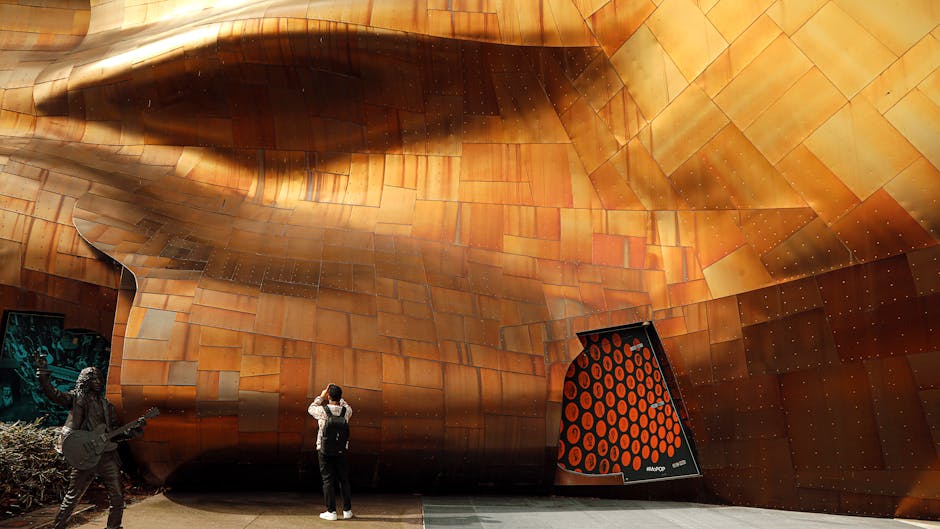
Explore Seattle’s oldest neighborhood. Discover vintage trailers, iconic neon signs, and the industrial heritage of Georgetown at your own pace.
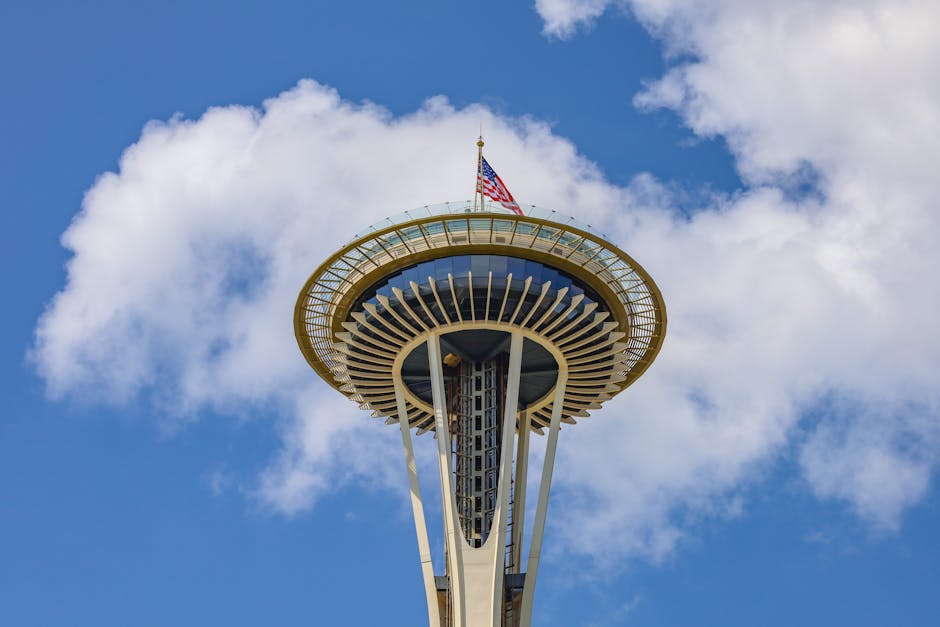 Moderate
Seattle, United States
Discover Seattle’s UNESCO City of Literature status on this self-guided walk through iconic libraries, historic hotels, and legendary bookstores.
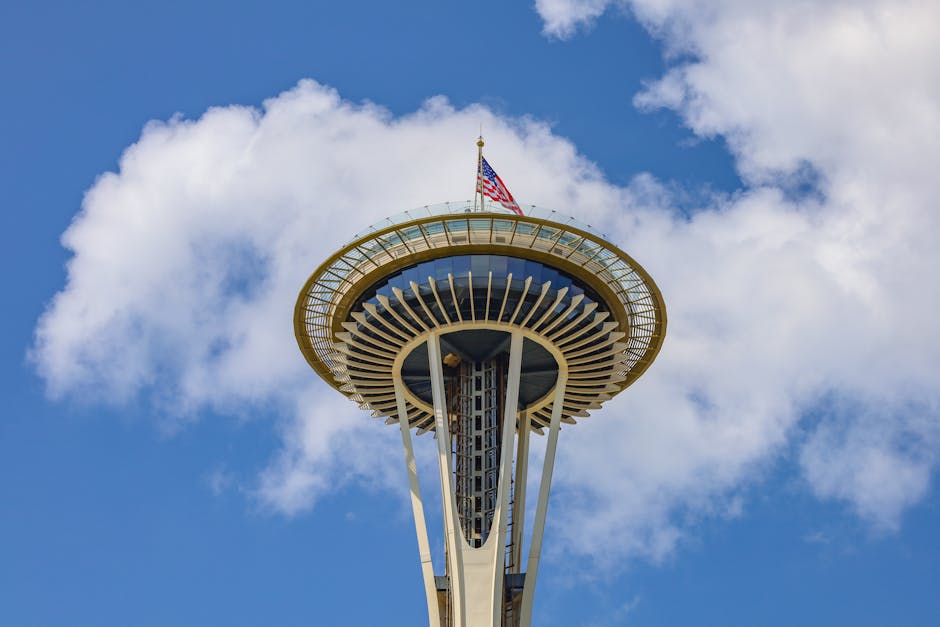 Moderate
Seattle, United States
Discover Seattle's hidden urban oases and brutalist green spaces on this self-guided walking route through downtown’s secret parks and gardens.
 Easy
EasyGothenburg, Sweden
Explore Gothenburg's elegant academic district, featuring grand 19th-century stone architecture and the iconic cultural hub of Götaplatsen.
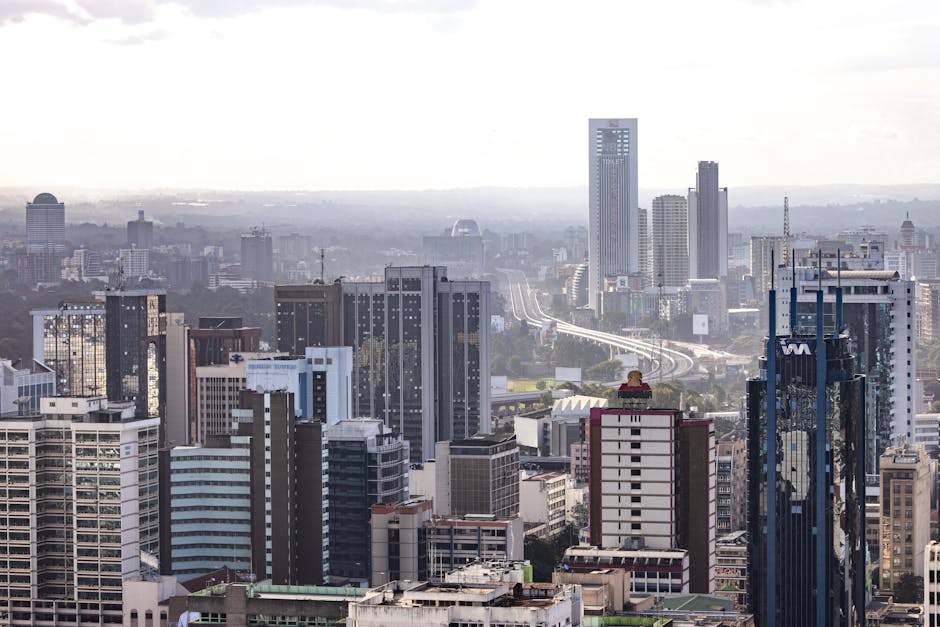 Easy
EasyNairobi, Kenya
Explore the history of Kenya’s independence through the statues, monuments, and parks that define Nairobi’s political heart on this self-guided walk.
 Easy
EasyNairobi, Kenya
Discover Nairobi’s literary soul on this self-guided walk through historic libraries, iconic bookshops, and cultural centers in the heart of the CBD.
 Easy
EasySalzburg, Austria
Discover the 'Rome of the North' on this self-guided walk through the Baroque squares and monumental legacy of Salzburg’s Prince-Archbishops.
 Easy
EasyNashville, United States
Explore the 'Athens of the South' on this self-guided walk through Centennial Park, featuring the world's only full-scale Parthenon replica.
 Easy
EasyNashville, United States
Explore Nashville's academic heart and Art Deco gems on this self-guided walk through historic Hillsboro Village.
 Easy
EasyNashville, United States
Explore the heart of Nashville's music industry. Discover iconic studios and the history of the legendary Nashville Sound at your own pace.
 Easy
EasyNashville, United States
Explore Nashville's oldest neighborhood! Discover Victorian architecture, Civil War history, and world-class craft beer on this self-guided walk.