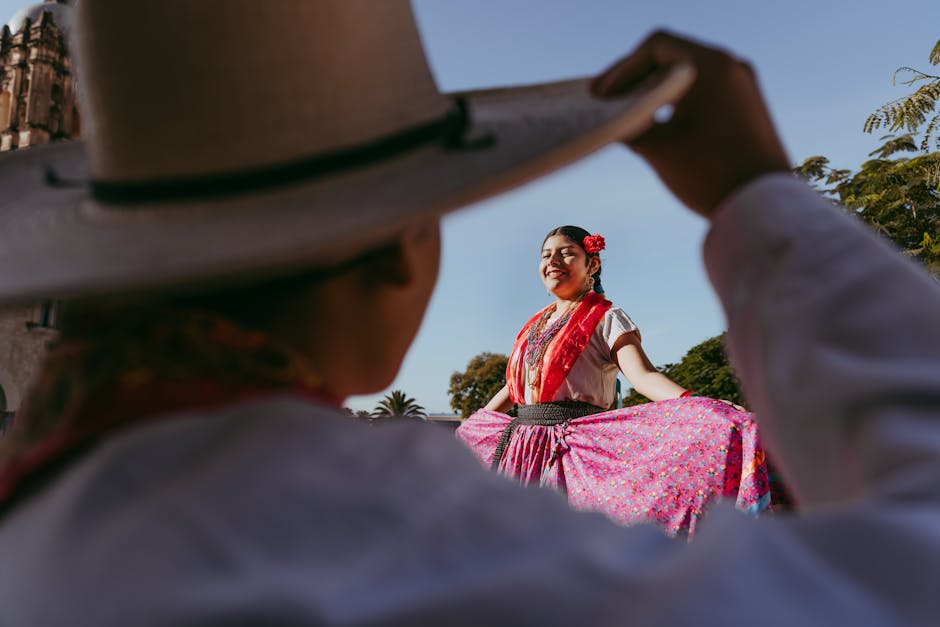
Self-guided audio tour in Oaxaca
Start Free on iPhone
Start free on iPhone to unlock this self-guided walking tour in Oaxaca. Hear all the stories that make it amazing, walk at your own pace, and begin whenever you want.
Your Private Tour Guide
Oaxaca’s skyline is defined not by skyscrapers, but by the resilient domes and ornate bell towers of its colonial past. This self-guided walk invites you to explore the 'Sacred Stones' of the Centro Histórico, a journey through the evolution of Oaxacan Baroque architecture and religious history. As you move through the streets, you will notice the distinctive 'cantera verde'—the pale green volcanic stone that gives the city its nickname, the Green City. This walking route takes you beyond the famous Zócalo to uncover the stories etched into the facades of the city's most significant temples and parishes. Starting at the elevated grounds of Carmen Alto, the route descends through the heart of the UNESCO World Heritage site. You will encounter the site where the reformist president Benito Juárez was married and see the architectural ingenuity required to build structures capable of surviving the region's frequent earthquakes. Unlike a standard guided tour Oaxaca visitors might find elsewhere, this audio walk allows you to linger under the intricate stone carvings and step into quiet courtyards at your own pace. The journey concludes at the majestic Basílica de la Soledad, a masterpiece of 17th-century craftsmanship dedicated to the patron saint of the city. Whether you are an architecture enthusiast or a history buff, this walking route Oaxaca offers a deep dive into the spiritual and artistic soul of the region. You will see how European styles were adapted by indigenous hands, resulting in a unique aesthetic that is both grand and grounded. From the Jesuit influence to the Augustinian legacy, each stop reveals a different layer of the city's complex heritage, making it a must-do neighborhood stroll for any first-time visitor or returning explorer.
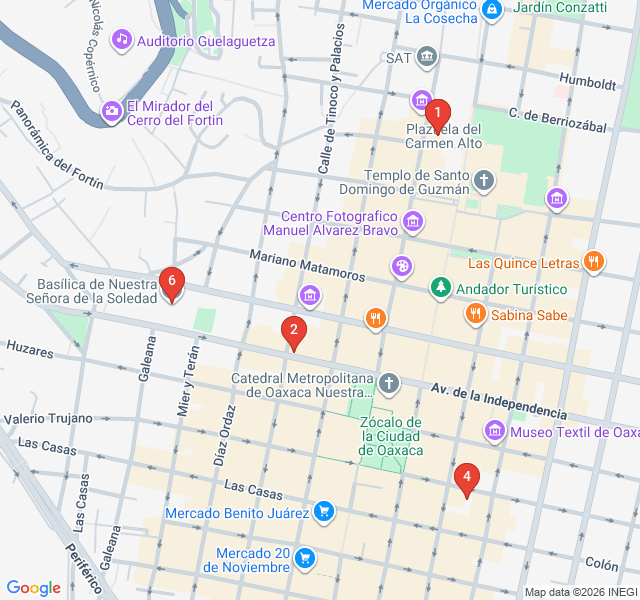
Numbers indicate the order of stops on the tour.
Begin your self-guided adventure at the Templo del Carmen Alto. This site has been a place of worship for centuries; long before the Spanish arrived, it was a Zapotec temple dedicated to Centeótl, the goddess of corn. In the 16th century, the Carmelite Order established this monastery using the very stones of the ancient temple. Notice the heavy, fortress-like walls and the pale green hue of the 'cantera' stone. This church is the traditional starting point for the city's famous Guelaguetza festivities, bridging the gap between Oaxaca’s pre-Hispanic roots and its colonial history.
Walking south, you reach the Templo de San Felipe Neri. Completed in 1773, this church is a prime example of the Oaxacan Baroque style. The facade is exceptionally detailed, featuring figures of saints nestled in niches and intricate floral patterns carved into the pinkish-tan stone. Historically, this church is famous as the site where Benito Juárez—the only indigenous president of Mexico—married Margarita Maza in 1843. Step inside to see the gilded altarpieces, which are among the most beautiful and well-preserved in the city, reflecting the immense wealth of the colonial church.
Located just off the Zócalo, the Templo de la Compañía de Jesús was built by the Jesuits in the late 16th century. Because Oaxaca is prone to earthquakes, the Jesuits designed this building with exceptionally thick walls and low vaults. Look up at the facade to see the image of Ignatius of Loyola, the founder of the order. The interior is simpler than some of its neighbors, but it offers a sense of peace and monumental scale that was intended to impress the local population during the era of evangelization.
The Templo de San Agustín is recognizable by its stunning relief carving of Saint Augustine over the main entrance. Founded by the Augustinian friars in the late 1500s, the current structure dates mostly to the 1720s after previous versions were destroyed by tremors. The facade is a masterclass in stone storytelling, depicting the saint protecting members of his order under his cloak. This church was once part of a large convent that served as a center for learning and religious administration in the southern reaches of the colonial city.
A short walk toward the southeastern edge of the historic center brings you to the Parroquia de los Siete Príncipes. This 18th-century church is dedicated to the Seven Archangels (or 'Princes'). It is often quieter than the central temples, offering a glimpse into local neighborhood life. The facade is distinctive for its use of red and green stone, creating a subtle polychrome effect. The church was part of a convent for the 'Conceptionist' nuns and remains a beloved local landmark, known for its tranquil plaza and traditional atmosphere.
Conclude your walking route at the Basílica de Nuestra Señora de la Soledad. This is the spiritual heart of Oaxaca. Built between 1682 and 1690, the church features a unique 'folding screen' facade that leans forward slightly—a clever architectural trick to ensure the sculptures remain visible from the plaza below. The basilica houses the image of the Virgin of Solitude, the patroness of the city. Legend says the image appeared miraculously in the pack of a mule that died on this spot. Don't miss the chance to try the famous 'leche quemada' (burnt milk) ice cream in the plaza outside after you finish your walk.
Start Free on iPhone
Explore “Sacred Stones: The Great Churches Route” with your very own Private Tour Guide with Zigway. Start free on iPhone, skip the large group and the fixed routes, and hear the city come alive as you go.
Your Private Tour Guide
Don't miss the good stuff
Explore Freely
 Easy
EasyOaxaca, Mexico
Explore Oaxaca’s oldest barrio on this self-guided walk through colonial aqueducts, colorful streets, and traditional artisan workshops.
 Easy
EasyOaxaca, Mexico
Explore Oaxaca's vibrant modern art scene, from revolutionary printmaking collectives to world-class contemporary museums, at your own pace.
 Moderate
Oaxaca, Mexico
Explore the heights of Oaxaca on this self-guided walk, featuring panoramic city views, cultural landmarks, and the iconic Cerro del Fortín.
 Easy
EasyOaxaca, Mexico
Explore Oaxaca's 'Green City' at your own pace. Discover Baroque masterpieces and the vibrant Zócalo on this self-guided neighborhood stroll.
 Easy
EasyNairobi, Kenya
Discover Nairobi's iconic skyline on this self-guided architecture walk through the CBD’s most famous modernist and Brutalist landmarks.
 Easy
EasyNairobi, Kenya
Explore Nairobi's architectural evolution from colonial-era landmarks to iconic Brutalist skyscrapers on this historic self-guided walking route.
 Easy
EasyKrakow, Poland
Explore the historic heart of Kazimierz on this self-guided walk through synagogues, ancient cemeteries, and vibrant squares.
 Easy
EasyGdansk, Poland
Discover the opulent Royal Way of Gdansk at your own pace. Explore Hanseatic history, gilded architecture, and the iconic Neptune's Fountain.
 Easy
EasyMexico City, Mexico
Explore Mexico City's most glamorous district on this self-guided walk through Polanco's luxury boutiques, lush parks, and iconic art museums.
 Easy
EasyMexico City, Mexico
Explore the Art Deco architecture and gourmet food scene of Roma Norte on this self-guided neighborhood stroll through Mexico City’s creative heart.
 Easy
EasyMexico City, Mexico
Explore the epic murals of Rivera, Orozco, and Siqueiros on this self-guided walking route through the heart of Mexico City’s historic center.
 Moderate
Mexico City, Mexico
Taste the legendary tacos and cantina culture of Narvarte on this self-guided walk through Mexico City's most authentic foodie neighborhood.